Seaton’s Column
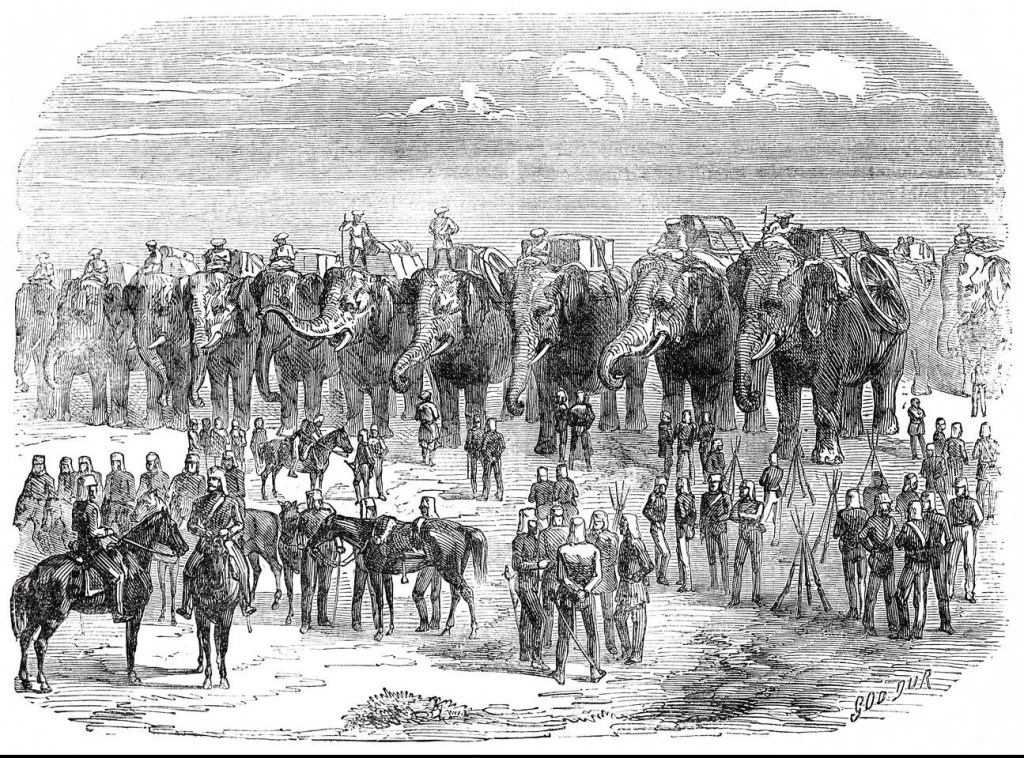
Instead of the command of the 1st European Bengal Fusiliers, General Penny presented Colonel Seaton with a formidable task, to escort to just grain and stores, with cattle and camp followers, but an assortment of goods, from ammunition and guns to clothing and equipment, through the Doab – the country between the Ganges and the Jumna. The country was barely “settled” as the terminology of the day allowed, and his convoy was hardly inconspicuous. His destination was Fatehgarh, and the request for the supplies was from Sir Colin Campbell.
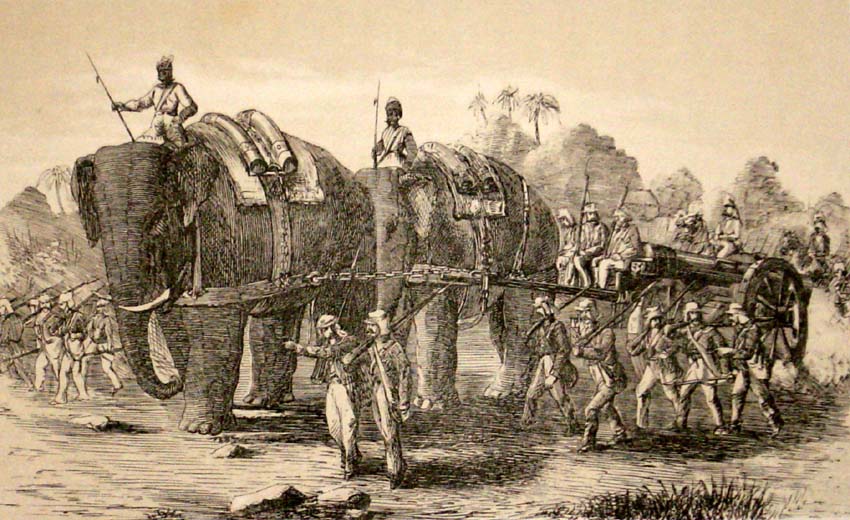
Seaton found that, once it had all been collected, the column would consist of 80 elephants, 16’000 bullocks, 800 camels, 1500 camp followers, and 4500 carts of four or six bullocks each. The carts alone would stretch for 18 miles. The troops to escort it all were a 9-pounder field battery, three heavy guns and 2 mortars, a squadron of Dragoons, two weak infantry regiments and 2 companies of sappers – in all 1900 men. When the baggage and the tents of the troops were added, Seaton estimated he could easily add another mile to his already over-extended convoy. He was expected to deliver everything to Sir Colin through a dangerous country without any knowledge of the rebel movements, but knowing full well bands of armed men were roaming through it, with infantry, cavalry and artillery. Realising the undertaking was well near impossible, Seaton decided the only way to move forward was to move from place to place, each time leaving the convoy under a small guard while he would take the rest of the troops in the advance to disperse whoever happened to be lurking ahead of him before moving ahead. Yet he still had a problem gathering the intelligence he would need for his plan to succeed. His request to General Penny was a surprising one.
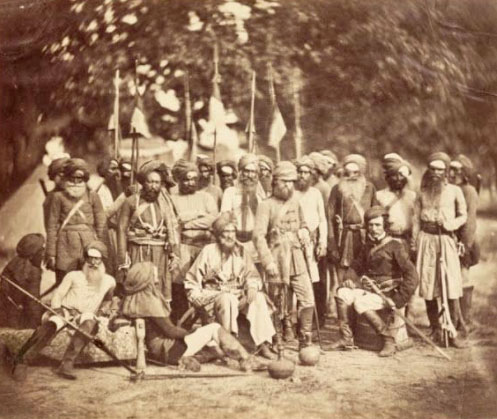
“The first and most important was that I might have Major Hodson his regiment of Horse, instead of the cavalry corps that, had been detached for that duty. “ But,” said the General, “Hodson’s corps is not so, strong as —or anything like, so well mounted.” I know that sir, quite well, but as the safety of the convoy—the whole success of the expedition—will depend mainly on getting accurate information of the enemy, I wish to have Hodson, for I know well that if any man in the world can get it he is the man. He is indefatigable—a soldier of the highest class; I have unbounded confidence in him, and would rather have him than five hundred more men.”
Following the shooting of the princes at Delhi, Hodson was not a man anyone was requesting by choice – indeed, most of the army was avoiding him. There was something of the pariah attached to his name; rumours of his dealings during the siege, his questionable actions outside the camp, and even his intelligence gathering had put him more in the league to lead “Italian banditti” rather than in the company of “honourable” men. That Seaton would want a man he sincerely liked, admired and trusted, regardless of what anyone else believed, for an impossible task, seemed to be one way of dealing with the problem of William Hodson. Penny quickly agreed. Until now Hodson had been kept busy with Brigadier Showers’ Column in the southwestern areas around Delhi but in November, he was in Ambala, waiting to see what would happen next to him and Hodson’s Horse. On the 2nd of December, he was on his way to meet his old friend, Colonel Thomas Seaton.
Seaton’s second request was far less outrageous – he wanted draught-gun bullocks in addition to the elephant teams for the heavy guns. While he knew elephants were at their best while dragging the guns, they were nearly impossible to handle in action. The last thing he needed was rampaging pachyderms disturbing any sudden call to fight. We shall see next just how right Seaton was.
Aligarh District
“The night before I marched, news came in from Allygurh that a large body of, rebels was in the district, causing great uneasiness, threatening to cut off our communication with Cawnpoor by the grand trunk road, which was my line of march, and placing in considerable danger a small force that was out in that quarter, under Colonel Farquhar, watching them.”
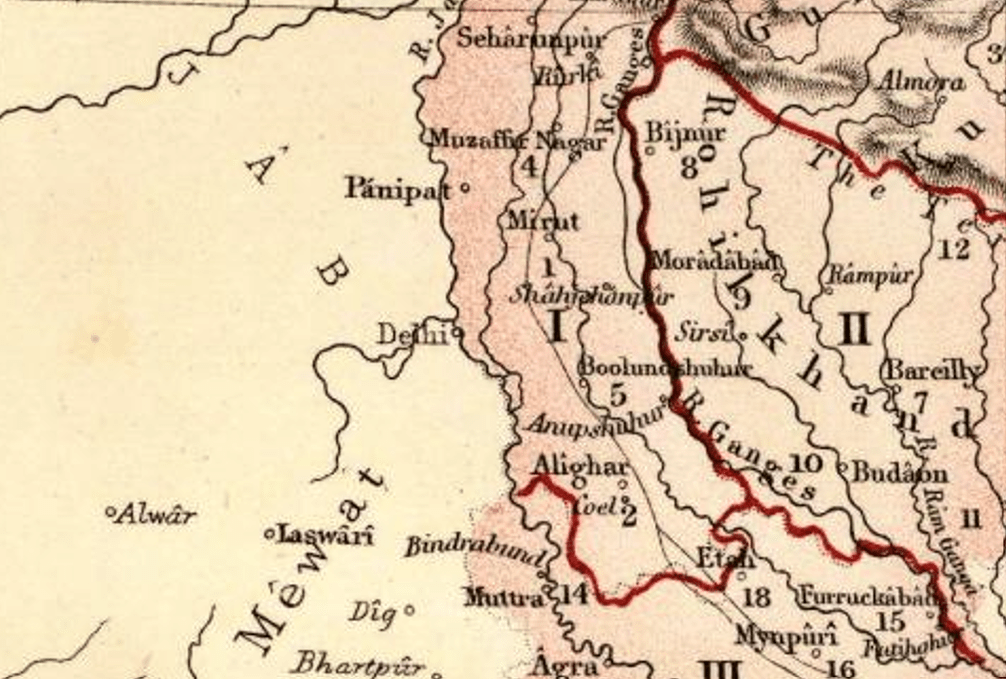
Colonel Robert Farquhar was not a man to panic – he had after all marched 800 miles to Delhi from Sind with the 1st Balochis in September to help take the city (they were the only Bombay regiment present); since the end of the siege, he and his force – two 6-pounders, 200 Afghan Horse and 300 of the 1st Balochis – as Seaton was want to say, keeping an eye on rebel activity in the field. They had recently moved towards Aligarh, which was held by Major Eld and his small force. Recent events, however, in Cawnpore, Lucknow and Central India had let loose a flood of rebels into the districts, and without men like Farquhar in place, Seaton would have been marching blind.
For Seaton, there was nothing for it – he ordered his force, convoy and all to proceed to Aligarh, by forced marches. Along the road, he added Wale’s Horse (later 1st Sikh Irregular Cavalry) to his force and an additional troop of Sikhs. With Hodson arrived Seaton would have a considerable army:
Artillery: two hundred and thirty-three men, manning six 9-pounder guns, two 6-pounders, two 18-pounders, one 8-inch howitzer, and two 5-inch mortars;
Cavalry: a squadron of the Carabineers, and a few of the 9th Lancers, one hundred and forty in all, and Hodson’s Horse, five hundred and fifty strong, led by Hodson;
Infantry: The 1st Fusiliers, three hundred seventy-six strong; the 7th Panjab Infantry, five hundred and forty strong;
Sappers, one hundred and twenty.
Among the 1st European Bengal Fusiliers was Lieutenant Edward Vibart. His regiment had mutinied at Delhi (the 54th NI), forcing him to flee to Meerut. Vibart subsequently joined the Delhi Field Force. Following the fall of the city, he had been left with little to do until the Battle of Narnaul in November, and now he was on his way under Colonel Seaton. For Vibart, he was moving one step closer to where he wanted to be – Cawnpore. His parents, younger siblings and a cousin (a fugitive from Fatehgarh) had been killed there, and he wanted nothing more than to finally ascertain their fates for himself. However, it would be months before he would set foot in Cawnpore.
Seaton and his convoy, now 15 miles long, marched on the 9th of December. Hodson’s Horse had started from Meerut on the 6th and on the morning of the 10th, joined Seaton’s convoy, 14 miles from Aligarh. The next day, the convoy was securely placed in the fort, and Seaton made his plans for what to do next.
“Everything perfectly quiet in the neighbourhood,” reported Hodson, “and no large gatherings of Pandies anywhere near. There is a small party at Khasganj, and I hope we may be lucky enough to find them, but I doubt their waiting for us…”
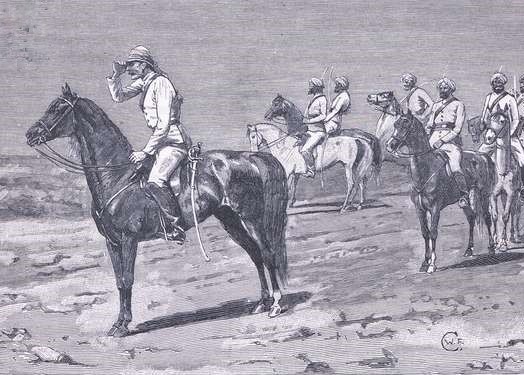
Seaton hurriedly sent word to Colonel Farquhar that he had arrived in Aligarh – should the colonel find himself overmatched, he should send word with all haste, and Seaton would do what he could to assist him. Farquhar replied there was no need to rush – the rebels were indeed moving about, but until now they had left him in peace. Seaton used the 12th of December to place his convoy in safety under the guns of Aligarh Fort. There was a field hospital to organise and baggage to be sorted, ordering everything that was not absolutely necessary to be left behind. He marched on the morning of the 13th with a part of his column and a small portion of the Aligarh Garrison -100 men of the 3rd Europeans under Major Eld, Hodson ever in front reconnoitring. They reached Gangiri on the morning of the 14th, 13 miles from Khasganj. Seaton found Farquhar had taken up a good position close to the suspension bridge over the river, close to the bank, which, surrounded by ravines, would make a cavalry attack impossible. The rebels were said to be moving on his position, but as yet seemed unaware of Seaton. Hodson was sent out to reconnoitre and found that the mutineers were in force, and that sixteen miles eastward from Khasgunge, on the farther bank of the Ganges, at Koochla, was another large and well-organised body of rebels. Four miles on our side of Khasgunge was a friendly village called Bilram, and here the road to Khasgunge branched off in the direction of Soron, a town on the other side of the Ganges, not far from Koochla, where considerable parties of rebels had been encamped. Seaton decided to send Hodson further afield, and, accompanied by Major Alfred Light of the Artillery, he scouted as far as Bilram to ascertain the exact number of rebels he was facing, where their camp was exactly and if there were any reinforcements on the way.
 Mutiny Reflections