On the 18th of May, intelligence was received that a detachment of the 20th BNI but lately mutined in Meerut had taken up residence in the vicinity of the town, armed, equipped and laden with treasure. They had set up a camp in the jungle on the left side of the Gorgun River, five miles outside Moradabad.
The Magistrate and Collector of Moradabad, Mr C.B. Saunders, who recently arrived in Moradabad, wisely left arrangements to deal with the mutineers to the judge, John Cracroft Wilson. Wilson knew the district well, having served as a magistrate before Saunders; above all, he knew and trusted the 29th BNI at his station. Not wanting to be caught out in crisis by swathes of red tape, Wilson put a muzzle on Calcutta. When the news of Meerut arrived in Moradabad, he quickly sent a request to Colvin at Calcutta to grant him special magisterial privileges, essentially allowing him to do what he thought was fit. Colvin acquiesced, and Wilson sprang into action.
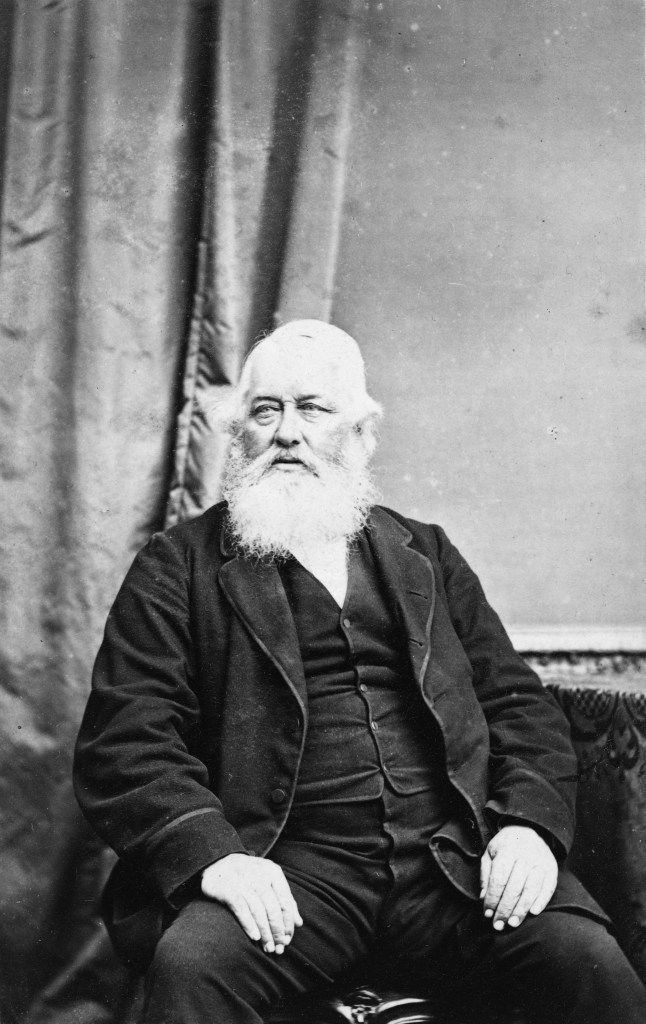
Under Wilson’s guidance, Saunders assembled a party of 30 sowars of an irregular regiment, a company of the 29th BNI (their headquarters was stationed at Moradabad), and, sending the civil surgeon with a few men to guard the bridge, he headed out with this small force. Accompanied by the judge and two officers to confront the mutineers. Shortly before midnight, they came upon the sleeping sepoys. Taken by surprise, the fight was short, and victory was with Wilson. The sentries were quickly overpowered; one man was killed, eight were taken prisoner, and Wilson not only captured all their arms and horses, he even made off with the treasure, some 10’000 rupees in coin. The rest of the mutineers ran off without putting up a fight. The prisoners and the treasure were sent to Meerut while the bulk of the detachment returned to Moradabad, carrying with them the body of the dead mutineer.
The next morning, several sepoys of the 20th BNI who had escaped the night attack strode boldly into the station and went straight to the lines of the 29th. If they thought they would have friends, it was their turn to be mistaken. One of their number was immediately shot by a sepoy of the 29th, and the rest were taken prisoner and put in the local jail. With them went the corpse of their slain comrade.
Unfortunately, the man who had been shot the night before – a havildar – had a relative in the 29th BNI who, shocked and angered, determined to storm the jail to retrieve his relative’s corpse and, when possible, release the men of the 20th BNI. Inciting a number of his colleagues in the 29th, they proceeded to the jail. The guard stood aside as the gaol doors were flung open, releasing not just the men of the 20th imprisoned there but some 600 other prisoners. Then, instead of laying waste to Moradabad, they fled into the jungle.
The remainder of the 29th BNI, still true to their salt, turned out and offered to bring the prisoners back without hesitation. Wilson raised a small levy of his own, no more than ten sepoys and a few Irregulars; the joined forces went off in pursuit of the prisoners. By midday, they had succeeded in arresting 150 of them.
After lodging the prisoners back in the gaol, Wilson rode through Moradabad. He found the town silent, shops closed, and the streets deserted. In the sepoy lines, no food was being cooked despite the lateness of the hour – the whole town was waiting and watching. Undaunted, Wilson first tried to enlist the help of some influential townspeople to secure the confidence of the inhabitants, but they held back, so he decided instead to address the sepoys directly and rode back to the Lines. Passing in front of the artillery, he saw the golundazes had laid their guns and lit their portfires. Fearlessly, Wilson rode towards the guns and then, without wavering, waved his hat at them as a challenge. Luck was on his side that day; the gunners slunk away back to their huts. Then, undaunted, now accompanied by a few officers, he went to the Quarter-Guard. Not a man was on parade, seemingly holding back to see what the Europeans would do next. Wilson did what he thought fit. He ordered ball cartridges to be served out to the 29th, and they were ordered to assemble with their arms. Thus drawn up, Wilson rode out into the midst of the square and addressed them.
“He told them they had committed a great crime in the morning, but that only a portion of the regiment had been implicated, and that it was not right that he had others who had grown grey in the service should be ruined by the excesses of several unruly boys; but that if they would swear to behave loyally for the future, he would recommend the Governor-General to forgive them.” Then, asked by the native officers to swear on the Bible to fulfil what he promised, Wilson readily consented. The shops in the town reopened, and for a time, Moradabad was saved. The regiment, obviously horrified by the behaviour of their comrades and wasted no time in trying to redeem the reputation of the 29th. They also lost no opportunity to regain the confidence of their officers.
On the 21st of May, the green standard of the Muslim fanatics, who had marched down from Rampur on the behest of the Moradabad Maluvie, was seen waving on the left bank of the Ram Ganga river, opposite Moradabad, the men showing every sign of attacking the town. Realising his only response could be to attack, Cracroft Wilson sent out a company of the 29th under Captain Faddy, and taking some sowars with him, they went off to meet the jihadis. It was a quick meeting, and the fanatics fled. Their leader, who had managed to reach Moradabad, was shot dead later that night by the local police force.
Two days later, news arrived in Moradabad that two companies of Sappers and Miners from Roorkee were close to the station, armed and laden with loot. Captain Whish immediately ordered up two hundred men and two 9-powder guns, loaded with shrapnel, and as many sowars and civilians as possible, they marched out, Wilson at the head.
Fairly soon, they were in front of the advanced body of the mutineers – Wilson sent the sowars into them to persuade them to lay down their arms. The guns were laid and ready to fire, but no order was given – the mutineers threw down the guns and surrendered to the 29th. It was not possible to take them prisoner, and as the events at Moradabad had shown, it was not wise to imprison them there in any case, so Wilson ordered them deprived of the arms and ammunition, their money, plunder and most of their clothes. Thus stripped and “beggared,” he set them adrift into the countryside – unbeknownst to him, most of them fled to Bareilly.
Disturbances around Moradabad continued, and Wilson continued to deploy the 29th who “behaved well…” doing their work ” like soldiers and cheerfully.” The news of their successes spread far, and mutineers were suddenly giving Moradabad a wide berth, but some continued arriving in stealth, always trying to tempt the men of the 29th to mutiny. Then something happened that no one had foreseen.
On the morning of the 1st of June, no letters arrived from Bareilly, but rumour both in the lines of the sepoys and in the town that the brigade had mutinied. At two in the morning on the 2nd of June, Wilson was roused from his sleep and a letter from the Nawab of Ranpur was put in his hands. It confirmed that the Bareilly Brigade had indeed risen and the Europeans had been massacred – if Wilson was so inclined, the Nawab continued, he should consider fleeing Moradabad. That was the last thing on Wilson’s mind – honour and duty forbade it. Instead, he went to the adjutant of the 29th and at dawn, he assembled all the main European and native officers. His speech was short. Stating the information he had received, Wilson explained “The only honourable course…was to hold the district until the Bareilly Brigade came to a distance of 20 miles of them, and that then they should march to Meerut with colours flying, taking guns and treasure with them.”
Accompanied by the European and native officers, Wilson went to the Lines and explained his plan to the sepoys. Instead of a rousing cheer, he was met with derision. The sepoys firmly believed if they went to Meerut they would be murdered and Wilson planned to lead them not to honour but to their deaths. Wilson and his men were allowed to leave the parade ground unharmed. There was nothing for it but to leave Moradabad. The treasure, Wilson knew was already lost – he did not have the means to take it to Meerut so he decided instead to remove it from the treasury and place the money bags in tumbrils anyway, leaving the treasury guard intact who he knew would hand it over to the sepoys but at least this action “would remove all temptation to the Budmashes of the city to come out and join the disturbance.” So Wilson went to the Treasury with Charles Saunders – after forcing the locks as the Indian treasurer was slow to produce the last key, Wilson handed out the bags while Saunders destroyed the stamped paper. Outside, the sepoys waited, impatient and excited. It turned out to be less than they expected. Wilson describes the scene:
“When all the treasure was placed on the tumbrils, the Collector, myself and the Native Treasurer, came out into the eastern verandah and then began murmurs as to the amount of treasure. The artillerymen forcibly carried off the Treasurer towards the guns and were in the act of tying him up to one of them, when Captain Faddy, who is deservedly a favourite of his men, rescued him. By this time the Collector and myself had mounted our horses when four young sepoys of the Treasury guard levelled their muskets at us. At this instant, Bohwanee Singh, Soubahdar, and Baldeo Singh, pay-Havildar of the grenadier company stepped between the muskets and our persons and the former raising his hand, said, in an authoritative tone, `What! do you wish to use the flesh to rot from your bones? Did you not take solemn oath not to hurt a hair on their heads, and you are now firing on them?` The muskets were lowered and Collector and myself rode off. ”
With nothing to save of Moradabad the two men rode back to the house they had lived in since the first news from Meerut and commenced making arrangements to leave. There were four civilians, including the surgeon and their wives already assembled. An escort of the Irregular Cavalry was ready and with their guard, they set off for Meerut. The European officers of the 29th had made arrangements of their own – they went off to Naini Tal instead. It was closer, the road less difficult and a hill station was far more attractive than a dusty military station in the Plains. No one, however, spared a thought for the clerks and lesser staff, mostly Anglo-Indians who, unlike the transient Europeans, were settled in Moradabad. They owned property and many of them had large families – leaving at a moment’s notice was well near impossible. Perhaps they thought, being Anglo-Indians, albeit Christians, they stood a better chance remaining in Moradabad, that perhaps, they would thus be spared. As such, those who could be made ready to defend themselves, the house of a pensioned officer named Warwick (who was just as settled in Moradabad as they were) being chosen as their gathering point. The defence was short, brutal and unforgiving. Those that tried to escape were killed, and others, quickly declaring themselves Mohamedans, were carried off as captives to Delhi where some of them would be killed in September by the British at the fall of the city.
While the civil officers and their families made their way to Meerut, Saunders, Captain Whish, Captain Faddy and the other officers of the 29th made off for Naini Tal. As Collector and Magistrate, it had been expected by the authorities at Agra that Saunders would remain at his post. He would have to work hard to justify himself, and finally, Agra accepted that his leaving had been correct, as the circumstances had been particularly trying. The officers of the 29th were particular, however, on one point. Had the Bareilly troops not mutinied, their men would have remained quiet. How far this is true cannot be ascertained for sure, but their faith in the men had at least, until the very last moment, remained true.
Sources:
Kaye, John William. A History of the Sepoy War in India, 1857–1858. Vols. 2 and 3. London: W. H. Allen & Co., 1896.
Keene, Henry George. Fifty-Seven: Some Account of the Administration of Indian Districts During the Revolt of the Bengal Army. London: W. H. Allen & Co., 1883.
Malleson, G. B. History of the Indian Mutiny, 1857–1858: Commencing from the Close of the Second Volume of Sir John Kaye’s History of the Sepoy War. Vol. 1. London: W. H. Allen & Co., 1880.
Narrative of the Indian Mutinies of 1857: Compiled for the Madras Military Male Orphan Asylum. Madras: Asylum Press, 1858.
Raikes, Charles. Notes on the Revolt in the North-Western Provinces of India. London: Longman, Brown, Green, Longmans & Roberts, 1858.
 Mutiny Reflections