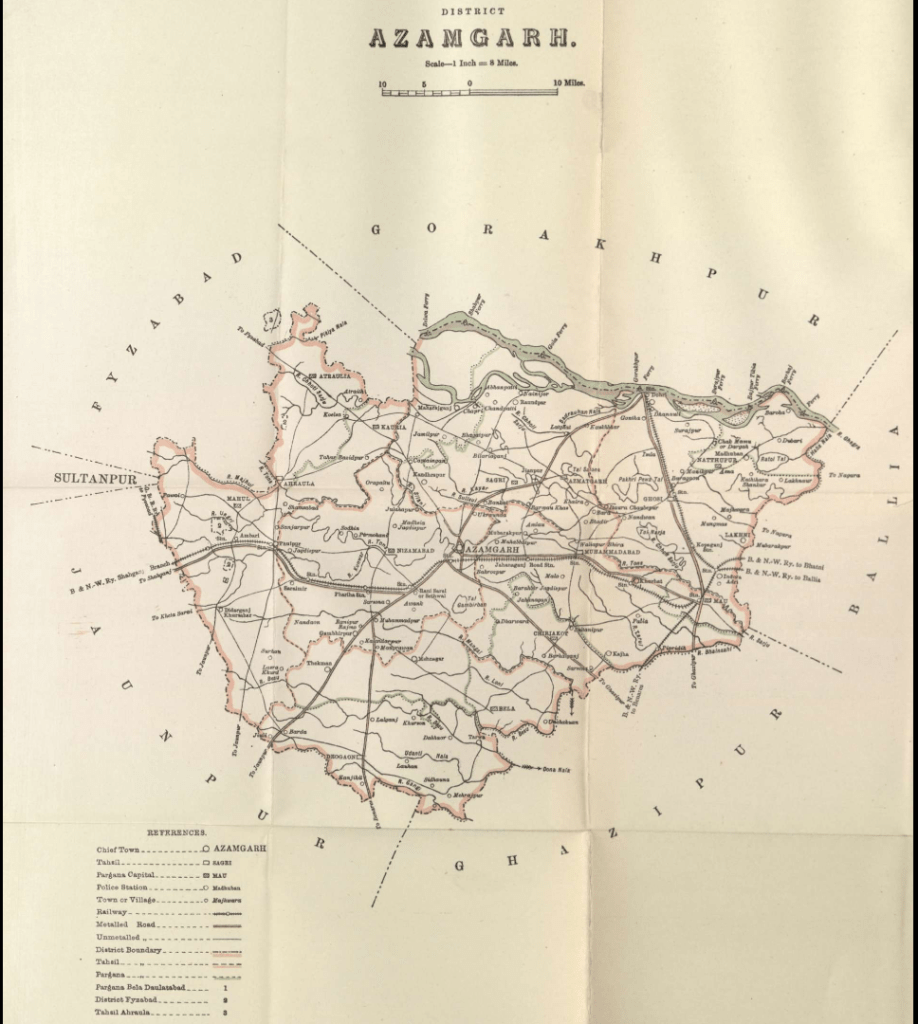
Following Kunwar Singh’s defeat by Major Vincent Eyre at Jagdispur in 1857, the province of Bihar had fallen into a state of relative calm. This, however, was deceptive. By September, he had begun amassing his forces again on the banks of the Son River, and this time, he had help. His three brothers, Ammar Singh, Nisban Singh and Juban Singh, had flocked to his standard; in the meantime, the mutinous 5th Irregular Cavalry was plying a dangerous trade of plunder throughout the western districts of Bihar; after destroying the public buildings at Noida, they turned their attention to the town of Gaya. The only force to oppose them was Rattray and his Sikhs. Under the urgings of a very misdirected civilian named Alonzo Money, Rattray finally agreed to go out and meet the 5th Irregulars. As defeats go, this one could have been worse. The Irregulars were almost all mounted, and they managed to go around Rattray’s position — twenty of Rattray’s Sikhs were killed in the onslaught. As it turned out, the 5th Irregulars, by keeping Rattray thus occupied, fell in some numbers on Gaya some hours before he could manage his retreat. They opened the jail, setting loose 400 prisoners and attacked a fortified house where the remaining British civilians had determined to hold out. In this attempt, the Irregulars failed — Skipwith Tayler, the son of the disgraced former commissioner of Patna, William Tayler, stood his ground with such determination that the Irregulars left off trying to take the house.
The Battle of Chatra gave Rattray some satisfaction where revenge was concerned. However, the two companies of the mutinous 32nd BNI ( who had mutinied on 9 October at Deogarh) were still running loose in the district. Rattray would finally force them to an open fight a month later on 6 November at Dhanchua. The battle was severe and raged on through most of the night, but finally the rebels withdrew and fled. However, it was not the end of skirmishes in Bihar. Until the formation of Rowcroft’s field force in November, the British force in western Bihar consisted of Colonel Fischer’s Madras troops, a portion of the Naval Brigade under Captain Sotheby and Rattray’s Sikhs. Assisting them was Lieutenant Stanton of the Engineers: ” the energy, the zeal, and the activity of this officer compensated to a very great extent for the paucity of fighting men.”
Meanwhile, Brigadier Carthew, following the Battle of Cawnpore on December 6 1857, had been detached with the Madras Brigade to command Fatehpur. While it was less to Carthew’s liking to be sent off, the posting was nevertheless an important one and, as it turned out, an exciting one. Fatehpur was exposed to rebel attacks, not only from Kalpi and Jhansi but also from Bundelkhand. Positioned as it was on the southwestern frontier of Oudh, with only a narrow strip of the Ganges intervening, it was prone to flying attacks from rebels from that quarter. It was now Carthew’s duty to thrust back these attacks while ensuring the Grand Trunk Road between Cawnpore and Allahabad remained in British hands. He did have help, however, from the troops and the convoys that were constantly passing up the road, and Carthew was able to call on these to assist him in clearing the districts bordering the road. At the south-eastern end of the line was the station Allahabad, and this was under the command of Brigadier Campbell.
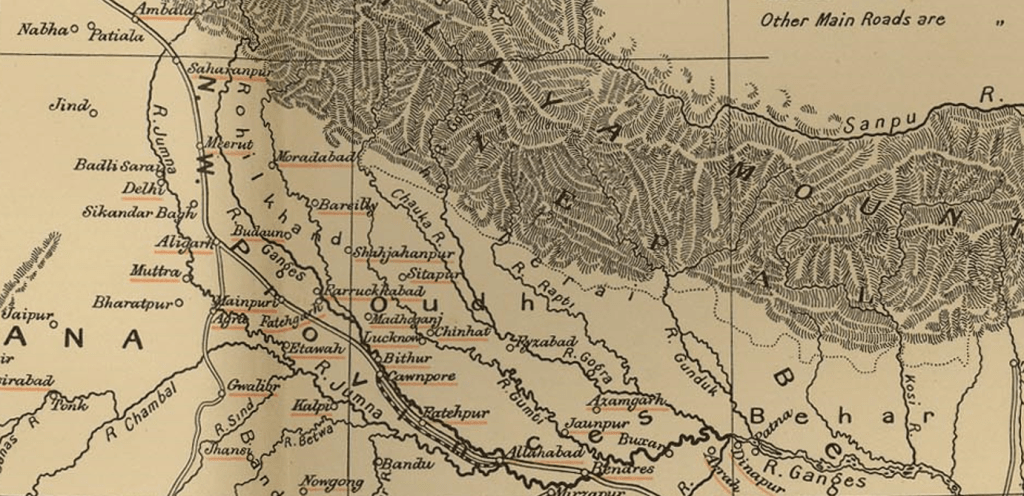
Before Carthew arrived at Fatehpur on 19 December, Colonel Barker (Royal Artillery) had been busy. Nearly a week earlier, on 11 December, with a small party under his command, Barker made a raid on a few disaffected villages in the district — although this was seen as a success, the expelled villagers certainly did not agree to watching their homes burned to the ground for the sake of punishing a few malcontents. It forced the villagers to flee across the Jamuna to find safety in the ranks of a considerable rebel force that was gathering on the right bank. From Kalpi all the way down to Banda, they were amassing; rebels from Gwalior, Jhansi and Bundelkhand, who counted in their numbers the men of the Raja of Chikani and relatives (a brother and nephew) of the Nana Sahib. The rebel leaders at Julapur on the Betwa River took this to heart and now began calling on landowners west of the Jamuna to furnish them not just with money but additional recruits, claiming they would be serving the Nana Sahib himself. Whether the Nana was there or not was never confirmed, but his name certainly still carried some weight with it.
For Sir Colin Campbell, whose hands were still tied at Cawnpore, it was impossible to divide his force to send anyone across the Jamuna. However, he “deemed it especially advisable that the districts to the east of that river should be kept clear of the mutineers,” and Carthew was the man to do it. On 10 January 1858, Brigadier Carthew, with a small force consisting of two horse artillery guns, four companies of the Rifle Brigade, and 200 men of the 17th Madras Native Infantry, set off from Fatehpur along the Cawnpore Road. When they reached Jahanabad, Carthew turned west toward Kalpi to meet up with HM’s 34th, sent up from Cawnpore for this purpose. He then moved towards Bhognipur, clearing pockets of rebels as he pushed on to Sikandra, returning to Fatehpur via Cawnpore. Meanwhile, Brigadier Campbell, on 5 January, set off from Allahabad with a brigade composed of the 79th Highlanders, a regiment of the Rifle Brigade, a new levy named the Benares Horse, and some foot and horse artillery, to clear the districts close to Allahabad, on the left bank of the Ganges. However, the successes of the small forces were but momentary and could not stop the never-ending flood of rebels who reappeared as soon as Campbell and Carthew turned their backs. As long as Sir Colin Campbell did not take Lucknow, the “the delta west of Kanhpur, that is the narrow strip lying between the two great arteries the Ganges and the Jamna, should be constantly threatened, and almost as constantly invaded. It was necessary, therefore, to patrol the entire district.” So it was time to raise yet another Moveable Column, this time under the command of Colonel Christie, to take up the work. In March 1858, Christie and his column moved down to the village of Dhana, close to the left bank of the Jamuna. The column was meant for speed, consisting of 70 men of the 8th Irregular Cavalry, 244 HM’s 80th Foot, 257 men of the 17th Madras Native Infantry, with one 12-pounder howitzer and one 6-pounder; however, while they did have some success, taking Siroli in the Hamirpur District from the rebels, but hampered by a lack of boats, Christie could not follow up his victory by following the rebels across the river. So once again, the British were engaged in stamping out fires as they occurred, they prevented rebel incursions into the districts, and stopped raids on villages, but like Carthew and Campbell, Christie could not be everywhere at once, and the raids continued.
The Sarun Field Force had given the rebels a hasty awakening at Amora, but Rowcroft was unable to follow up his victory, and the rebels were still able, from the stronghold at Belwa, to detach a considerable force to the south-east, gathering up, during their march, the troops that had been dispersed by Brigadier Franks and the Jaunpore Field Force. Thus reinforced, they effected a juncture with Kunwar Singh at Atraolia on the 17th of March. Their destination was Azamgarh.
 Mutiny Reflections