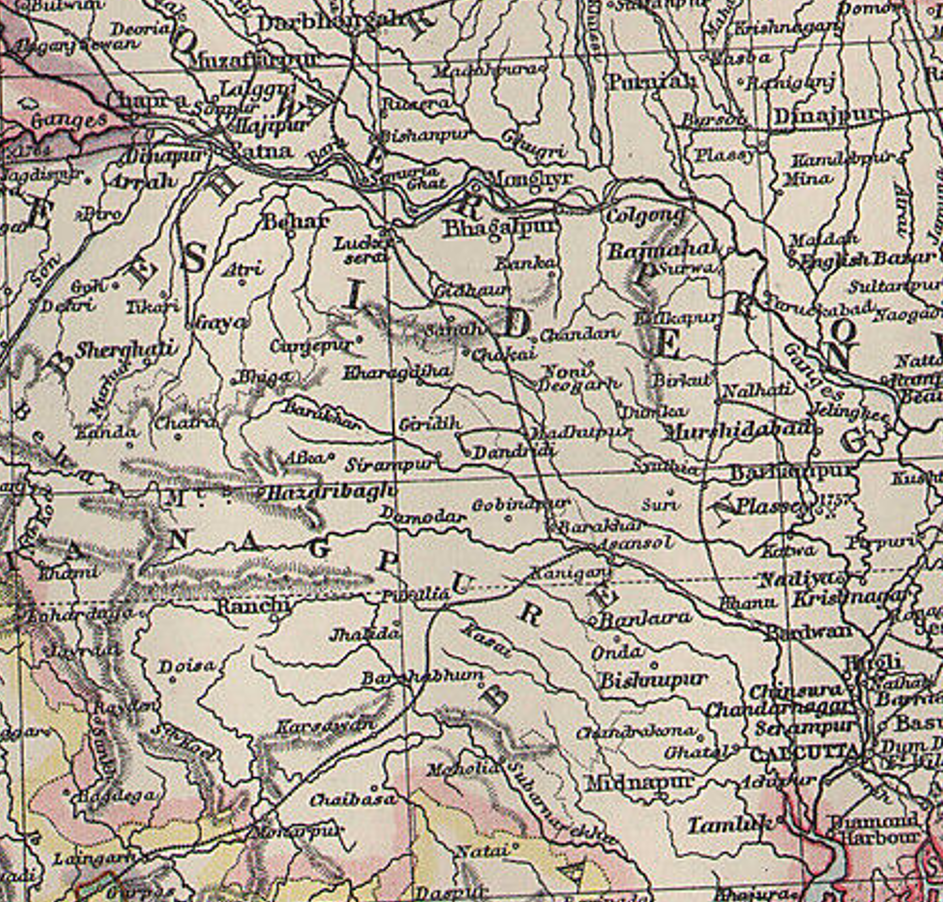
The rebels had already been routed in Bihar and put to the sword by Vincent Eyre in August, leaving not a pacified division but a momentarily cowed one in his wake. We shall now turn our attention to the division of Bhagalpur, comprising the districts of Bhagalpur, Munger, Purnia and Santalia with the subdivision of Rajmahal – all governed by Mr.George Yule as Commissioner. Situated 266 miles from Calcutta in the easternmost corner of Bihar, with Bhagalpur on the Ganges as the principal station and headquarters.
Mr. George Yule, a gentleman marked by “energy of character” and essentially a man of action, he was known for his “even-handed justice” which secured him the confidence of not just the local population but the hard-to-manage English planters – both classes, as divided as they might be by race and creed, could agree they liked Yule. It was much to Yule’s credit, while Dinapore went up in flames and Patna ran riot, Bhagalpur remained quiet. The 2 native regiments – the 63rd at Barhampur and the 32nd at Bansi had made no signs of rising. While the 5th Irregular Cavalry at Rohini had made some attempts to murder their officers, their commandant Major MacDonald was having none of their nonsense and their grumblings were quickly quashed. Yule remained watchful and with a small party of Europeans continued to maintain the peace in his division. The uprising in Dinapore however, forced his hand in so far that he now needed to secure the route on the Ganges, both at Bhagalpur and Munger. Although he did not trust the two native regiments in any way nearing the infatuation their officers had, Yule could at least have been somewhat satisfied when the 5th Irregulars failed to induce either the 63rd or the 32nd to mutiny. While the 5th would not believe that Eyre had defeated their brethren at both Arrah and Jagdispore, the 32nd at Bansi at least were convinced of it – at least for a moment, nothing would induce them to mutiny and throw in their lot with what looked like a very poor choice. Yule had sent a special messenger to their commandant, Colonel Burney that the 5th Irregulars were marching on his station and Burney, a man of considerable talents and remarkable linguistic ability could hold the 32nd together. When the 5th arrived on the 16th of August at Bansi they were received by the 32nd with bullets and bayonets – their hopes destroyed, the 5th rapidly retreated and continued their dissolute march to destruction to Arrah via Rohni.
While Yule could, for a moment, breathe a little easier, the neighbouring district of Chota Nagpur – a mountainous district that lies between southern Bihar, western Bengal, Orrisa and the Central Provinces – was preparing for a different scenario. The acting Commissioner of the district, Captain Dalton was facing a mountain of problems at the chief military stations of Hazaribagh, Ranchi, Chaibasa and Parulia. At Hazaribagh, a detachment of the 8th NI was stationed, at Ranchi the local Ramgarh Battalion with detachments of the same at Chaibasa and Parulia. The 8th NI, upon hearing of the mutiny at Dinapur, threw off any pretence of loyalty and mutined, driving their officers and civil authority to beat a hasty retreat out of Hazaribagh.
Captain Dalton was not a man to be trifled with. Educated at Addiscombe, he had arrived in India to take up his first commission in the rather forlorn outpost of Dirubagh in the upper reaches of Assam having first spent 4 years in Calcutta, working his way up to this dismal posting. It was, however, a good education for an industrious man and he would spend 18 years of his career with the artillery division of the First Assam Light Infantry. At the age of 42, he was transferred to Chota Nagpur with the rank of Captain and the position of acting commissioner. He quickly established good relations with the local tribes, pacified the zamindars and to his credit, managed through personal influence to prevent an uprising of the local population – he would have to face mutinous sepoys and irregulars, but at least he would be spared the wrath of the civilians.
“When, then, intelligence reached Doranda, the civil station adjoining Ranchi, that the troops at Hazaribagh, only sixty miles distant, were shaky, the officer commanding at that station despatched Lieutenant Graham with thirty horsemen of the Ramgarh Irregular Cavalry, two companies of the Ramgarh battalion, and two guns, to Hazaribagh, to disarm them. Graham marched, but he had
not reached the second stage before Captain Oakes met him with the information that the detachment of the 8th Native Infantry had mutinied the previous day. That same night his own infantry mutinied, seized, in spite of his protestations, the guns and ammunition, as well as four elephants, the property
of Captain Dalton, and marched back to Ranchi, breathing hostile imprecations against the Europeans there stationed. The cavalry remained staunch.”
While Graham and the few European officers at Ranchi remained at their post until the very last moment, they were eventually to leave their station and proceeded to Hazaribagh, lately abandoned by the mutineers, with the few horsemen that had remained staunch. So Ranchi and Doranda fell into rebel hands, who proceeded in the familiar pattern of destruction – the treasury was plundered, they fired cannon at the church, released the prisoners from the gaol and destroyed the civil station.
Leaving Ranchi and Doranda to burn, mainly because he had neither men nor means to stop the mutineers, Dalton concentrated his efforts on securing Hazaribagh. Ably aided by the officers of the Ramgarh battalion and the cavalry, and the civil officers Captains Davies and W.H. Oakes, he further received much-needed assistance from the Raja of Ramgarh who provided Dalton with a native levy of 50 armed men. Thus reinforced, Dalton could wage a small war on the rebels – with Hazaribagh quietened, he could recover much of the property that had been looted and even capture a few of them. Within days he could re-open the courts and confidence these restored, official business started up again as if it had never ceased.
However, the peace was deceptive. At Parulia and Chaibasa the troops were held by no one and promptly rose, destroying public property and looting as they went – any European who could, fled to Raniganj. Meanwhile, the Raja of Ramgarh expressed his doubts to the rather confident Dalton – without a European regiment he was no longer convinced they could hold Hazaribagh between them; his influence with his men was not as all-encompassing as Dalton liked to think and if the Raja lost control of his levies, Hazaribagh would burn.
At least Dalton was willing to listen. Without delay, he sent word to Calcutta informing the authorities of his position and if they could possibly send him one regiment – and for once Calcutta listened.
Although Delhi had not as yet fallen and an army was urgently needed to relieve Cawnpore and Lucknow, Canning understood the loss of Bihar would seriously impede any future operations in Oudh. The road had to be secured.
Instead of waiting for reinforcements from the Cape, China and England, Canning resorted to the means he had open to him – the sepoys of the army of the Madras Presidency. Except for 1 regiment, the 8th Light Cavalry, they had not been infected with the spirit of mutiny and had for months been imploring their officers ” to be granted the opportunity of proving their faithful attachment to the Government which had cherished them.” On the 5th of August, their wish was granted and the 27th Regiment of the Madras Native Infantry and a wing of the 17th arrived in Calcutta. The remaining wing of the 17th quickly followed bringing with them some native artillerymen. In their wake came a Rifle battalion composed of the 1st, 5th, 6th, 16th, 24th, 36th 49th and 54th Regiments of Native Infantry, under the command of Brigadier M. Carthew. Meanwhile, marching up from Katak in Eastern Bengal, led by Lieutenant-Colonel Fischer was the 18th Madras Native Infantry. With troops thus secured, the government sent word to Dalton that as soon as the Madras troops were in place, they could push forward a European regiment. However, Dalton would have to wait, and for him, the answer was hardly satisfactory.
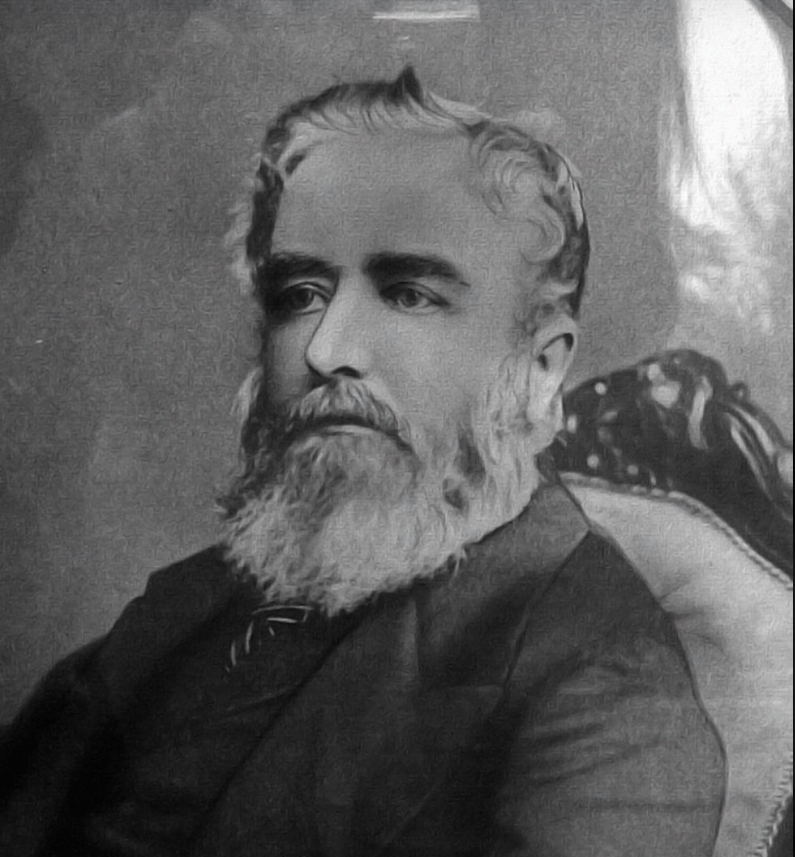
In the meantime, he had been forced to abandon Hazirabagh as the Raja’s levies became less and less manageable, and fell back on Bagoda – here he remained for a few days until 150 men of Rattray’s Sikhs, under Lieutenant Earle, provided him with the much-needed succour. With their help, he was able to take back Hazirabagh. Unfortunately, the mutineers were still at large and now were plying in greater numbers along the Grand Trunk Road, threatening Beaton’s famed line of 600 miles. The problem was augmented by the sudden rise of 2 companies of the 32nd NI in Deogarh in the Santal District, which led to the murder of two of their officers.
So a new plan was needed, and it was needed with haste. Colonel Fisher was now ordered to march his men with all speed, via Doranda to Hazaribagh. Fischer received the news on the 13th of September – he had with him a few Sikhs, a detachment of the HM’s Regiment of Foot, his own regiment and 2 guns. Fischer was a man who could meet a crisis and think on his feet; ascertaining that the mutineers had probably left Chota Nagpur and were probably heading for Rhotasgarh, he submitted he could cut them off by not marching upon Hazirabagh. Then, instead of waiting for Calcutta to agree or disagree, Fischer pushed forward 150 men of the 53rd and 50 Sikhs towards Doranda under Major English.
As English marched towards Doranda, Rattray, with 250 Sikhs, was entrenched at Dehri, while Fischer with the main body of troops continued towards Jalpa. The problem was that no one could say for sure where the mutineers were.
“”It is incredible, but a fact,” wrote Colonel Fisher, on the 24th September, to the Chief of the staff at Calcutta, “that the Ramgarh mutineers, with their guns, are moving about in a small province, and not an official, civil or military, can tell where they are to be found.”
By carefully weighing out where they might possibly be, Fisher decided the most likely place was Chatra, a town in the Hazaribagh district, hitherto unnoticed and the only place no one had as yet thought to look. He communicated his intentions to Calcutta, and the reply came back he was to cease all this gallivanting and concentrate his forces on protecting the Grand Trunk Road. The same post, brought fresh orders to Major English – directed by the Commander-in-Chief, English was to take charge of all operations in Chota Nagpur. Major English, following Fischer’s lead, marched on Chatra.
The mutineers, for their part, had either disbelieved the rumours that the Europeans were marching towards Chatra and continued in their desultory manner of plundering the town, harassing the inhabitants and, above all, robbing a local zamindar. Thus pre-occupied they failed to solidify their position. The rebel army, led by former subedars and jamadars of the Ramgarh Battalion and a few zamindars that had not turned on them, stationed themselves on the road to the town; in their rear was the bridge to Chatra, to the north of which were deep rice fields which would make it difficult for English to cross with any rapidity. Satisfied they could withstand any attack, the insurgents went back to their business.
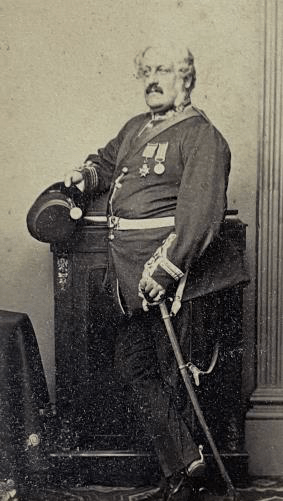
On the 2nd of October at 9 in the morning, English was encamped on the west side of the town; his force consisted of 180 men of the 53rd, 150 Sikhs and two guns. They would shortly face a rebel army that mustered anywhere between 800 and 3000 men. In English’s force was Major Smith, who was familiar with the area – he was able to draw up a map of Chatra; based on this, Major English launched his operations on the south side of the town, coming up the opposite direction that the rebels expected. Undaunted by the numbers he was facing, English attacked.
“…we got the order to fix bayonets which was soon obeyed, and with a wild hurrah we dashed at them. Met by rolls of musketry and canon playing on us from t hree different directions, their grape did fearful execution amongst us but as soon as our bayonet’ s were fairly at play we quickly silenced them, in fact we turned their own big gun’s upon them as they flew pell-mell and left us masters of the field. After two hours hard fighting they left seven hundred dead in the field.” (Private Thomas B. Tomadin (Tomazin) of Number 6 Company, in a letter to his father).
An advance party had located the rebels and English ordered the skirmishers forward, across a narrow passage through the rice fields to engage the rebels. Armed with the Enfield, the 53rd let loose their first volleys; the rebels quickly replied with round shot. Their aim was off and the Europeans and Sikhs crossed the paddy fields without any losses. The first gun was quickly disabled by artillery fire and its gun crews killed. On the other side now, they moved off east as Lieutenant Earle and the Sikhs proceeded through the village, surprising the rebels – meanwhile in a nearby tope of trees, English’s men were pinned down by the second gun; the rebels tried to form up in skirmishing order and rush up on the rear of English’s men – but a very awake officer immediately warned the Sikhs who took up a position, using the trees and cover and “fired steadily on the enemy..”
As soon as the Sikhs had beaten off the attack from this angle, they quickly joined the attack on the remaining rebel gun that were still pouring devastating fire on the 53rd. Lieutenant Daunt of the 53rd rushed to the left flank, and pistolled the gunners, thus stopping it from“tearing away the branches or ploughing up the ground..” – and turning the tope of trees into a veritable graveyard of Sikhs and men of the 53rd. In this brief and mostly forgotten battle, Major English routed the mutineers, drove them out of Chatra, and captured 4 guns, all their baggage, forty ammunition carts, ten elephants, 29 pairs of ordnance bullocks and several boxes of treasure. The local population quickly handed over 2 insurgent leaders, Subedar Jai Mangal Pandey and Nadir Ali Khan who had hidden themselves in the precincts of the town. English made a swift example of them and after a very quick trial, they were hung for mutiny on the 4th of October.
English’s losses amounted to 56 dead of both the 53rd Regiment and Rattray’s Sikhs. Unusually, they were buried together in a disused well with their arms and ammunition. A plaque, still visible at the well, reads:
“56 men of Her Majesty’s 53rd Regiment of Foot and a party of Sikhs were killed at Chatra on October 2nd 1857 in action against mutineers of the Ramgarh Battalion. Lieutenant J. C. C. Daunt of the 70th Bengal Native Infantry and Sergeant D. Dynon of the 53rd regiment were awarded Victoria Cross for conspicuous gallantry in the battle in which the mutineers were completely defeated and lost all their four guns and ammunitions.”
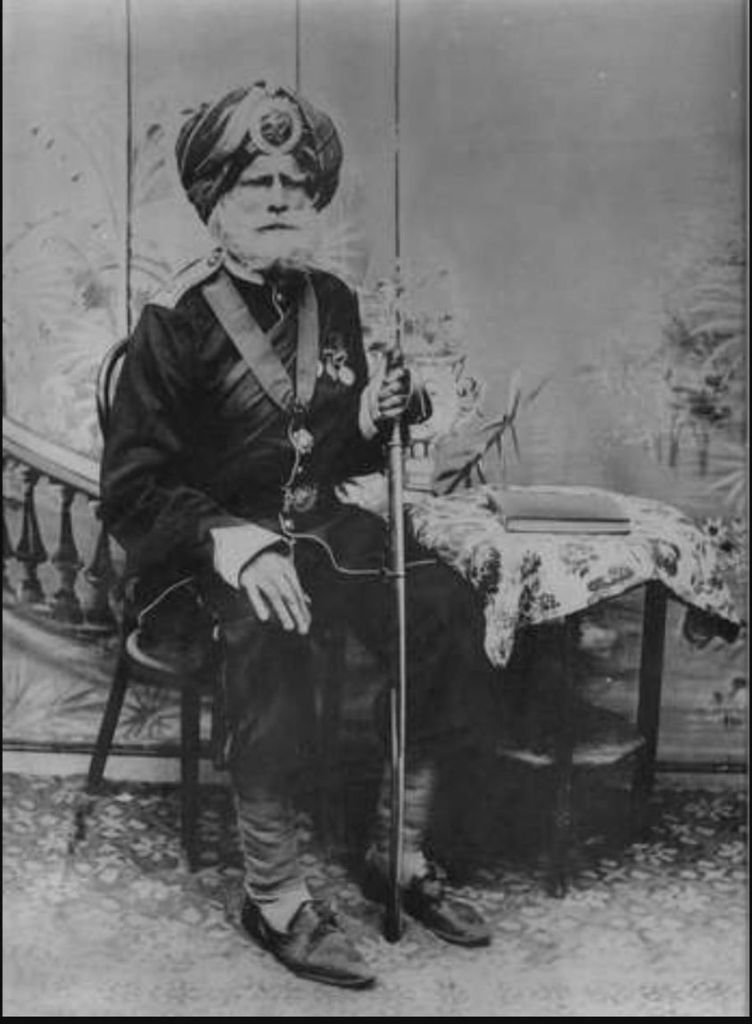
He served in the 45th Rattray’s Sikhs under Captain Thomas Rattray for 40 years from 1853 till 1893.
This final and decisive battle eliminated the last danger to the Grand Trunk Road and dispersed the Ramgarh Battalion. The 53rd were recalled and Rattray’s Sikhs with their excellent commander remained in the province to mop up what was left of the insurgents in Chota Nagpur and in the surrounding districts. Sir Colin Campbell could now move on to Lucknow, though not completely unhindered, as we shall see in the next post.
Returns of the Battle of Chatra
HM’s 53rd Regiment
Sergeants
Charles W. Floyd – dangerously wounded, died of wounds 5th of October.
Robertshaw, John – dangerously wounded
Wall, Edward – wounded, died of wounds 22nd October
Corporals
Caird, Adam – wounded, died of wounds, 23rd October
Ware, John – slightly wounded
Williams, George – wounded
Williams, John J. – wounded. Died 21st November 1859
Drummer John O’Farrell – severely wounded
Privates
Ashman, William – killed in action
Banks, James – dangerously wounded. Died 4th January, 1858
Brannigan, John – dangerously wounded
Burke, Patrick – killed in action
Burney, John – killed in action
Comyns, George – severely wounded
Connelly, Patrick – wounded
Costelloe, Michael – severely wounded
Cronin, Timothy – dangerously wounded
Cullen, William – killed in action
Curran, Richard – wounded, died of wounds
Flaherty, Michael – dangerously wounded
Jackman, David – slightly wounded
Knox, Thomas – severely wounded
McAndrews, John – killed in action
McGrath, Patrick – wounded. Died 9th of March 1859
McGuire, James – slightly wounded
Morris, John – severely wounded
Norris, John – dangerously wounded
O’Conner, Job – slightly wounded
Pussey, Patrick – slightly wounded
Quinn, Willian – severely wounded
Rourke, Thomas – wounded
Ryan, James – killed in action
Shaughnessy, Michael- killed in action
Spillalane, Jeramiah – dangerously wounded, died of wounds
Sullivan, Denis – slightly wounded
Woodward, John – severely wounded
The 10 men of Rattray’s Sikhs, who lie buried in the same well as the men of 53rd, remain unnamed.
Sources:
Fifty-Third Regiment of Foot in the Indian Mutiny. Historical Record Compilation. London: Military Department, n.d.
Holmes, T. Rice. A History of the Indian Mutiny. 4th ed. London: W. H. Allen & Co., 1891.
Jha, J. C. “The Battle of Chatra (1857).” Proceedings of the Indian History Congress 43 (1982): 602–9. jstor.org.
Kaye, John William, and G. B. Malleson. Kaye’s and Malleson’s History of the Indian Mutiny of 1857-58. Edited by G. B. Malleson. Vol. IV. London: W. H. Allen & Co., 1889.
Mukherjee, Siddhartha. “Major General Edward Tuite Dalton: Commissioner Chota Nagpur. British India. 1855-1875.” Farbound.Net, April 11, 2025. https://farbound.net/major-general-edward-tuite-dalton/.
Tavender, I. T., comp. Casualty Roll for the Indian Mutiny, 1857-59. Polstead, Suffolk: J. B. Hayward & Son, 1983.
 Mutiny Reflections