For the Battle of Chatra, two VCs were awarded. It was the first VC for HM’s 53rd Regiment of Foot for 1857 while the other was given to a man who served in the Bengal Native Infantry and they won the VC for the same deed.
As we have seen in The Bihar Provinces, the Battle of Chatra was decisive on two fronts: one, in scattered the Ramgarh Battalion and the other, it opened a useable line of communication along the Grand Trunk Road, which would serve to strengthen operations in Oudh. Although it was by no means a stellar battle – it was fought by a small force of 530 men against a formidable enemy, who had they had the leadership and the wherewithal, should by rights have won. As one historian noted, “…it is difficult to believe that three thousand men were insufficient to hold the town against three hundred and fifty.”
Lieutenant John Daunt, 11th (late 70th) Bengal Native Infantry
It is something of a misnomer to refer to the 70th NI as the 11th in 1857 – the designation was changed in 1861. Daunt was lucky enough to belong to one of the few regiments that did not mutiny, although a portion of it was disarmed at Barrackpore in June, the 70th NI continued its long history.
1825: raised as the 2nd Extra Battalion, Bengal Native Infantry.
1857: Disarmed at Barrackpore – loyal portion formed 11th Bengal Native Infantry
The 70th was the first regiment to volunteer, in 1858, for service in China during the Second China War.
Following the mutiny, the Bengal Army underwent a radical restructuring and the 70th Regiment was reformed as the 11th Bengal Native Infantry in 1861.
1903: designated the 11th Rajputs
1918: designated the 5th Battalion, 7th Rajput Regiment.
Post-independence they were one of the regiments allocated to the Indian Army.
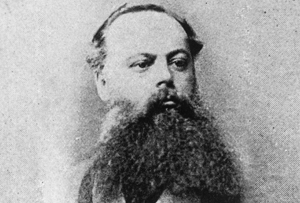
As for Daunt himself, he was born on the 8th of November 1832 in Auttranches, Normandy. He was commissioned as Ensign to the 70th Bengal Native Infantry on the 20th of July 1852. In October 1857, he was attached to the 53rd Regiment of Foot as interpreter and would also serve as Baggage Master to the 27th Madras Native Infantry. He would then become a part of the intelligence-gathering operations in West Bengal to root out further signs of rebellion.
The citation in the Gazette would read:
“Lieutenant Daunt and Serjeant Dynon are recommended for conspicuous gallantry in action on the 2d of October 1857, with the mutineers of the Ramgurh Battalion at Chota Behar, in capturing two guns, particularly the last, when they rushed at and captured it by pistolling the gunners, who were mowing the detachment down with grape, one-third of which was hors-de-combat at the time.”
It then continues:
“Lieutenant Daunt is also recommended for chasing, on the 2d of November following, the mutineers of the 32d Bengal Native Infantry across a plain into a rich cultivation, into which he followed them with a few of Rattray’s Siklis. He was dangerously wounded in the attempt to drive out a large body of these mutineers from an enclosure, the preservation of many of his party on this occasion being attributed to his gallantry.”
(The London Gazette of 25 February 1862, No.22601, p. 957)
On both occasions, Daunt was in the company of Rattray’s Sikhs – if fairness abounded, Rattray’s Sikhs could lay claim to two VCs for the Indian Mutiny. Even Daunt was somewhat put off by his VC. It arrived in the post as registered mail, and to his surprise, it did not contain the coveted Cross and Bar, as he was, after all, cited twice. A letter to the War Office received a rather sheepish reply,
“No person is entitled to a bar unless, after having received the cross, he shall again perform an act of bravery.” So unless Daunt wanted to do something else particularly brave, he did not meet the statutes to receive the bar as well. Following the mutiny, Daunt left India on Sick Certificate and spent some time in England, only returning to his regiment in 1861, now renamed the 11th NI. He would wind up his career as District Superintendent of Police in Tirhut and remained with the Bengal Police until 1882 when he retired as Colonel. He then returned to England and died in Bristol in 1882.
Corporal Denis Dynan, HM’s 53rd Regiment of Foot
Born in September 1822 in the Parish of Kilmannon, close to the town of Rosenallis, Queen’s County, Ireland, Dynan was working as a labourer when, in September 1841, he signed into the 44th Regiment of Foot at Mountrath. He diligently served with the 44th until 1844, when he transferred to the 53rd – the regiment was on the eve of departure to India and required men to bring it up to strength. Dynan would find his battle legs swiftly in the 2 Sikh Wars, fighting his way through Aliwal, Sobraon, and the battle of Gujerat. He would then march with his regiment to the North West Frontier, where they would remain until 1853.
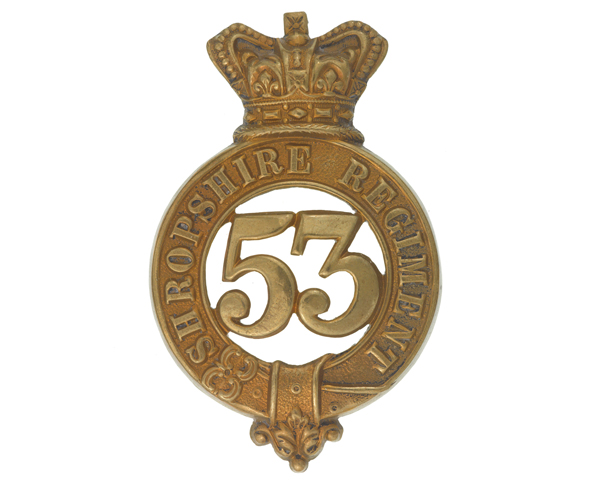
On the 27th of August 1857, while stationed in Calcutta, the Left Wing of the 53rd was called up for active service upcountry, and Dynan, now a Corporal, marched under with 373 men and officers of his regiment, first to Allahabad and then, in late September, to Hazaribagh. Under Major English, Daynan would be part of the detachment of the 53rd that fought the Battle of Chatra on the 2nd of October, 1857. The gun was won by a direct, frontal attack, led by Daunt and Dynan – no mean feat. It had been firing grapeshot at such close range, the ground was raked up in furrows, and the boughs of trees were smashing and splintering, killing or wounding one-third of the men of the detachment before it was silenced.
Following Chatra, the Left Wing of the 53rd remained for a time in Bihar, giving chase to the 32nd NI before marching up to join Sir Colin Campbell for the relief of Lucknow, the withdrawal from and the later recapture of the city.
After Chatra, Dynan does not appear again in the annals of the Indian Mutiny. He was promoted to sergeant in 1858 – as he was not gazetted until 1862, the citation lists him as a sergeant, but at the time of Chatra, he was still a corporal. His and Daunt’s gazette appeared fairly late – in 1862 – after other men of the 53rd had already been cited, but his VC remains one of the first won by the 53rd in 1857.
The regiment returned to England in 1860, after 16 years of service in India. Dynan received his discharge in February 1861, and his conduct was described as “very good.” Although he appeared in the Regimental Defaulters Book three times in his career, Dynan was never court-martialed and had three Good Conduct badges that included pay before his promotion to sergeant.
Sixteen years of continuous service in India and the arduous two-year campaign against the mutineers proved too much for Dynan. He died as an “in-pensioner”, at age 40 on the 18th of February 1863 of “pulmonary and hepatic disease” at the Royal Military Hospital at Kilmainham, Dublin, where he had received his VC from the Master of the Hospital on the 2nd of May 1862. It is believed he was buried in Dublin in an unmarked grave. Only his VC still exists in the Ashcroft VC collection – his other medals have been lost.
Sources:
Fifty-Third Regiment of Foot in the Indian Mutiny. Historical Record Compilation. London: Military Department, n.d.
O’Byrne Brothers, comp. The Victoria Cross: An Official Chronicle of the Deeds of Personal Valour Achieved in Presence of the Enemy During the Crimean and Baltic Campaigns, the Indian Mutinies, and the Persia, China, and New Zealand Wars. London: O’Byrne Bros., 1865.
Stewart, Rupert, comp. The Book of the Victoria Cross: The Empire’s Roll of Valour. London: Hugh Rees, Ltd., 1916.
 Mutiny Reflections