Hansi, May 29th, 1857
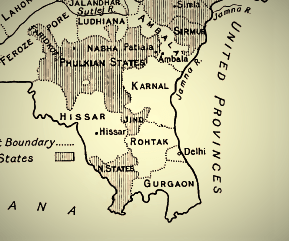
The following résumé of events which occurred at Hansi, Hissar and Sirsa in 1857, when the Hureeanah Light Infantry and a portion of the 4th Irregular Cavalry mutinied, is now published with a view to supply the imperfections of what has already appeared regarding this outbreak.
– Details of Occurrences Regarding the Mutiny of the Hurreeanah Light Infantry at Hansie, on the 29th of May, 1857.
On the 13th of May, intelligence was received at Hansi of the outbreak at Delhi and of the massacre of
the Europeans at that station, and on the 20th of the same month, the 4th Irregular Cavalry marched to Kurnaul to join the camp of his Excellency, the Commander-in-Chief. I collected as many sowars who were on furlough as I could, but they all turned traitors, with the exception of a few who were placed in town for its protection under a native office of the 1st Irregular Cavalry.
On the 17th, Lieutenant Barwell, Adjutant of the Battalion, was sent to Hissar to assist the collector of
the district in organising a body of horse, and I was the only European officer at the Hurreanah Light Infantry. The different orders issued by the Commander-in-Chief regarding the obnoxious cartridges were duly explained to the men, and to all appearance, they were perfectly satisfied, indeed, I never heard a murmur. There were several false alarms, and the manner in which the men turned out and behaved tended to give me confidence in them.
On the 29th May, pay was disbursed by me, at my quarters, and there was nothing whatever in the demeanour of the men to create any suspicion in my mind of the impending danger, but at about half-past 11 o’clock on that very day, the troops broke out into open mutiny.
Two or three men had told me that there would probably be a disturbance in the city and that some of
the sepoys might join; I immediately sent for the drill havildar to make the necessary arrangements to prevent any outbreak, but that man was already in his way to my house; his brother, jemadar of the corps, also came directly afterwards, they seemed deeply affected and declared that the regiment would certainly mutiny in less than an hour and implored me to fly and on no account come near the lines. I clearly saw that no time was to be lost and gave notice to all the European residents in cantonments, and most of them soon were on the road to Hissar. I, of course, stayed behind, and Assistant surgeon D. Scott and Messrs. Tapsell and Rich remained with me.
We were standing near the gateway of my compound, where my guard and orderlies were, but they did not attempt to molest us, and to the last made protestations of good faith; however in a few minutes, several volleys were fired at the sergeants, who, after having been warned by me, had returned to the lines after the family of the quartermaster sergeant. We then moved off slowly to get clear of the Irregular Cavalry Bazar, as I feared our retreat might be cut off. The two sergeants here joined us and told us they had been fired at and that the sepoys were running towards my house. The whole cantonment was soon on fire, and feeling sure that nothing could be done, I went on and overtook the fugitives in advance, about 10 miles from Hansi.
It was fortunate for us that the 4th Irregular Cavalry did march from Hansi as the subsequent behaviour proved that they were not to be trusted. I had no means whatever of coercing the troops; not a man was to be depended on. Lieutenant Hillard, in command of the detachment at Sirsa, reported that there were rumours afloat affecting the loyalty of his men and that of the 4th Irregular Cavalry sowars, and his letter was forwarded to the Adjutant-General of the army. At the headquarters of the battalion, two or three men were said to be disaffected, but no unfavourable report had reached me from Hissar; I, therefore, up to the last moment, trusted all would have gone well. I was placed in a most trying situation without the most remote hope of succour in case anything occurred.
I had been upwards of 12 years in the battalion, which was second to no local corps in discipline and efficiency. The two men who gave me warning and afterwards joined the mutineers saved the lives of those who escaped from Hansi, 32 in number, for in the absence of that warning, I feel confident that we must all have been destroyed. The detachments at Hissar and Sirsa followed the example of their comrades at Hansi. Lieutenant E.W. Barwell was killed in the former place, and Lieutenant T.H. Hilliard was murdered by some villagers when endeavouring to effect his escape.
– Wm. J. F. Stafford, Captain, Late Commandant Hurreeanah Light Infantry Battalion, Hissar, 25 March 1858
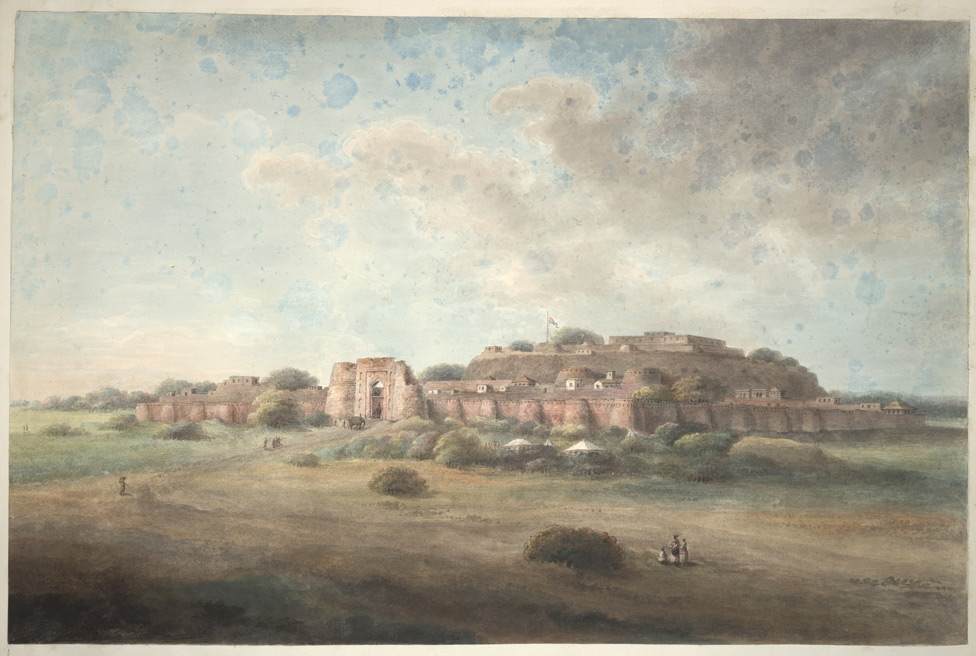
However, his first report was somewhat different and far less reserved. Writing from Meerut in July 1857, Captain Stafford left behind this account:
“We were standing near my guard and orderlies; no allusion was made to the sepoys, but fears were expressed of disturbances in the city taking place, but all the sepoys present laughed at the idea of anything of the kind likely to happen.
It should have been mentioned that Sergeants Murphy and Malone had, after they had been warned, returned to the lines to bring away Mrs Malone and her children. Although only a few minutes could have elapsed since the Sergeants had left their bungalows, they found the whole regiment had turned out and was drawn up in quarter distance column near the magazine. Several volleys were fired at the Sergeants, who immediately fled. Malone rushed to my compound and reported what had occurred.
All now mounted and proceeded towards the irregular cavalry magazine, from whence the sepoys were seen running here and there. After the warning given me that I should certainly be shot if I came near the lines, it was thought rank folly to attempt to reason with the men; as for coercing them, no means whatever of doing so existed. It may be mentioned en passant that on two occasions, alarms (false) were given and that the men turned out with the greatest alacrity.
It was now about 12 o’clock; in a very short time, several houses were on fire. It was evident the Hissar detachment would also mutiny, if not already done so, and it was necessary to stop the fugitives in advance. They were overtaken about 10 miles off, where there is a canal bridge which was crossed and a northerly direction taken.
The party consisted of:
Dr Scott
Mr Tapsel — Collector of Customs
Mr Rich — Patrol
Mr Blewett — ditto and wife
Mr Wren — Assistant Patrol, wife and three children
Mr Herdon — ditto,
Mr Hickie — Assistant Patrol
Mr Ives — ditto
Mr Tapsell — Clerk
Quarter-Master Sergeant Malone
Mrs and Miss Tapsell
Mrs Brown and 2 children
Mrs Mackey and two children
a child of Mr Daniell’s
Mr A. Skinner and Sergeant-Major Murphy were seen about three miles and Mr J. Paul, his wife and six children about seven miles, on the Hissar road. The following are supposed not to have left the cantonments, viz:
Mrs Milne and two children
Mrs Malone and two children
Subcontractor Fitzpatrick, canal department, wife and four children.
We travelled all day and all night, with the exception of a couple of hours, and arrived at Khurruck in the Jheend Rajah’s territory a little after sunrise on the 30th.”
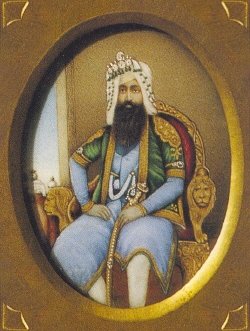
Leaving Hansi, they first made their way to Mirzapore, where they were treated with kindness and even offered protection by the villagers. Stafford, finding the place too close to Hissar — which they could see was burning in the distance — they moved on. Within a few moments, they were fired upon by 4 sowars — Stafford and the men of the group fired back, persuading their would-be attackers to desist. Mr. Daniell of the Hissar Patrol joined them on the road, having intended to escape to Hansi.
The four sowars who had initially fired on the party soon overtook them — they claimed to have shot at them by mistake and were willing to accompany them, as their protectors, as far as Jind and as long as they were paid the princely sum of Rs 150 each. One of the four had a change of heart and disappeared.
They reached Jind territory the next day, making a stop at Safidon with its ancient fort, where they were welcomed by the Jind Raja. The next day, the 3rd of June, Stafford and his party met up with the brigade of General Harry Meggs Graves at Panipat. This crusty general was not particularly pleased with the women and children entering his lines and ordered them to immediately depart to Meerut with the 4th Lancers whom he happened to be sending there. Interestingly enough, the only one who obeyed the order was Captain Stafford!
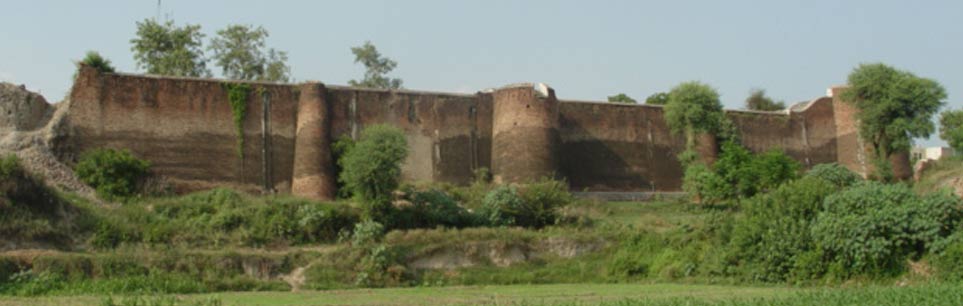
Four sowars left Hansi and made their way towards Hissar. The mutinous work that had started been started by the Haryana Light Infantry and the badly deposed men of the 4th Irregulars, was far from over. Before the 29th of May ended, another two stations would fall.
Sources:
Ball, Charles. The History of the Indian Mutiny. Vol. 1. London: London Printing and Publishing Co., 1912.
Chick, Noah Alfred. Annals of the Indian Rebellion. Calcutta: Sanders, Cones, and Co., 1859.
List of Inscriptions on Tombs or Monuments in the Punjab, N.W. Frontier Province, Kashmir and Afghanistan. Vol. 2. Lahore: Government Press, 1910.
Muir, William. Records of the Intelligence Department of the Government of the North-West Provinces of India During the Mutiny of 1857. Edited by William Coldstream. 2 vols. Edinburgh: T. & T. Clark, 1902.
The Anglo-Indian Almanack. London: Indian News Office, 1858.
 Mutiny Reflections