Be not ye afraid of them:
Remember the Lord which is great and terrible,
And fight for your brethren,
Your sons, and your daughters,
Your wives, and your houses.”
Nehemiah iv. 14.
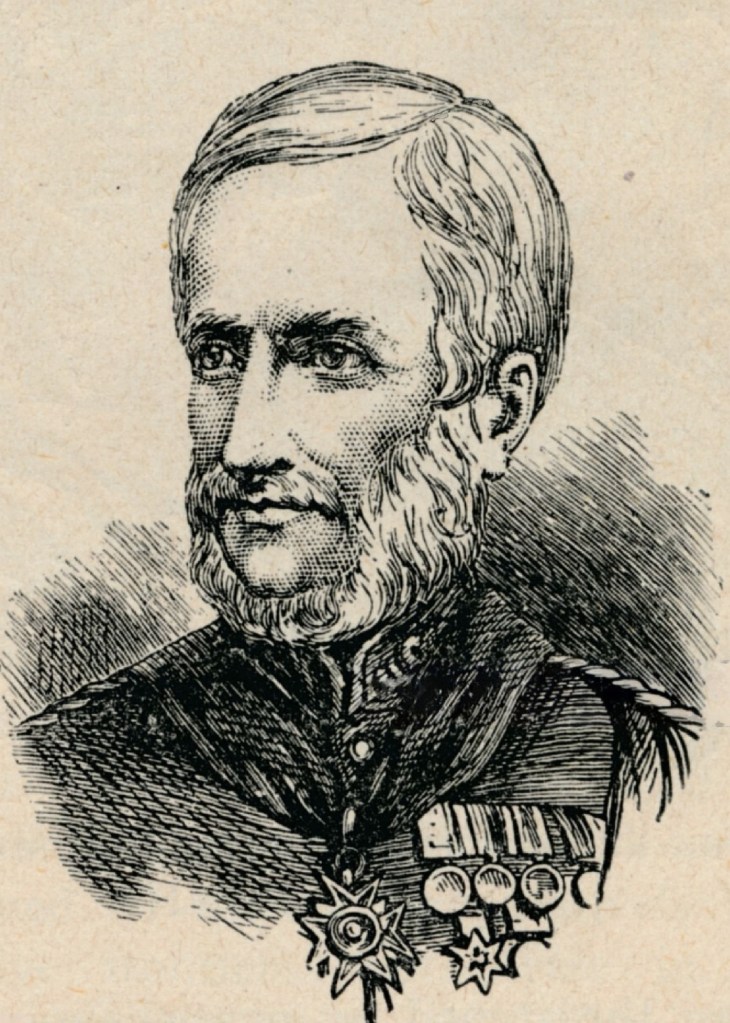
It was the end of the Persian Campaign and the beginning of a new chapter for Sir Henry Havelock. A man who had spent 23 years as a lieutenant in the Queen’s Army and then side-stepped for a decent promotion for many more, despaired that he would not be a major-general before the age of 70. It was not due to his lack of experience – Havelock had plenty, nor for his inability to command, as he had proved he could; but there fermented in the Queen’s Army a dislike of Havelock. He was too Baptist and too rigid. He had never coveted favours nor put himself unduly forward. His decisions had always been calculated to achieve the best results, even to the detriment of himself, and now, at the age of 62, India was calling Havelock to manage their biggest fiasco – the revolt in Bengal.
The Crisis is Eventful
So wrote Sir Henry on the 31st of May. He had arrived in Bombay two days earlier, fresh from the Persia Campaign, his eldest son, also named Henry, at his side. The 78th Highlanders and the 64th Queens, who had formed part of Havelock’s division in Persia were sent post haste to Calcutta without landing, while an additional regiment was called from Ceylon. Anxious to resume his duties as Adjutant-General of the army, Havelock’s first impulse was to travel overland to join Anson’s force – but the monsoon had set in, the roads were unsafe and no escort could be spared. As a result, on the 1st of June, Havelock and his son embarked on the steamer, Erin, at Bombay bound for Galle in Ceylon, in the hope of meeting a steamer proceeding from the Suez to Calcutta. Had fate been a cruel master, it would have been the end of Henry Havelock and history as it is known.
On the night of the 5th of June, the Erin fell foul of a reef off the coast of Ceylon. Havelock, who had been in his cabin at the time, felt the first shock. His son entered the cabin and in military fashion, said to his father and said, “Get up, sir. The vessel has struck.” Havelock dressed and followed the youth up to the deck. The streamer had by now drifted off the rocks into deeper water but the forepart was full of water and it was expected she would sink, head first – but the rough seas threw her again and again against the reef until one long swell brought two-thirds of the vessel’s length firmly onto the rocks.
Later, Havelock would write:
” This brought her up with a shock which made the whole frame shiver, and nearly jerked the masts out. The force of this may be imagined, as the speed at the time of its occurring was more than eleven knots the hour. move about the decks was almost impossible, as every surge rolling in lifted the ship bodily, and receding, dashed her with violence against the bottom. It, therefore, became necessary to hang on to the sides or rigging for life, and heavy rain commencing again to fall made the long hours until day-light wearisome and trying in the extreme.”
The deck was a scene of no little confusion – the commander had rushed from his bed but so overwhelmed by the occasion, was unable to issue any orders and his crew had lost their wits. The Lascars among them huddled in a corner and refused to obey anyone; neither threats nor bribes could persuade them to climb aloft and send down the heavier sails, the masts and yards. Havelock, upright and unperturbed, addressed the European crew.
“Now, my men, if you will obey orders and keep from the spirit cask, we shall all be saved.” For the next four hours, the Erin rolled and bucked while the crew hastily, on Havelock’s orders, fired their guns and burned blue lights. Providentially, they were heard – the judge of the district, fishermen and several other men soon gathered on the shore to watch the progress of the Erin. An Indian man, braver than the rest, swam through the roaring surf, rope in hand, out to the floundering steamer; a hawser was hot on shore, and as soon as it was daylight, boats were sent out to rescue the passengers. Shortly after, the Erin fell to pieces. For once, no one complained when Havelock called the passengers and crew together on the beach for a prayer of deliverance.
The delay to Havelock was minimal. On the 7th of June, he was on his way to Calcutta aboard the Fire Queen. At Madras, the steamer halted, and Lieutenant-General Sir Patrick Grant boarded to take his place as Commander-in-Chief of the Bengal Army. Anson was dead at Ambala, and Grant was to take his place. On the 17th of June, the two generals arrived in Calcutta, and Havelock placed himself under the command of Sir Patrick. Sir Henry Havelock was appointed Brigadier General at Sir Patrick’s behest and told to proceed, with all haste, to Allahabad.
Theirs was not the only force that had been summoned to Calcutta.
 Mutiny Reflections