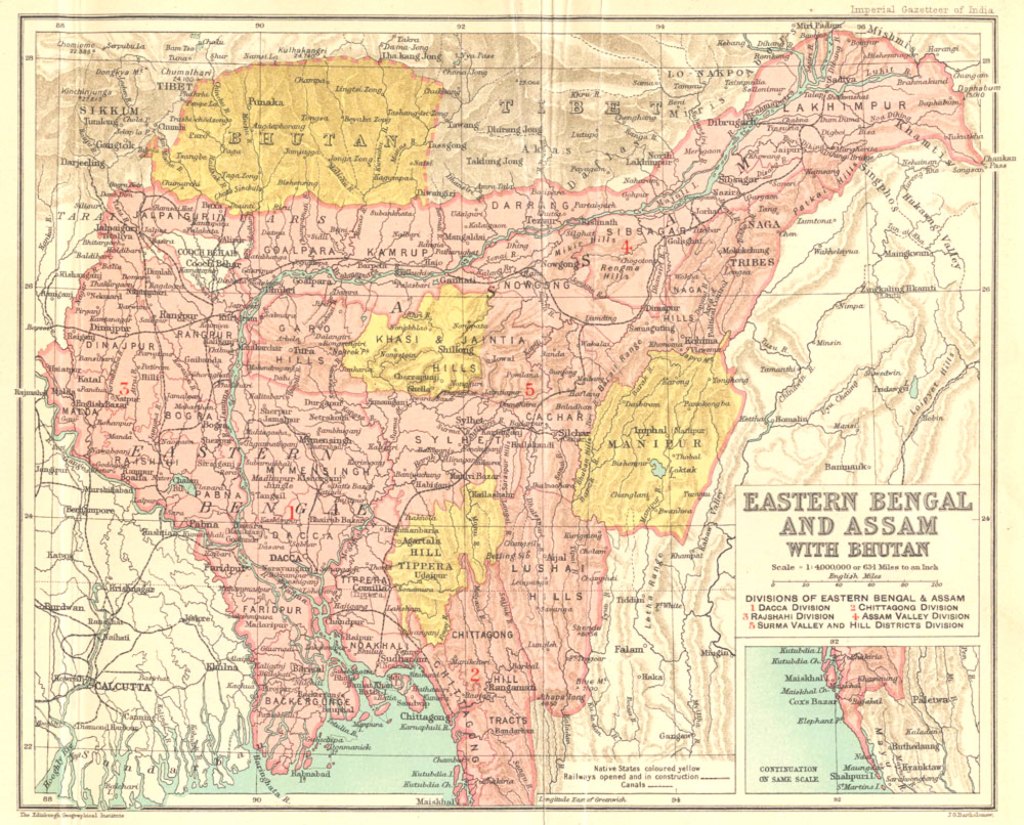
Once the land of warring kingdoms and empires, fighting for what was one of the most bountiful provinces the subcontinent had to offer, there had been little peace in this land of rivers and jungles.
From the 14th century, Bengal was ruled by the Bengal Sultanate, founded by Fakhruddin Mubarak Shah. It was the dominant power in the Ganges-Bharamputra Delta for nearly 2 centuries and accumulated into its borders parts of Orissa in the southwest, Tripura in the east and Arakan in the southeast. This thriving trading nation began its fall into decline during the long and protracted war with the Suri Empire. Its fate was sealed by the final conquest by the Mughals in 1576 when the entirety of Bengal was annexed, and the eastern provinces disintegrated into petty kingdoms.
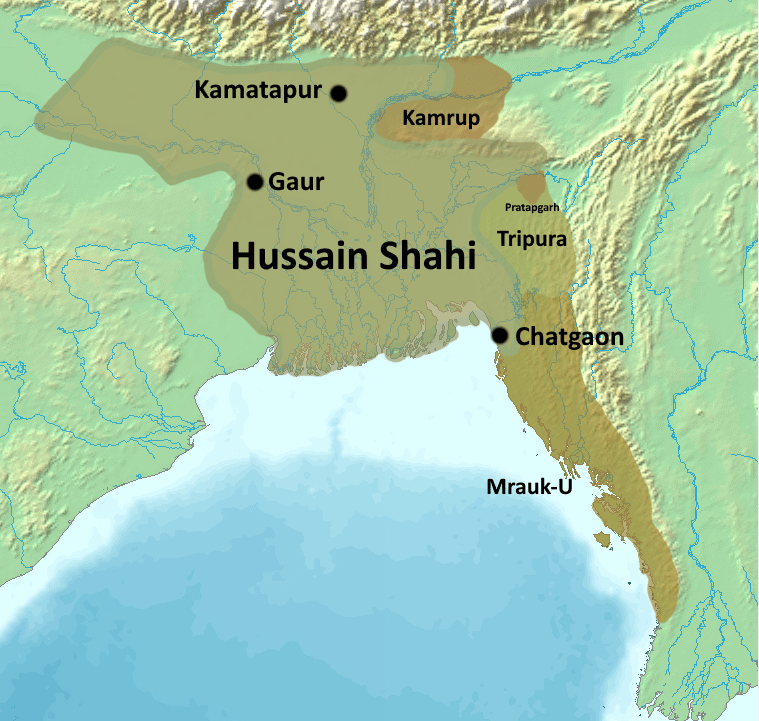
During its peak, the Bengal Sultanate had established valuable trade links with China, Southeast Asia and the Middle East, with tales of its wealth spreading far and wide. It is therefore hardly surprising when among the visitors to the sultanate were the Portuguese, who rapidly settled in the capital of Gaur. They established a settlement in the port of Chittagong (Chatgoan) but were never granted sovereignty over any land in East Bengal. Under Mughal rule, the capital city was established at Dacca (Dhaka) on the banks of the Buriganga River. In all the tumult and strife, the East India Company managed to set up a small trading post in East Bengal, where they would rub shoulders with the Dutch and the French. However, all things do come to an end, as we have seen in ” A Little History”.
Under East India Company rule, the eastern outskirts of the burgeoning empire – though still vastly important for the bounty which could be reaped from its land – gradually faded. Dacca, no longer a splendid eastern capital, was now a provincial district headquarters, a thriving city, teeming with bazaars, a fine river and Lalbagh Fort, constructed by Prince Muhammad Azam in 1678. In 1835, Dacca College was founded by Dr. James Taylor – among its first graduates were not only Hindus and Muslims but also Armenian and Portuguese students. While the advent of EICo rule in Bengal had been turbulent, to say the least, by the start of the 19th century, a certain peace had descended on the province east of Calcutta.
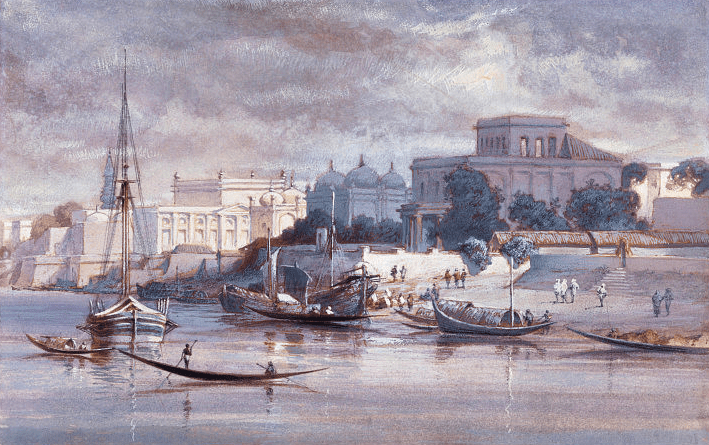
1857 found this eastern dominion relatively calm. The panics in Calcutta had their spill-over effect in Dacca, but as such, the mutiny “touched the mass of people not at all.” Dacca, and indeed the entire area of eastern Bengal, had no European troops; two companies of the 73rd BNI with some artillery were quartered at the Lalbagh Fort in Dacca, and three companies of that very disgruntled regiment, the 34th, were stationed at Chittagong. At the same time, the most far-reaching town of Jalpaiguri on the border of Bhutan boasted the entire regiment of the 73rd BNI minus the 2 companies at Dacca. Towards Assam in the northern regions, the Sylhet Light Infantry plied its trade while various irregulars made up the rest.
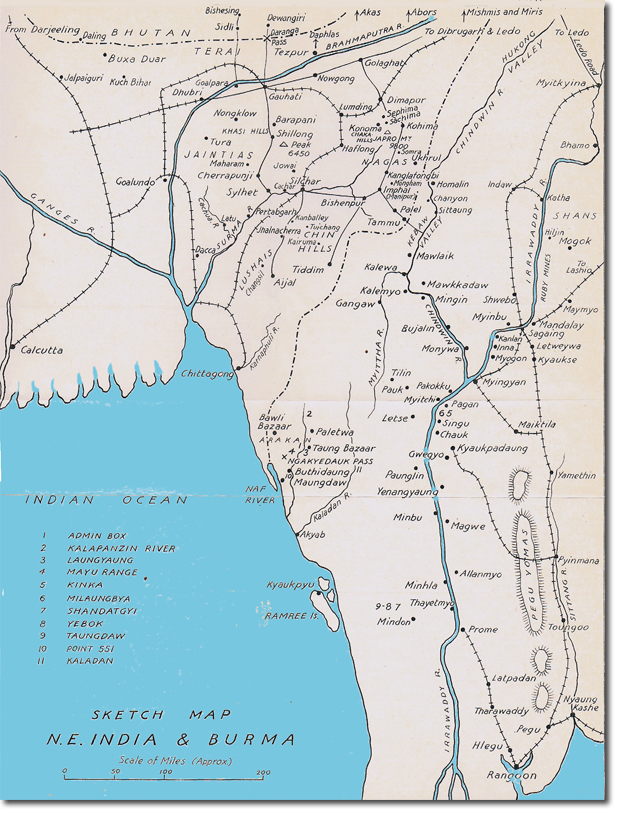
For a narrative of events in Dacca, the rather factual principal of Dacca College, Mr. Brennand, left us with his account:
10th June – The troops appear excited on account of the rumour that European troops are to be sent to Dacca.
12th June – A panic spread among the Europeans in consequence of a report to the effect that the two companies of the 73rd which had left the station about the beginning of the month had met some of the disbanded men from Barrackpore and had mutinied: that they had returned to Dacca and had been joined by the men at the Lal Bagh: that they were looting the bazaar and setting free the prisoners at the jail. A number of Europeans assembled at the house of Mr. Jenkins, the Magistrate; others resolved to defend themselves at the Bank. Some of the ladies went on board boats on the river; arms were collected; the whole town was in a state of excitement; the Bund was crowded with natives in a state of wonder and curiosity. Lieutenants McMahon and Rhynd, the officers in command of the troops, started for the Lal Bagh where the sepoys were located. On their return, they reported that their men were all quiet in their quarters and the alarm was groundless. On the evening drive, the natives who were collected in knots along the road seemed surprised to see us after the report we had all fled and left them to their fate.”
(On the first day of the panic, Mr. Jenkins was still the magistrate, while Mr. Carnac was the collector – however, Mr. Carnac would subsequently take over as both Collector and Magistrate of Dacca).
The Dacca panic was not lost on Calcutta, which reacted with more promptitude than was their nature so early on in the mutiny. They sent, on the request of Mr. Carnac, 100 men of the Naval Brigade, under Lieutenant Lewis, to protect Dacca. They arrived on the 23rd of June. Not an idle man by any means, Mr. Carnac supplemented this rather meagre draft with all the Europeans and Eurasians capable of holding a gun to serve as volunteers and included not just himself but Mr. Davidson, the Commissioner and the Judge, Mr. Abercrombie. Sixty men in all, they would mostly patrol the city streets and keep up a show of calm in front of the increasingly frightened residents. They were formed on the 30th of July and split into two corps – one of Infantry under Major Smith and the other of Cavalry under Lieutenant Hitchins.
Mr. Brennand continues:
5th July – the Metcalfes came in from Comillah in a fright; they had heard that the sepoys at Chittagong had mutinied and that they were on their way to Dacca. The report was without foundation. Dacca has been comparatively quiet since the arrival of the sailors. Lieut. Lewis has his tars out frequently in the morning to practice with the guns. Today, there was something of a panic among the sepoys. Dowell, who is in command of the station sent up to the Lal Bagh for the screws used to elevate the guns and the men there supposed there was intention of disarming them.”
Jessore


At Jessore, a large and populous district with its headquarters at Kasba, trouble was brewing. Situated 80 miles northeast of Calcutta, it was home to important factories held not only by enterprising English and Scotsmen but also by the occasional Frenchman, and their main profit was in that highly profitable crop, called indigo. The cultivation of it was left to rich and powerful Zamindars, who, after the miserable exploitation of their poor farmers, rubbed hands with the factories. On the whole, the people of Jessore itself were “peaceful and unwarlike”, but they had interesting neighbours in the adjoining district of Faridpur, the Ferazis.

This Muhammedan sect had already proved themselves something of a nuisance in 1832 as they “held very questionable and wild doctrines about the non-payment of rent to infidel Zamindars.” While it was not considered they would organising an uprising of their own, they continued to engage in “outrages on Hindu functionaries of a very violent character” which led to some of them being imprisoned; their leader, Dudhu Miyan, irritated the officials of the district enough to have him arrested and thrown into jail towards the end of 1857. Subsequently, following another ruckus in 1863, it would be discovered that the sect had indeed engaged in correspondence with the Wahabis during the mutiny and would even be found to be funding the Ambelya campaign on the northwestern frontier that same year. However, in 1857, the Ferazis, though outspoken and rather worrisome, were initially not under anyone’s particular spyglass, though had they gathered momentum, there might have been a different history told.
Jessore, although financially important and positioned precariously, had no sepoys at all, nor indeed did any of the bordering districts. To maintain peace and order, a military police, under the control of the Commission of the Suppression of Dacoity, had been established and in Jessore District consisted of 30 Najibs, all men from the North-West Provinces and Oudh. The head of the commission at Jessore was a Bengali, one Babu Guru Charan Dass a man of much experience and decidedly sharper wits than the Civil and Sessions Judge, Mr. Seton-Karr, the Magistrate, Edmund Weldon Molony, F.C. Fowle, the collector, J.P. Grant the Assistant Magistrate and Collector, J. Elliott, the Civil Surgeon and C.B. Skinner – in charge of the local jail. While these men continued in their ordinary fashion of work, riding and shooting, Dass was watching the Najibs with an increasingly suspicious eye. At the end of July, Dass received a report from a “reliable subordinate” that not all was well with the Najibs. Their Jemadar had been holding meetings in which he told his men and anyone else who would listen of “the events that were daily occurring in other parts of India, foretold the downfall of the Company’s rule, and informed some Bengalis, natives of Jessore, that they might soon look for a great political change.” It was, for all intents, treasonable talk and, unfortunately, at a time when sedition of any nature was liable to be viewed from a completely different perspective.
Charan Dass waited until he was certain the Najibs were settled down for the night. At 11 pm, he slipped out the back door of his bungalow and went to Molony’s house. Explaining to him the reason for this rather late arrival and told him the following story.
A man of his guard, Jemadar Pairag Dhobi had been trying to incite rebellion and had made use of
“seditious and threatening language,” directed at Molony himself. As Dass had brought his informant, named Bechu, with him, his deposition could be recorded at once. Bechu reported Pairag had tried to elicit information from him regarding the supposed murder of one Mr. Ward by the Nawab of Murshidabad. When the informant told Pairag the rumour was false, Pairag refused to believe him – in a later conversation with another man of the guard, Govind Singh, Pairag told him he intended to leave the service with 10 other men and kill Molony before they left Jessore.
Molony listened with some shock, realising quite suddenly that the Najibs were most likely plotting under his very nose, something he found highly objectionable. Without hesitatin,g he called for Fowle, Elliott, Skinner and Grant – they left Seton-Karr asleep at home and they did not bother to disturb the slumber of a planter who happened to be sleeping at the Planter’s Bungalow, directly opposite the house of the Najibs. The five of them, armed with pistols, walked resolutely to the Najibs – the sentry on guard in his surprise made some kind of “flourish with his sword” and was immediately disarmed along with two other men. The band of Europeans then entered the house and arrested four Najibs – Ram Singh, Pairag Dhobi, Ganesh Tewari and Shubek Dhobi – and marched them off to the jail after disarming the rest. There was no resistance, and even Seton-Karr was ignorant of the raid until morning when he discovered his two pistols were missing – Grant had requisitioned them for his own use as he did not have any of his own. Molony then informed Seton-Karr of the events and set off an administrative nightmare.

“Perhaps it was as well that I had not been made one of the capturing party, as it fell to me to hold the
trial under a special and summary Act passed to meet the crisis. On being informed by Molony of the
night’s occurrence, I at once wrote to the Lieutenant-Governor ( Sir F. J. Halliday), officially and demi officially, to vest me with powers of life and death under a new and special Act. These powers were at once given. I did not allow the correspondence to pass through the office, and no native official or other person had any idea of my extended powers till the Sessions trial was concluded.”
Molony committed two men initially for trial, the charges being sedition and incitement to rebellion. Seton-Karr found he did have enough evidence, as Govind Singh had corroborated Bechu’s initial story, to sentence the men to transportation for life, but he was not satisfied that the affair was over. The ringleader had not been presented to him, and the only way he could achieve the result he needed was to arrest the remaining Najibs and press them until one of them “volunteered to give evidence.” As such, Pairag Dhobi was quickly implicated and brought to trial.
“It was clearly proved that this man, with others, had deliberately planned an attack on the house of the native Treasurer of the Collectorate, who was known to have by him no less than ten thousand gold mohurs. With this money, the Najibs were to have gone off right across the country, to Murshidabad, after setting fire to the bazaar and liberating the prisoners in jail. The Jemadar had been in correspondence with Sepoys both at Murshidabad and at Allahabad, at which latter station the officers were shot down at their own mess table. He had also talked openly of a time coming when the native Raj would be restored and when those who knew English would be turned out of office and only those who knew Persian would get any employment. Sitting as judge of life and death, without any appeal from my decision, I considered that words and intentions derived their significance from surrounding circumstances; and that what might be loose and idle talk, or evidence of the speaker’s insanity, at a time of profound peace and security, assumed a very different aspect if spoken when rebellion and mutiny had occurred over a large part of the empire.”
It was interesting to note that two of the men arrested, Ganesh Tewari and Shubek Dhobi had both been sepoys, the former had belonged to the 19th BNI when it was disbanded, and the other claimed he had been discharged some eight years previously from the 43rd BNI but had could no longer present his discharge papers.
Without a jury or assessors to assist him, Seton-Karr would be obliged to act in what he felt was best for the district to keep the peace during these troubled times, and the decision weighed heavily on him. Convinced that under normal circumstances he could have let him off with a slap on the wrist, it irked Seton-Karr that he now needed to set an example. The native population he found were “uneasy rather than excited”, but the Najibs that had taken to hovering about the court had worried him sufficiently that he sat, during the trial, with two loaded pistols at his side. Worried that otherwise loyal members of society might get ideas in their heads if action was not taken, Seton-Karr ordered the Jemadar executed.
“I was convinced that unless a prompt blow was struck, we might have a disturbance of which no one could predict the end or consequences. Isolated planters might naturally take the law into their own hands. Englishmen at a distance from each other, in charge of valuable properties, were, of course, looking to the regular authorities to maintain order and quiet. I did not think it necessary to order the Jemadar to be hung that very evening under the nearest tree.”
As such, the sentence was proclaimed on Saturday evening, and the execution was ordered for Monday morning. Jemadar Pairag Dhobi, a man of “fine physique” who had fought for the English at Maharajpore and against them at Sobraon, walked to the scaffold with a firm step and straight back. The kerchief was tied around his face, and he was hung, not in the quiet grounds of the court but on full display in front of the police station in the bazaar. “All the Englishmen in the station, except myself, attended on horseback and well armed, but not the slightest sympathy was shown by any of the population.” As it was market day, Molony ordered the corpse to remain hanging in full view of some 3000 people until sunset. Whatever Seton-Karr’s misgivings were about the execution, his action prompted a sudden quiet in Jessore and the rest of the year passed without incident.
Back in Dacca
Meanwhile, Dacca continued on, peaceably enough according to Mr. Brennand.

1st, 2nd and 3rd of August – The three days of Buckereed (Bakra Eid). The Volunteers all on the alert: patrols out all night on each of the three days. The 2nd being Sunday, a party of Volunteers stationed at the College to protect the people who were at church.
11th August – Many of the Armenians are leaving for Calcutta. The Europeans are thinking of fortifying the Mills. The Volunteers are on parade for several hours daily and are making good progress in drill.
The Armenians had been nervous for some time, as their letter to Calcutta shows and had been most dissatisfied with the quarters of Lewis and the Naval Brigade, well back in June.


14th and 15th of August – The festival of Junmostomee. There was as usual a large crowd of people. Cavalry Volunteers were mounted on elephants and well-armed but all passed off quietly. It has been decided that if the men of Julpigoree do mutiny the sepoys here shall be at once disarmed.
Jalpaiguri

Situated in the lower foothills of the Himalayas bordering Bhutan, 300 miles from Calcutta on the direct road to Darjeeling, Jalpaiguri was the most far-flung corner of the Bengal province. As one of the most isolated, it was as far from the assistance of European troops as possible. A detachment of the 73rd BNI had been sent here, far away from the comrades in Chittagong. Their commander, who had but lately joined them in this quiet exile, was one Colonel George Moyle Sherer.
Born in Blanford in Dorset in 1800, he arrived in India in 1822 and was posted to the 20th BNI. He transferred to the 29th NI in 1823 and a year later to the 57th BNI. From there, his career took a slightly different turn. Promoted to lieutenant in 1824, he took a year’s furlough in 1825 and returned to India towards the end of 1826. He briefly returned to his regiment, but in June 1827, Sherer took up the post of Acting Superintendent of cadets at Fort William in Calcutta, after which followed various appointments as an engineer and as assistant and finally supervisor for various stud departments which occupied most of his career until 1853. He was posted as Lieutenant Colonel to the 71st BNI in 1853, from which he quickly transferred to the 2nd European Bengal Fusiliers and then went on furlough with a sick certificate for two years.
On the 2nd of January 1857, Sherer transferred to the 73rd BNI and took up command at Jalpaiguri. There were some reservations about sending Sherer to command the 73rd – though his knowledge of horses was considered profound, he had spent 30 years away from regimental duties and had subsequently “forgotten all his drill.” Perhaps it was his rather unconventional thinking, rather than strict adherence to military practice, that saved the 73rd at Jalpaiguri. From the very onset of his command, Sherer decided he would trust his men and when trouble reared its ugly head in May, he continued in the same manner as he felt, “that vague alarms and groundless suspicions, rather than any discontent or any hatred of the English, were hurrying the Sepoys into rebellion.” Only assurances of the goodwill of the British government and its officers, Sherer felt, would thwart mutiny in the ranks of the 73rd.
Rumours, like those in Dacca, even reached Jalpaiguri – one day, the sepoys believed an English regiment was coming to disarm them, on another, they were being marched up to destroy them. With disarming all the rage at the moment, it was clear to Sherer why his men were uneasy. However, determined not to betray their trust, Sherer remained resolute that disarming the 73rd under his watch would never happen. The arrival of a despatch from Division Headquarters led him to remark to his second-in-command, “If this, as I suspect, is an order to disarm our men, nothing will induce me to do it; I would rather lose my commission.” Realising Sherer was not about to comply with anything sent to him by post, his officers attempted to urge him to at least remove the rifles from the sepoys’ possession and place them on boats from whence, at the first sign of trouble, they could be sent downriver. Sherer, a little surprised at this somewhat bizarre idea, promptly ignored it. At his call at Jalpaiguri, he did have two troops of irregular cavalry who were “sharpening their swords and eager to be led against the infantry,” but this he felt was somewhat premature.
Towards the end of June, his faith in the 73rd would be put to the test as “sinister rumours of disaffection” came to his ears – emissaries from Lucknow and Meerut, one disguised as a fakir – had made their way to Jalpaiguri, and wherever they went, trouble was sure to follow. On the 25th, men of two companies of the 23rd, who had arrived from Dacca, set about pouring fuel into an already smouldering fire. Two hundred Europeans, they said, were on their way from Calcutta to disarm them and, like the Jemadar in Jessore, proceeded to speak of dissension, of the end of the Company rule and the reinstatement of the native Raj. Their words had the desired effect – the men of the 73rd swore they would never give up their arms, and some even spoke of turning the streets of Jalpaiguri red with English blood. They had not reckoned with their colonel.
Sherer heard the ” tidings of excitement”, but never a hasty officer, he put off visiting the lines and ordered a parade for the next day. His nervous officers asked if the men should parade with their arms,
“Yes,” he replied, “ by all means – with their arms, loaded as they are.” On the morning of the 26th, mounted on his horse, Sherer rode to the lines. As he approached, he heard the “murmur of many voices which bespeaks the general excitement” and rightly surmised, his men were ready to mutiny. However, the parade was formed; under Sherer’s watchful eye, the hubbub died down, the men performed as expected, adhering to all the discipline they had been taught and “confidence was triumphant.” The crisis though stayed, was hardly over.
Over the next months, the 73rd continued on in a state of nervous anxiety. A convoy of elephants sent by Sherer to Darjeeling to bring the office establishment of the Lieutenant-Governor with all its bag and baggage to the plains, set off a rumour that the pachyderms would return covered in the English troops; numerous plots to murder the English officers were thwarted; and all the while, Sherer continued on with “blended kindness and vigour” to put the minds of the 73rd at whatever ease they could expect to find in these turbulent times. However, kindness and understanding could only go so far, and Sherer was not beyond setting a few well-timed examples.


For their part, Calcutta was not impressed with Sherer’s idea of sending them to Calcutta, and grumbled at having to keep mutineers and rebels, “fed and clothed, without any possible return for the expenses attending their incarceration, and almost a certainty of their making the other convicts to rebel from their having nothing whatever to do.” Sherer’s and that of the joint magistrate Gordon, however, was sound – imprisoning the men in Jalpaiguri itself would have fermented even more dissatisfaction and possibly even plots to release them – by sending them away to far off Calcutta, away from their comrades, Sherer was ensuring his men understood their fate all too clearly if mutiny crossed their minds. Punishment was not the only weapon in Sherer’s diplomatic arsenal – he encouraged his men to keep their Colours with regimental promotions and monetary rewards. Three men of the 73rd were awarded the Indian Order of Merit, 1st Class:
– Sepoy Deoram Doobee (G.O. 559/1858)
– Subedar Bindadeen Tewaree (G.O. 1057 13 July 1858)
– Subedar Achaiba Lolla (G.O. 1057 13 July 1858)
In the case of Deoram Doobee, he was additionally promoted to the rank of Subedar:
“Promoted to the rank of Subedar and specially admitted to the 1st Class Order of Merit for his conspicuous loyalty and great attachment to all his European officers through a period of great peril. For eight months, this man daily kept his commanding officer informed of all that took place in the lines at Jalpaiguri, and enabled him to nip in the bud many a growing conspiracy. Deoram Doobee was thus the means of saving the lives of many, if not all, the British officers at Jalpaiguri.”
Those who faced court-martial were arrested without warning; others who were known to keep loaded weapons in their huts and known to be planning their great uprising were attacked in their huts, which led to one man being shot through the head. Another, out of fear of Sherer’s justice, malingered in hospital, attempting to starve himself to death – when this ruse did not work and it was clear he was next up for court-martial, he drowned himself in the river. Another was not so swift.

The mutinous spirit did not end here – four men were given over to Sherer as the ringleaders of a plot that would have seen the English murdered in their beds the following night – Sherer had the men court-martialed and sentenced to death. However, unable to carry out the sentence on his own authority, Sherer had to wait for confirmation from Calcutta – when it did, it was rather less detailed than was the nature of the government and simply stated he was to “dismiss the offenders from service.” After a fashion, Sherer did so. He ordered a parade for the following morning, brought out the condemned men and had them blown from guns in front of the assembled regiment. He then returned to his quarters and wrote back to Calcutta. The order, he said, had been received and understood. He had dismissed the men that morning – from the muzzles of four loaded guns. For now, a sudden quiet would fall over Jalpaiguri. However, a greater test would soon arrive at Sherer’s doorstep which would finally decide where the loyalty of his men actually lay.
All Quiet in Dacca

Mr. Brennand, our erstwhile chronicler of the events at Dacca, had little to report in the coming months.
22nd August – the fortification of the Mills is going on. There are 200 men digging a ditch.
27th August- The fortifications are progressing and it is supposed that should there be occasion for it, we should be able to make a stand against 5 or 6 thousand men.
30th August – Yesterday, Sunday, was the great day of the Mohurrum. The Cavalry Volunteers were out all night patrolling.
14th September – Some alarm here in consequence of a report that the sepoys in Assam are in a state of great excitement and that they had become very insolent. The Government has sent off a number of sailors in the Horungatta by way of the Sundarbans; they are expected to arrive here tomorrow and are intended for Assam. The 73rd at Julpigoree still quiet. We have hopes it will prove staunch. If not, we shall be involved here: but we shall be quite a match for the sepoys.
12th October – the Cavalry Volunteers gave a ball to the Infantry. The gathering was not so great as expected; about ten ladies present. Of the Infantry Volunteers only about twenty attended in uniform. The party on the whole was a pleasant one.
1st November – Something like a panic occurred on the Sunday last, caused by the removal of the sailors to the house near the church, recently occupied by the nuns. The sepoys got ammunition out of the Magazine and it was through that an outbreak was imminent. It is reported that they have written to their brethren in Julpigoree asking whether they should resist if an attempt were made to disarm them. We believe that the disarming could be effected with little danger to ourselves, but it is feared the effect on the troops at Chittagong, Sylhet and Julpigoree might be disastrous. It is supposed that if we can preserve order in Dacca the other places will remain quiet. The men are very civil, but with the example of their “bhaibuns” before us, we cannot put much trust in them.
9th November – The Infantry Volunteers gave a dinner to the station. Upwards of fifty sat down to dinner.
On the 21st of November, boatmen arriving from Chittagong brought the news that the 34th BNI had mutinied – the crisis Dacca had thus far avoided was now upon them.

Sources:
Bulletins and other State Intelligence for the Year 1858 Part I & II – T.L. Behan (1860)
Further Papers Relative to the Mutinies in the East Indies No.6., No. 7, No. 8, No. 9
History of the Indian Mutiny 1857-1858, commencing from the close of the second volume of Sir John Kaye’s History of the Sepoy War, Vol I & II – Col. G.B. Malleson (1878/1879)
A History of the Sepoy War in India 1857-1858, Vol III – John William Kaye (fourth edition, 1880)
A Short Account of Events during the Sepoy Mutiny of 1857-58 in the Districts of Belgaum and of Jessore -Walter Scott Seton-Karr (1894)
Eastern Bengal District Gazeteers, Dacca – C.Allen (1912)
Dacca, the Romance of an Eastern Capital – F.B. Bradley-Birt (1914)