During the advance on Lucknow by Sir Colin Campbell starting on 14 November 1857, and the Battle for Cawnpore on 6 December, a staggering number of Victoria Crosses were awarded – 31 in total. In the meantime, Charles Gough and Frederick Roberts had added their names to the list. If one were to add the VCs awarded under Sir Henry Havelock, those for the Defence of the Residency and throw Bulandshahr and Agra into the mix, the number grows to 74. Taking this into consideration, it would appear that being even remotely associated with the Lucknow campaigns was an excellent way of securing a Victoria Cross.
This, however, was not the opinion of Sir Colin Campbell or General Mansfield, both of whom would have preferred the Cross had never been dreamt of, much less implemented. They believed it made men reckless and served as a motivating force for officers to disregard common sense and put themselves deliberately in harm’s way, all for the sake of securing a piece of metal for their chests. Besides, to quote Mansfield, it was “destructive to discipline.” Sir Hope Grant, however, disagreed. He felt it did more good than harm – it was good for the morale of a regiment, promoted a positive sense of competition among younger officers who might, in other circumstances, be wary of putting themselves forward, and above all, pushed men towards bravery – an antidote, so to speak, to timidity. It made men and officers “fight like Turks,” which, in Grant’s opinion, was certainly a good thing. However, this reflects more the leadership attributes of the three men; Sir Colin Campbell was by nature brave but cautious and abhorred losing men senselessly, General Mansfield was not noted for his skills and after the debacle at Cawnpore in December 1857, not much liked, while Sir Hope Grant, as a cavalry man himself, was not averse to a measure of recklessness among his men. As for Sir Henry Havelock and Sir James Outram, they were quick to award men for their bravery and in the campaign they fought, any morale boost was seen as a good measure. Brigadier Inglis, on the other hand, put very few men up for the VC during the Siege of Lucknow – his opinion was quite clear: every man during the siege had done his duty above what he had been called to do; it was only an exceptional few (7) who he finally singled out for the award.
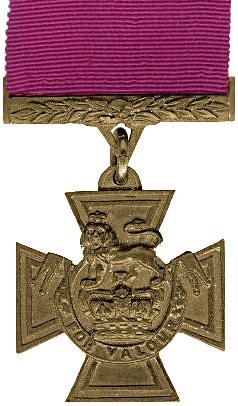
The Final VCs for Lucknow
Regardless of what Sir Colin Campbell or General Mansfield would have liked to do and all they disliked about the VC, some would still be awarded for the capture of Lucknow. The number would not reach the dizzying heights of November – nowhere close to it – but twelve men would have the honour of seeing their names in the Gazette. Unlike in November, Sir Colin’s own favourite regiment – the 93rd – would only receive one VC; the 90th, on the other hand, would receive none. The latter was not seen as a slight but as Wolseley put it, “…to ask for that decoration was not the custom in the 90th
Light Infantry.” That said, we begin on 9 March 1858.
Thomas Adair Butler – 1st European Bengal Fusiliers
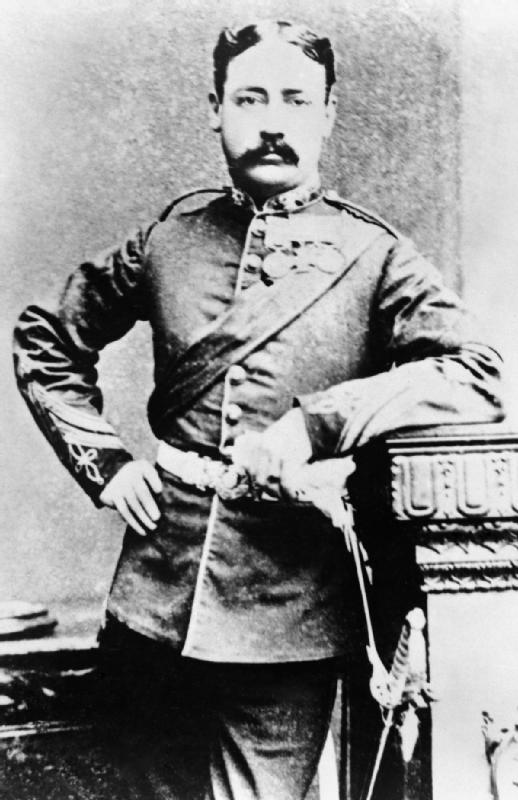
Born in 1836 in Hambledon, Hampshire, he was the son of the Reverend Stephen Butler and his wife, Mary Ann Thistlethwayte. Whether the exploits of his uncle, Rear-Admiral Sir Francis Augustus Collier, inspired young Thomas to join the army, we may never know, but join he did, in 1854. Commissioned to the 1st Bengal European Fusiliers as an ensign, he was promoted to Lieutenant in 1856 and shortly thereafter served as the regiment’s musketry instructor.
When the mutiny reared its head, the 1st Bengal Europeans headed for Delhi. They fought at Badli-ki-Serai and right through the siege; at Najafgarh, Butler served as John Nicholson’s galloper. At the actual taking of Delhi, however, Butler was wounded at the taking of the Burn Bastion, which made for an interesting story on its own:
“Our Officers and men now pushed forward towards the Burn Bastion, which Lieutenants Butler and Speke and about a dozen soldiers attempted to climb; but finding it closed at the gorge and loopholed inwards, they could not ascend more than a few feet. Butler, being convinced of the fruitlessness of the attempt, ordered his men to drop down and protect themselves, intending to follow; but he found that he was pinned in between two bayonets, which had been thrust at him through the loopholes, on either side. Whilst in this position, he received a blow on his head from a stone cast at him from above, felling him to the ground, but, recovering himself, he quickly fired his revolver through the loopholes and escaped from under the Bastion before the enemy could recover himself.” His feat earned him a mention in despatches.
He was certainly back to fighting fit by the time Sir Colin Campbell was ready to take Lucknow, where the 1st Bengal Europeans joined Sir James Outram over the river, to commence operations on the right side of the Gumti. The 9th of March was certainly a momentous day and one which perhaps the mutineers regretted more than any other, as they must have realised all of the wonderful fortifications they had spent months building were, in fact, useless. Sir Colin Campbell was going to take them from the very side they had neglected to defend, and there was nothing at all they could do about it.
With the Yellow Bungalow taken, the Fusiliers were ordered by Sir James Outram to move along the riverbank with some of the heavy guns. When they reached the junction of the river and the canal, the guns were positioned to enfilade the rebel batteries, which formed their first line of defence. The guns opened fire, but no one replied, and the officers – Major Nicholson of the Engineers and Captain Salusbury of the Fusiliers – debated whether the batteries were in fact abandoned. The only conclusion they could reach was that someone would have to take a look. Salusbury thought boats were the solution, but Nicholson was loath to let anyone cross, lest his guns be left unprotected. At this impasse, Lieutenant Butler, subaltern to Salusbury, volunteered to solve both their problems. He would swim the Gumti. With a stern warning from both the officers that he was running a terrible risk should the batteries indeed be full of mutineers and he stumbled into them, there would be no one in a position to come to his aid, but Butler threw off his coat and other impediments and went for a swim. The river was flowing swiftly, and he had 60 yards to cross, but to the relief of everyone watching, he suddenly appeared on the other side and climbed up the inner bank.
“…Butler looked round; the inside of the enemy’s works was still as silent as the grave; but, even so, it needs some nerve to storm a fort alone. Passing to the rear, Butler gained an entrance unopposed: and mounting on the parapet, signalled with a white flag which he had improvised, to a Staff Officer of Adrian Hope’s Brigade. This Officer came near, but sent no aid; and so Butler was left unarmed, and cold and wet, to garrison the Fort alone. Gesticulating for help, Butler was seen by an Officer of a Highland Regiment on the plain in front of the Martiniere, who, rapidly advancing with his men, occupied the Fort. The Sikhs soon followed, when Butler, relieved, swam back, having performed an act of cool and dauntless courage.”
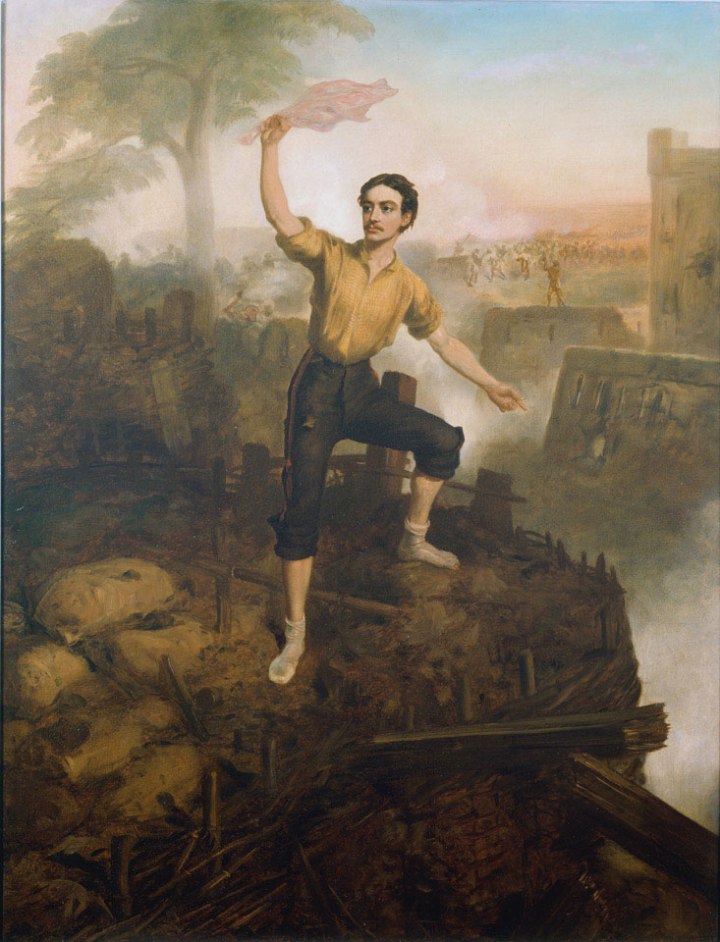
Sir James Outram was so delighted with Butler’s actions, he came up to congratulate the young man personally and, without any hesitation, put his name forward for the Victoria Cross.
Lieutenant Thomas Adair Butler — Date of act of bravery 9th March, 1858. Of which success the skirmishers on the other side of the river were subsequently apprised by Lieutenant Butler of the Bengal Fusiliers, who swam across the Goomtee, and, climbing the parapet, remained in that position for a considerable time under a heavy fire of musketry until the work was completed.” — Extract from Lieutenant-General Sir James Outram’s Memorandum of Operation on the Siege of Lucknow.
Following Lucknow, the 1st Bengal European Fusiliers were attached to Sir Hope Grant’s force and would, until March 1859, continue to fight in the mutiny. When the regiment returned to Dagshai in March, Butler went home – he received his Victoria Cross from Queen Victoria on 9 June at Buckingham Palace the same year. In 1871, it was Butler who was in charge of the Guard of Honour when the Colours of the 1st Bengal European Regiment were deposited at Winchester Cathedral.
Following the death of the East India Company, the regiment was transferred to the Crown to become the 101st Regiment of Foot (Royal Bengal Fusiliers) and Butler chose to remain on their strength; he subsequently served in the Umbeyla Campaign, where he was once again wounded. In September 1874, he retired as an honorary major, a rank he retained until his death in 1901. His VC resides at the Royal Military Academy, Sandhurst.
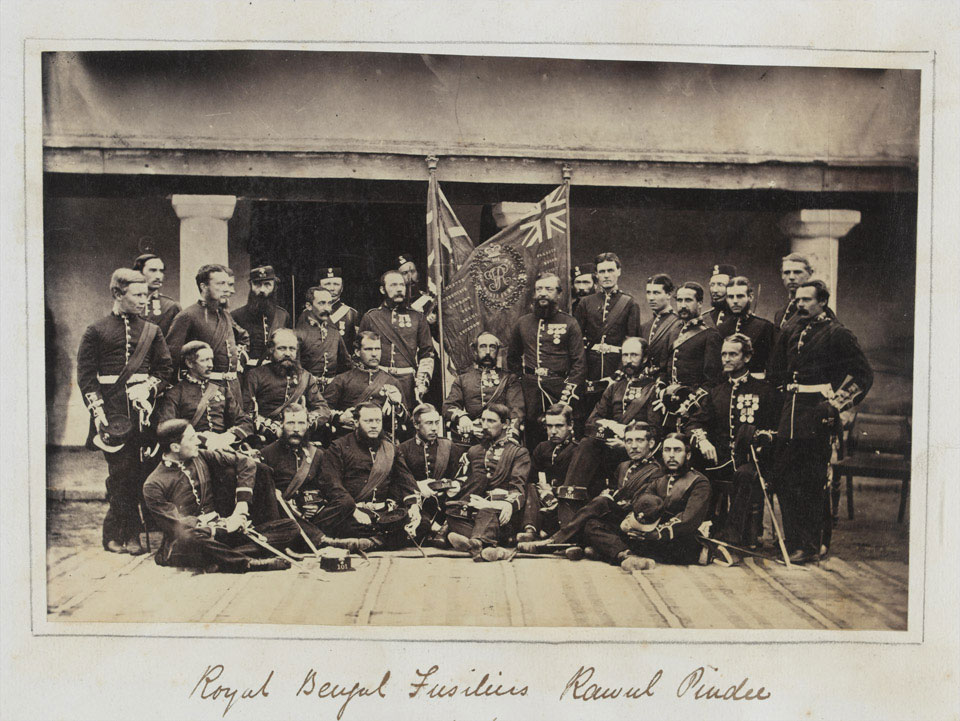
Lieutenant Francis Edward Henry Farquharson, 42nd Royal Highlanders, the “Black Watch”
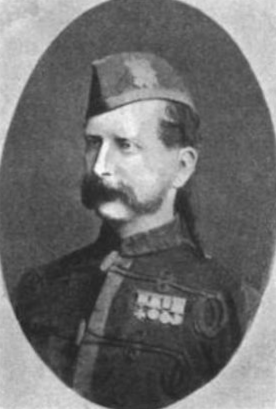
The 42nd were but new arrivals to India – they had begun their journey from England in August 1857 and stepped off the first ship when it docked at Calcutta in October. A second ship arrived with the remainder in November. By the first week of December, the headquarters and five companies were in Cawnpore, arriving just in time to whet their swords at the Battle for Cawnpore on the 6th. From here on out, the 42nd was never far from a fight.
At Lucknow, they secured the Dilkusha, took the Martiniere and then followed it up in short order by taking Banks’ House, but on the 9th of March, a singular incident occurred, for which Lieutenant Francis Farquharson won the Victoria Cross. The citation is as close as we can get to the event of the day – the various histories of the regiment written are very scant in their information, which is truly unfortunate, and Farquharson himself did not lend his hand to pen and paper. The citation itself is confusing:
” For conspicuous bravery, when engaged before Lucknow, on the 9th March, 1858, in having led a portion of his Company, stormed a bastion mounting two guns, and spiked the guns, by which the advanced position, held during the night of the 9th of March, was rendered secure from the fire of Artillery. Lieutenant Farquharson was severely wounded while holding an advanced position on the morning of the 10th of March.” (The London Gazette of 21 June 1859, Numb. 22278, p. 2420)
While Alexander scoffed at the idea that Farquharson actually did this particular deed, it needs to be put into the proper context; it is the citation that is misleading, as it fails to provide the location of the event, and Alexander’s own somewhat boorish attitude does not help matters. Alexander believed Farquharson had led a detachment of the 42nd into the abandoned lines, which had been scouted by Butler, which makes the incident as described above in the citation very unlikely and Alexander’s mirth at seeing the famous painting of Farquharson understandable; another claim is that the 42nd were supporting the Punjabis through the earthworks towards Banks’ House, and in an incident that did not happen, Farquharson won his VC. No matter how generous Sir Colin Campbell was towards Highland Regiments, he would hardly have sanctioned a VC to a man who was acting contrary to his orders, as he had implicitly stated that no one was to venture into the abandoned works on the 9th. However, if we consider that the 42nd was involved in taking the Martiniere that day, it begins to make sense.
Advancing in two lines from the Dilkusha, the first line under Colonel Priestley took the fortifications that abutted the left of the Martiniere, while Colonel Alexander Cameron took the second line directly to the parapet on the right. Farquharson then took the initiative and captured the guns.
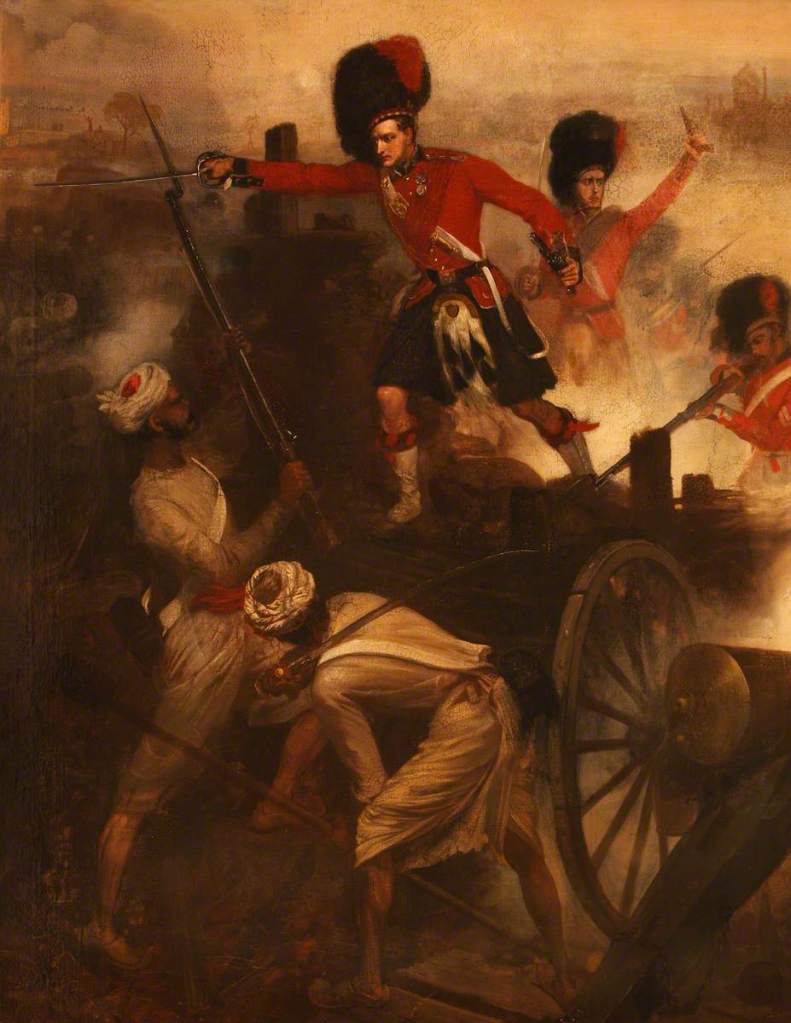
Farquharson was badly wounded the next day, and there was, for a time, a worry that he would not recover. At just 21 years old, he was sent home on sick certificate.
Born in Glasgow on 25 March 1837 to Henry Herbert Farquharson, he was educated at Sandhurst and began service with the 42nd Regiment as an ensign in January 1855. Francis served in the Crimea from 1854 to 1856 before finding himself in India. Until the 10th of March, when he was wounded, he had seen action at Cawnpore, Khodaganj, and Shamshabad. Francis received his VC – provisionally at first – from Sir Colin Campbell himself while still in India, but the official investiture took place at Windsor Castle on 4 January 1860.
Following the mutiny, the 42nd remained in India, and he returned to his regiment. In 1867, Francis married Harriet Charlotte (née Lowe ) in Murree, by which time, he had been promoted to captain (1862). His next war, however, would not be in India but in Africa during the Ashanti War, where he served as a staff officer to Garnet Wolseley. Unfortunately, it was also his last. On 12 September 1875, Major Francis Farquharson died at Haberton Vicarage, New Totnes, Devon, of an illness contracted during the campaign. His medals are held by the Black Watch Museum in Perth, Scotland.
Sources:
Forrest, G. W. A History of the Indian Mutiny. Vol. 2. Edinburgh & London: William Blackwood & Sons Ltd., 1904.
Gordon-Alexander, W. Recollections of a Highland Subaltern. London: Edward Arnold, 1898.
Innes, P. R. The History of the Bengal European Regiment, Now the Royal Munster Fusiliers, and How It Helped to Win India. London: Simpkin, Marshall & Co., 1885.
Kaye, John William, and G. B. Malleson. Kaye’s and Malleson’s History of the Indian Mutiny of 1857–58. Edited by G. B. Malleson. Vol. 4. London: W.H. Allen & Co., 1889.
Links:
https://vcgca.org/
https://www.victoriacross.org.uk/
https://www.victoriacross.org.uk/
 Mutiny Reflections