Enter Colonel Thomas Seaton
“Tom, would you like to go to India as a cadet?”
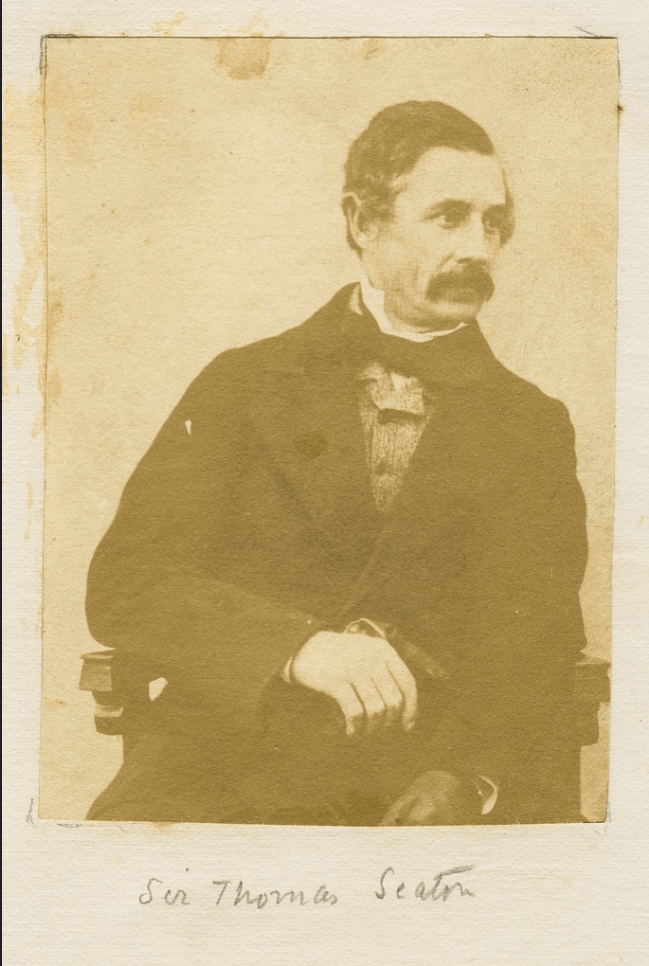
In 1822, young Thomas Seaton was asked that very question by his cousin and his answer was “Yes, very much.” A week later, he sailed for India.
Thomas Seaton was born in 1806, the eldest son of John Fox Seaton and his wife Anne. He had received a classical education, “that is to say, a small amount of Latin and Greek, which had been caned and
flogged into me at a certain, or rather uncertain, rate per week…Useful knowledge, such as reading, writing, and arithmetic or any science was considered unworthy of any particular attention…” His schooling amounted to a mere five hours a day, of which one hour was devoted to learning French. As such, when Thomas attained the age of 16, he was sent to London to learn “something” of arithmetic and writing. As soon as he was deemed sufficiently educated, his future was given over to a drab office, where he spent his days in idleness. It was no wonder then when his cousin posed the question, young Thomas gladly threw in his lot with India. “Thus was I, equally destitute of the theoretical knowledge or of the practical experience of life, left to sink or swim as chance might happen, or rather as a merciful and overruling Providence might direct.”
If it was indeed Providence. Another young cadet, unable to face life abroad, was professed to be so “mammy sick” before the Thames had left the Downs, he was sent home forthwith and in his place went Thomas Seaton. It was also the reason for his swift departure. The Thames was the last ship of the season and if he wanted his cadetship he had to be on it or forget the whole venture. Six months later, he stepped ashore in Calcutta, and his new life in India began on the 2nd of January 1823. With the rank of ensign a month later, he joined the 1st battalion of the 10th Regiment, NI. By July, he was considered drilled enough to join the 17th NI in Ludhiana. A year later, in October 1824, after the regiments in the army had been divided with each battalion forming their own regiment, Seaton found that his battalion, the 1st, was now the 34th Regiment of Native Infantry, to be stationed in Sitapur. He would see Lucknow in all its glory under the wing of Mordant Ricketts, the resident to the Court, and found that although Sitapur was a dull station, India held wonders his young life could barely have imagined. He was a capital shot, sports abounded and he was learning to admire his regiment. Learning Hindustani turned out to be a pleasurable pastime too, particularly as his teacher saw no reason to beat him. In July 1825, he and four other officers were re-transferred back to the 35th NI and Seaton, owing to the death of an officer in England, which occurred before the battalions were separated, found himself promoted to lieutenant, his commission backdated to May 1824. Bidding goodbye to Sitapur, the little band made their way to Fatehgarh. Not that they would stay very long — shortly after it was deemed a force would be sent to Bhurtpore and the 35th would join them. It was his first prospect of prize money, and Seaton was not sorry for it.
He also saw the native regiments in their former splendour and glory, long before the mutiny tore them all to shreds.
“My first parade with the 35th introduced me to a grand regimental institution, the same as that which existed in those days in several other native regiments that had served under Lord Lake, and had acquired some celebrity. This was a bhat, or, in plain English, a bard, whose business it was to encourage the men in action, to incite them to deeds of valour, to celebrate their achievements, and to sing their praises. Our bard was a splendid old fellow, who had been many years in the regiment and must have known personally all Lord Lake’s old soldiers, some of whom were still alive in the regiment when I joined it. The old man was a fine, noble-looking fellow, six feet high, and straight and upright as an arrow; he had a splendid head, with a grand patriarchal grey beard hanging nearly to his girdle. Every day, when the parade was dismissed, he used to advance a few paces clear of the regiment, and placing the butt of his spear on the ground, would raise his right hand, and roll out in the most magnificent voice, deep and sonorous, the praises of the colonel, the officers and native officers, and the ‘Noke ka pultun’ generally. On this, our first parade, he introduced the names of the officers just arrived, and as I was amongst them, I gratified the old fellow with a small present, in return for which he prophesied that I should ever be fortunate and victorious.”
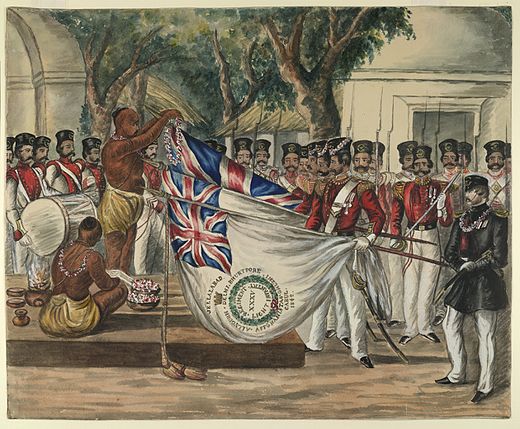
The 35th Regiment, Bengal Native Infantry – Noke Ka Paltan
Raised in 1798
Battle Honours: Allygarh, Dehlee, Bhurtpore, Afghanistan, Ghaznee, Jellalabad, Cabul, 1842.
Colours: a mural crown inscribed Jellalabad. Honourary colour “Lake and Victory.
Disarmed on by Brigadier John Nicholson on the march to Delhi at Phillour, 25th June 1857
Seaton envisioned a bright and brilliant future for himself, and for nearly 14 years he diligently served the army. Unfortunately, in 1835 after speculating in an east India agency house in Calcutta had seen Seaton deprived of a small fortune, it was the death of his first wife Caroline (whom he had married in 1831) that caused him to apply for three years of furlough. On the 10th of May 1836, he was back home. It was the panacea he needed. By 1838, remarried and revitalised, Seaton returned to India only to discover, on the passage out, that his regiment was marching with the army of the Indus to Afghanistan. After landing, Seaton quickly organised everything possible for his young wife (which entailed leaving her in Simla for the next few years), and dashed off to Ferozepore. Three days later, thankful for the arrangements Sir Henry Lawrence had made for him in advance, Seaton joined the convoy bound for Kabul.
His experiences in Afghanistan would be worthy of a book of their own — he served at the defence of Jalalabad with Sale and on the 13th of January 1842, would be one of the first men to meet Doctor Brydon, one of the few survivors of the tragic retreat from Kabul. The answer was to send out a party to search for anyone else, with the hope Brydon was not the only man left. “About four miles from Jellalabad they came on the bodies of three of Brydon’s companions-Lieutenants Harper, Collyer, and Hopkins — all terribly mangled. Not another was found; nor was a soul seen on the road. At night, lights were hung out above the Cabool gate, and two buglers at a time were put on duty in the south-west angle bastion to sound the advance every quarter of an hour, in hopes that some poor fugitive might hear it and be saved. A strong wind was blowing from the southwest, which sent the sound of the bugles all over the town; but it could not be heard half a mile in the direction of Cabool. The terrible wailing sound of those bugles I shall never forget. It was a dirge for our slaughtered soldiers, and, heard through all the night, it had an inexpressibly mournful and depressing effect.”
If this was not awful enough, Seaton would march back to Kabul with Sale along the route of annihilation, in September — past the sixty skeletons of the men who had died at Gandamak, the officers only distinguishable by the long hair still attached to their skulls. Through the pass, still choked with the bones of the dead, so thickly strewn that they had to be moved aside before the guns could be dragged onwards. There was worse to come. At the old fort of Jagdalak, they found the dead “in ranks” as they had fallen, “the flesh still on their bodies and every face perfectly recognisable to those by whom they were known.” They buried them where they lay as a last mark of respect. The wearisome march through fields of the dead came to its height at Sei Baba, a small round tower, where “The whole of the room was filled with skeletons and decaying bodies, up to the very roof: and there was a mound of them outside,
halfway up the door, extending.ng to a distance of twenty-six or twenty-seven feet from the wall, and completely covering the steps.” It was enough for Seaton to question the Christian principle of ‘love your enemies,’ leaving him by far a more jaded man than his nature, under normal circumstances, would have allowed. He was gratified for being recognised as one of the ‘Illustrious Garrison’ but as for Afghanistan, Seaton was heartily sick of it all.
For now, his regiment the 35th BNI, which had so covered itself in glory, was the pride of Seaton’s life, and in later years, reflecting on their disbandment, he wrote of the mutiny –
“… I wish to redeem the character of the native soldier from some of the obloquy thrown on it by the recent mutiny, which was the result of untoward circumstances, from which we are not entirely to judge the character of the men who filled the ranks of our native army. When the mind of man is wrought upon by anger, hatred, or fear, he is both unreasonable and unreasoning; therefore it is not to be wondered that those who wrote during or immediately after the mutiny, with hatred still burning in their hearts, should make the sepoy’s undoubtedly base conduct appear still more base, and that, though excellent in many respects as a soldier, and generally mild, humane, and temperate as a man, he should, from some of the deeds which in his frenzy he committed, be written down as both coward and demon.”
After his ordeal in Afghanistan, Seaton was granted 30 days leave in Simla, where he once again saw his wife, whom he had left behind so suddenly and then it was back to his regiment, this time with his wife in tow, first to Karnal and then to Agra. Here he would settle down as Major of the Brigade for the next nine years and could only hear, from this great distance, the exploits of his brother, Captain Douglas Seaton, with the 1st Bengal European Fusiliers of their exploit at Ferozeshah and Sobraon. There would be no battles for Thomas Seaton this time, except with his health. Blaming the ague he had contracted in Simla’s ‘rejuvenating air’, he went home on sick leave in 1851.
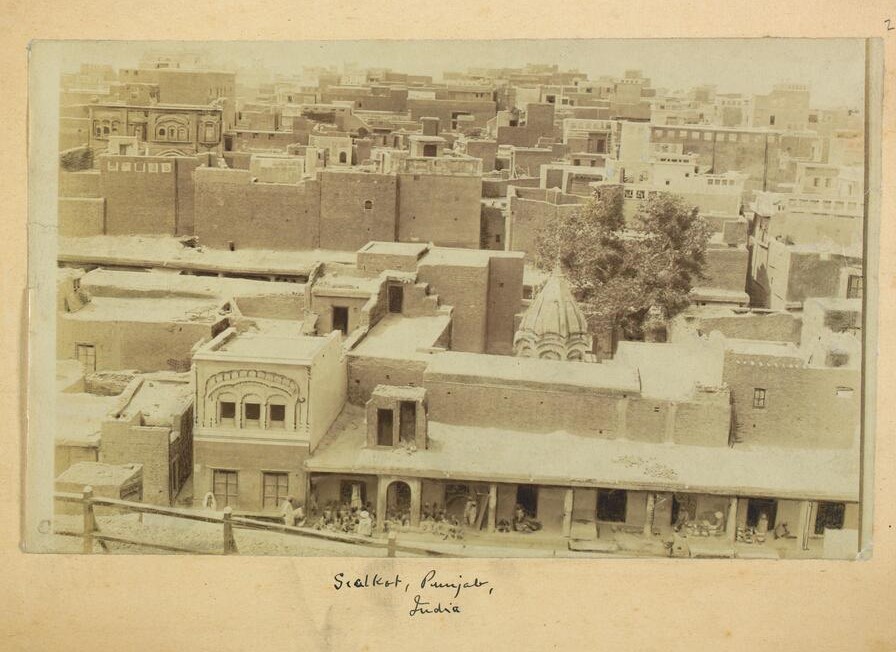
Following this three-year furlough, Seaton rejoined his regiment in January 1855 and assumed command of it in Sialkot. It was here he realised something had changed with the sepoys. As the oldest officer in the regiment, he noticed that things were not as they should be. The cordial respect between the officers and the men was all but gone –
“There was an independent, swaggering, free-and-easy kind of air about the sepoys generally, and I observed more particularly in other regiments at the station that the men were quite careless of showing
respect to any officer but those of their own regiments. Riding in uniform past the guards of other regiments, I constantly observed that the sepoys would stand with their arms folded, their legs straddled, their noses raised in the air, and that they would salute with mock respect, or purposely with their left hand. I never passed over such acts of disrespect, and in the course of a few weeks, as I became known, their conduct altered towards myself.”
He found when speaking to his native officers, men who had served with him for so many years, they all had one opinion, that the army had ceased to fear. Their commanding officers, with their power to promote, demote, punish and praise curtailed by what Seaton calls a “philanthropic government”, had been left like fish out of water. They could only watch as discipline in their regiments disintegrated and the sepoys became spoiled by indulgence and a lack of discipline, “for can anyone for a moment imagine that the sepoy will stand in awe of the commanding officer whom he can safely defy?”
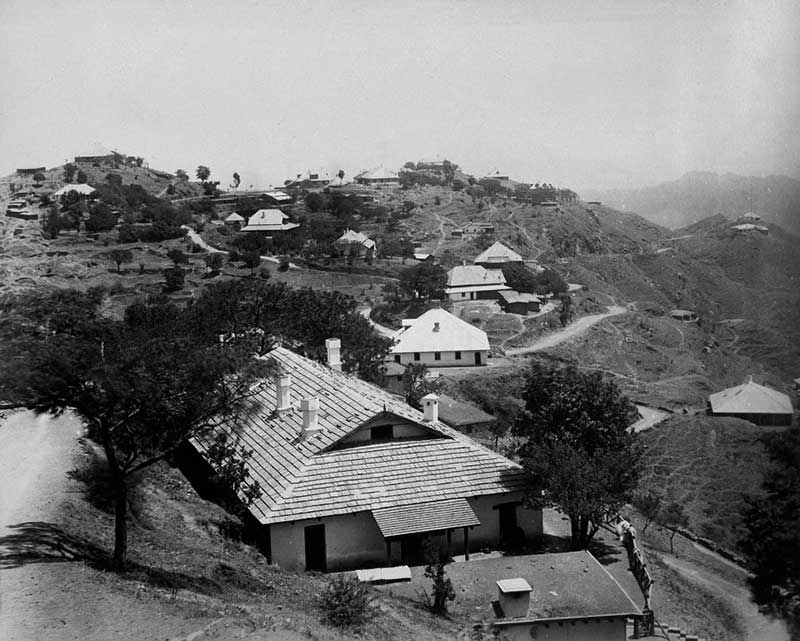
In 1856, Seaton went to Dagshai during his regulated 60-day leave to visit his brother Douglas, making by chance a new acquaintance – Captain William Hodson. In the next two years to come, although he did not know it yet, he would see far more of Hodson than he ever imagined. When he returned to Sialkot, he returned to more worries.
A musketry school had been established at his station, and while all went well for the first few months, suddenly, placards appeared on its walls, proclaiming the well-mouthed story of the greased cartridges. As no such cartridges had been distributed at Sialkot, even the sepoys found it ludicrous – they tore down the placards and gave them to Seaton. In his turn, he spoke to his native officers, and they, in a body, assured him they trusted the Company Bahadur. However, Seaton continued to feel uneasy. Within a few short months, those fears would suddenly be very real. Illness once again forced him to apply for leave. However, this time, he felt something he had never experienced before – an aversion to leaving his regiment, a “presentiment of evil” that caused him to cancel his planned trip twice. When he finally did start for Simla, it was May 1857. Nothing prepared him, however, for the shock he would receive when he did finally arrive at the hill station. Three days afterwards, on the 11th of May, the news arrived of the mutiny at Meerut.
The same afternoon, Seaton was informed that it was the C-in-C’s (Anson) wish that instead of returning to his regiment, he was to take command of the 60th BNI at Ambala. He arrived there on the 15th and managed to keep the regiment together until the 10th of June, when, at Rohtak, they mutinied to a man.
For Colonel Seaton, Delhi marked the end of his career with the native army of the East India Company. While on the Ridge, Seaton was seriously wounded on 23 July when a musket ball entered his left breast and came out of his back; he had been helping two other men carry the injured Captain Law back to camp when he was shot. Initially, Seaton did not seem to think the injury was anything to worry about; having “found no air issuing from the wound,” he simply concluded he had not been hit in the lung. However, shortly after arriving back at the tent he shared with Hodson, he fainted. Hodson galloped off to camp to fetch a surgeon who concluded that the ball had, in fact, struck a rib, fractured it, “driven it forcibly on the lung” before exiting his back. The surgeon concluded Seaton needed rest, absolute quiet and no talking, and it would be Hodson, the man many felt was nothing more than a bandit, who would be his nurse.
“Hodson’s care for me I shall never forget. He watched land tended me with the affection of a brother: he anticipated all my wants, prevented me from speaking (according to the doctor’s orders) and carefully excluded everyone from the tent.” (Seaton)
As it was, Seaton would see no more fighting before Delhi and on 20 September, he was off to Simla to recover. Here he would remain, recuperating until November, when a telegram arrived,
“If you wish to command the 1st Fusiliers, come to Delhi as soon as you can. Colonel Gerrard has been killed in action.”
Instead of the regiment of 1st Bengal European Fusiliers, he had expected, Seaton was given a column. Their first and what would be their only duty was to convey stores to Sir Colin Campbell at Cawnpore, but he only found out from General Penny on the 29th of November what was expected from him.
 Mutiny Reflections