A Deplorable Sight – Delhi Captured
According to Wilson’s General Order of the 6th of September, plundering was prohibited and the appointed prize agents were tasked with collecting and selling off “all captured property”, the proceeds of which were to be fairly divided up between the men. the order was widely ignored by both the officers and the men while the Sikhs, Balochis and Kashmir troops saw the plundering of Delhi as part of their just reward. The Multani troops had a more creative justification, saying the English had given them to plunder to make the people of the Punjab believe Delhi had been taken. They would be returning to their homes sooner than the British expected.
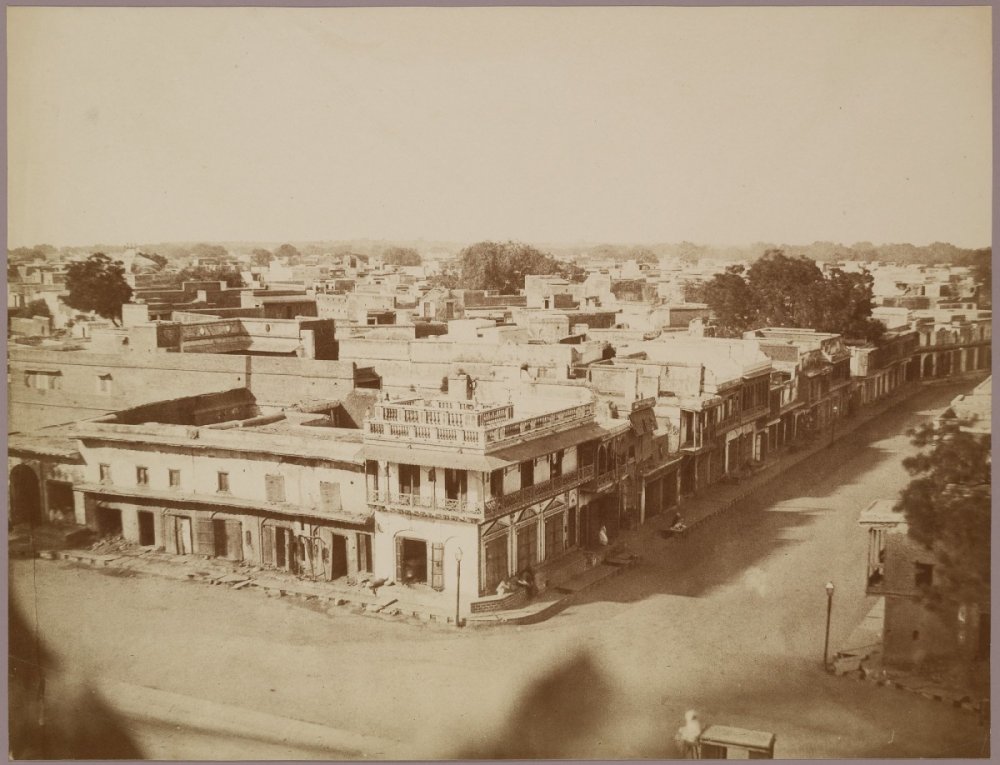
The city now presented a deplorable sight. Daly, after visiting Coke at the Jama Masjid where he was quartered with his men, wrote,
“The city is a wondrous sight; doors and windows broken open, here and there is a cat peering. Bottles, boxes, bedding, furniture and articles beggaring description cast about. Men of all colours searching and plundering. The inhabitants roam about, helpless and hungry in every direction. Nobles and delicate women, still carrying jewels and wealth, were without food and almost without covering. The desolation no language can paint…”
The Honourable Octavius Anson of the 9th Lancers picked up a drawer full of playthings for his children when he went through the zenana and a “mother-o-pearl lid of a box with a Persian inscription upon it”, which he hoped his wife could use to wind a ball of thread on. He saw Hope, Showers, and many others “looting innocently.” Hope took a sandalwood necklace while Showers was gripped with a need to read Persian books. Walker took a lovely brown and white Kashmir shawl, while the men of the 75th Regiment purloined a crystal vase (for the wife Richard Barter, as a thank you), of such prodigious size they had to wrap it in Kashmir carpets before sending it to Simla. Lang found a “little book which I say was a present from the Prince of Bokhara to the Delhi family!” It joined his small collection of pachisi markers. Young, who served on Wilson’s staff, succeeded in “picking up a couple of those pretty spotted goats…An Afghan chief made me a present of them.” His wife, it appears, admired spotted goats. The 60th Rifles purloined valuable Mirzapore carpets and turned them into their beds. The prize agents did what they could and ultimately £350,000 worth was handed in, but it was only a fraction of what the city held.
Honesty, however, did not pay. Soon after the fall of Delhi, Canning countermanded Wilson’s order and insisted the loot had been taken from British subjects (which under the law, the Indians were), and thus, there could be no payment made of prize money. The men would receive only the standard Company batta of 36 rupees,10 annas for privates and 450 rupees for lieutenants. This would have repercussions on further campaigns with men reluctant to give up anything they plundered and would spell certain disaster for cities such as Lucknow, where the immense wealth of the Awadhi capital would serve to line hundreds of pockets. Canning’s order was eventually rescinded under the weight of public pressure in Britain and the prize money for Delhi was finally paid out in 2 instalments between 1862 and 1865 and it amounted to nearly a year’s pay for privates (£17), 5 shares for lieutenants, 11 and a half for captains while Wilson retained the princely sum of a sixteenth of the total. (David)
 Mutiny Reflections
Another fascinating and absorbing read! A monumental piece of work!!!!!! Kudos to you for this!
LikeLiked by 1 person
Thank you so much!
LikeLiked by 1 person
You are very welcome!!
LikeLike