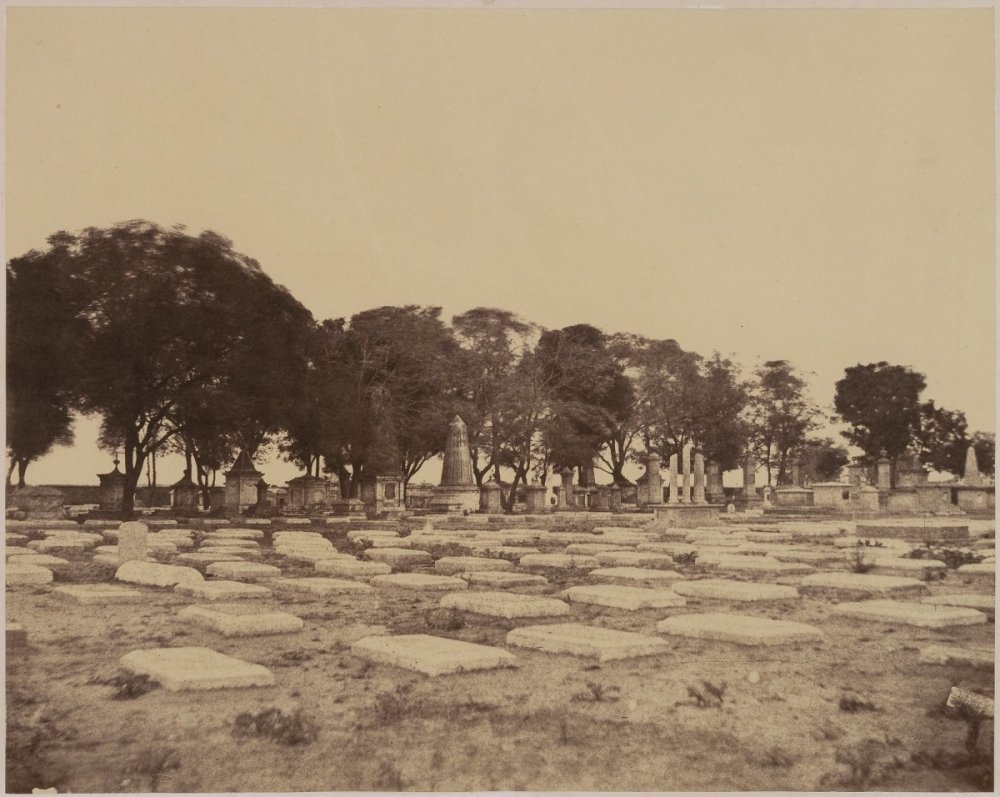
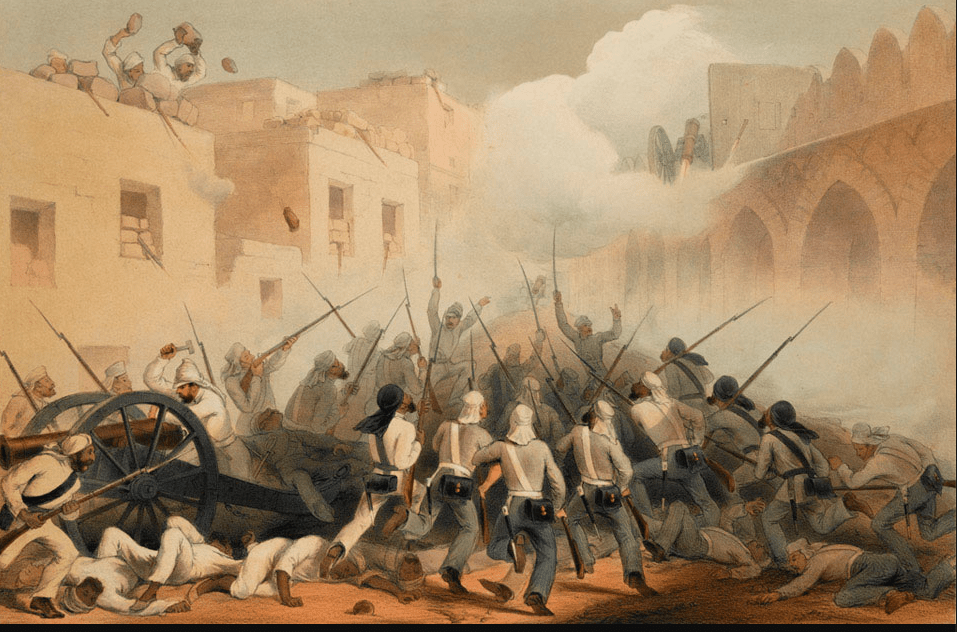
The official returns state 282 killed, 878 wounded, and 10 missing. The wounded and killed of the Jammu troops were not included in the returns.
Brigadier-General John Nicholson – wounded at Delhi -14th September 1857. Died 23rd September.
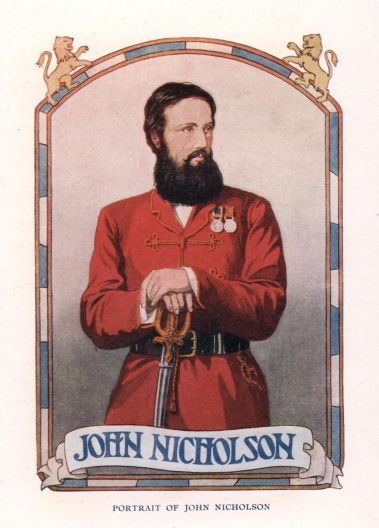
Aged 34. Son of Dr. Alexander Nicholson and Clara, of Dublin. Joined the Bengal Army in 1839. Served in the Punjab (1848). He was buried at the Cashmere Gate Cemetery, Delhi – “The grave of Brigadier General John Nicholson, who led the assault on Delhi; but fell in the hour of victory, mortally wounded, and died 23rd September 1857; aged 35.” His brother Charles, was also wounded on 14 September.
Infantry
1st BTN 8th Regiment
Brevet Lieut-Col J.C. Brooke HM 8th Sept 14, severely wounded
Captains
Baynes, R.S. – severely wounded
Beere, Daniel – severely wounded
Lieutenants
Metge, W.F. – severely wounded
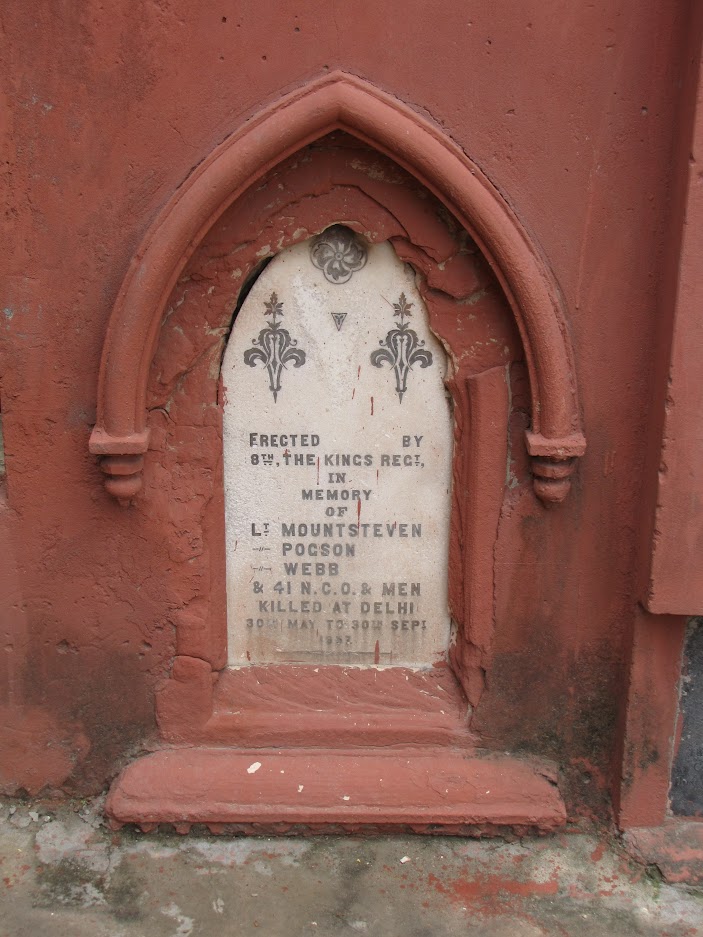
Pogson, William Waldegrave – wounded at Delhi 14th September 1857 – died of wounds, 17th September 1857, aged 30.
William Waldgrave Pogson was the son of the late Colonel Pogson of Risgram House, Suffolk. Born in 1827, he entered HM’s service on 27 March 1846 as an ensign in HM’s 64 Regiment of Foot, but on 3 April, he was transferred to the 8th Foot. The same month, the 8th was on its way to India, landing in Bombay in August. After a two-year sojourn, Pogson marched with the left wing to Bombay, and the following October, he was with the regiment in Karachi. On 9 February 1849, he was promoted to lieutenant. The regiment moved back down the country to Deesa in November 1850, and in March 1852, Pogson went home on furlough. He rejoined the 8th at Deesa in the spring of 1853, from whence they were marched to Agra at the end of 1854. Here, they remained until the end of 1855, when the regiment was sent to Jalandhar. In the spring of 1857, Pogson was officiating as adjutant of the regiment was there when the Bengal Native Infantry mutinied. Within a week of the mutiny, on 14 June, Pogson marched from Jalandhar with a portion of the 8th to join the force in Delhi. They arrived on the 28th. Pogson took part in the repulse of the sorties on the 9th, 14th, 18th and 19th of July – on the last occasion, he was wounded.
On 14 September, “while gallanty advancing with the storming party to the assault of the breach in the Water Bastion, he fell desperately wounded with a grape-shot in the leg. It was found necessary to amputate the limb, but he survived only three days. He died of his wound, in camp, on 17 September 1857.”
Sandilands, E.N – wounded.
Walker, G.J.- severely wounded
Webb, William Robert -mortally wounded, died of wounds 15th September.
The eldest son of Patrick Robert Webb Esq., William was born on 16 June 1838. He entered HM’s service on 7 September 1855 as an ensign in the 8th Foot. Having joined the regimental depot at Chatham, he continued serving there for just over a year. On 14 April 1856, he was promoted to lieutenant and sailed for India, joining the regiment at Jalandhar close to the end of the year. Following the outbreak of the mutiny in May, he accompanied a detachment of the 8th to secure the fort and magazine at Phillour; in the middle of June, he was sent with a wing of the 8th to Delhi, reaching the Ridge on the 28th. During the final assault, Pogson fell, mortally wounded in the advance on the Mori Bastion after the breach had been carried. He died the following day.
Sergeant Major James Robinson – severely wounded in the arm
Drum Major Patrick Byrne – contused by musket ball
Colour Sergeant John Baulden – mortally wounded
Corporals
Lee, Patrick – killed in action
McKay, Thomas – killed in action
Petch, Thomas – severely wounded
Ridsdale, William – mortally wounded, died of wounds
Robinson William – killed in action
Privates
Barber, William – severely wounded in the thigh and back
Barnett, John – dangerously wounded, died of wounds, 27th September
Barthrupt, Charles – killed in action
Bolton, William – killed in action
Brathby, Samuel – killed in action
Crowley, Patrick – killed in action
Cunningham, William – severely wounded in left femur
“…received a gunshot comminuted fracture of the left femur; the ball entered on the outer aspect, some 7 1/2 inches below the trochanter, and has never been found. He states that he was at once placed in a dooley, and the limb shortly after put up in a long splint; was twice moved to different houses which were set apart as hospitals at Delhi, and at the expiration of three months he was sent to Umballa in a dooley, a distance of eleven days’ march, without any splint, the bone still ununited; and, according to the patient’s statement, the splint never was replaced. The upper fragment of the femur projected in front, and protruded through the integuments, and a portion came away by necrosis; extensive abscesses formed, and the limb was left perfectly free of any apparatus, as the patient was in such a weak and exhausted condition that it was not expected he would survive; and it was thought that he was not capable of bearing amputation of the limb. He states that while at Umballa, the fracture united, and after being there two months, he was sent to the Hill Station at Landaur, in a dooley.” In April 1859, 17 months after the injury, Cunningham’s leg was now 4 inches shorter than the other, and the wound had still not completely healed. In May 1859, he was able to put weight on the leg and was fitted “with a high-heeled boot with a long thigh-piece, &c, attached, using which apparatus he is able to walk tolerably well, with the assistance of a stick.” It was the end of his active service – in the same month, he was invalided aged 33.
Donovan, James – killed in action.
Dooling, James – killed in action.
Driscoll, Cornelius – severely wounded
Dumarick, William – killed in action
Fullalove, Stephen – severely wounded
Goold, William – severely wounded
Grieves, William – killed in action
Johnston, William – killed in action
Keating, John – killed in action
Knapp, John – severely wounded
McCabe, Francis – severely wounded
Mc Carthy, Michael – killed in action
Maguire, John – killed in action
Malone, John – killed in action
Morgan, John – severely wounded
Murphy, William – killed in action
Noah, Andrew- killed in action
O’Mealy, John – severely wounded
Owens, Edward – severely wounded in arm
Roche, John – severely wounded, died of wounds 27th September
Saint, Robert – severely wounded
Sweeney, Edward – severely wounded, aged 26. The musket ball “…entered at the left side of the face, fracturing the lower jaw opposite to the first molar tooth, and passed across to a corresponding part on the opposite side of the lower jaw, where it made its exit. The portion of the symphysis of the lower jaw in front was, for about three months, quite loose and detached; several pieces of bone came away from the fracture on the left side; none came away from that on the right side, which became united in about three months after.” 11 months later, he still could not open his mouth completely and his chin was “distorted. ” He was invalided on the 16th of August 1858.
Thomas, James – severely wounded,
Turner, John – dangerously wounded, died of wounds
Wood, Edward – severely wounded
HM’s 52nd Regiment, Light Infantry
Colonel G. Campbell – slightly wounded in the assualt
Captain (Brevet Major) J.A. Bayley – severely wounded in the arm
Lieutenants
Atkinson, W. – slightly wounded. Early on in the action, when the 52nd were ordered to lay down to avoid the musketry from the walls of Delhi, Atkinson impaled himself on a cactus bush. Then, to add insult to injury, he received a shot in the ribs from a spent bullet. When Captain Bayley saw him on the Ridge, he was lying perfectly still, unable to move. Besides his obvious injuries, the “unusually severe pedestrian exercise to which he had been subjected during the day’s fighting, he might be a mighty rider, and not given to walking, except at such times as duty required, and he could not help it.” (Bayley)
Bradshaw, James Hill -killed in action. Aged 20. He was killed whilst charging a gun.
Simpson, T.- wounded.
Sergeant-Major James Street was severely wounded in the abdomen
Colour-Sergeant John Thomas – slightly wounded
Sergeants
Brookbank, Robert – severely wounded, right thigh
Ellis, William – severely wounded, right arm amputated
James, John – severely wounded
McKeowin, Richard –mortally wounded. McKeowin was taken to the field hospital, and the last person he spoke to was Reverend Rotton. Rotton had known him since 1855 when the regiment had first come to Meerut, and McKeowin was a corporal. Rotton remembered his manly and handsome cooutenance that lit up with a particularly sweet smile; something Rotton said gave McKeowin a heavenly face. With no bed to give him, Rotton added some extra straw on the ground for McKeowin to lay on and then, holding his hand, read verse after verse of the 23rd Psalm to him as he died. Shortly after, Rotton took him to the grave and marked it personally with a plain stone with a simple inscription, the only thing he could do for a man for whom he had infinite love and respect.
Moore, Alfred – severely wounded in the chest
Moore, James – severely wounded, left hip
Palk, William – severely wounded, shot through the cheek and mouth, lost a few back teeth. He survived.
Corporals
Gent, George – wounded
Nelson, George – dangerously wounded, died of wounds
Reid, Charles – severely wounded
Ryan, Patrick – severely wounded in the left arm
Buglers
Miller, Robert – wounded; died of cholera 28th September
Ward, William – dangerously wounded, left hip
Privates
Amos, George – killed in action
Birmingham, Charles – died of febris
Bottomley, George – severely wounded, back
Boylan, James – killed in action
Brown, John – killed in action
Busby, George – killed in action
Butler, John – killed in action
Butt, John – severely wounded, left leg amputated. Died 5 October
Byrne, Edward – severely wounded, left leg amputated
Byrne, John – killed in action
Byrne, Patrick – killed in action
Byrns, Edward – wounded
Campbell, James – slightly wounded
Campbell, Neill- severely wounded
Carroll, Michael – severely wounded, two fingers left hand amputated
Chapple, William – severely wounded in the back
Colclough, Robert – severely wounded, left thigh
Condran, Patrick – killed in action
Cooney, Bartholomew – severely wounded, left shoulder
Crawley, James – wounded
Daniels, John – slightly wounded, left arm
Daniels, Thomas – killed in action
Daly, John – killed in action
Desmond, Patrick – wounded
Doyle John – severely wounded, right hip
Fitzgerald, J. – slightly wounded
Gleeson, Thomas – killed in action
Glover, Frederick – severely wounded, right arm amputated
Goose, Simon – killed in action
Grady, Thomas – killed in action
Harborrow, William – dangerously wounded, died of wounds, 24 September
Harding, Samuel – slightly wounded, chest
Hayes, Jeremiah – wounded
Heney, William – severely wounded, left groin
Howe, Brockwell – killed in action
Howith, Richard- severely wounded, right thigh
Hubbert, John – killed in action
Jones, Frederick – severely wounded, the middle finger of his left hand amputated
Kavanagh, Peter – killed in action
Kelly, Charles – dangerously wounded in the left leg, died of amputation, 3 October
Lloyd, John – slightly wounded, chest
Loughlin, John – killed in action
Lynch, Frederick – severely wounded, right arm amputated
McConville, John – severely wounded, shoulders
McGrain, Constantine – dangerously wounded in the left. Died of amputation, on October 30, at Delhi.
Marshall, James – severely wounded, shot in the left arm. Marshall was 27 years old. He was wounded by a pistol ball which passed through the elbow joint. Although the wound healed, the elbow remained bent, and he lost sensation in the “little and one-half of ring fingers.” He was invalided on the 22nd of July 1858.
Manson, George – wounded
Middle, Thomas – severely wounded, left arm
Moore, John – killed in action
North William – slightly wounded 12th July, severely wounded 14th September, left foot amputated.
Padan, William – dangerously wounded, died of amputation on October 14
Pither, William – severely wounded, left arm amputated
Prunty, Patrick – slightly wounded, left arm
Rackley, George – killed in action
Reid, Charles – severely wounded, right knee
Riley, James – mortally wounded. Died 22 September
Riordan, Daniel – dangerously wounded, died of wounds 24 October
Selfe, William – wounded in the cheek
Shallis, John – died of cholera
Siggins, James – severely wounded in the right ankle
Smith, Joseph – killed in action
Sole, William, wounded
Spooner, James- slightly wounded
Sugden, James – wounded
Walters, John – died of cholera
Ward, William – killed in action
Wilson, George – severely wounded, right arm
Wood, Matthew – wounded
1/60th Foot
Captain G.C.H. Waters – severely wounded
Lieutenant P.J. Curtis – severely wounded 12th of June, and again 14th September
Colour Sergeant George Young – slightly wounded 23rd July, severely wounded 14th September
Sergeants
Beal, William – severely wounded
Carpenter, George – killed in action
Cunningham, James – severely wounded
Joyce, Thomas – severely wounded
McCarthy, Michael – killed in action
Mulvaney, Thomas – severely wounded
Young, George – severely wounded
Colour Sergeant James Baker – severely wounded
Lance-Sergeants
Bishop, Thomas – killed in action
Kelly, William – killed in action
Lance-Corporal Henry John Edmonds – killed in action
Corporals
Lafferty, Malcolm – slightly wounded
Buglers
Lees, Robert – killed in action
Miller, William -severely wounded
Silwood, James – slightly wounded 17th June, and severely 14th September
Sutton, William – severely wounded
Privates
Bailey, James – severely wounded
Benson, Richard – slightly wounded
Bentley, David – killed in action
Bowe, Edward – severely wounded
Brady, Patrick – severely wounded
Butler, John – slightly wounded
Challis, Samuel- killed in action
Connellan, Patrick – severely wounded
Cross, John (2343) – wounded
Curren, Matthew – severely wounded
Dowling, Patrick -severely wounded
Drake, Frederick – severely wounded
Edmonds, John – killed in action
Edwards, George – slightly wounded
Farthing James – severely wounded 9th of September and again 14th September
Flanagan, Patrick – severely wounded
Green, William – slightly wounded
Gordon, Hugh – killed in action
Gowing, Daniel – killed in action
Green, William – slightly wounded
Groves, Richard – mortally wounded
Hazlett, William – severely wounded
Hogan, Timothy – killed in action
Hurley, John – killed in action
Ilsley, George – killed in action
Jackson, George – killed in action
Johnson, Robert – severely wounded
Jones, William – slightly wounded
Kneeshaw, Francis – slightly wounded 8h of June and again 14th of September
Knight, William – slightly wounded
Lafferty, Charles – dangerously wounded
Lamb, Adam – severely wounded
Leonard, James – killed in action
Magee, Samuel – dangerously wounded, died of wounds 16th September
McConnell, Robert- dangerously wounded
McDonald, James – dangerously wounded, died of wounds 16th September
McEvoy, Robert – severely wounded
McNamara, James – killed in action
McNamara, Michael Durack – killed in action
Magee, James – severely wounded 26th August and again 14th September
Martin, Thomas (2837) – killed in action
Mellor, John – killed in action
Meydell, Isaac – mortally wounded
Miller, Edmond – severely wounded. He was injured by a musket ball which “struck the centre of the popliteal space, but, as far as could be observed at the time, not entering the joint or causing any fracture; great swelling and effusion occurred, with considerable disturbance, and excessive pain on moving the limb, or even the mildest manipulation. The ball was extracted, with some difficulty, from the aperture of entrance, which rapidly healed, and again broke out.” He was invalided on the 22nd of July 1858, his knee permanently stiffened, but he was able to walk.
Minogue, John – severely wounded
Murphy, John – severely wounded
Murphy, Patrick – mortally wounded, died of wounds
Murray Patrick – slightly wounded 15th June and again 14th September
Needham, Martin – severely wounded
Parke, John – severely wounded
Parsons, William – killed in action
Peake, John – severely wounded “…by a musket ball, which penetrated the body on the right side, about an inch from and in a line with the ensiform cartilage, wounding the organs within, and passing with slight obliquity downwards to the left side , to the ninth and tenth ribs, where it issued, and a piece of lung pertruded; the wounds did not heal for five months; had vomiting of blood after the accident, and was insensible.” Although his wound eventually healed, he was invalided at age 24, on the 22nd of July 1858.
Peate, Charles – killed in action
Price, James – killed in action
Punch, Thomas – dangerously wounded, died of wounds 21st September
Quinn James – killed in action
Rae, George – severely wounded 12th of June, and again 14th September
Robertson, Luaghlin- severely wounded
Robinson William – killed in action
Ryan, Thomas – killed in action
Sands, Iden – severely wounded
Saunders, Henry – severely wounded
Savill John – killed in action
Small, John – dangerously wounded, died of wounds 17th September
Snook, James – severely wounded
Spence, William – severely wounded
Steptoe, William – severely wounded
Taylor, Charles – dangerously wounded, died of wounds 30th September
Temple, William – killed in action
Thompson, George – slightly wounded
Thompson, John – dangerously wounded, died of wounds 16th September
Turner, Henry – severely wounded
Walsh, James – mortally wounded
Walton, Johnathan – killed in action
Ward, William – killed in action
Watson, William (1438) – killed in action
Wheeler, George – killed in action
Woodward, John – wounded
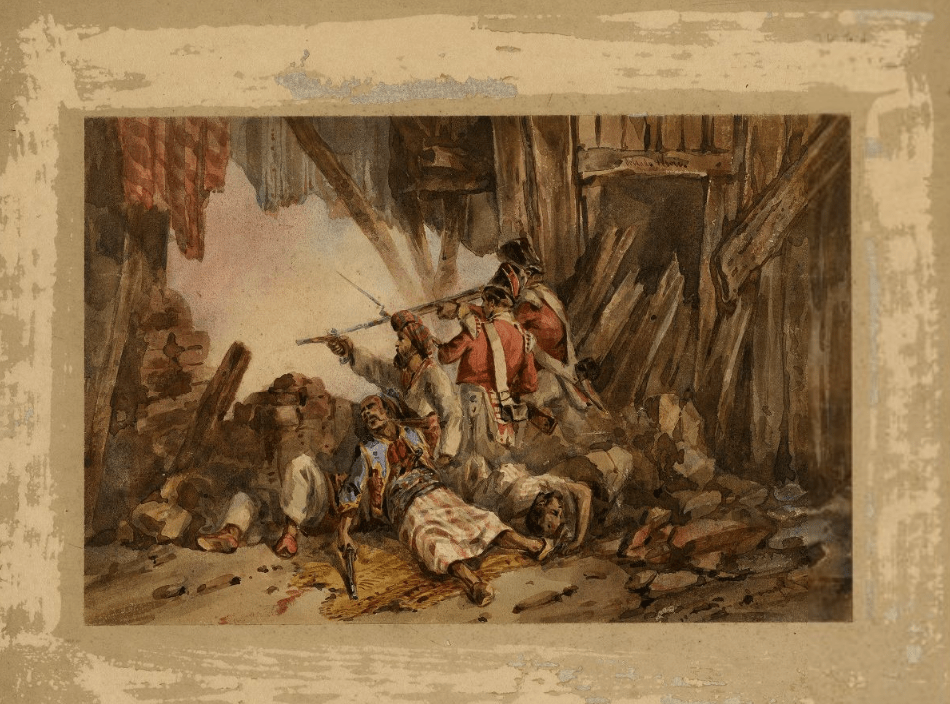
61st Foot
Captains
Burnside, Henry E.H. – Brigade Major, 3rd Inf Brigade – slight sword cut in right hand 9th July, severely wounded in the head 14th September
Deacon, W.E.D.- severely wounded in leg
Lieutenants
Moore, Thomas M. – slightly wounded in right shoulder
Young, Arthur, C. severely wounded in arm
Sergeants
Brown, James – slightly wounded in both legs
Burke, William – severely wounded in head
Higgins, James – severely wounded in hand and arm
Joy, Thomas – severely wounded in the foot by a shell splinter
McKeon, Patrick – killed in action
Robertson, George – slightly wounded in the back
Scanlon, Thomas – killed in action
Young, Adam – severely wounded in right leg
Corporals
Brown, James – slightly wounded in both legs
Burke, William – severely wounded, musket ball to the head
Dooling, Patrick – killed in action
Jones, Frederick – severe sword cut in arm
McKenzie, Donald – slight wound in the thigh
Robertson, George – slightly wounded, musket ball to the back
Sheppard, George – dangerously wounded, died of wounds 29th September
Young, Adam – severely wounded, musket ball to the right leg
Drummers
Neylan, William – slightly wounded
Vanston, Robert – slightly wounded
Privates
Anderson, William – severely wounded in the scrotum by a shell splinter
Box, Richard – severely wounded in right leg
Broderick, John – killed in action
Carter, Edward – killed in action
Coffey, William – severely wounded in hand and leg
Collinson, James – dangerously wounded, died of wounds 29th September
Connor, John – severe sword cut in the neck
Coulter, Robert – severely wounded, sword cut to the face
Davis, Thomas – killed in action
Eland, William – severely wounded, musket ball to the arm
Fletcher, George -killed in action
Frawley, Thomas – killed in action
Gilfoyle, Michael – severely wounded by a shell splinter to the head
Gilroy, Michael – dangerously wounded, arm amputated, died of wounds
Gorman, Michael – killed in action
Gorman, William – killed in action
Haslan, Peter – killed in action
Haughney, John – slight musket ball wound to the right foot
Higgins, Patrick – killed in action
Hughes, Samuel – severely wounded by musket ball to the fingers of the right hand
Jones, George – severely wounded in head
Keating, Thomas – slight contusion to head
Keefe, David – killed in action
Laden, James – severely wounded in hand
Leaden, Charles – killed in action
Leech, William – severely wounded in arm
Llewellyn, William – severely wounded in both thighs
Lodge, James – killed in action
Lyons, Michael (2) – killed in action
McBride, James – killed in action
McDonald, Michael slightly wounded by a musket ball to the head
McFarlane, Archibald – killed in action
McGinley, James – severely wounded in hand
McShavey, William – slightly wounded in hand
Madden, James – killed in action
Mahoney, Thomas – slightly wounded in shoulder
O’Brien, Francis – killed in action
O’Connor, Dennis – severely wounded in shoulder
O’Donnell, Patrick – killed in action
Owens, John – killed in action
Parr, Henry – killed in action
Poppy, Isaac – slightly wounded in arm
Power, Patrick – severely wounded in head
Regan, Andrew – killed in action
Reid, James – killed in action
Rice, Henry – severely wounded in arm
Rodgers, Samuel – killed in action
Rogers, William – killed in action
Rownan, John – killed in action
Ryan, Bernard – killed in action
Shaw, Richard – mortally wounded
Smith, Simpson – severely wounded in leg
Strecks, George – severely wounded in arm
Swain, Robert – slightly wounded in arm
Symes, George – killed in action
Turner Thomas (2) -killed in action
Walsh, Michael (2) – killed in action
Watson, James – killed in action
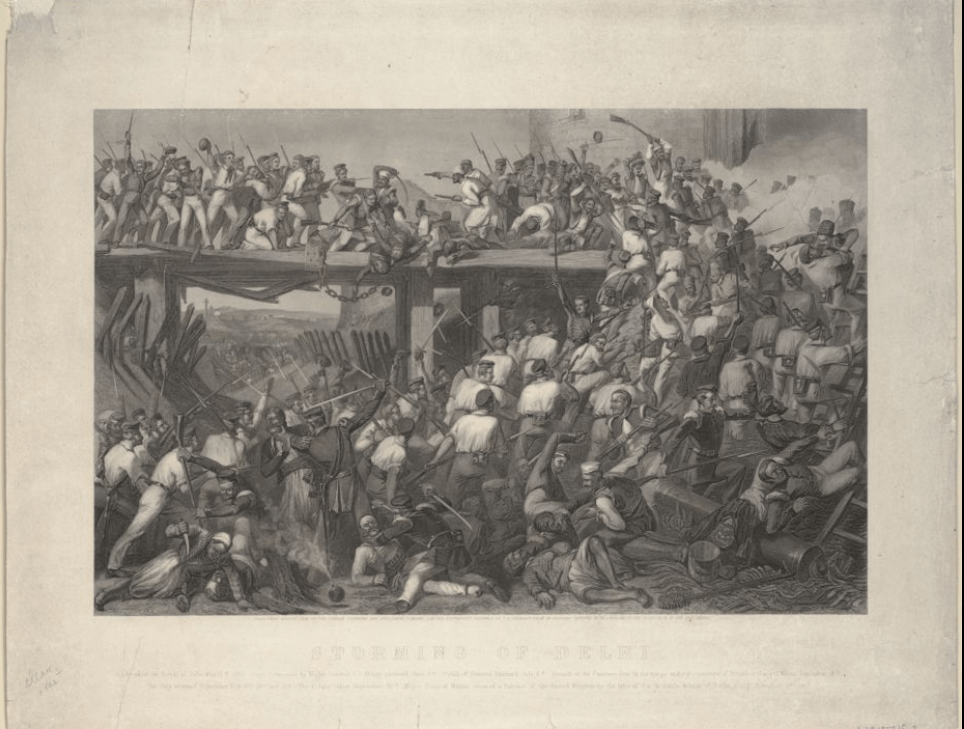
75th Foot – 1st Gordon Highlanders
Lieutenant Colonel Charles Herbert – severely wounded 8th of June and slightly wounded 14th September
Captain R. Freer – attached from 27th Foot, severely wounded by ball through the leg
Lieutenants
Armstrong, Edward – slightly wounded
Fitzgerald, John Richard Sherlock – killed in action at Delhi by a discharge of grape inside the walls of Delhi. Age 29. “A braver man never lived, but it was patent to us all that he expected to be killed for he was silent and gloomy all the night instead of, as he always used to be, full of fun and cheery” (Richard Barter)
Watson, Richard – wounded
Ensigns
Dayrell (or Darrell) Thomas – severely wounded by a musketball through the leg; 58th BNI attached to the HM’s 75th
Wadeson, Richard – severely wounded
Paymaster David F. Chambers – slightly wounded
Sergeant-Major Eugene Courtenay – slightly wounded
Sergeants
Hampton, William – dangerously wounded, died of wounds 22nd September
McEvoy, William – severely wounded
Murray, Michael – died of wounds
O’Connell, Michael – killed in action
Philpott, George- killed in action
Lance-Sergeant Cornelius Hollingsworth – slightly wounded
Corporals
Brudenell, George – severely wounded in hip
Carroll, Edward – severely wounded
Coyne, William – severely wounded in right leg
Hanlon, Patrick – severely wounded in back and arm
Wilkins, William – killed in action
Privates
Arnold, Richard – severely wounded in right arm. Amputated
Baker, Alfred – killed in action
Bell, Thomas – slightly wounded
Berry, David – severely wounded in both thighs
Byrne, James – severely wounded
Button, William – slightly wounded
Byrne, James – severely wounded in abdomen
Callan, Patrick – severely wounded in left arm
Carroll, Edward – severely wounde
Clarke, William – severely wounded in left arm
Clover, Alfred – wounded in right hand
Collins, Edwin – severely wounded in right thigh
Collins, Michael – wounded in elbow
Coyne, William – severely wounded
Cranaway, Isaac – dangerously wounded, leg amputated
Curtis, John – severely wounded in left thigh
Desmond, John – severely wounded in right arm
Eadie, Archibald – shot in thigh, died of wounds
Eastman, John – severely wounded in neck
Elliott, George – severely wounded in head
Elton, Thomas – killed in action
Finan, James – killed in action
Fisher, Thomas – missing, presumed killed action
Flanagan, Michael – killed in action
Foster, George – severely wounded in left arm
Fox, Patrick – severely wounded in chest
Gillinaud, John – slightly wounded in chest
Hackett, Duncan – killed in action
Hanlon, Patrick – severely wounded
Harrigan, Michael – slightly wounded
Harris, Samuel – slightly wounded in hip
Hazelwood, Lawrence – severely wounded in thigh
Hilton, Thomas – killed in action
Holtby, John – killed in action
Hughes, Daniel – slightly wounded in back
Jarvis, John – slightly wounded
Keegan, James – severely wounded in right thigh
Kenyon, John – severely wounded in thigh
Knighton, Michael – slightly wounded – orderly to Colonel Herbert, shot through the arm
Laherty, Michael – dangerously wounded, died of wounds 22nd September
Leigh, Edward – wounded in right arm
Linnane, Thomas – severely wounded
McKenzie, Angus – wounded in left arm
McMahon, Patrick – severely wounded in back
Maddigan, Michael – slightly wounded
Mahon, Christopher – severely wounded in chest
Mann, John – killed in action
Martin, James – severely wounded in left thigh
Meath, John – severely wounded
Murphy, John – killed in action
Murphy, Patrick – slightly wounded
Murtagh, Thomas – wounded in left hand
O’Dea, Brian – slightly wounded in right hand
O0Dea, Thomas – slightly wounded in forehead
Peck, Shadrack – severely wounded in left hand
Peel, John – severely wounded in right leg
Philpott, Richard – killed in action
Popham, Joseph – severely wounded in chest
Rich, James – wounded in left groin
Ryan, John – slightly wounded
Ryan, Thomas. severely wounded in right leg, amputated
Slader, William – slightly wounded in left knee
Smith, John – severely wounded in left arm
Steptoe, George – severely wounded in left leg. The musket ball penetrated his leg, breaking the bone “and passed out on the outer side of the leg at its upper third; several pieces of bone came away from both wounds.” Although the exit wounds healed, Steptoe was still indisposed on the 26th of July 1858, as the entrance wound refused to heal. Whether he died is not mentioned, but it would appear a portion of the tibia was removed at Fort Pitt in England.
Stone, James – slightly wounded in left leg
Swain, Joseph – severely wounded in right arm
Tait, Henry – killed in action
Thompson, William – severely wounded in right thigh (fractured)
Waghorn, John -killed in action
Waglin, John – severely wounded in right foot
Wall, William – severely wounded, right arm fractured
Webb, James – severely wounded in neck
Whelan, James – wounded in left thumb
Woods, John – severely wounded, died of wounds on 23rd September
Wynne, James – killed in action
Young, John – severely wounded in the leg and scrotum. The bullet exited through the centre of his hip, posteriorly. Although he lost his left testicle, his wounds healed, and he was back on duty on the 21st of July 1858.
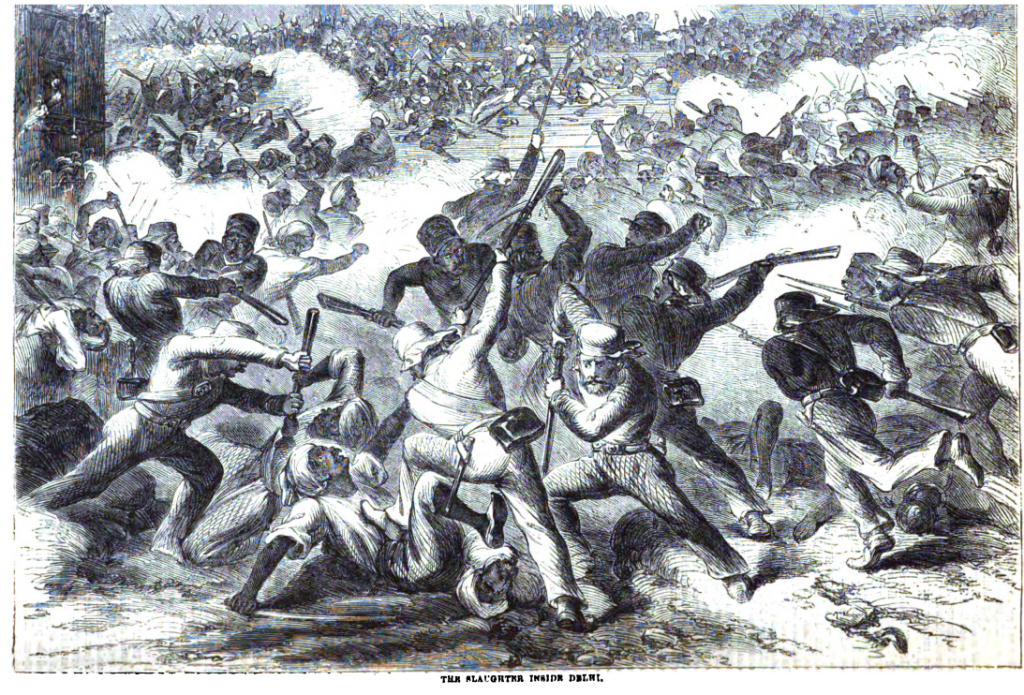
1st European Bengal Fusiliers
Major George Ogle Jacob – mortally wounded at Delhi. Aged 38. Son of Surgeon George Jacob (Bengal Medical Service).
George Ogle Jacob joined the EICo’s Bengal Army in 1837 and was promptly sent on arrival to Barrackpore to serve with the 54th BNI. This was a short posting for within a month, Jacob joined the Bengal European Regiment. As that corps was under orders to serve with the Army of Sutlej, Jacob was ordered to travel “express and join it at Karnal as quickly as possible.” He arrived on time and the regiment marched to Afghanistan, where Jacob and the regiment would serve through out the campaigns on 1838 upto 1840, including the storming and capture of Ghazni, (he was slightly wounded and received the campaign medal), the occupation of Kabul and the capture of the Kajja Forts in the Wazira Valley. Early in 1841, the regiment was sent back to India, to Karnal, and was there until the autumn of 1842, when they were sent to Ferozepore to form the Army of Reserve. When the work was over and the Army broken up, the regiment, now called the 1st European Light Infantry, proceeded to Subathu. After a short stint in Ludhiana and Ferozepore, they were back in Subathu in 1844.
On the outbreak of the First Sikh War, Ogle was once again in the field with his regiment when they joined the Army of the Sutlej one day after the battle of Mudki. However, Jacob had been placed at the disposal of the Commissariat Department just two days previously, but nevertheless, he fought with his regiment at both Firozashahr and Sobraon; for the rest of the campaign, he served with the commissariat and received the campaign medal and clasp.
Following the war, it was back to Subathu for the regiment and Jacob, who was quick to join the Regiment of Ferozepore, where he was appointed Adjutant. Towards the end of September 1846, this regiment was in Ambala, and Jacob served the following year as officiating second in command. In July 1848, promoted to captain, he rejoined his own regiment at Cawnpore, where, in 1849, he temporarily officiated as Second-in-Command of the Regiment of Ludhiana.
On the formation of the Punjab Irregular Cavalry, he was appointed, in 1849, Second-in-Command of the 5th Punjab Cavalry; on 31 May, he transferred in the same position to the 2nd Punjab Cavalry. However, less than a month later, on 25 June, he was appointed Second-in-Command of the 4th Punjab Cavalry, and with this regiment would serve for over four years on the Dera Ghazi Khan border. By 1850, after having officiated for two months, he was appointed the regiment’s commander. In April 1853, he led the 4th Punjabis against the Khasranis, after which they marched to Kohat. With a few more exciting expeditions behind him (including Mirzani and Kuram, including the capture of Torawari), Jacob resigned his appointment as Commandant of the 4th Punjab Cavalry in January 1857 and took six months’ leave to Kashmir and Simla.
He happened to be in Simla in May 1857 and wasted no time in rejoining his old regiment, now called the 1st Bengal European Fusiliers, on the 13th at Dagshai. Ordered by the C-in-C to make haste to Ambala, Jacob, as Major and the senior most officer present, took command of the Fusiliers and marched them down from the hills. He then took them to Karnal, where he was superseded in command when the next senior-most officer arrived. They would fight at Badli-ki-Serai and all subsequent engagements on the Ridge. On 23 June, Jacob was returned to the command of the regiment and remained so until the end. He led them successfully at Najafgarh and through the operations on 14 September, but unfortunately, during the desperate fighting at the Kashmir Gate, Jacob, ever in front, managed at least for a moment to remain unscathed, but later in the day, he was shot through the thigh. The wound would prove mortal as the bullet had smashed the bone to bits; however, Major Jacob, even with such an awful injury, refused to leave his men. Instead, he remained on the ground and continued encouraging their attack. Following the inevitable amputation, he died at ten o’clock the same night.
Grave at Rajpura Cemetery, Delhi – “Sacred to the memory of Major George Ogle Jacob, 1st Bengal Fusiliers, who whilst commanding his Regiment fell mortally wounded at the storming of Delhi, on the 14th September 1857, aged 38 years. This monument is erected by his family.”
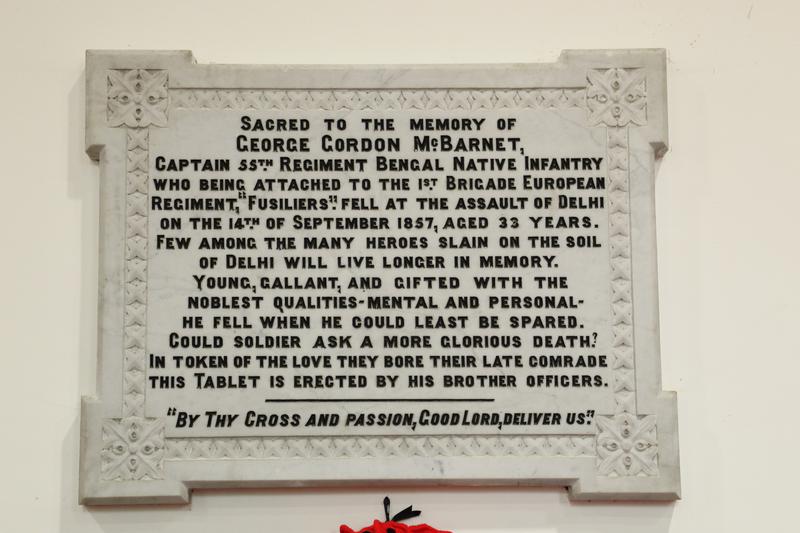
Captain George Gordon McBarnett – killed in action at Delhi – 14th September 1857 (55th BNI) attached to the 1st Bengal European Fusiliers. Son of Captain Donald McBarnett, of Ballichroan, Inverness-shire, born in 1823. Joined the Bengal Army in 1840.
George Gordon McBarnett arrived in India in March 1841 and was posted on the 1 April to the 55th BNI, then at Nasirabad. Early the next year, they joined the Army of Reserve at Ferozepore, and in 1843, they were sent off to Sukkur in Sindh. India did not agree with McBarnett, and, with his health broken, he proceeded the same winter to Mussoorie and Simla on sick leave. A year later, in November 1844, he rejoined his regiment at Meerut, where they remained until December 1845, when they were ordered to join the Army of the Sutlej. The same month, he was appointed Interpreter and Quarter Master of the regiment. Although he served with the 55th through the Sutlej Campaign between January and March 1846, he did not take part in any of the great battles; at the end of the war, it was back to Meerut, where they arrived in April 1846.
The climate still did not agree with McBarnett. In September 1847, he proceeded to Simla on sick leave until February 1848, when he was obliged to return home on furlough, vactating his position as interpreter and quarter master. He did not return to India until 1851 when he joined his regiment at Nowgong, appointed now as acting interpreter and quarter master. In 1854-55, the regiment was stationed in Multan; however, in 1854, McBarnett’s services were placed at the disposal of the Lieutenant Governor of the Northwestern Provinces, and he was given the position of Extra Assistant Commissioner of the Saugor-Narbadda Territories. This did not suit him in the slightest, for a month later, the appointment was cancelled at his request, and he rejoined the 55th. When the regiment was ordered to Nowshera in the autumn of 1856, McBarnett took leave shortly after and went to Kashmir, where he happened to be when the mutiny broke out. The 55th BNI mutinied at Nowshera on 22 May, leaving McBarnett without employment, so he was eventually sent down to Delhi. He arrived on 1 September and was appointed to duty with the 1st Bengal European Fusiliers.
Attached to Ried’s Column on the 14th, McBarnett was killed during advance, “whilst leading his men with the most distinguished gallantry.”
Grave in Sadar Bazar, Delhi – “Here repose the following officer, non-commissioned officers and men of the 1st Bengal Fusiliers killed in the attack on the enemy’s fortified position at Kissen-gunge on the morning of the successful assault and storm of Delhi. Captain G.G. McBarnett, 55th NI (attached).”
Memorial at the old church, Kingussie, St. Columba’s – “Sacred to the memory of Captain George Gordon McBarnet, 55th Regiment Bengal Native Infantry, who, being attached to the 1st Bengal European Regiment Fusiliers, fell at the assault of Delhi on the 14th September 1857, aged 33 years. Few among the many heroes slain on the soil of Delhi will live longer in memory; young, gallant, and gifted with the noblest qualities, mental and personal, he fell when he could least be spared. Could a soldier ask for a more glorious death? In token of the love they bore their comrade, this tablet is erected by his Brother-Officers.”
Captains
Caulfield, J.P. – (3rd BNI) attached 1st Fusiliers – slightly wounded
Graydon, William – (16th BNI), attached 1st Fusiliers – severely wounded
Greville, Southwell – severely wounded. Shot in the shoulder. He had been injured on two previous occasions.
After they had been seen to by the doctors, Major Jacob and Captain Greville occupied the same tent. Jacob’s fear, as he lay dying, was that his groans would disturb the captain, telling him, “I know you are badly wounded, and in pain, but pray pardon my groaning, I try not to disturb you but I cannot help it.” Greville, exhausted from the loss of blood, fell asleep only to wake half an hour later to find a sheet had been drawn over Jacob. His last words, it was maintained, were in “perfect harmony with the whole tenor of his life, shown in his never-failing courtesy and consideration for others.” He was brave and chivalrous, respected by everyone and “most loved by those who knew him best.”
Lieutenants
Butler, Thomas – severely wounded in the attack on Lahore Gate
Lambert, Edwin. A.C. – slightly wounded. Hit in the leg by splinters.
Owen, A.G. – severely wounded. He was wounded “across the whole of the right side of the head, the skill laid bare; and hit just over the left eye by another bullet.”
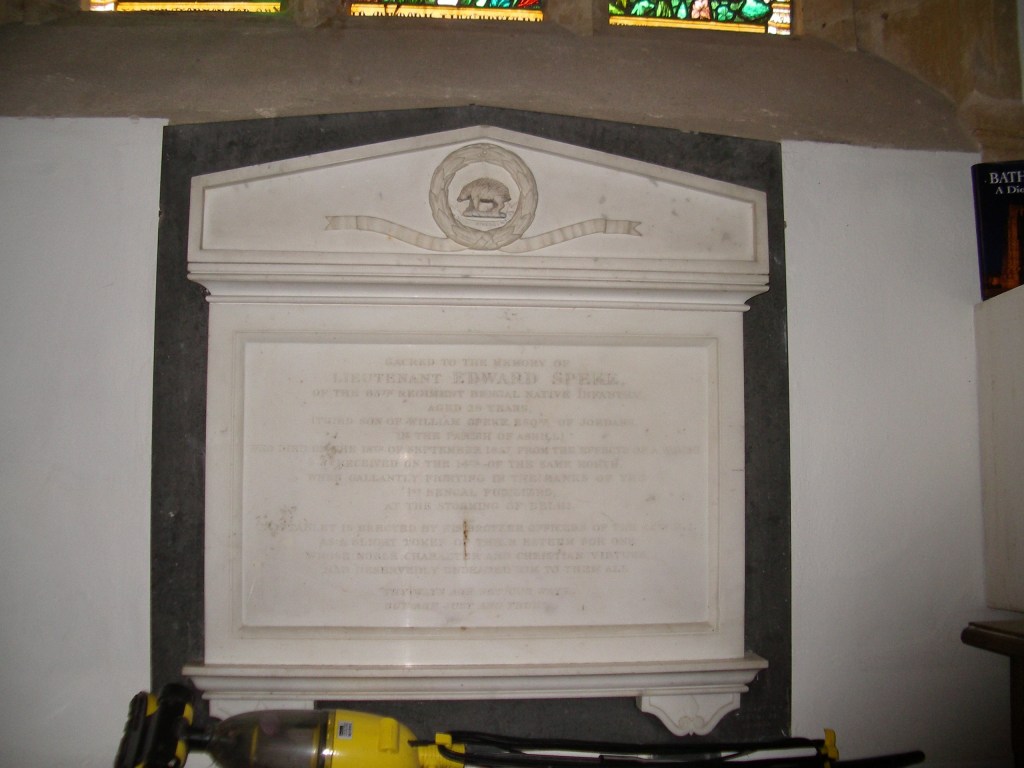
Lieutenant Edward Speke – wounded at Delhi, 14th September – died 18th September 1857
Attached to the 1st Bengal European Fusiliers. Aged 29.
Born in 1828, Edward Speke was the third son of William Speke, Esq., of Jordans Co., Somerset, and the younger brother of Captain John Hanning Speke, 46th BNI, the renowned explorer and one of the discoverers of the source of the Nile.
Edward joined the EICo Bengal Army in 1850 and arrived in India the following year. He was sent to Benares to do duty with the 33rd BNI, but in March 1852 was posted to the 65th BNI, which he joined in Lahore. The following year, the regiment marched to Bengal, where they remained at Barrackpore until told off for duty in Burma, where they arrived in January 1854. Although Speke would return to India in 1856 to take charge of a detachment of the 8th Irregular Cavalry, he returned shortly after to Burma, where he remained with the 65th until they sailed back to India in early 1857. Leaving the regiment in March 1857 for a break to Mussoorie, Speke was still in the hills when the mutiny broke out. Although the 65th did not mutiny, they were disarmed at Ghazipur and would subsequently become the new 10th BNI.
Speke himself was sent to Delhi, where he was appointed to the 1st Bengal Fusiliers shortly after his arrival. He was “devotedly fond of his profession”, and for a fight, there was no better man than he. With his hardy, wiry frame, Speke was well adapted to the hardships of a campaign. He had gained much regard on the Ridge as the man who never left anyone behind, even carrying an injured private to the rear during a particularly devilish engagement in August. He led something of a charmed life, but the 14th of September saw an end to his luck. On the attempt to carry the Burn Bastion, Speke was shot, but the doctors were unable to locate the bullet: “Strange to say, he had almost no pain and maintained his mental powers though his wound was very severe. Firmly, yet humbly, did he depart this life.” He died of his injuries four days later.
Memorial at St. Andrews Church, Dowlish Wake, Somerset – “Sacred to the memory of Lieutenant Edward Speke, of the 65th Regiment of Bengal Native Infantry, aged 29 years, third son of William Speke, Edqre of Jordans, in the parish of Ashill, who died on the 18th September 1857, from the effects of a wound received on the 14th of the same month, when gallantly fighting in the ranks of the 1st Bengal Fusiliers, at the storming of Delhi. This tablet was erected by his brother officers of the 65th N.I. as a slight token of their esteem for one whose noble character and Christian virtues had deservedly endeared him to them all.
Wallace, Newton – slightly wounded
Wemyss, Henry M. Wemyss – severely in the attack on Lahore Gate. According to the Account of the Wounded in the History of the Bengal European Regiment, Wemyss only received a flesh wound in the calf.
Woodcock, E.H. (55th BNI) was severely wounded in the attack on Lahore Gate.
Colour Sergeant Eli London – dangerously wounded, died of wounds on 15th September. He was injured by a shell which burst in the midst of sixteen men. The same shell killed and wounded a further 14 Fusiliers.
Sergeants
Dunleavy, Austin – killed in action
Hickey, Edward – dangerously wounded, died of wounds
Hutchinson, Michael – killed in action
Piert, Samuel – killed in action
Rippon, Edmund – killed in action
Savery, John – killed in action
Webb, Alfred – killed in action
Corporals
Evoy, Walter – mortally wounded, died of wounds on 15th September
Fisher, William – killed in action
Lavery, John – killed in action
Murphy, James -dangerously wounded, died of wounds
Drummer William Mansfield – killed in action.
Privates
Buckland, Alexander – missing in action at the storming of Delhi
Buchan, Alexander – killed in action
Private Lawrence Butler – died of wounds
Caldwell, James – killed in action
Coleman, Jeremiah – dangerously wounded
Cook, George – killed in action
Dalrymple, Alexander – dangerously wounded, died of wounds
Dawson, John – killed in action Denehy, John – killed in action
Doughty, Henry – dangerously wounded, died of wounds on 15th September
Flynn, Michael – dangerously wounded, died of wounds
French, Charles – killed in action
Harvey, John – killed in action
Hastings, Walter – killed in action
Hogan, John – killed in action
Lavery, John – killed in action
Longworth, William – wounded, died of wounds, 21st September
McGeurk, Bernard – killed in action
McGovern, John – killed in action
McKay, Daniel – dangerously wounded, died of wounds
Private Robert Maxwell – killed in action
Mooney, Dennis – killed in action
Moran Thomas – mortally wounded, died 15th September
Mullins, James – dangerously wounded, died of wounds
O’Flaherty, John- killed in action
Owens, William – mortally wounded, died 15th September
Private John Perry, dangerously wounded, died 15th September
Reardon, John – killed in action
Robinson, George – killed in action
Rogers, Thomas – killed in action
Scanlon, Marty – killed in action
Stapleton, James – killed in action
Stephenson, William – killed in action
Taylor, Elijah – killed in action
Turner, Thomas – killed in action
Wood, John – killed in action
2nd European Bengal Fusiliers
Captain John Charles Hay, 60th BNI, attached 2nd Bengal Fusiliers, was dangerously wounded. Captain Hay was born on 5 September 1821, the son of a former captain of the EICo maritime service. He was privately educated at East Lothian and carried on his studies of the classics and mathematics at Edinburgh Academy. he received a commission as an ensign to HM’s 80th Regiment of Foot but sailed to India, through the influence of his uncle, Lieutenant Colonel Edward Hay (commanding the EICo depot at Chatham). When he arrived in 1841, he was posted as an ensign to the 60 BNI, then stationed at Ferozepore. Hay was with the regiment in Afghanistan when they earned the battle honour “Cabool 1842.” He also received the Kabul medal. Promoted to Captain in 1855, Hay was with his regiment in Ambala when they mutinied. As such, he joined the 2nd Bengal European Fusiliers. Following Delhi, Hay returned to England and retired as Brevet Major in 1859. He died in London on 8 October 1874.
Lieutenants
Elderton, A. -severely wounded
Lieutenant Charles Henry Fitzroy Gambier – killed in action at Delhi
Born in 1835, Charles, the eldest son of S. James Gambier, of Ashley Lodge, Cheltenham, joined the EICo Bengal Army in 1854. He arrived in India the same year and was sent to Berhampore to do duty with the 7th BNI, where he remained until August, when he was posted to the 38th BNI, then at Cawnpore.
In February 1856, he accompanied the regiment to Lucknow as part of the Oudh Field Force deputed for the annexation of Oudh and the deposition of the king. With that duty done, the regiment proceeded to Gonda, where they remained until the autumn. Gambier was appointed adjutant to the regiment shortly before the regiment was sent to Delhi in October. On the march, however, Gambier fell seriously ill and had to be left behind at Fyzabad, but he recovered enough to not only overtake the regiment on the march but arrive with them on 28 November.
It was at Delhi that Gambier witnessed his regiment’s mutiny. He was one of the fortunate officers to escape the fracas unscathed, and he would eventually find his way to the village of Arjunpur, from where he would be rescued by a detachment sent out from Meerut on the 18th. When he was sufficiently recovered from this adventure, Gambier joined the force on the Ridge and was attached to the 2nd Europeans. Gambier was killed in the attack on the breach of the Water Bastion 14th of September 1857 and died of wounds on 18 September.
Grave at Delhi – “The grave of Lt. C.H.F. Gambier, 38th N.I. who fell mortally wounded in the ranks of the 2nd E.B. Fusiliers at the assault of Delhi and died 18th Sept 1857, aged 22.”
He lost his sister and her children at Cawnpore – The wife of Major Henry Lloyd Evans of the 17th Regiment, Bombay Infantry, Frances Money Evans (née Gambier) and her two children, Fanny Rolanda, aged 2 and Frederic Lloyd Gambier Evans, 9 months, all died together when the roof of the barracks in which they were sheltering fell in.
Walker, T.N. – 60th BNI, attached to the 2nd Bengal European Fusiliers, slightly wounded
Sergeant Major George Bradley – wounded in the leg
Staff Sergeant Richard Flavin – wounded in the groin
Colour Sergeant William Thomas – killed in action
Hospital Sergeant Thomas Hiney – wounded in the leg
Sergeants
Addis, James – wounded in the arm
Brady, Maurice – wounded in the leg
Campbell, Duncan – wounded in the arm
Delamar, Edward – severely wounded in the arm
Elms, John – wounded in the back
Good, Richard – wounded in the arm
Melton, George – wounded in the arm
Mills, George – killed in action
Reynolds, Peter – killed in action
Wilkinson, John – wounded in leg
Corporals
Barton, William – killed in action
Buller, John – severely wounded in left leg, amputated
Greenback, Richard – severely wounded 12th June and dangerously 14th September
Harknett, Thomas – wounded in the groin
Irvine, Robert – dangerously wounded, died of wounds 21st September
Noon, Michael – killed action
Drummer John Vallaly – wounded in the breast
Privates
Agnew, Samuel – wounded in head
Ambrose, William – dangerously wounded, died 15th September
Barrett, Richard – wounded in shoulder
Bean, William – slightly wounded in arm
Bearcroft, William – wounded in both legs
Blair, John – killed in action
Burns, Patrick – dangerously wounded, died 7th October
Bull, John -killed in action
Byrne, James – wounded in hand
Cagney, John – wounded in shoulder
Callaghan, Patrick killed in action
Calloghan, John – wounded in the arm
Carmichael, Coll – severely wounded in arm
Caulfield, Peter – killed in action
Chamberlain, James – severely wounded in hand
Collins, Richard – killed in action
Condon, William – killed in action
Connelly, John – wounded in the belly
Connelly, Patrick – killed in action
Connolly, Francis – killed in action
Cull, John – killed in action
Currie, James – killed in action
Dick, William – wounded in hand
Dogherty, Charles – wounded in face
Driscoll, Daniel – killed in action
Egan, Daniel – wounded in the hand
Evans, John – wounded in the shoulder, died of wounds
Feagan, James- severely wounded in left hand
Ferguson, Robert – wounded in the leg
Ford, William – wounded in the back
Fothergill, Thomas – wounded in the arm
French, William H. – dangerously wounded, died of wounds 18th September
Galbraith, William – dangerously wounded, died of wounds 1st October
Goggan, Richard – wounded in leg and hand
Good, Richard -slightly wounded in the leg and hand
Godwin, Samuel – killed in action
Holmes, Christopher – dangerously wounded in leg, died
Holmes, William – wounded in the leg
Joceline, Richard – wounded in leg
Johnson, Arthur – killed in action
Keeffe, Michael – dangerously wounded died 27th September
Kennedy, Michael – killed in action
Kerns, Patrick wounded in the back
Key, James- killed in action
Lugard, Eward – killed in action
McCall, Charles – wounded in hand
McCarron, George- killed in action
McIntosh, Henry – slightly wounded in the leg
McVeary, William – dangerously wounded, died 2nd October
Martin, Thomas – wounded in the thigh
Mason, Robert- killed in action
Midigan, James – killed in action
Moore, Francis – killed in action
Moran, James – wounded in the head
Morgan, Joseph – mortally wounded, died the same day
Muir, John – killed in action
Nelligan, James – wounded in the groin. Died of wounds, 8th of October
Newman, William – wounded in arm
O’Brien, Patrick – wounded 19th June and again 14th September – wounded in the arm
Parsons, William – dangerously wounded in groin. Died of wounds, 4th October
Power, Dennis – wounded in foot
Radford, George – killed in action
Roorke, William – killed in action
Rourke, John killed in action
Rourke William – killed in action
Sharp, William – wounded in leg
Shaw, John – killed in action
Trimlett, (Trimblet) John – wounded in neck
Turner, Henry – wounded in knee
Walsh Michael – slightly wounded in the hand
Wigmore, Elias – wounded in foot
1st Punjab Infantry
Lieutenants
Nicholson, Charles J. – 31st BNI, acting Commandant 1st Punjab Infantry, severely wounded, arm amputated.. Brother of Brigadier John Nicholson; they shared a tent after Charles’ arm was amputated.
As soon as it was deemed possible, Charles was sent home on sick leave. He returned to Ireland to visit his mother before travelling to America to marry his cousin, Miss Gillian; he then brought her back home. In 1862, Sir Hugh Rose offered him the command of a Gurkha Regiment, but on his way upcountry, in a lonely dak bungalow, Charles Nicholson died, supposedly of a ruptured blood vessel. He was 33 years old and would be the last of the four Nicholson brothers who served and died in India.
Shelley, Thomas Martin – 11th BNI attached 1st Punjab Infantry, slightly wounded
Ensign C.Prior – 11th BNI, attached 1st Punjab Infantry, slightly
Killed: 1 Subadar, 1 Jemadar, 1 NCO, 5 Rank&File
Wounded: 1 Subadar, 1 Jemadar, 28 Rank&File
2nd Punjab Infantry
Captain G.W.G. Green – Commandant, slightly wounded, attached from the 2nd Bengal European Fusiliers
Lieutenants
Davidson, John Tierney – (26th BNI, attached to the 2nd Punjab Infantry) – killed in action, 18 years & 9 weeks. Tablet in St. Mary Magdalene’s Church, Lahore – “To the memory of Ensign John Tierney Davidson who was killed at Delhi on 14th Septr 1857.”
Frankland, T. – (48th Madras Native Infantry, attached) Second-in-Command – severely wounded
Killed: 1 Jemadar, 3 NCOs, 36 Rank&File
Wounded: 4 Jemadars, 67 Rank & File
4th Punjab Infantry
Lieutenant Robert P. Homfray (17th BNI) – severely wounded
Killed: 5 Rank & File
Wounded: 2 NCOs. 26 Rank&File
4th Sikhs
Lieutenant F.H. Jenkins (47th BNI) – attached 4th Sikhs, severely wounded
Killed: 1 NCO, 7 Rank & File
Wounded: 1 Jemadar, 5 NCOs, 37 Rank & File
Kumaon Battalion
Captain Henry F M. Boisragon – 1st Bengal European Fusiliers, severely wounded, attached to the Kumaon Battalion as second-in-command. His son, Guy Hudleston Boisragon, would be awarded the Victoria Cross in 1891.
Killed: 1 NCO, 9 Rank & File
Wounded: 3 Subadars, 3 Jemadars, 29 Rank & File
Sirmoor Battalion
Major Charles Reid – severely wounded, attached from the 10th BNI
Killed: 1 Jemadar, 13 Rank & File
Wounded: 1 Subadar, 1 Jemadar, 28 Rank & File
 Mutiny Reflections
Thank you for this post. A well-deserved tribute.
In those days of “decolonialism”, how easily do people forget…
LikeLiked by 1 person
Thank you. I try to do what I can. There is no reason to forget and in fact I think forgetting sets a terrible precident. If I had the names of the Indians who fought for and against the British I would publish them too – everyone deserves their name.
LikeLike
Do you know whether that cemetery in the first picture is extant? Like the earlier post, there are some unusual names here – is the Speke mentioned, the brother of the explorer?
LikeLiked by 1 person
The cemetery exists, albeit it is quite different today and sadly many graves are no longer visible. The last time I was there it was quite overgrown but the care taker assured me when visitors come in the winter time the grass is cut back! I was there in July during the rains, so I was out of luck! Yes, it is the brother of John Hanning Speke. I only managed to confirm that this morning. The family connections in India are quite startling – it was quite a small community, considering, and there was a lot of intermarriage within it. It was also quite common for more than one brother to join the army, the Battyes had 10 sons serving in India. The Ridge is abound with brothers and relatives 3 Greatheds, 2 Nicholsons, the Blairs are cousins, the Ansons are cousins, and of course the 2 Gough brothers.
LikeLiked by 1 person
Thank you so much for such a detailed reply! Can I ask one more cheeky question? What is the name of the cemetery? Is it up by the memorial?
The interconnections between the families are fascinating!
LikeLiked by 1 person
Not a cheeky question at all! It is the Nicholson Cemetery, also called Kashmir Gate cemetery. Was established in 1857. There were graves by the Flagstaff tower but I am not sure they are still there. There is another cemetery, called Rajpura which is mentioned in accounts but I have not been able to figure out if it is the same as the Rajpura now.
LikeLiked by 1 person
Thank you! I shall add that to my “to do” list when I next visit! I lived there for years yet missed this!!! 🙄😔
LikeLiked by 1 person
The Ridge is worth a visit, there are mutiny tours nowadays but I have never joined any so I can’t vouch for them. What I saw on YouTube of three such they are generally OK. St James Church is full of memorial plaques as well. Delhi certainly deserves a longer look than it usually gets. I usually just grab a map and a patient taxi driver and head off. I want to spend more time on the Ridge next time I go to Delhi, there are a few things I want to figure out on the ground!
LikeLiked by 2 people
Yes, St James’ is an interesting place. Kashmiri Gate area was always so overrun with cars and lorries but acceptable early on a weekend! I did meet an English guy who did tours but while I spoke to him a few times, I never wanted to be part of a tour! Same when I went to Lucknow.
LikeLiked by 1 person