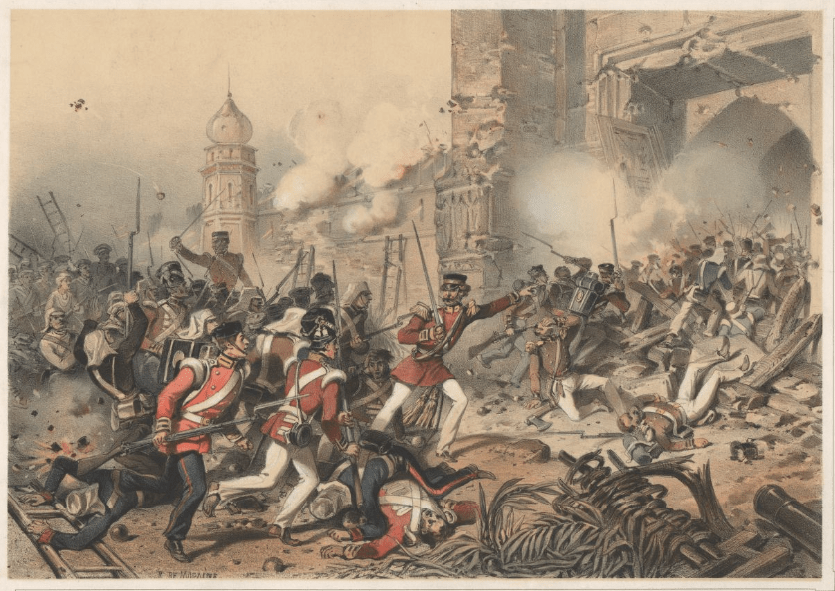
At the end of the 14th of September, the British found, for all of their losses, they had achieved very little. True, they were now in the city, but the three columns had not succeeded in their goals, and the 4th column had been soundly trounced.
The 3rd Column, on moving out of the Main Guard at the Kashmir Gate, had turned off to the left, cleared the cutcherry and the church, the destroyed Delhi Press and Skinner’s House where some rebels staunchly held their positions but were swiftly pushed out by the column. The posts were then left in the hands of Wilde’s Punjabis, who had come in with the reserve, while Campbell pushed on through the Begum Bagh in the lower part of the Chandni Chowk, the main thoroughfare of the city. Crossing it, he then turned down a narrow lane which led up to the Jama Masjid.
After some stiff fighting, the column suddenly halted some hundred yards from the mosque – the massive gateway had been fortified and closed, while the side arches were bricked up. There were no engineers left in the 3rd Column – two had been killed and the third wounded; without artillery, it was useless to try and take the mosque. While the debris was being cleared from the Kashmir Gate and a temporary bridge devised, no gun could enter the city. So, under heavy fire, Campbell instructed his men to find shelter while they waited for the reinforcements the colonel hoped were coming from the Lahore Gate.
The 4th Column, however, had utterly failed, and Nicholson, now seriously wounded, had not taken the gate. No reinforcements were coming. While Campbell waited, refusing to retreat, the rebels were mustering their numbers in Chandni Chowk.
The Kumaon Battalion of Gurkhas under Major Ramsay and 100 men of the 52nd had been detached by Campbell to push up the street and take the kotwali (police station). Although they carried their point, they could not hold it for long – three times, Ramsay was forced to clear the road and the adjoining houses and managed to hold the Kotwali for 5 hours but found himself unsupported and the position too isolated to hold without more men, Ramsay was forced out of the Kotwali. Meanwhile, Campbell resolved to fall back to the church. The dead were left where they lay, but they took their wounded. Ramsay, too, drew off his men and retreated to the church.
The reserve, Column No. 5, had been broken up to meet the needs of the assaulting columns, while the whole of the 60th Rifles under Colonel Jones had distributed themselves along the line of advance to give covering support to the attacking columns. The Beluch Battalion was first sent into the advanced batteries and was then sent to support Reid. The 61st under Colonel Deacon had pressed forward in support while Wilde’s Punjabis (4th Sikhs) and the forces of the Jhind Raja occupied the positions opened by Campbell. With these secured, they rushed the Government College and chased off the rebels who were still defending their post.
The telegraphic message that flashed through India that evening simply read, “We hold the lines of the city from the Cabul Gate to the College Gardens.”
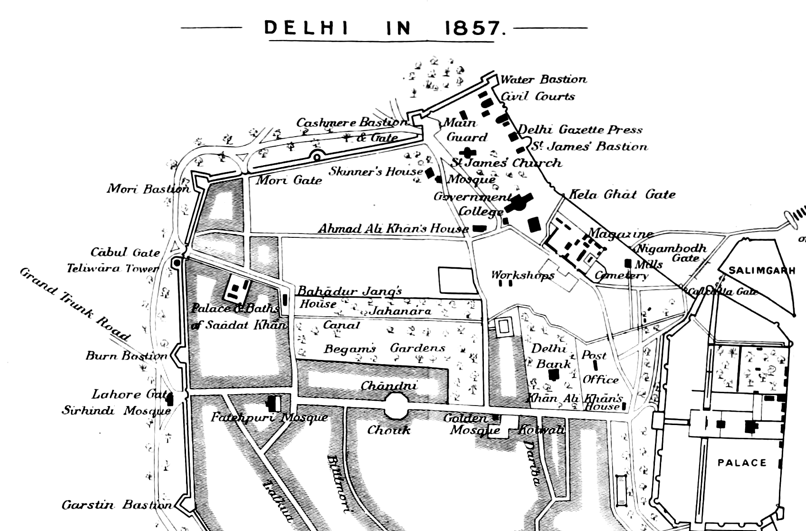
The rest of the city remained to be fought over – barely 1/6th of the city was occupied.
The troops who were not otherwise engaged were busy drinking themselves silly. Left without enough officers to exact control and with no provisions forthcoming, they broke open the stores of the beer and wine merchants all of whom had fled, leaving the stocks behind. The soldiers ignored the shouts of their officers, refused to listen to any remonstrations and were flatly beyond any discipline. Drinking their fill they crawled away into corners to sleep or stumbled along the streets the enthusiasm to take the city all but forgotten. The officers, those that were left, dispatched parties to smash any jars and bottles of liquor they could find, while a rumour was spread that the alcohol was poisoned – not that it did any good. While the British soldiers liberally helped themselves to alcohol, the camp followers who had dashed into the city in the wake of the army and the Sikhs began their work of plundering everything they could grab hold of. Houses and stores were broken into, merchandise strewn along the streets, furniture smashed and anything that could be moved was swiftly carried off.
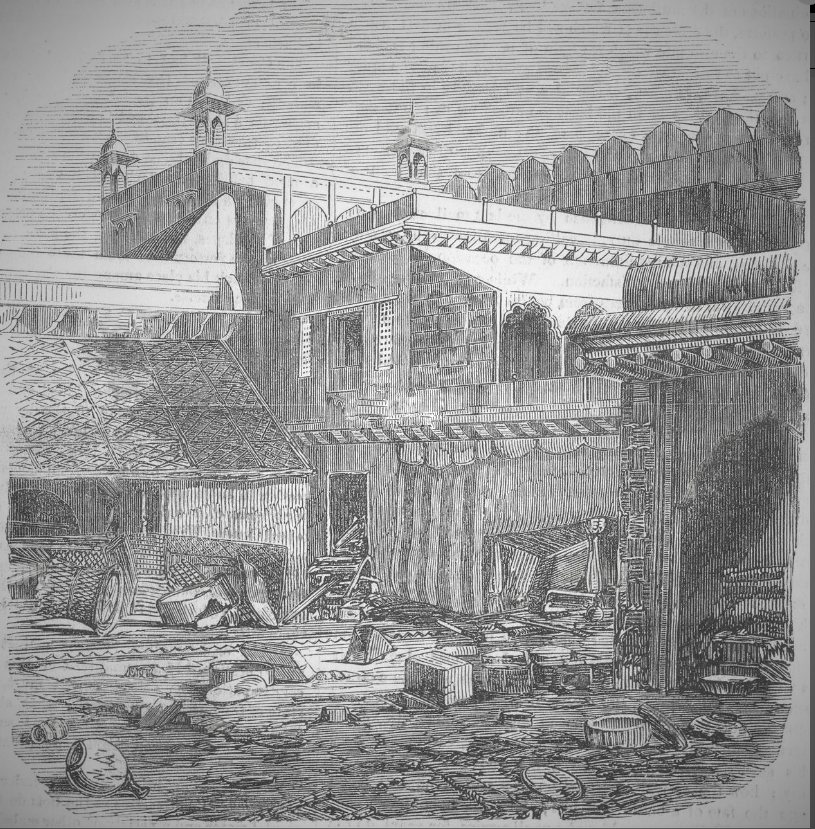
Soon after the Kashmir Gate had been cleared, General Wilson and his staff entered Delhi. After inspecting the church, they retired to Skinner’s House, which would remain their base in the city for the next few days. Wilson, worn out from the months spent on the Ridge, found the half-success of the assault disheartening. Upon hearing the first reports, Wilson contemplated withdrawing the army to their previous position on the Ridge, thinking it was the only way to preserve what was left from destruction. Baird Smith, who had gone down to the city, was asked by Wilson if they could hold the city – the answer of the Chief Engineer was decisive, “We must do so.” When word of the apparent indecision of Wilson reached Daly and Chamberlain, they quickly sent down their replies; however, the loudest came from John Nicholson who lay dying in Daly’s tent, “Thank God,” he said, ” I have the strength to shoot him yet.” He then sent word to John Lawrence up in the Punjab if he could not rid Delhi of the old poltroon and replace him with Chamberlain instead.
It never came to that. Wilson placed his confidence in Baird Smith, and under his guidance, the army remained in Delhi. However, Wilson spent much time at Skinner’s House at the other end of the long hall, “balancing himself on a chair, his face to the wall on which he rested his feet.” His staff were loath to approach him, and Baird Smith, in his decidedly direct way, declared Wilson to be quite mad. Meanwhile, Wylie Norman, E. Johnson and Frederick Roberts were sent out towards sunset to inspect the positions for themselves.
“We proceeded along the parapet, and halfway between the Kashmir and Mori bastions, we passed a small tower held by a non-commissioned officer and eight men of the 2nd Punjab Infantry, and soon after, descending by a ramp, proceeded up the lane between the ramparts and the houses towards the Mori basion. We had not gone far before we saw a party of mutineer sepoys emerge from a cross street, running into the lane, about a hundred and fifty yards in front and to our right. They did not look in our direction but, on emerging into the lane, pulled up and opened fire on our men in the Mori bastion. It was clear that we have a fight to get to the Mori, so Johnson ran back to ask for three or four infantry soldiers who had just passed us going towards the Kashmir Gate with camels that had brought spare ammunition, to come back and help us, and he mounted the rampart and told the havildar at the tower and his party to do the same. Roberts and I stood our ground and were at first unperceived, but as Johnson was bringing up his men at the double and was still a little way off, a mutineer sepoy looked in our direction and at once fired at us. This was followed by more bullets that were pleasant from the others. One of the Punjab soldiers coming up with Johnson at the double was shot through his head, and Roberts’ horse, which was being led away by his syce, was hit. It was clear that we must attack; as Johnson came up, we drew our swords, gave a cheer, and sent at the sepoys. Simultaneously, we saw that some men, led by an officer, were descending from the Mori to com at the sepoys from the other side, and though both our parties probably did not amount to twenty men, before we closed, the mutineers fled up the street by which they had approached, closely followed by us. Some escaped, but a few turned into a house on the right, and we went in after them and killed those we found. We then withdrew, as we should have been liable to attack by overwhelming numbers, and it was no part of our plan to involve our troops in street fighting…”
They continued their tour of inspection instead.
Wylie Norman found his attention drawn to shouts and “strong language” as two men, a Sikh and a European soldier, fought over a purse they had found on the body of a dead sepoy. Norman demanded the purse be handed over to him, upon which both men replied they would gladly do so if the other let go first. Norman then “…forced both of them to let go by beating them with all my force on the knuckles with the hilt of my sword..” Having thus taken possession of the object, he found it to be full of rupees. Upbraiding the two men for their disgraceful behaviour, intoning that they deserved nothing, he then said that since they had bravely taken part in the assault, they would after all get their reward – he then dealt the rupees out one at a time like a pack of cards. At the bottom of the purse, he found a medal. The purse had belonged to one Hanuman Upadhia of the 18th BNI, and he had received the medal for the Punjab Campaign. Norman kept it. The 18th had mutinied in Bareilly in May and had ceased to exist.
Following this incident, the men finally made it to the Mori Bastion and found it in possession of a European and some native soldiers and a small party of artillery who were keeping a fire on the city from the capture guns. The parapets were all but destroyed but the bastion itself was still solid and with the six guns and three mortars in it was being used against the insurgents. It was strange, Norman remarked, to look now on the Ridge from the very bastion that had been so troublesome for so many months, to see as it was, what the insurgents had seen.
They returned then to Skinner’s House to find their servants had entered the city and, as if nothing had been the matter, had laid out their dinner.
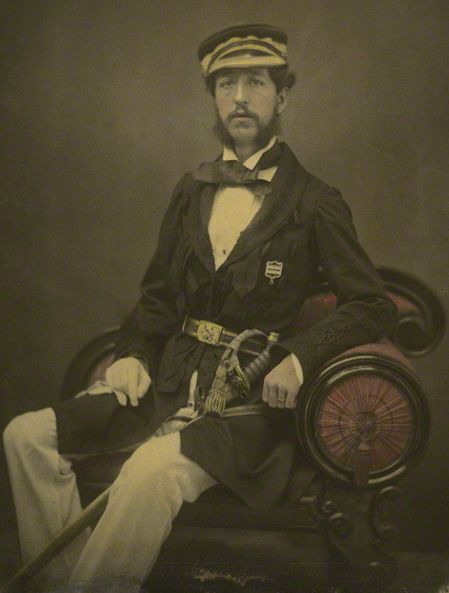
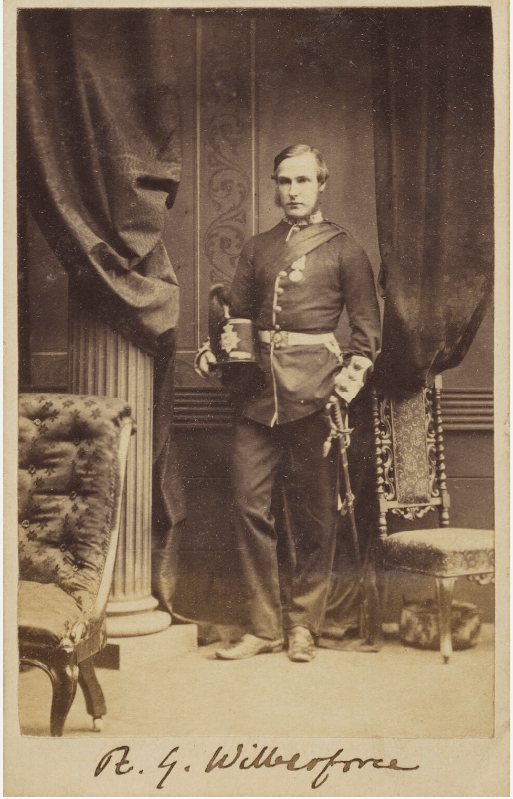
Reginald Wilberforce, who had made it back to the church with Campbell’s column, found to his delight the mess servants had rustled up dinner – cold mutton and claret – and there were tumblers of brandy and soda. No sooner had he settled down to his repast that the order came for him and a small party of men to relieve the 61st at the college. Dinner thus interrupted, Wilberforce would have two hours of hard fighting before he could get back to it – the insurgents who still had possession of the Magazine had settled themselves into one of the towers and were harassing a picquet Wilberforce had sent out. The picquet was forced to abandon their position and retreat to a nearby house – from this, they were chased out by the heavy firing from the walls. Wilberforce advanced with 16 men to relieve them but first sent off an officer to gather reinforcements. When he left, Wilberforce was attacked by a determined party of insurgents, who killed 2 of his men and wounded four out of a party of 16. He told the remaining men to go back to the college in single file while he waited.
“As they came on, I fired by revolver into them and walked out – I thought it useless to run. I did not see how I could escape, for besides the fire behind me, I had to pass for 100 yards in front of the magazine wall at a distance of 30 yards…The magazine was crowded and the bullets cut the ground all around me….” He managed to escape unhurt and, with some relief, found himself behind the college wall.
When his relief finally arrived, Wilberforce had been on his feet for 13 hours, of which most of it had been spent in“excitement and running about.” He returned to the church for his dinner and then settled down to sleep on a few empty sandbags. He was rudely awakened 2 hours later by a rough shake from his adjutant – a live shell was blazing away on the church floor a few feet away from him. The insurgents were shelling the church, and Wilberforce had slept through all of it. He picked up his sandbag bed and went outside to find a place to sleep.
 Mutiny Reflections
Another fascinating and absorbing read! A monumental piece of work!!!!!! Kudos to you for this!
LikeLiked by 1 person
Thank you so much!
LikeLiked by 1 person
You are very welcome!!
LikeLike