The Fighting Continues
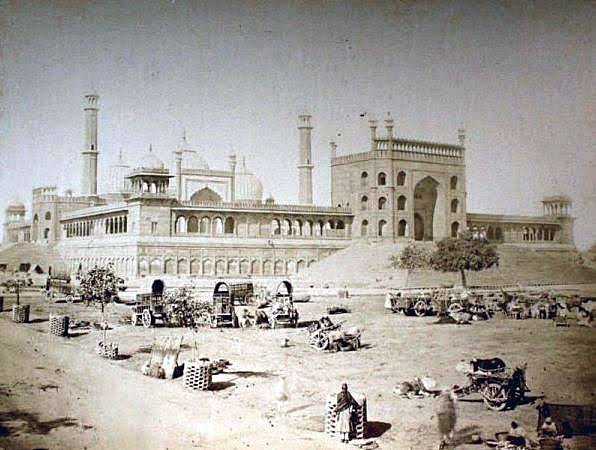
The capture of Delhi, however, was proving to be slow and difficult, and although further positions were captured, Baird Smith furiously ordered the artillery to cease firing on the Jama Masjid and the Bridge of Boats. Over the next days, the bridge was full of people desperately trying the leave the city. Destroying the mosque served no purpose, and it would be captured when the palace was taken. The Bank was finally taken on the 18th after three failed attempts by a well-managed attack of the 52nd regiment.
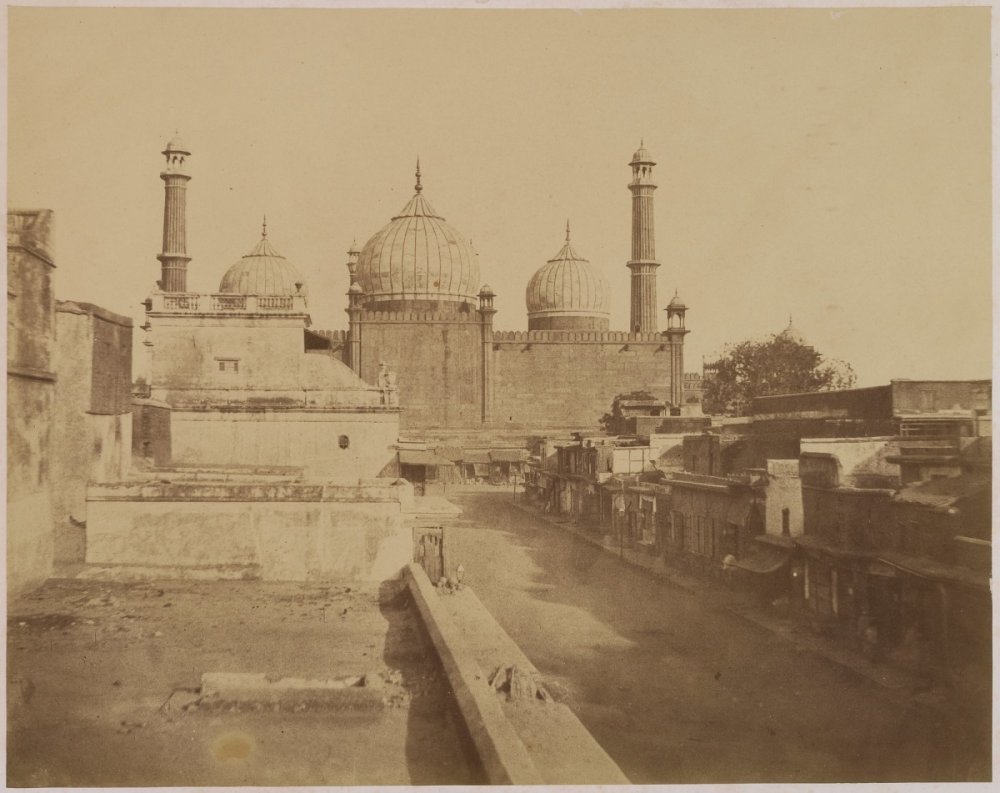
Back in the city, the men continued to find alcohol even though General Wilson had ordered it all destroyed, much to the irritation of the medical officers who felt it might have been useful for the hospitals. In the first two days after the assault, the men were also without regular access to food since many of the servants were too afraid to enter the city – as a result, they took to plundering the shops for their meals. While the officers and certainly Wilson’s staff were comfortable, the men who had the day before fought to capture Delhi were left without as much as a crumb. What was worse, they were almost leaderless; most of the officers had been killed or wounded in the assault.
Wilson complained bitterly in a letter to his wife,
“I have not a Queen’s Officer under me worth a pin or one who can maintain any sort of discipline except Jones of the 60th Rifles. In fact, the men are so badly officered that they will and can do nothing…All we can expect to do is get on gradually, but this street fighting is frightful work, and Pandy is as good a soldier at it as our men…We have to gain our way inch by inch, and of the force we have, unfortunately, there is a large portion besides the native troops upon whom I can place no confidence…I do not suppose any Commanding Officer had such wretched tools to work with as I have….”
Even Hodson pointed out the men were “utterly demoralised by hard work and hard drink..” while Dr. Wise saw a larger problem. “We cannot advance on account of the drunkenness of our men…The 52nd are the disgrace of the army. They make a point of running away, and it is said the officers show them the way…”
However, perhaps Wilson was more to the point than either Hodson or Wise. He realised the men hated street fighting. They could not see their enemy and found their comrades falling at the hands of this unseen foe so disconcerting they panicked and subsequently refused to advance. Without strong leadership, they had become unmanageable.
On the 18th of September, an attempt was made to take the Lahore Gate – it failed singularly through a lack of leadership and the refusal of the Europeans to follow their officers. The failed attack cost the 75th another officer – Lieutenant Briscoe – his life. Briscoe had been unable to sleep the night before the attack – Barter noticed he continuously lit his pipe only to let it go out again as he paced around the room. He continually came outside to ask Barter if he thought Lieutenant LePelley, who had been out to reconnoitre earlier, had done so diligently, stating LePelley was a “harum scarum sort of fellow who wouldn’t give more than a partial glance over a place…” He didn’t trust LePelley’s report that the houses lining the lane which led to the Lahore Gate were completely free of mutineers – thoroughly miserable, Briscoe continued pacing until Barter paraded the regiment.
Gordon informed Barter he would not be joining in the attack. He would remain behind with Lieutenant LePelley along with a dozen men, one 9-pounder and the sick and wounded – they were to hold the post until relieved. Barter noticed Briscoe was missing from the parade and found him, running down the stairs, “…he had forgotten his helmet..On his falling in, I saw that he had forgotten his sword this time, and he ran up for that, the whole time seeming to be in a dreamy kind of state and only half conscious of what was passing around him..”
All that was missing now was the 8th and their commander, Lieutenant-Colonel Edward Greathed. By the time they arrived and the party was ready to march, all element of surprise was lost – it was daylight. Barter and LePelley looked on Briscoe for the last time before they barricaded the gate and mounted the flat roof to watch the proceedings. They both felt Briscoe knew he was going to die and the attack would fail.
“…the sudden report of a Fieldpiece startled us both. There was then a shout followed by a roll of musketry, not much, and all was still again…Presently, the horrible quiet was broken by the shuffle and peculiar noise of doolie bearers coming back through the lane up which the party had advanced…” Both Barter and LePelley rushed down the stairs to meet the doolie; LePelley lifted the curtain to find Briscoe, “stone dead, regularly riddled with grape.”
During the night, the houses in the lane had been occupied again by the rebels, something no one had had the foresight to think of before the regiments marched out. The end of the lane was barricaded by a large studded iron door which had in it a smaller door or wicket. As soon as the men had entered the lane, this smaller door swung open, and the muzzle of a 9-pounder was shoved through it, showering the men with grapeshot. It was
“a most wretchedly managed affair…”
Quick thinking Sergeant Kenna of the 75th, after the discharge, “noticed that the recoil had not carried the gun back within the wicket as the Enemy had expected, and they were now behind trying by spoking the wheels to get the gun to reload it and repeat the discharge. Rushing up, Sergeant Kenna threw his arms around the gun and was then hacked by the Enemy with their swords, but never let go until the column had got back and taken the dead and wounded under shelter when he relinquished his hold…and ran back to safety, though terribly cut about the arms.” He was lucky that none of the wounds was fatal – the crowd behind the gate had been in one another’s way, and no one had managed to deal him a serious blow. Kenna was recommended for the Victoria Cross but died of cholera before it could be presented. As for Greathed, he bore the brunt of the blame, called “a regular muff, who knew nothing, who was “certainly not the right man in the right place, being “not only a perfect fool” but a “funk stick” whose reputation at home was “just a lot of blether.” (Hibbert, p. 310) Barter would say that Greathed had no head, and he would bear testament to that “very often after.” What Barter did not see, however, was that the men of the 8th and the 75th had refused to charge when they had the chance, and Greathed was forced to retire. The 1st Bengal European Fusiliers helped him achieve this by clearing all the houses along the lane on the line of retreat. All that remained was to try again.
While the rest of the force was disorganised and disheartened, the engineers were, in the accustomed manner, very busy. They had little time for disappointments.
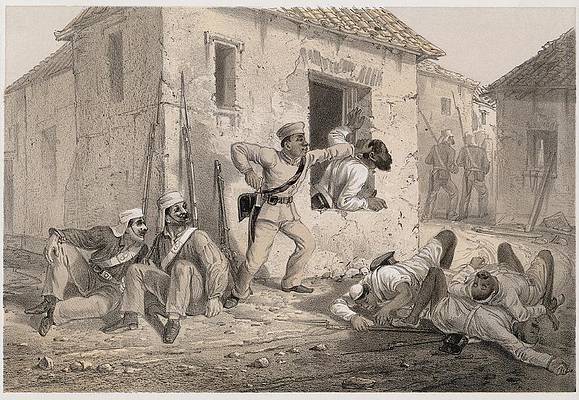
Alexander Taylor now directed the advances in the city and towards the Lahore Gate. With the assistance of the 1st Bengal European Fusiliers and Frederick Roberts attached, they broke open wall after wall of houses. Starting at the end of a row, they first occupied one house. As soon as it was cleared, sandbags would be carried up to the roof to construct a parapet from behind which a covering fire could be kept up while the next house was taken. Lang noted some of the houses were “very pretty, courts in the centre of them with little canals and fountains, shrubs, flowers and creeper; balconied rooms, gorgeous in barbaric style of gilding and glass, immense mirrors, thick rich carpets and comfortable chairs, elegant furniture and the scent of attar all about. Strange it seemed to see these rooms full of soldiers, Europeans and Sikhs…” The owners had fled.
They worked their way through houses, courtyards and lanes, occasionally fighting their way through streets still occupied by rebels until they reached the rear of the Burn Bastion. They had with them 50 Europeans and 50 native soldiers; the senior officer of the party was Captain Gordon of the 75th Foot. A single door separated them from the lane which led to the bastion – Lang smashed open the door and the soldiers “…formed up…they were ordered to cross about 10 feet of the lane to the ramp which led to the Bastion. Just as the first men began to start, one Pandy musket was fired, on which back rushed our gallant fellows and all fired their pieces in the air! Such curs has this sort of fighting made them. We again soothed and encouraged the fools and then in we went without losing a man, and at last, held the Bastion at which we had fatally failed on the 14th…I immediately began pulling down Pandy’s sandbag parapets with the Europeans and Sikhs and made a parapet and barricade across the lane, and getting afterwards some sappers, made a parapet at the head of the ramp, behind which we put a light gun. Although they fired grape and musketry into the Bastion during the night, only two men were wounded.”
For one man, the rush on the Bastion came as a sorry surprise. Just as they had secured the ramp, a rebel sepoy strolled up. He was seized by an officer who demanded to know who he was and received a question in return – “Are you the English guard?” asked the startled sepoy. He had been sent, he said, to spy and had just come back to tell the former inhabitants of the Burn Bastion that the Europeans and Sikhs were on their way. He was shot, and his body joined the countless others in the ditch below. The capture of the Burn Bastion had been a decisive one, as it overlooked the Lahore Gate. The end, it seemed, was closer than they expected.
 Mutiny Reflections
Another fascinating and absorbing read! A monumental piece of work!!!!!! Kudos to you for this!
LikeLiked by 1 person
Thank you so much!
LikeLiked by 1 person
You are very welcome!!
LikeLike