Taking the Lahore Gate
Early the next morning, they continued sapping their way towards the gate. To their surprise, they found, huddled together in a courtyard, 50 Banias (grain sellers and money lenders) who were as much in terror of the sepoys as they were of the Europeans. Before the soldiers could kill them, the officers of the party intervened, ascertaining correctly that they were unarmed and could doubtlessly prove useful. However, for reasons of their own, the officers felt, “a good fright would do them no harm and might possibly help us so for a time we allowed them to believe that they were looked upon as traitors but eventually told them their lives would be spared if they would take us in safety to some place which we might observe how the Lahore Gate was guarded..” After some deliberation, two men volunteered for the task under the understanding that if the party they were to lead did not return after a certain time, the rest would be shot.
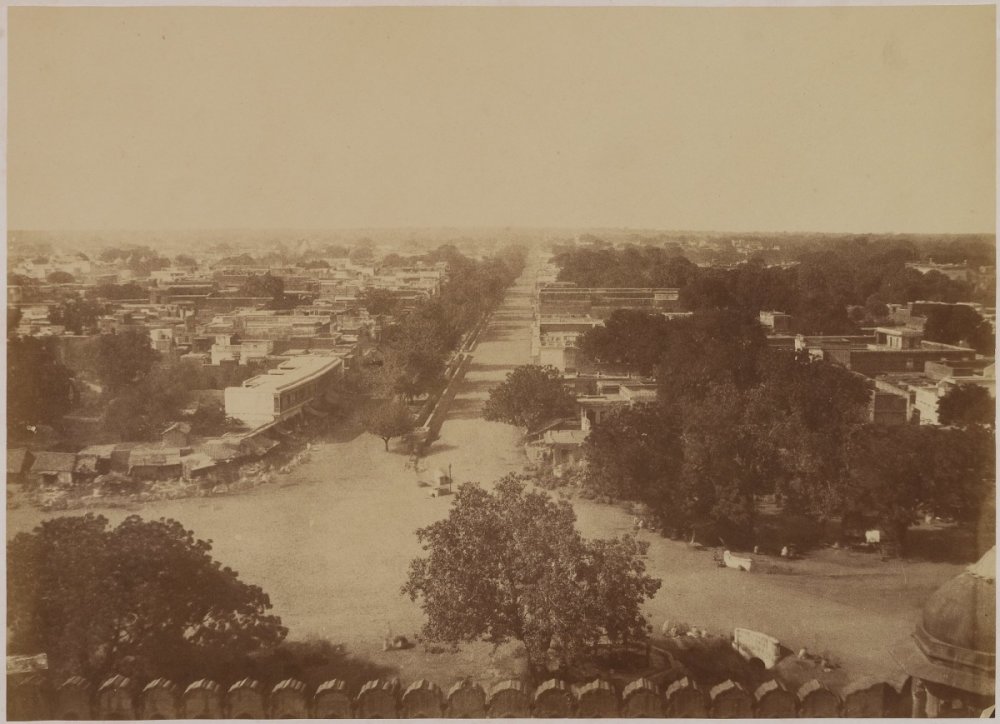
Lang and Roberts followed their “trembling guides” who led them through houses, across courtyards and along dim alleys without meeting anyone at all until they found themselves in an upper room of a house which looked out on the Chandni Chowk, barely 50 yards from the Lahore Gate.
From the window, they could see beneath them sepoys “lounging about, engaged in cleaning their muskets and other occupations, while some in a lazy sort of fashion, were acting as sentries over the gateway and two guns, one of which pointed in the direction of the Sabzi Mandi, the other down the lane behind ramparts leading to the Burn Bastion and Kabul Gate…” From their cap badges, Roberts could see they were sepoys of the 5th BNI. From this position, they could see it was possible to take the Lahore Gate in the rear.
Roberts and the men returned to the courtyard to rejoin the main party. After a brief consultation, it was “…decided to repeat the manoeuvre which had been so successful at the Burn Bastion. The troops were brought by the route we had just traversed and drawn up behind a gateway next to the house in which we had been concealed. The gate was burst open, and rushing into the street, we captured the guns and killed or put to flight the sepoys whom we had watched from the upper chamber a short time before without losing a man ourselves.”
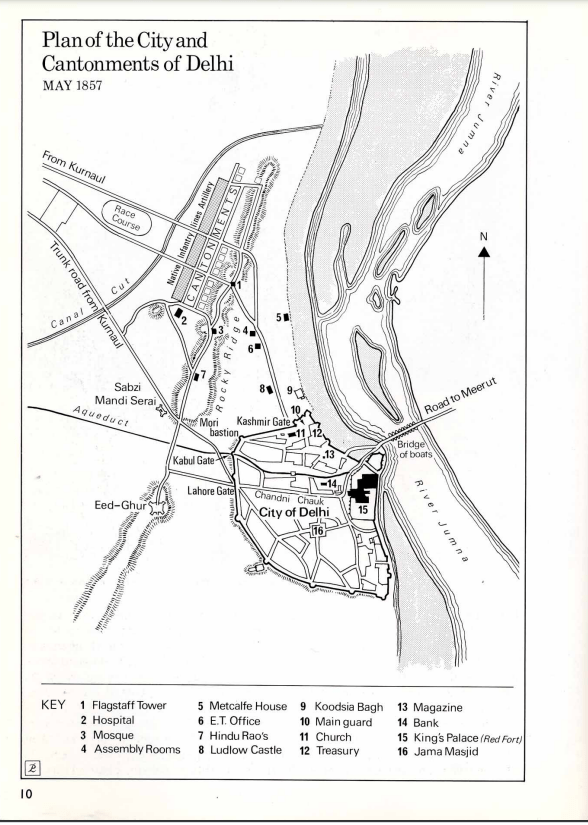
With the capture of the Lahore Gate, the way into Chandni Chowk, and the heart of the city, was finally open.
The advance now proceeded with some rapidity. Arthur Lang quickly got Wiles and 25 of his 2nd Europeans and “what Sikhs I could rescue from the last big house I had occupied and we descended into the street and marched our gallant little army up the Grand but deserted Chandni Chowk..” The street was deserted except for dead and wounded sepoys – all the shops had been abandoned and there was no one in sight. They pushed on until they reached the Delhi Bank. Here there was firing going on and round- shot was flying about from a few guns placed just outside the palace. The Jama Masjid had just been occupied by Major James Brind while Lang and Ensign McQueen reconnoitred up to the Lahore Gate of the Palace itself.
Lang spied through chinks in the enormous doors and saw “four great guns, crammed to the muzzle with grape, pointing within ten feet of the door. I went back for powder.”
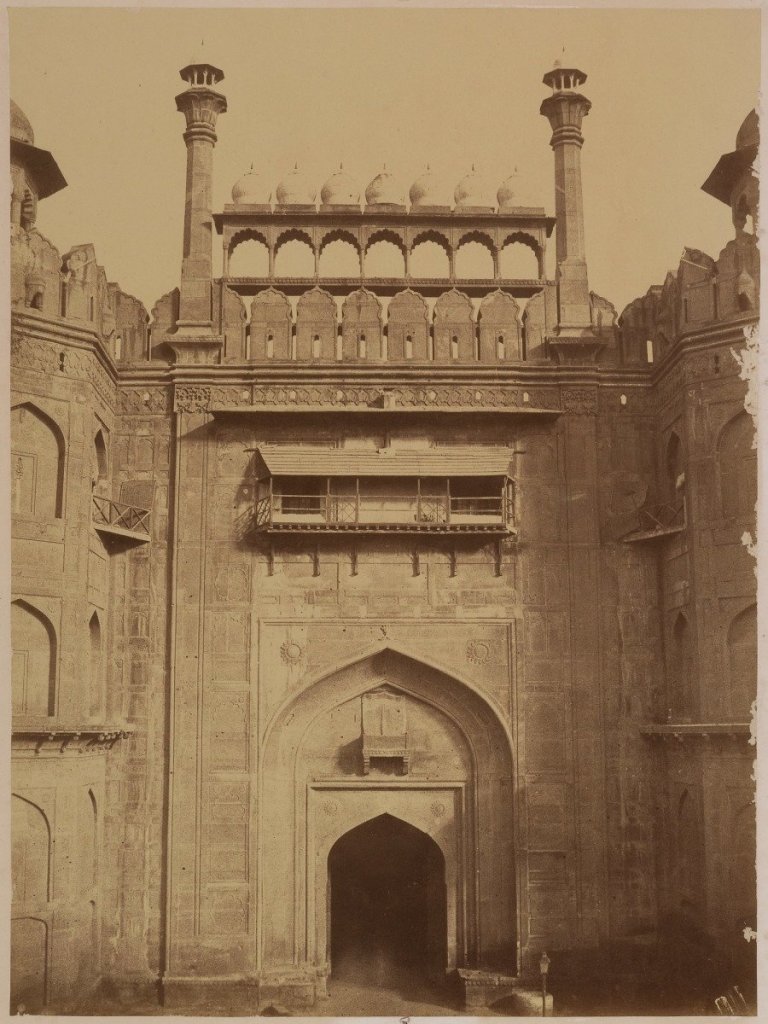
Home of the Engineers who had so gallantly managed the affair at the Kashmir Gate soon appeared with sappers and blew in the gate. Roberts, wishing to be present at the final capture of Delhi, attached himself to a party of the 60th Rifles under Ensign Alfred Heathcote and waited.
“As soon as the smoke of the explosion cleared away, the 60th, supported by the 4th Punjab Infantry, sprang through the gateway; but we did not get far, for there was a second door beyond, chained and barred, which was with difficulty forced open when the whole party rushed in. The recesses in the long passage which led to the palace buildings were crowded with wounded men, but there was little opposition, for only a few fanatics still held out. One of these – a Mohamedan sepoy in the uniform of a Grenadier of the 37th Native Infantry – stood quietly about thirty yards up the passage with his musket on his hip. As we approached, he slowly raised his weapon and fired, sending a bullet through McQueen’s helmet. The brave fellow then advanced at the charge and was, of course, shot down.”
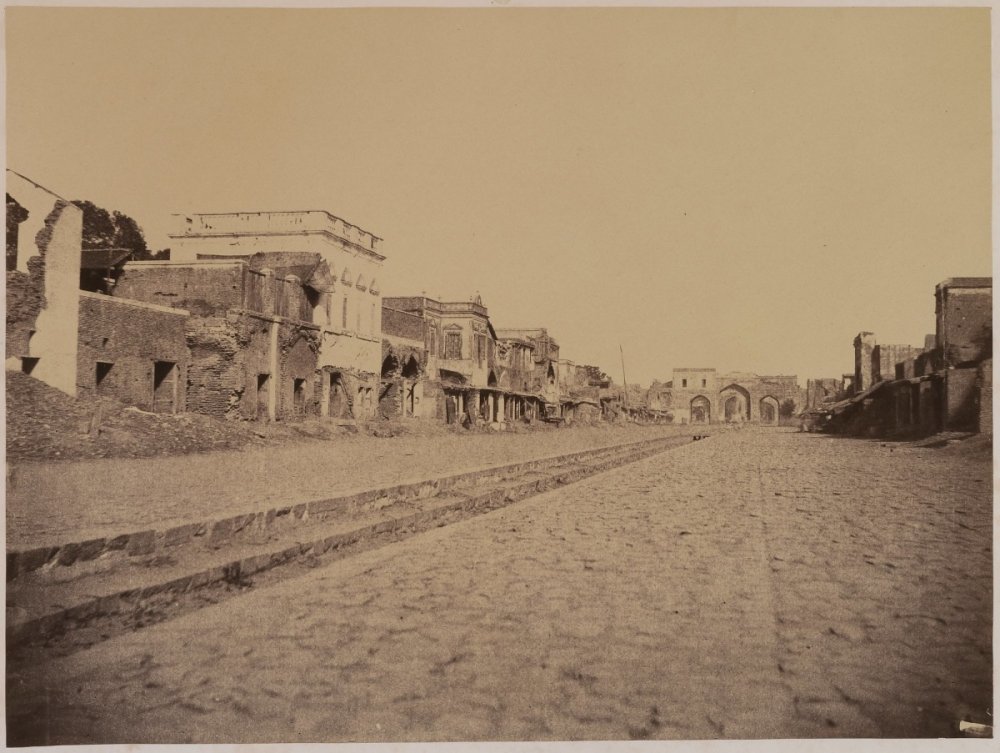
So ended the 20th of September.
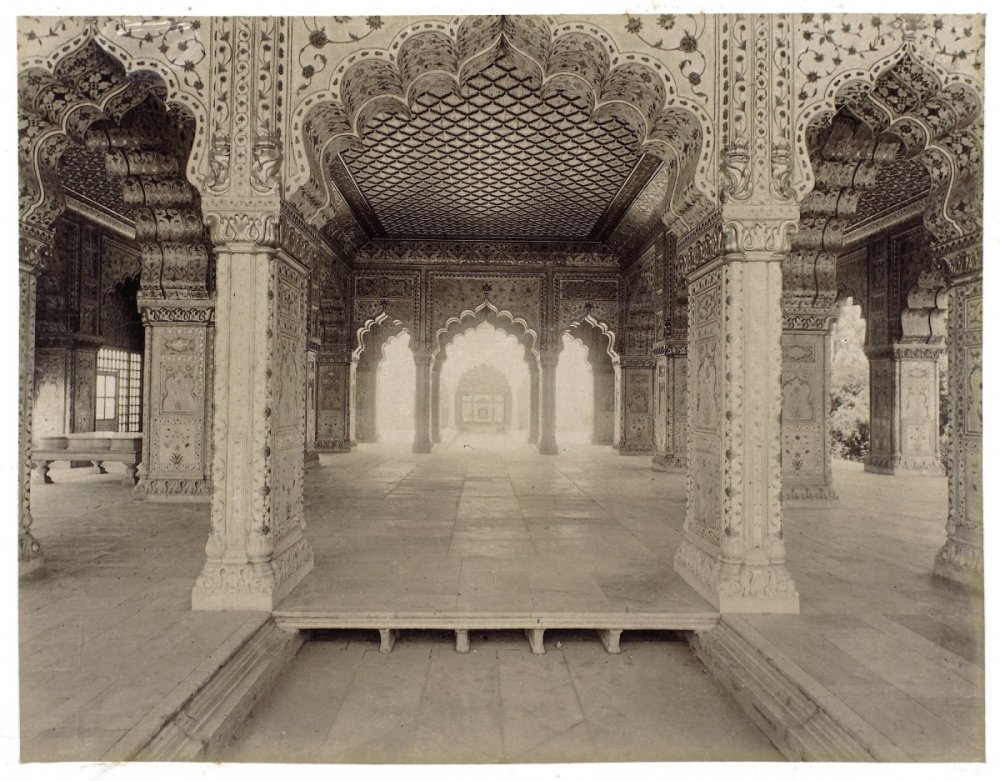
Lieutenant Murray and a private of the 60th raced madly down the rest of the road to see who would be the first to sit on the emperor’s throne in the Hall of Private Audience or Diwan-i-Khas, and the British soldiers and Sikhs rummaged through the private rooms of the palace, looking for plunder. Everything of value appeared to have been taken away, and what was left, the troops threw about. Lang helped himself to five glass pachisi markers to remember the day. He then made his way to the Jama Masjid, where he joined the party which was completing the rout of the last ghazis still in the building. He climbed up a minaret and “saw the whole city and country like a map below our feet; Delhi was ours.”
Hodson and his men rode out around the walls surrounding the city, seeing only ammunition, clothes and various trifles that had been abandoned in haste by the retreating sepoys but found no one alive. He re-entered the city through the Delhi Gate, unopposed. Alexander Taylor rode his horse up the steps of the Jama Masjid while the men danced about and drank beer and brandy. The Sikhs lit fires in and around the mosque – if there was anything to plunder, it was soon gone.
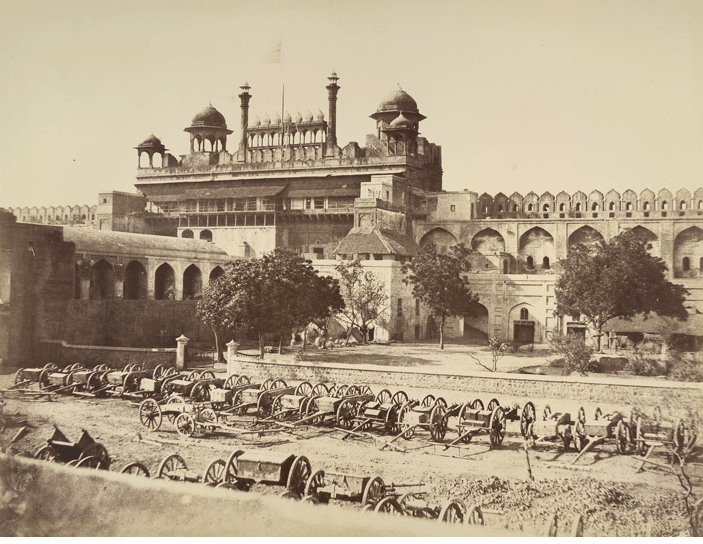
The following morning, Wilson and his staff set up their headquarters in the Diwan-i-Khas, and the British flag flew above the Lahore Gate.
 Mutiny Reflections
Another fascinating and absorbing read! A monumental piece of work!!!!!! Kudos to you for this!
LikeLiked by 1 person
Thank you so much!
LikeLiked by 1 person
You are very welcome!!
LikeLike