The South Front
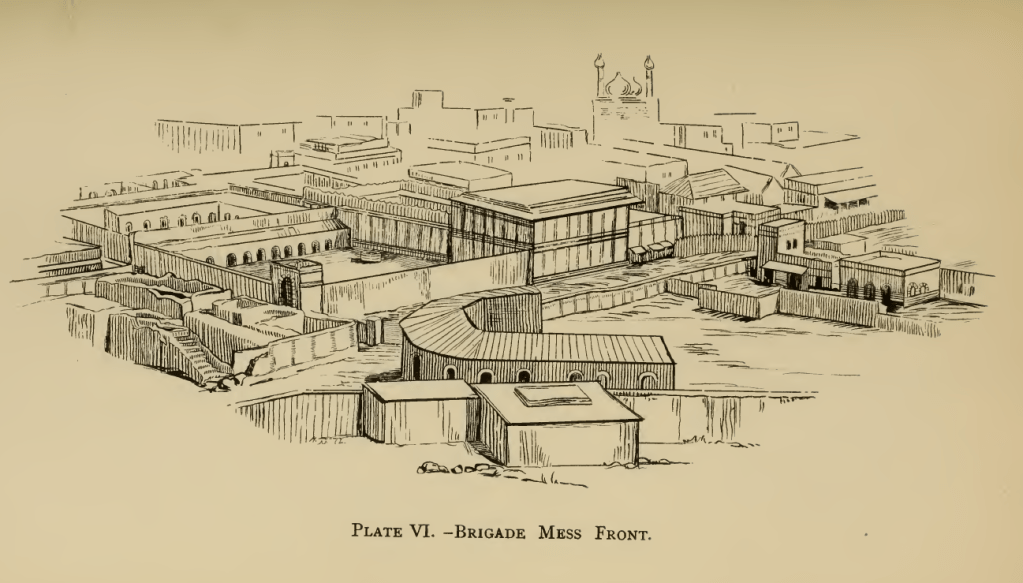
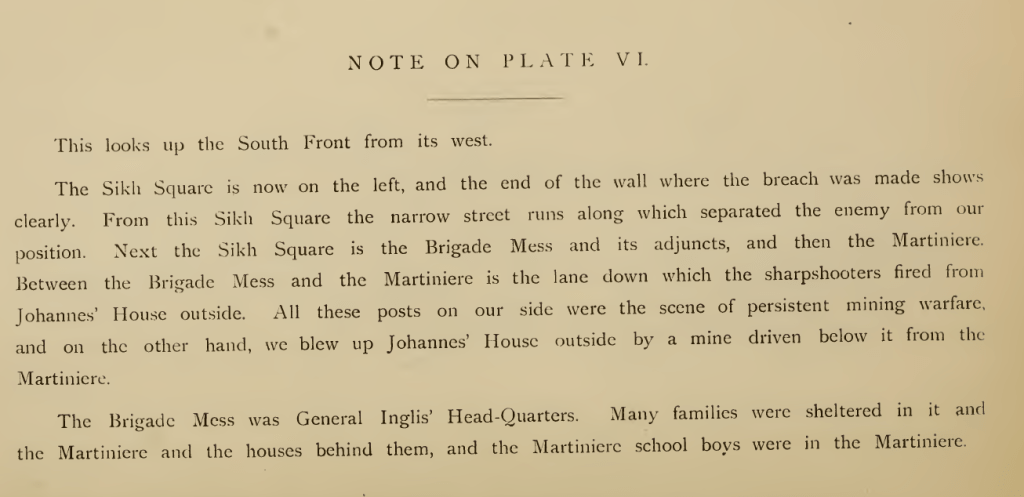
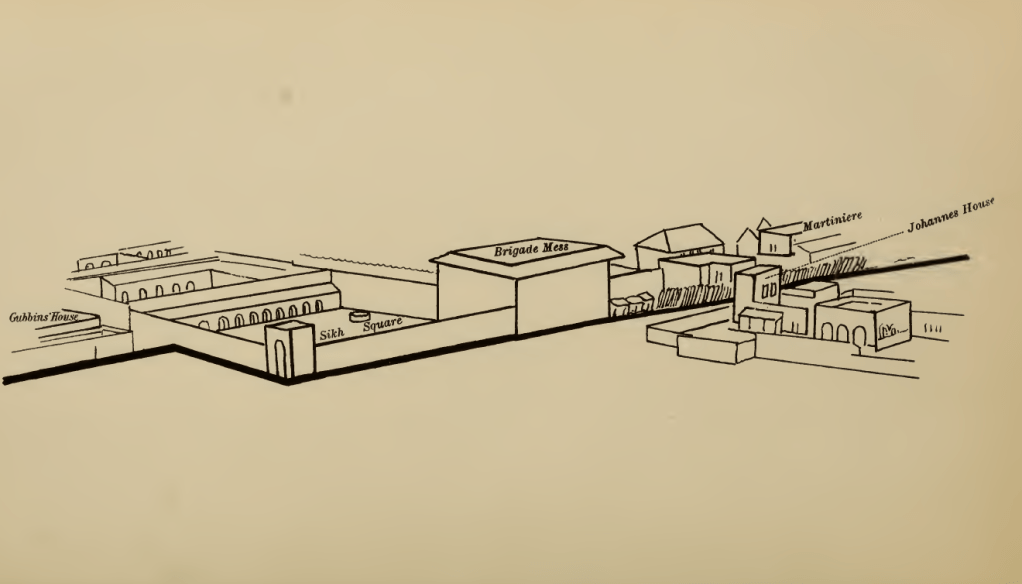
The Brigade Mess Front
Our room, which really formed part of a native gaol, was very small, hardly more than a veranda, about twelve feet by six feet, with no doors nor windows, only arches; but we put up screens and curtains, which gave us a certain amount of privacy; and we had an outhouse attached, which we used as a bath-room, a great luxury…” (Lady Inglis)
On the other side of the road to the Martinere Post, stood the Brigade’s Mess, also known as the King’s Hospital. It was a striking, two storied building with a massive outer wall. During the siege, it was converted into a mess for the Oudh Force and for the BNI regiments. There were also two inner courts which were surrounded by low, flat-roofed brick buildings and protected by high walls. The post was chiefly manned by the English officers of the mutinous regiments, many of whom owned their own rifles and were excellent shots. The commandant, Lieutenant Master, 7th Light Cavalry, soon became known as the Admiral from his habit of hailing from the rooftop.
One of the constant threats faced by the inhabitants of the Brigade Mess was the presence of sharpshooters, who occupied the upper floors of Johannes House. Their fire raked the lane between the Mess and Martiniere Post and could not be dislodged by musketry or shellfire. Although the lane had been blocked up by a bank and palisades, it remained a precarious position. Six mines were laid by the enemy in the direction of the Brigade Mess; none of them was of consequence, being either too short or stopped by countermining.
The Sikh Squares
“There are the two nine pounders which were brought to bear upon the breach in the Seik Yard…The embrasures were made in a wall about fifty yards in the rear of the breach; and as the guns completely commanded it, and were always kept double.loaded with grape, the enemy would have been sure of a warm reception..” (Lt Mecham)
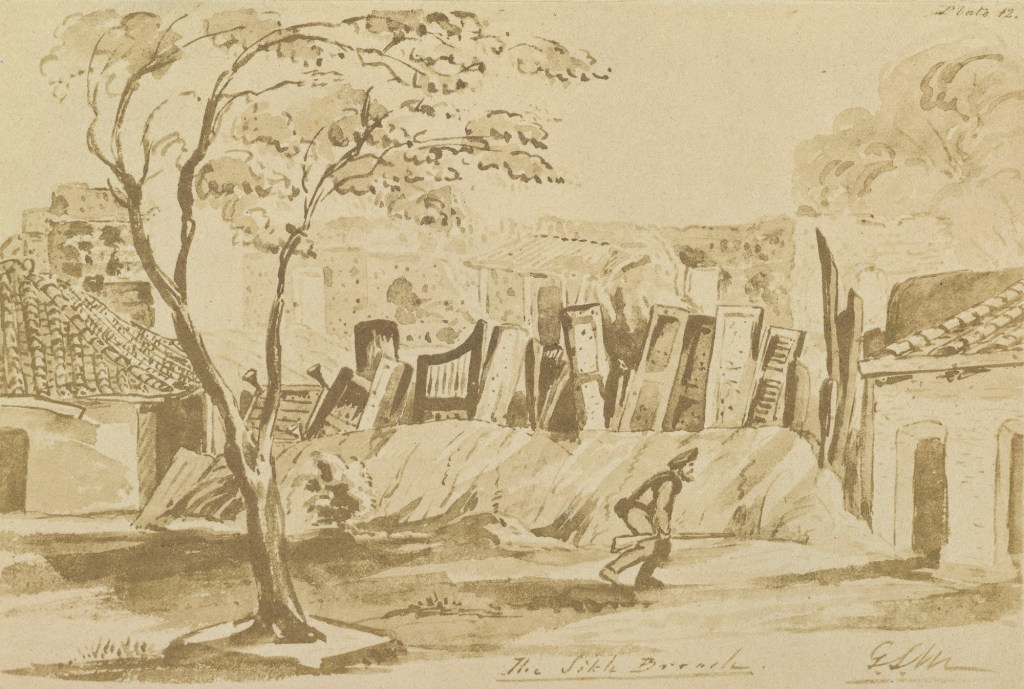
The Sikh Squares were two squares, surrounded by rows of flat-roofed buildings, in which the Sikh Cavalry was quartered; the horse stables were somewhat to the rear left of the position. Along with their commander, Captain Hardinge, the Sikhs would bear the brunt of the attacks on this front; as little had been done to provide it with any defence at all, the men resorted to using anything that came to hand to provide themselves with shelter from the firing. This could take the form of window shutters, and if legends bear it out, a pianoforte and boxes of books. One of the successful mines was blown up by the rebels towards the Sikh Squares – the sound of digging had been missed due to the trampling of the horses in the stables.
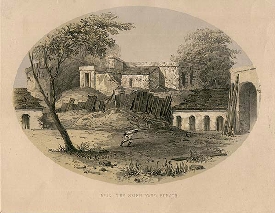
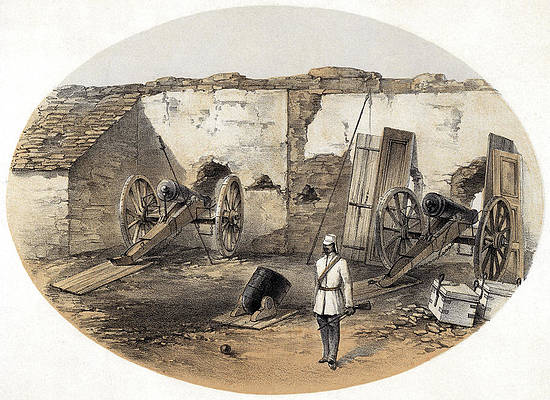
The part of this position, which, the reader perceives, is protected by doors and shutters, was formerly occupied by a large terrace-roofed building, on the top of which was constructed a parapet, through which we used to fire on the enemy…
It was here that that Captain Orr and myself, and ten Christian drummers who formed part of the garrison, where blown into the air by the explosion of a mine…. (Lt. Mecham)
 Mutiny Reflections