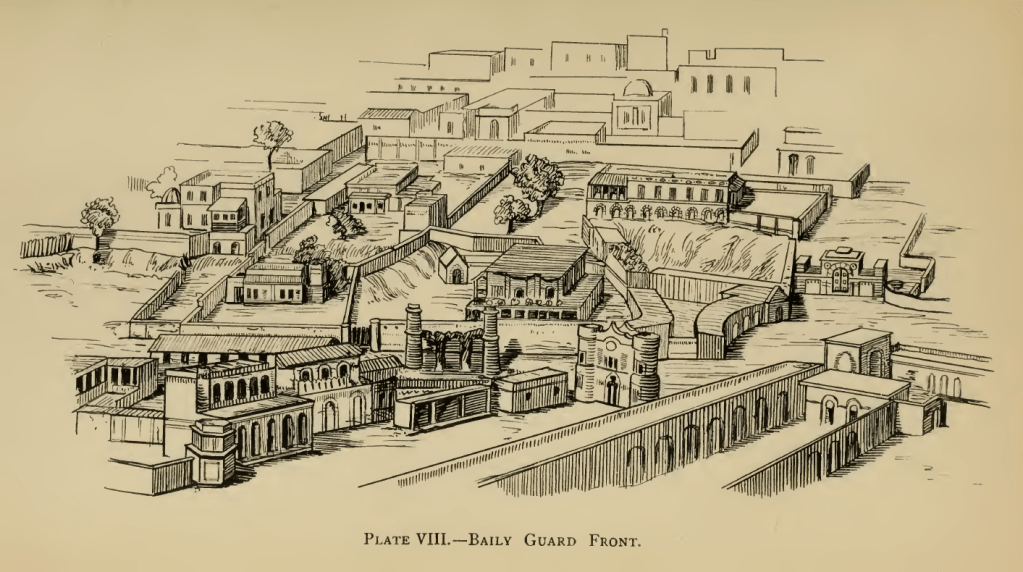
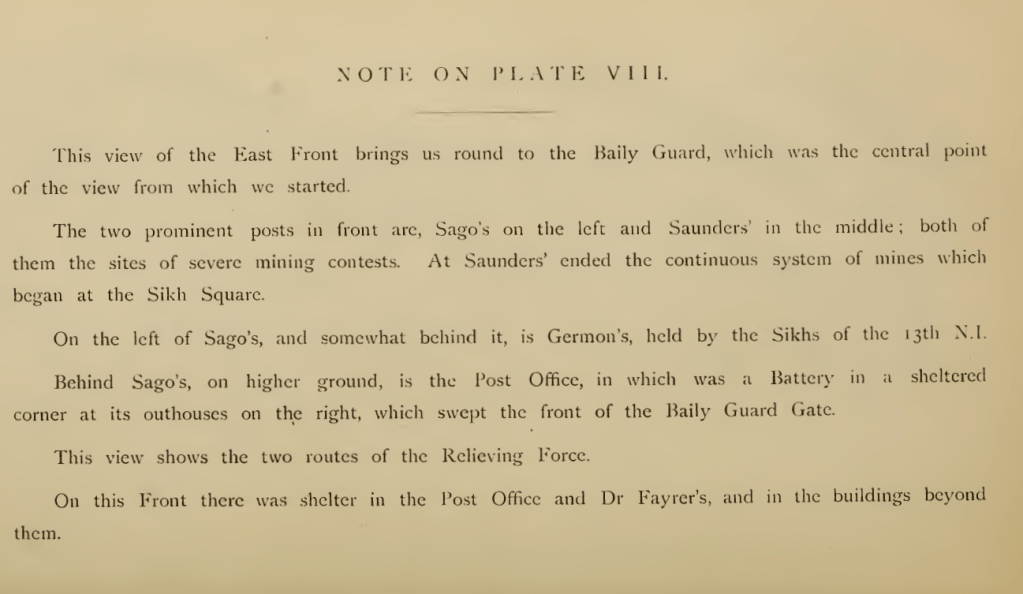
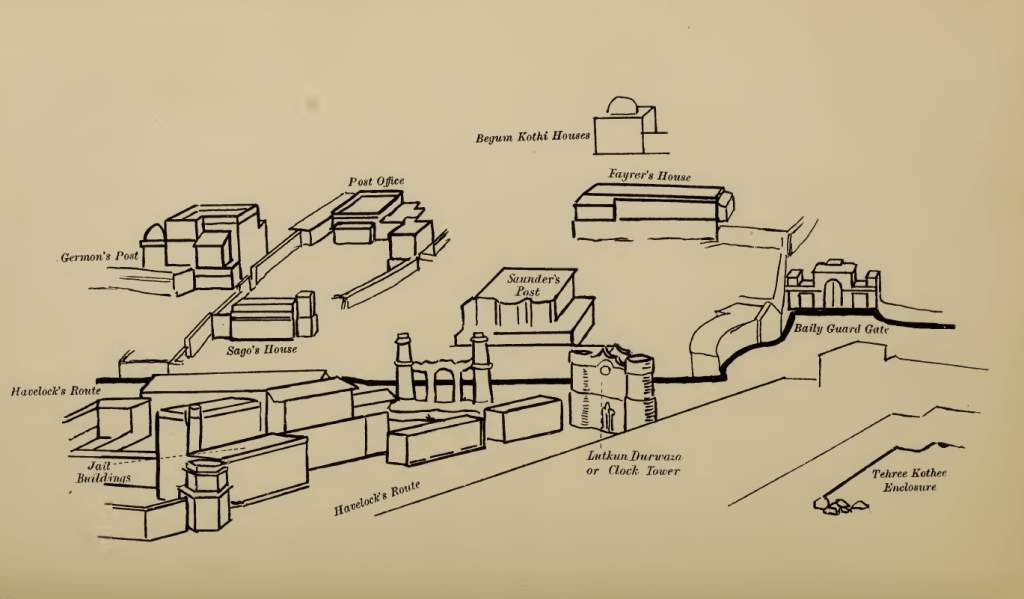
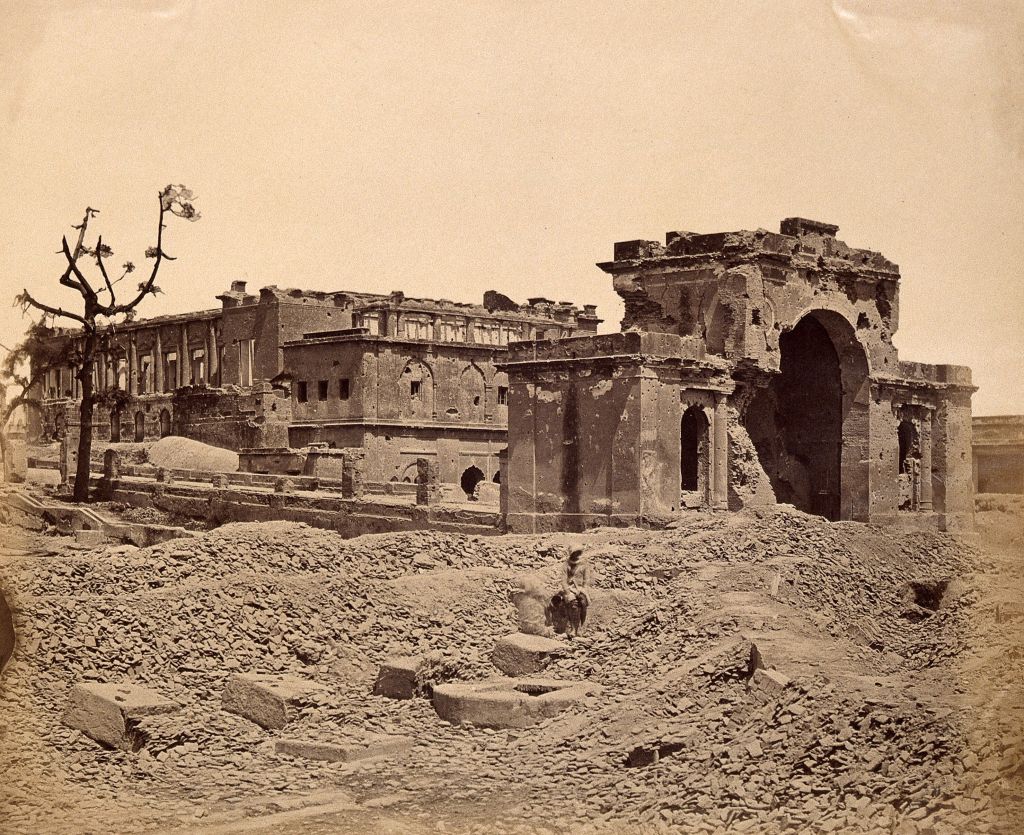
The View of the East Front
The Banqueting Hall
“Everywhere, wounded officers and men were lying on couches, covered with blood, often with vermin. The apothecaries, hospital attendants, and servants were too few in number, and with all their activity could not attend to everybody; and as for a change of linen, where was that to come from? There were not even bedsteads enough for all. Many of the wounded were lying groaning upon mattresses and cloaks only. Everywhere, cries of agony were heard, piteous exclamations for water or assistance. The fumigations to which recourse was had were not sufficient to remove the disagreeable, fetid smell which pervaded the long hall of the sick, and the air in it was pestilential and oppressive. Owing to the unceasing fire of the enemy, the windows had to be barricaded, and it was therefore only by the doors facing the Residency, and those fronting the Bailey Guard wall at the back, that light and air could penetrate the buildings. The upper story was quite untenable, and, indeed, the lower was far from safe. One poor fellow, in a fair way of recovery, while smoking his pipe, was shot in his bed, and several of our sick had most narrow escapes from the bursting of shells. At a subsequent period, too, a carcase fell into the midst of one of our barricades and set not only the whole of it on fire, but consumed also a great number of hospital appurtenances. Dysentery and diarrhoea swelled the numbers in the hospital almost as much as the balls of the enemy.” (Rees)
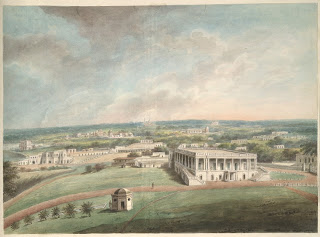
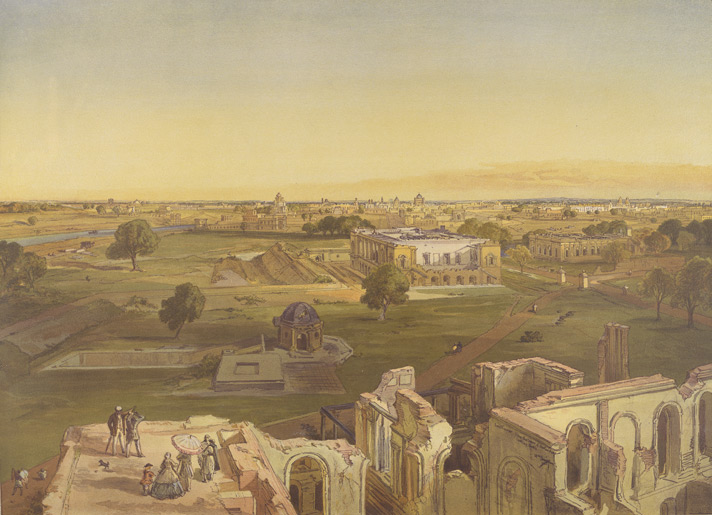
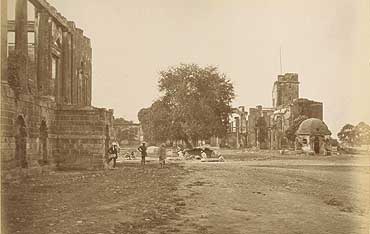
Two storied and with no tykhannas below, the ground floor served as a general hospital. The right wing was a factory for the manufacture of fuses and cartridges and one room on the north was set aside for state prisoners. The upper floor suffered a similar fate to that of the Residency – the large windows and doors made tempting targets (even though they had been closed with shutters, and fairly stuffed with tents and boxes), and the apartments were soon reduced to rubble.
The Treasury
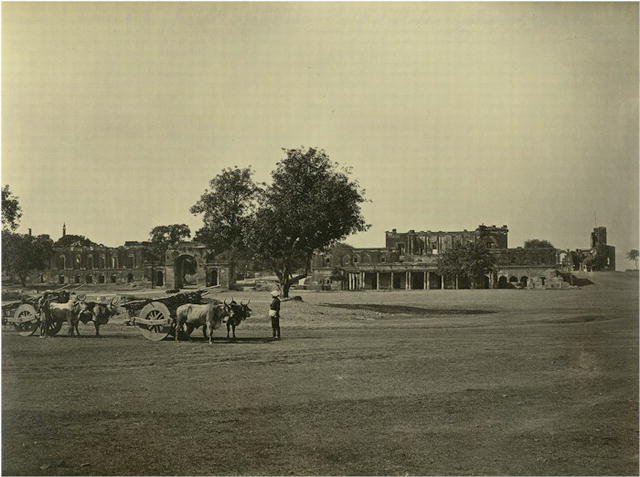
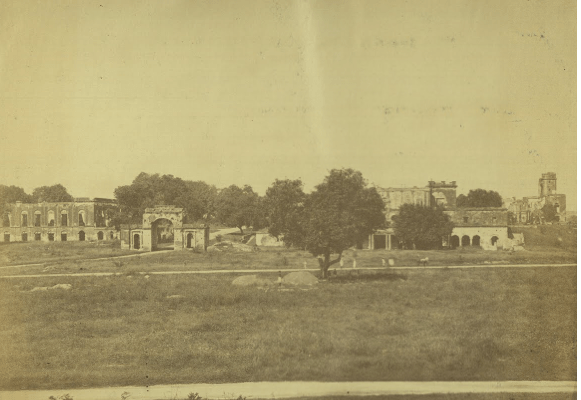
Both the treasury and the Baily Guard Gate were garrisoned by the 13th BNI. under the command of Lieutenant Aitkin. The treasury is situated on the right of the entrance to the Residency compound. The long room in the centre of the building was used for making Enfield cartridges – it is interesting to point out that at the beginning of the siege, no provisions had been made to produce these and manufacture only started when Major North, of Havelock’s force, made from a mould provided by Lieutenant Sewell and a second was discovered in the compound. If the cartridge had not been found, the relieving force would have been unable to use the Enfield and would have had to rely on the “miserable Brown Bess, which was the weapon used by the men of the 32nd Regiment during the Siege.” (Hilton)
The rest of the building was used as a store room, a treasury and last but not least as the barracks of the 13th N.I. and their commander. A crescent-shaped guard house stood just outside the Bailey Guard – since it was outside the line of defence, it often gave shelter to the enemy from whence they could attack Aitken’s, Fayrer’s and the Financial Garrison. On the 28th of September, Lieutenant Alexander, one of the few remaining artillery officers, while walking on the road just outside Bailey Guard, was killed by round shot fired from there.
 Mutiny Reflections