Nasratpur, January 23rd
Franks found the rebels had thought their position through most judiciously, and it would prove to be the “one of the strongest and most difficult” approaches Franks had ever seen. Access was limited by a dense jungle through which ran a series of hillocks and deep ravines that extended for a mile and a half to the north-east and south-west. On the northwestern extremity, Beni Bahadur Singh had his stronghold – a two-storied country house of solid masonry, surrounded by a bastioned entrenchment and a deep ditch. He had further barricaded all the entrances and covered these by abattis.
Franks sent his cavalry patrol in the advance to Saraun, and he moved out on 23 January, first making a wide circuit towards that place as if he intended to turn the rebel right flank, however, it was actually to ascertain if the Nazim had decamped as the reports had stated, and Franks would not receive any surprises on his left flank and rear from Saraun.
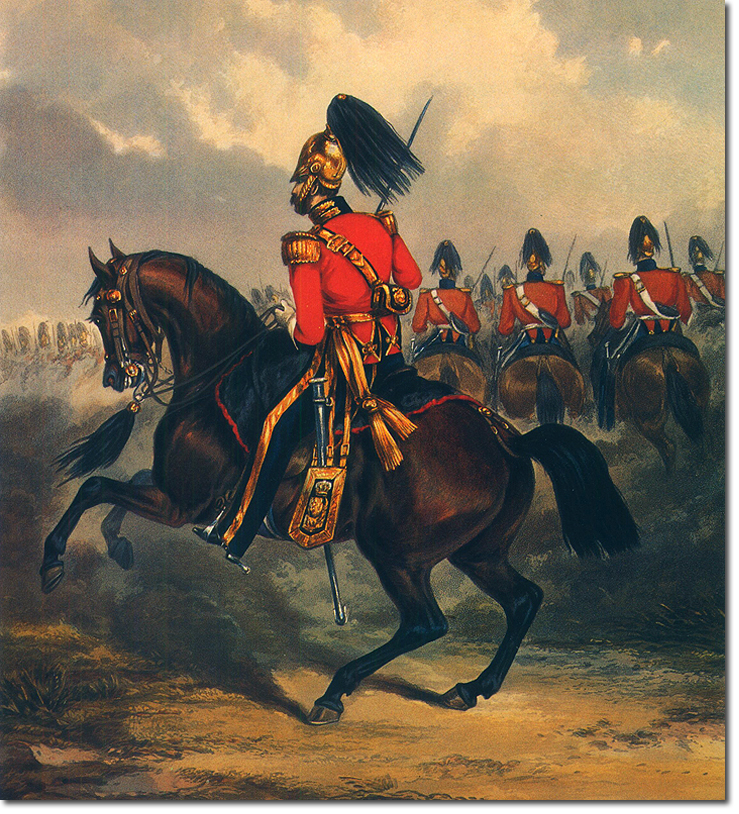
His cavalry patrols confirmed that Saraun was indeed empty – Franks now changed direction and made for Nasratpur. His infantry moved in quarter-distance columns, “deploying at distance, ” with HM’s 97th in the centre, the Shere Regiment of Gurkhas on the left and the “Burruj Bahadur” battalion on the right, covered by the horse artillery under Colonel D’Aguilar who “disposed two on each flank.” In the centre were the two guns of Major Cotter’s No.2 Madras Light Infantry Battery and three 9-pounders of the Royal Artillery commanded by Captain Thring. 100 selected marksmen of the 97th under Lieutenant-Colonel Burton supported the guns while the two squadrons of the Bays protected the flanks. They followed in the rear of these, well out of reach of fire. Captain Matheson had remained behind in the camp with the guard.
Wary of the high crops and thickness of the trees, Franks moved onwards with caution, but to his surprise, the rebels, fearing they would be cut off, began abandoning their advanced posts, flying before Franks’s skirmishers.
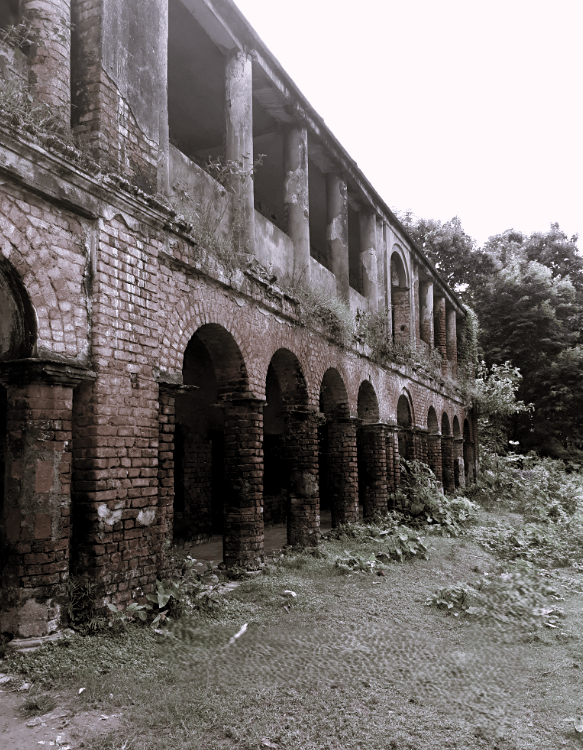
At the Kupuri Indigo Factory, the rebels had placed two guns facing the road; had they stood their ground, they could have made things difficult. Instead, the rebels fled before the skirmishers and retreated into the jungle with their guns.
As he passed the factory, Franks deployed the line, and his artillery guns advanced at the gallop. These then halted 600 yards in front of the rebels and opened fire on the stronghold, which now came into sight. Under the sudden barrage, the rebels abandoned their front and retreated with their guns into the jungle at the rear. They then poured a few ineffectual shots at Franks, who directed one squadron of the Bays with two horse artillery guns to “sweep around and threaten the enemy’s right” while the other squadron and the two remaining guns would make a flank move to the right and watch the rebel left.
“At all times, the freest use has been made of the Field Artillery, doing what would be considered in European warfare, the duty of Infantry, while Anderson’s Horse Artillery on emergency charged as Cavalry. When riding at the head of his guns through the low bush, Captain Thring was surprised by an agile native swordsman, whose keen tulwar cut through the peak of the sun helmet and the skin of his nose, stopped only by the thick folds of his pugaree. The powerful Englishman settled accounts with his assailant, whose loss was his life as against a patch of white sticking plaister on Thring’s sunburnt nose, which produced a temporary squint and much merriment among his comrades.” (Gunner Jingo)
While the 9-pounder continued to batter the fortifications, the infantry broke into open column of companies and encircled the rebel’s left rear, “in which direction his fire (as far as could be distinguished through the dense brushwood which covered the front) was gradually retrograding.” At the same time, one squadron of the Bays tried to take one of the rebel guns which was in front behind a breastwork, but they had underestimated the ground – while it looked favourable from a distance, a deep ravine, well hidden, put an end to their endeavours. They pulled up just in time and returned to their previous position, supporting the guns. D’Aguilar and his squadron of Bays, however, on the left with the guns now skirted the right of the jungle and entered the rebel camp. Taken by surprise, they rushed out into the jungle, leaving one gun behind.
“The infantry, supported by the 9-pounder battery, moving steadily round the enemy’s left rear, came eventually on his line of retreat: but so rapid was his flight, that he was enabled to withdraw nearly all his guns; and the skirmishers only were able to close with the rear of the fugitives, of whom they shot and bayoneted great numbers.”
With the cavalry and horse artillery guns from both flanks now together, Franks considered a pursuit, but the ravines, dense jungle, broken ground and the advent of sunset made it a futile venture. Instead, he torched the stronghold, took two guns, the ammunition and the rebels’ entire camp equipment for his own, and left behind 500 dead and wounded rebels. His losses were six wounded, three horses killed and a further four wounded. Fazal Azam decided on a complete retreat and continued marching until he was well within the borders of Oudh. Franks, for his part, retook Saraun, established the customary civilian authority and returned to Badlapur. To his regret, the cavalry reinforcement was ordered back to Allahabad.
 Mutiny Reflections