George Lawrence in Rajputana
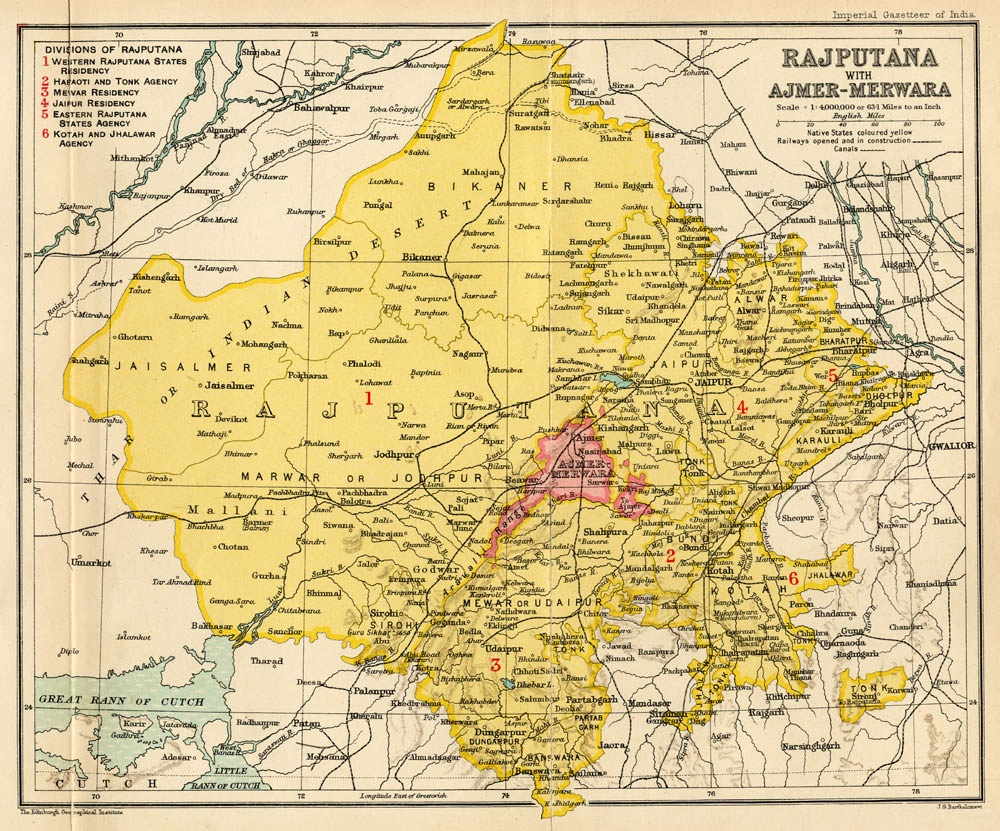
Rajputana, the land of the Rajputs or Rajasthan, as it is known today, included, in 1857, 20 Native States – Udaipur or Mewar, Jaipur, Jodhpur or Marwar, Bundi, Kota, Jhalawar, Tonk, Karauli, Kishnagarh, Dholpur, Bharatpur, Alwar, Bikaner, Jaisalmer, Siroli, Dongarpur, Banswari, Partabgarh and the then “British District” of Ajmere-Merwara. The decline of the Mughal Empire had brought in its wake the Maratha, and the States came under the domination of “that enterprising people” It would not be until 1803, after the successive campaigns of Lake and Wellesley, that the ruling states of Scindia and Holkar relinquished some of their grip over Rajputana. However, the Pindaris ran havoc over the land and in 1814, Lord Hastings put them to the sword and crushed them out of existence. Nawab Muhammad Amir Khan who had been a military commander in the service of Yashwantrao Holkar had received the State of Tonk in 1806 as acknowledgment for his services and above all for his fight against the British; but with the end of the Pindaris and the rise of the EICo in Rajputana, Khan finally submitted to the company in 1817 and in a rather quick reverse of events, he came to the terms with the British; by agreeing to dismantle his army he received a comfortable stipend and recognition as hereditary ruler of Tonk. He would serve as one of the staunchest allies in 1857. The final victories in Rajputana saw the territories plundered by the Maratha returned to the rightful heirs; Ajmere was ceded to the British, and the yoke of Maratha power was broken. While this was not lost on many of the rulers of Rajputana, those bordering on Central India would give the EICo in 1857 some cause for concern.
Moreover, there was a singular lack of European troops in Rajputana, and the regular troops belonged not to that state but to the Bengal Army. When the mutiny broke out, the troops were as follows:
Nasirabad: No. 6 Native Field Battery, 15th and 30th Bengal Native Infantry, 1st Bombay Cavalry (Lancers)
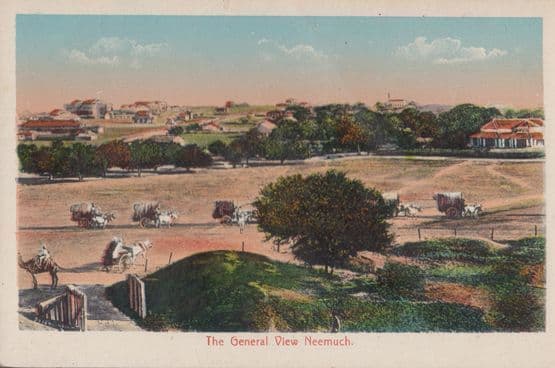
Neemuch: 4th Troop, 1st Brigade, Bengal Native Horse, one wing of the 1st Bengal Cavalry, 72nd Bengal Native Infantry, 7th Infantry, Gwalior Contingent.
Note:
Neemuch was geographically located in the Malwa region of Central India. Militarily and politically, it was under the suzerainty of the Maratha Gwalior princely state, which fell under the purview of the Central India Agency. However, it was located on the immediate border of the Rajputana states (such as Mewar/Udaipur). In fact, due to its proximity, Neemuch housed military garrisons that were routinely considered one of the six major military cantonments of the Rajputana Agency in 1857.
Deoli – The Kotah Contingent
Beawar – The Mhairwarra Battalion
Erinpura- The Jodhpur Legion
Kherwara – The Meywar Bhil Corps and one troop of the 1st Bengal Cavalry
The Ajmere Magazine was garrisoned by a company of the 15th BNI, and a company of the Mhairwarra Battalion held the gates. The Political Agent of Jaipur had an escort of the 30th NI at his service, while the agent of Haraoti made use of a detachment of the Jodhpur Legion. The Political Agent of Meywar, whenever absent from Neemuch, took with him an escort of the Meywar Bhil Corps.
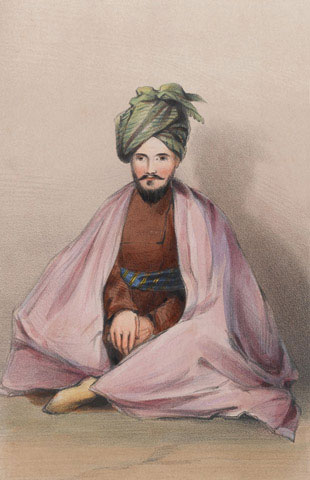
Most of these states had been assigned a political officer who was headed by the Governor-General’s Agent, Colonel George St. Patrick Lawrence, the elder brother of Sir Henry and Sir John. He had many of the qualities that made his famous brothers great – high-spirited, conscientious, a frank and straightforward man with a high regard for truth and justice. He had served as a cavalry officer in the Bengal Army (the 2nd Bengal Light Cavalry) and served with this regiment in 1838 in the Afghan War, and was present at the storming of Ghazni.
Returning to Kabul, George Lawrence was appointed political assistant to Sir William Hay Mcnaghten, the envoy to Afghanistan. Needless to say, Lawrence was present at the retreat from Kabul and was one of the officers, together with the ladies and children, who were held hostage until September 1842.
His subsequent career was no less interesting or adventurous than that of his brothers but would take too long to relate – for our intentions here, in March 1857, George Lawrence had just taken over from his brother, Sir Henry, as Resident for the Governor-General in Rajputana.
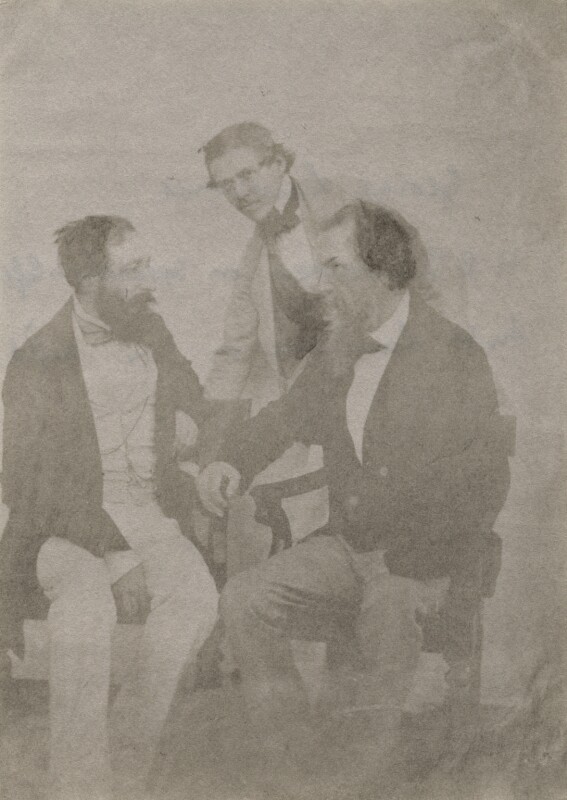
Under Lawrence worked an energetic band of officers. Major William Eden was at Jaipur who would prove himself to be the “very backbone of Lawrence’s staff” in the trouble times to come; at Udaipur was Captain Charles Showers – a decent officer but somewhat lacking in judgement and discretion; Captain George Henry Monck-Mason, the shrewd agent assigned to Jodhpur, at Kotah was Major Charles Aeneas Burton, and all the way at Beawar was a man who had been in the country so long he had seen the fall of empires – Colonel Charles Dixon, the founder of Beawar and the man responsible for raising Mairwarrah from the ruins of war to one of the most prosperous regions in Rajputana. He had raised the Mhairwarrah Battalion long ago, who, when an attempt was made to tamper with their loyalty in 1857, responded in body, “Do you think that we will war against the Government which raised us from the dust and made us what we are now?”
The great Mewar chief – Maharana Swaroop Singh of Udaipur- was the acknowledged head of the Rajputana Confederacy, and it was to his leadership the other chiefs turned – if Udaipur stood, so it was inferred so would they. George Lawrence, during his time as a Political Agent to Udaipur, in conjunction with his brother Sir Henry, had advocated in 1855 sending British troops to Udaipur to support the Maharana’s rule and depose 2 of the more querelous members of the nobility. While Lawrence’s ideas did not come to fruition, it left the Mewar Darbar ruffled and Lawrence doubting the fidelity, not of the Mahrana, but the men who surrounded him. Showers soothed tempers in Udaipur but only gave his attention to the Maharana of whose fidelity George Lawrence never doubted. In a private interview the Maharana declared, “…adhesion to the British cause, and practically proving it by placing at my disposal to take the field, sending his highest chiefs present at the capital and Durbar-officers to accompany me, and calling by proclamation on the loyal chiefs and district officers to afford aid in our operations.” He would be the friend they sorely needed.
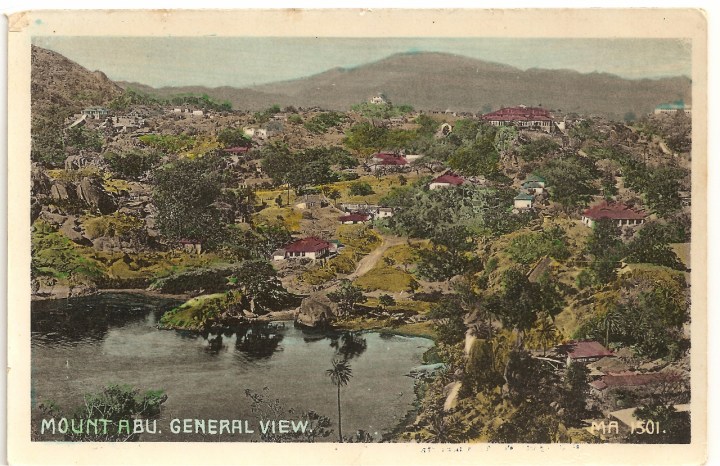
In May 1857, Lawrence was at Mount Abu when the intelligence reached him of the Meerut outbreak. He at once understood the importance of the news and what the consequences of the mutiny could be for Rajputana. With a population of some 20 million – all subjects of protected kings – and an area of a hundred thousand square miles, George Lawrence felt, would be more than happy to mutiny at the first favourable opportunity. Except for 20 sergeants attached to the various native regiments, there was not a single European soldier in Rajputana fit for duty. The nearest station with any European troops was Disa in the Bombay Presidency, and that was 150 miles away from Mount Abu. His first concern, the general populace aside, was the 5000 ill-disposed Bengal soldiers who were now watching the mutiny spread and swell. It was not a comforting situation.
On the 17th of May, better news came from Jaipur – Eden had wasted no time in consulting the Jaipur Darbar and Maharaja Ram Singh and was able to confer to Colvin at Agra and Lawrence at Abu that the Maharaja and the Sirdars had declared themselves in allegiance with the British. They offered to to aid them with as many troops as they had to offer, ready at Eden’s disposal whenever he would need them. As they were closest to Agra, Colvin resolved that Eden and his 5000 Jaipur troops would be best utilised in maintaining order in the Muttra and Gurgaon districts.
Monck-Mason called on Maharaja Takht Singh of Jodhpur for assistance and while there was no doubt of the fidelity of the Maharaja, long-standing feuds had weakened the state and not long before the outbreak of the mutiny, there had been an armed resistance against the Maharaja. Nevertheless, he placed 2000 Horse and Foot with 6 guns at Monck-Mason’s disposal.
As such, on the 19th of May, the Kotah Contingent under Captain Dennys marched from Deoli for Agra and took up service in the Muttra District; the Bharatpur troops inder Captain Nixon took to the field, while Alwar sent 2’500 men to cooperate with Nixon; 2000 horse and foot with 6 guns were dispatched from Jodhpur to Beawar and Ajmer.
With the troops of Bhurtpoor, Jaipur, Jodhpur and Alwar cooperating in the field, it gave Colvin at Agra a momentary peace of mind; but he was discerning enough to know that while the Rajput princes had no complicity with either the Mahomedan or Maharatta intrigues, many had given their daughters in marriage to the House of Delhi, had made obeisance to the Mughals and even coined money in his name – it would remain to be seen how far Rajputana was willing to go for an even more foreign cause.
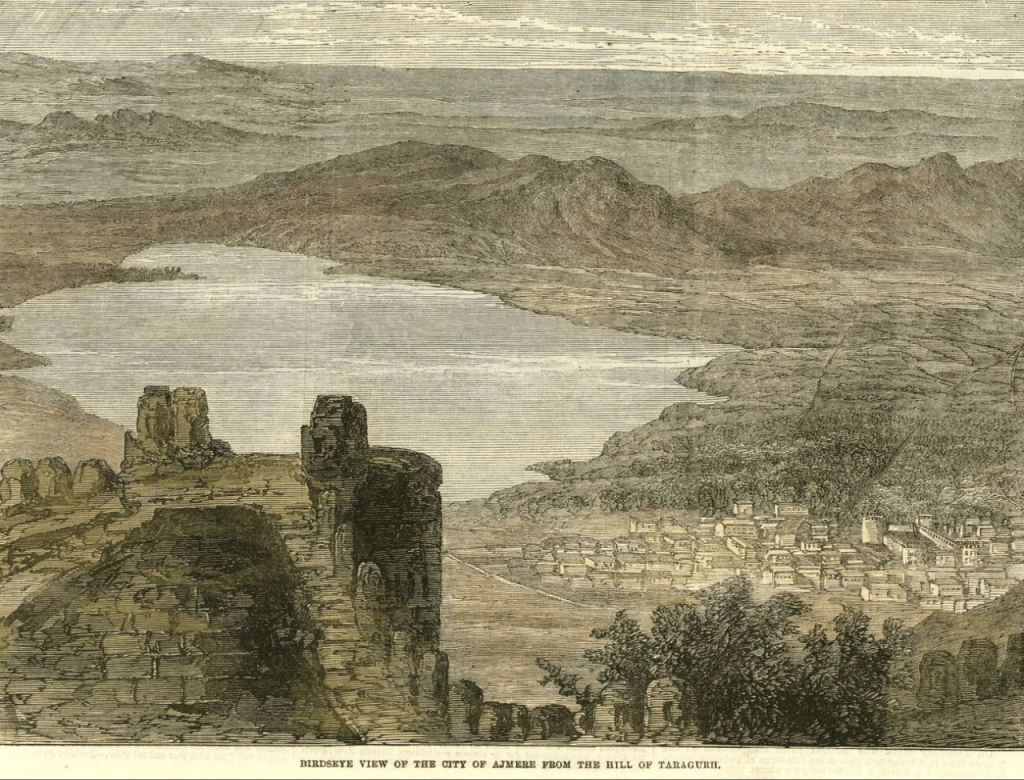
Lawrence’s first concern was to secure the arsenal at Ajmer which was housed within the old fort. With enough munitions to furnish a siege train, it was currently under the charge of the 15th BNI whose countenance was anything but gratifying. Interestingly, using the adage, “set a thief to catch a thief” the military authority at Nasirabad, sent the grenadier company of the 15th BNI to “ostensibly reinforce” their brethren in Ajmer. “This may appear a curious arrangement… as, if the protection of the fort was the object aimed at, it could scarcely be attained by doubling the strength of a traitorous garrison; but the grenadier company was generally supposed to be less tainted, or rather, I should say, more free from suspicion than the rest….” The arrangement did not, however, satisfy Lawrence. Realising that everyone, except the British officers of the 15th BNI, understood the regiment to be mutinous to the core, he sent off a message to Disa to requisition a light field force which would allow him to not only assure the safety of the magazine but overawe the 15th BNI if necessary.
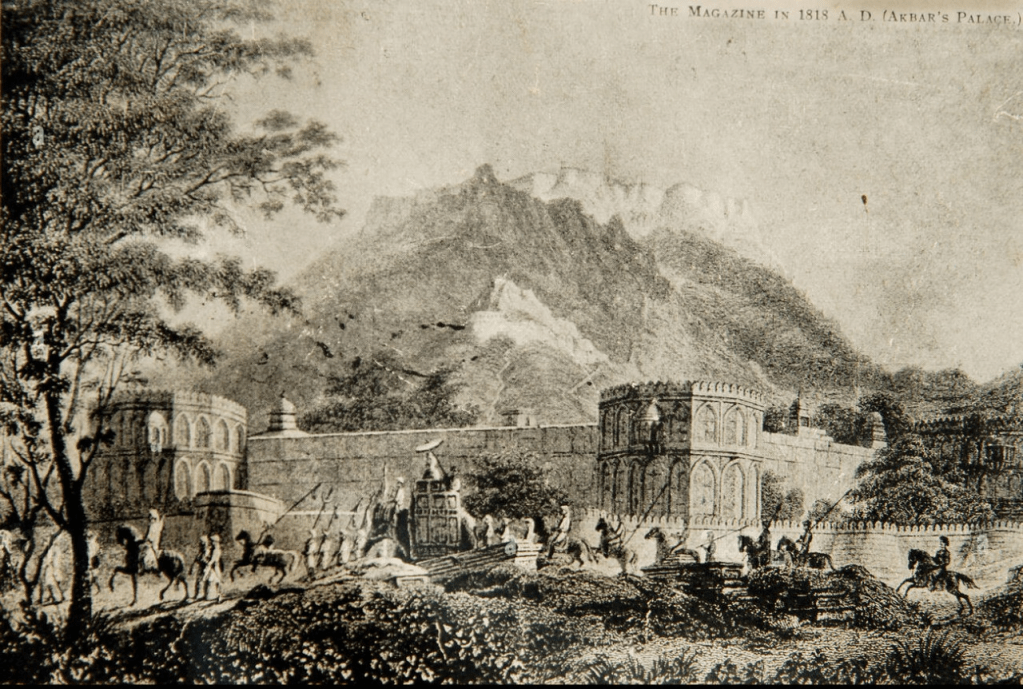
“The force was despatched, but before it could arrive, the Commissioner of Ajmir, Lieutenant-Colonel Dixon, acting on the inspiration of a dying man—for he survived but a few days—had made the arsenal safe. This officer, feeling, as Colonel Lawrence felt, that the caste question was a most important factor in the movements of the native army—that it was the question of the hour—bethought him of the regiment, of which he was commandant, raised for civil duties and appertaining exclusively to Rajputana, composed entirely of low-caste men, men who had no sympathy with the Brahmanical prejudices of the regular army. This regiment was the Mairwara battalion, quartered at Biaur, a little place southwest of Nasirabad on the Disa road. Without the delay of a single day, Dixon ordered Lieutenant Carnell, his second-in-command, to march at once with a hundred men of his battalion upon Ajmir. Carnell replied by acting with the most praiseworthy promptitude. Making a forced march of thirty-seven miles, he surprised the Sipahis before they had concerted their plans with their comrades at headquarters. The new arrivals at once took charge of the arsenal, and the regular troops were sent back to Nasirabad.”
The outcome was a success – the arsenal was saved and remained under the Mairwara men. To show his appreciation for their good service and their staunchness, Lawrence raised, on his own authority, a second Mairwara battalion and recommended that both battalions be given the same privileges as a regular native regiment.
With Ajmer safe, Lawrence, in his turn, issued a proclamation. On the 23rd of May, he called upon the Rajput rulers to preserve peace within their borders, to concentrate their troops on the frontiers of their States so they would be available should the EICo require them, and to “show zeal and activity in dealing with any body of rebels who might attempt to traverse their territories.” While thus requesting the cooperation of the native rulers, he wanted the commandants at the various stations to act with “promptness and vigour.” He then requested the Government of Bombay to send any European troops returning from the Persia Campaign to be sent to Agra via Gujarat and Rajputana.
Throughout the extent of Rajputana, there were two military stations – Nasirabad and Neemuch. The regiments and batteries at both stations were composed entirely of native troops, and Colonel Lawrence had little reason to believe they would stay loyal. It was as much for the magazine at Ajmer as for these two stations that he had requested the field force from Disa – unfortunately, they could not march faster than the rumours of their approach. Before they arrived, the damage was done and the next problem Lawrence would face would be from the Jodhpur Legion.
Sources:
Narrative of the Indian Mutinies of 1857 compiled for the Madras Military Mail Orphan Asylum (1858)
The Mutinies in Rajpootana – Iltudus Thomas Prichard (1860)
A Missing Chapter of the Indian Mutiny – Liuet. General Charles Lionel Showers (1888)
Kaye’s and Malleson’s History of the Indian Mutiny Vol. III (1889)
The Rajputana Gazetteer Vol. I (1879)
The Revolt in Central India 1857-59, compiled in the Intelligence Branch (1908)
 Mutiny Reflections