Both Nasirabad and Neemuch were quickly reoccupied by the British, and they spent several worrisome weeks in their destroyed stations, with barely a force enough to protect themselves, lest stave off a concentrated attack by mutineers.
Back to Nasirabad
The officers of the Lancers, after presumably eating Dixon out of house and home, started back to Nasirabad. Unanimously, they decided that instead of spending their days sweltering in Small’s bungalow surrounded by women and children, two days after arriving in Beawar, Prichard and the other officers too returned to Nasirabad. The ladies and children remained behind.
With the officers went a party of the 30th BNI – 120 men who had instead followed the party to Beawar.
“They were ordered to halt outside the station, and to give up their arms. An officer, Captain Fenwick, was sent to meet them, and receive their submission; and accordingly he repaired to the spot. It was a very hot day, and the walk made him feel very thirsty, but there was difficulty in getting water fromthe well, as natives, either Hindoo or Mussulman, will not allow a European to drink out of their vessels.But the native officer of the party, a Hindoo, came forward, and offered his, remarking,”Take mine. Sahib, and drink, there is no such thing as caste now.”
Unfortunately, their loyalty was sadly mismanaged. On the evening Pritchard and the others intended to return to Nasirabad, the sepoys were unexpectedly ordered to march thither, under the command of two of their officers. They had received no warning to make ready and had not even been given enough time to pack their bundles. Perhaps rightfully wary of this sudden order, half of their number deserted. It was not a promising beginning.
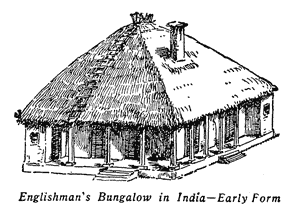
Arriving back at Nasirabad around sunrise, barely three days after they had left the place, the officers were met with a strange sight. The road in front of them was patched with white, as if it had suddenly snowed. On closer inspection, Pritchard found it was paper.
“We soon found that this white appearance of the ground resulted from an immense quantity of paper strewed about, chiefly private letters, taken evidently out of writing-desks and cabinets, where they had been no doubt placed with the idea of keeping them from the eye of strangers. Here was a revelation of secrets and family matters. 1 observed that nearly all I picked up were overland letters, and began at first collecting them with a view of returning them to the owner, who had evidently made a point of preserving them for some object, but I soon found that the attempt would end in my overburdening myself, for I could have collected a donkey-load in half-an-hour, and by evening should have required a camel to carry the product of my day’s gleaning.”
As they rode past the blackened bungalows, the devastation soon became clear. The roads were strewn with papers, notes, letters and fragments of books, and to Pritchard’s surprise, “the immense quantity of music lying about. Trashy stuff, I dare say, as old music generally is, but, had I chosen to collect it, I could have laid in a stock that would have put most regimental bandmasters in ecstasies.” In one house, which once been the home of a married officer of the 15th BNI, they found a little crockery that was surprisingly still intact and an empty plate chest; Pritchard lamented that in his house, where the ashes were ankle deep and still warm from the recent inferno,
“On the mantelpiece in the drawing-room there had stood a stereoscope, and a pile of stereoscopic pictures on subjects of family interest. The glasses were still there, partly melted, but of course no traces of the images represented on them. A coloured daguerreotype of some members of my family, done upon a brass plate, still remained; it had been subjected pretty well to the action of fire, but the figures and colour were still discernible. In the compound I found stems of moderator lamps fused and half melted; on the wall, as if placed there in derision, a broken tortoiseshell tea-caddy, an old family relic; and in the servants’ huts and outhouses several empty broken boxes, chiefly those which had contained ladies’ wearing apparel, dresses, &c.; and this was all I found.” His library, consisting of valuable oriental works, was completely destroyed. One of his servants, who he found in the bazaar, brought back a brooch and bracelet that belonged to Prichard’s wife along with a book, Jeremy Taylor’s “Disce Vivre” that Prichard had left open on the on the drawingroom table the day the mutiny broke out.
With the bungalows uninhabitable, the officers took up their abode at the 15th BNI Mess House, with each man occupying a corner of the one of the rooms – they then purchased, at vastly inflated prices, a few plates and cooking pots and hired such servants as were willing to attend them. While the mess-house had not been torched, the contents were gone, except for pieces of a table which, for some reason, remained untouched. Otherwise, everything else had been carried away – Prichard suspected the beer, wine and oilman’s stores had not been taken by the sepoys but by the local tradesmen. However, the Brigadier refused the officers permission to search the bazaar for their property – had they done so, the regimental doctor would not have had to see his furniture and stock lodged in a shop, evidently for sale. The owner claimed he had moved everything there for safety – and, of course, he would return everything, for a price.
The bazaar had suffered in equal measure to the bungalows – the plundering had been systematic and thorough, first by the mutineers, then by the townspeople and finally by the villagers from the surrounding countryside. While only a few buildings in the bazaar had been set on fire, not a single one escaped pillage. A captain of the 15th rode through the bazaar reassuring the inhabitants of Nasirabad, who came to him with their grievances, consoling them with, “Never mind, it will be all right now,there are so many pultans (native regiments) on their way and so many European soldiers….” Considering their recent experiences with the pultan, Prichard remarked,
“…it seemed but a poor source of consolation to them to know that though the dreaded Sepoys had just gone off to Delhi laden with plunder, there were plenty more coming. The prospect of a garrison of European soldiers might have been deemed a tower of strength at any other time, but just then the value of soldiers and everything else European had fallen considerably in the market; the public feeling was anything but one of confidence in us, and it was a question whether, to the excited imagination of these people, the advent of the Goralog (English soldiers) was not looked upon as a worse calamity than even the occupation of the place by Sepoys.”
Interestingly enough, Prichard found the men of the 15th and 30th BNI had taken the time to settle their accounts with the regimental shopkeepers the day before the mutiny – while the shopkeepers now had nothing in their shops, they had at least money in their hands. As for the regimental hospital, it was a mystery why it was empty – all the sick and wounded were gone. He found to his surprise that several sepoys had actually stayed behind at Nasirabad – after taking part in the general plunder of the place, they had decided they really did not want to march to Delhi after all; instead, they returned to the lines and reported themselves to the first British officer they came across. There was neither the means nor the inclination to pursue their claims of innocence any further; instead, they were permitted to live in the cantonments. Unfortunately, they had armed themselves with large bludgeons, which they claimed was to protect the station, and being ready for “any mischief” soon proved themselves to be something of a nuisance, albeit a dangerous one. Their behaviour to the English officers was insolent and rude; having nothing useful to do, they took to loitering around the police station, rummaging through the property that was gradually being brought back to Nasirabad. Their presence soon became such an irritation, a subaltern was set daily for duty to preserve the peace. On one occasion, rowdier than usual, Lieutenant Thackwell had to order them back three times; while most of them retired, one man decided to measure himself against the lieutenant. Thackwell was forced to push the man back, who then raised his club and advanced on the lieutenant. Clenching his fist, Thackwell “sent it with the whole force of his muscular arm right in the man’s face…” flooring the sepoy. Thackwell was reminded his actions were, besides dangerous, somewhat unconstitutional, but since the sepoy did not launch a complaint, the matter was dropped.
The reinforcements arrived a few days after Prichard and consisted of a detachment of the Jodhpur Legion, a wing of the 12th Bombay Native Infantry, a detachment of the 2nd Bombay Cavalry, three guns of the Bombay Horse Artillery (European) and 200 men of H.M.’s 83rd. Nasirabad had nothing to offer the men, and the officers would have to claim what space they could in the ruins of the 15th BNI Mess House. And so,
“We set to work to gather up the fragments, as it were, of our regimental institutions, and settle as far as we could, while things were fresh in our memory, band and mess accounts, &c.; we had to draw out returns and rolls for transmission to head-quarters, committees sat to investigate losses, and altogether, the horse being gone, we did our best to shut securely the stable door.”
Back to Neemuch
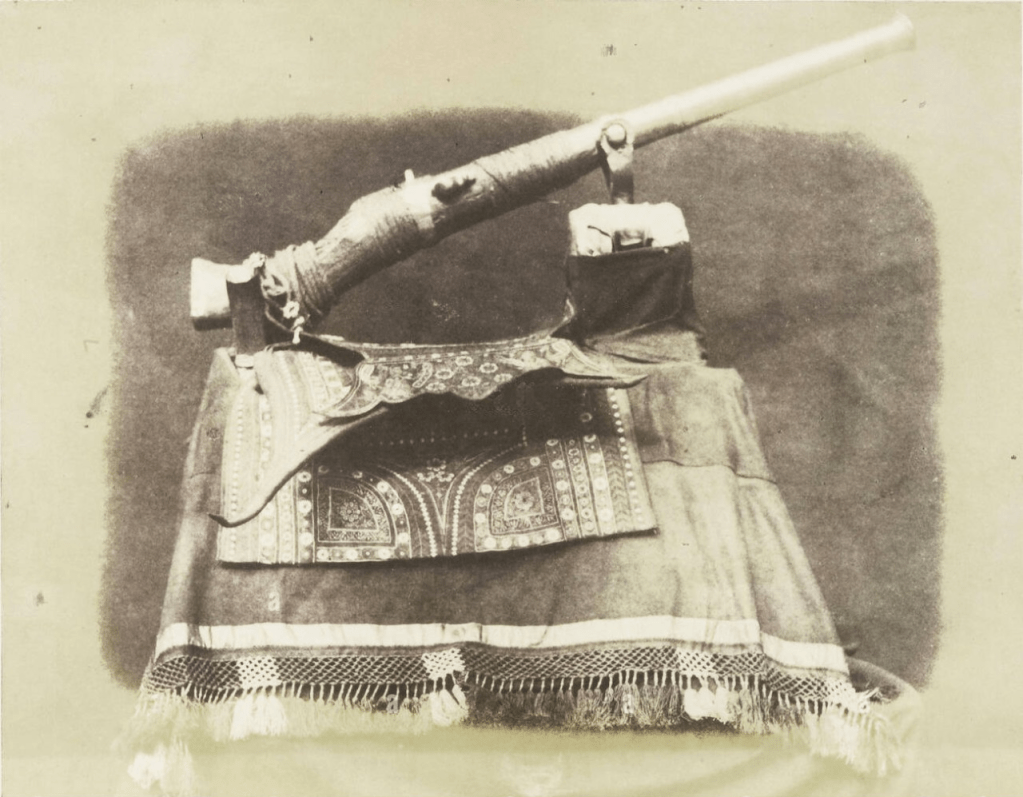
We left Captain B.P.Lloyd kicking up his heels in Daru, waiting for Showers. He was further disappointed that the Raj troops, promised by Showers, were nowhere to be seen, and police sowars Lloyd had sent out to assist any fugitives still on the road did not return to Daru. Early in the morning on 6 June, Lloyd, accompanied by seventeen Sadri sowars, Lieutenant Ritchie (Adjutant-Superintendent), and Lieutenant Stapleton(1st Cavalry), started back to Neemuch. The station had been abandoned by the mutineers, but they had left a ruin in their wake – the only habitable building left was the fort.
Like at Nasirabad, the destruction of the station was visible long before the cantonments were reached. Three miles in the outskirts, the road was “white with fragments of papers and letters that were clinging to the roots of bushes…” Only fourteen houses had escaped being torched, but like at Nasirabad, there was nothing of value left. The bazaar had been plundered, and much of it had been burned down. As for the prison, the prisoners had been released on the night of the mutiny, but to Lloyd’s surprise, some of them came back and gave themselves up. On 7 June, the Kota troops under Major Burton arrived in Jawad to restore confidence, and a detachment of 100 Bundi cavalry arrived in Neemuch. At Lloyd’s request, Burton, with the rest of his troops, marched into the station – he left 100 infantry and ten horsemen at Jawad for the protection of that station. The troops at Neemuch now consisted of:
Kota – 500 infantry, 200 cavalry with two guns
Bundi – 100 troops, five camel swivel guns
Jhalawar – 125 infantry, 75 troopers, ten camel swivel guns
They would remain in Neemuch until relieved by British troops on the 18th of July, when the Irregulars returned to their respective capitals.
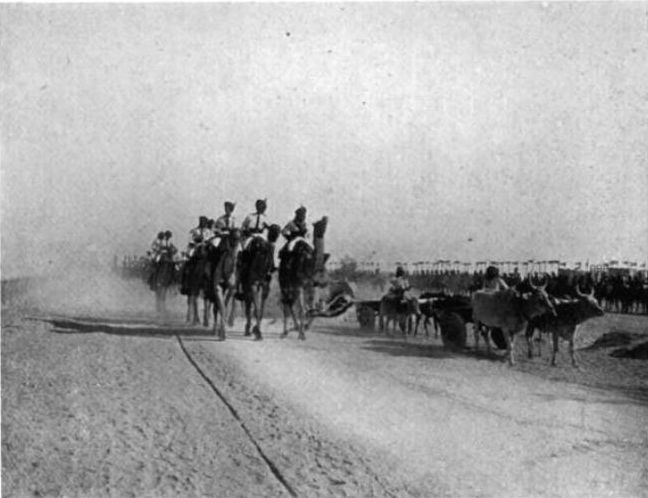
Not everyone who had been at Daru had gone on the Dangala – the wives of the officers who elected to remain behind had stayed with their husbands, and when it was decided to return to Neemuch, they dutifully went along. They would take their place by their husbands, living in the hastily fortified square. Among the ladies was the wife of Major Burton – he had sent his wife and children to Neemuch to their house for protection before the mutiny, and his family was one of those that had escaped from the station. Now that Burton was going there, his family accompanied him. The Kota guns – two brass 3-pounders were placed on the bastions, an 8-inch mortar was placed in the centre, and a 24-pounder, which due to its weight was too heavy to move onto the ramparts, was positioned to defend the gate. The drawbridge was repaired and made ready for use. It was as much as they could do for now.
Much to Lloyd’s discomfiture, on 7 June, the Cavalry of the United Malwa Contingent, sent by Colonel Durand from Mahidpur to assist Neemuch, mutinied on the road. They murdered their officers – Captain Francis Walter Brodie (commander, Malwa Contingent, Cavalry) and Lieutenant Charles John Hunt at Malhargarh – and then tried to return to Mahdipur. The mangled bodies of their officers would be collected and buried in roadside graves by Indian civil authorities and later reinterred at the Old Cemetery in the area of the Indore Residency.
It was initially believed that the Malwa Contingent Cavalry would ride on Neemuch, but the presence of Burton and Captain Lloyd gave them second thoughts. Instead, they rode 80 miles in two days, intending to incite the artillery and the infantry of the Contingent to mutiny at Mahidpur. These did not listen, and the cavalry was sent on their way. They joined forces with the rebellious Neemuch Brigade on the road to Deoli. The Neemuch Brigade were not particularly impressed by the Malwa Cavalry – while they swelled their numbers, they had not brought any treasure with them. It was not a good start.
The Neemuch mutineers had marched towards Nasirabad but refrained from attacking the station – the British detachments from Disa had arrived on the 12th of June, and they thought better of taking them on. Yet they appeared at a loss of what to do next and
“.. hovered about the neighbourhood, taking first one road, then another, then returning, marching and countermarching, so that we could not tell what their plans were. They carried on their movements, too, with the utmost precision and showed that they had not forgotten the lessons that had been taught them in the service of the Government. They made a great point of gaining accurate intelligence and had scouts mounted on fleet riding camels scouring the country and always accompanying the brigade at some little distance on each flank. Their camp regulations were conducted in the most approved military style, and they made a point of always halting on Sunday! At last, they made up their minds, after sacking Deolee, to proceed to Agra and Delhi…”
As they made their way towards Agra, they sacked and burned down the station of Deoli, taking with them not just a 24-pounder time gun but a part of the guard of the Kota Contingent with them when they left. The sergeants, who were absent from the station with Burton, had left behind their families in Deoli – they were saved by the commander of the guard, Subadar Raghubar Singh, who concealed them in a nearby village where they remained until the arrival of Captain Showers with the Mewar troops. The subadar and 60 out of his 120 men were forced to accompany the rebels, but at the first chance they had, they escaped and returned to Deoli.
Meanwhile, for Agra, it would be the end of talking, posturing and deliberating. The mutiny, which so many had tried to pass off as a temporary excitement, had finally arrived – in the form of the combined forces of Nasirabad, Neemuch and Gwalior. When they met Agra Brigadier Polwhele in the field on the 5th of July, it would spell another inglorious moment in the history of Agra in 1857. However, in spite of their momentary victory against Polwhele, their goal was still Delhi. They marched off towards Muttra and would form part of the force that was defeated by Nicholson at Najafgarh in August. After the fall of Delhi, the remanent of this force would flee towards Lucknow, but after the conclusion of that campaign, they were forced out of Oudh. They joined hands with Khan Bahadur Khan in Rohilkhand, and their final chapter unfolded. However, we are still many months away from Lucknow and Rohilkhand.
On the 6th of July, the officers of the infantry corps at Neemuch were ordered to proceed to Nasirabad and to take their families with them. An escort of 50 cavalry and 100 infantry of Maharana of Udaipur troops were promised, but when the time to start came, only 10 cavalry and 25 infantry showed up – as such, no one was complaining. The officers had lost some of their trust in Indian troops and believed their “chances of security were in inverse ratio to the strength of the native escorts furnished…” and as such set off towards Nasirabad. They arrived, after a distressing march through monsoon rain, at the station on 17 July. Although everything was done to ensure their comfort, the ladies were told not to make themselves too much at home. Colvin had sent orders for all officers of the mutinied Rajputana regiments to proceed to Agra, and the Neemuch officers were no exception. Every few days, they were told to be ready to march, but it would not be until 28 August that they finally started. Their time in Nasirabad was hardly uneventful.
 Mutiny Reflections