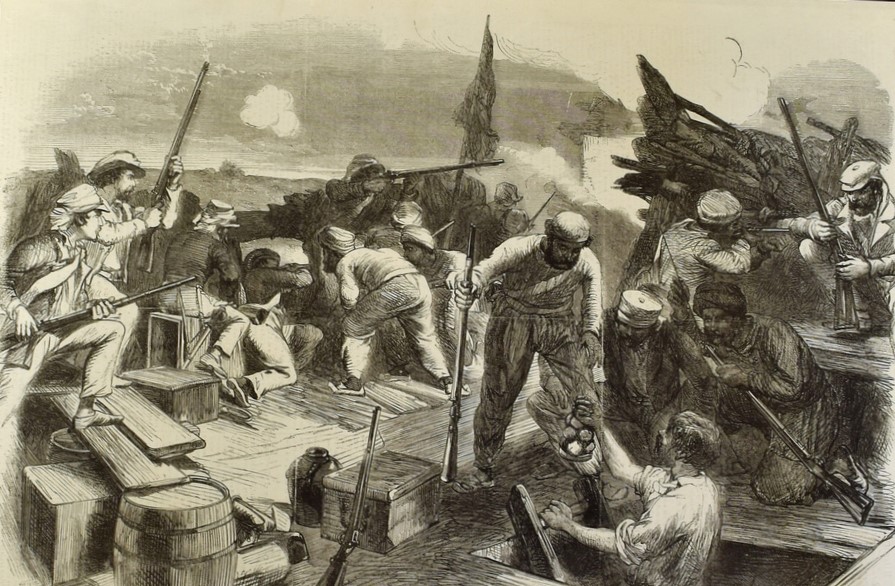
Unless otherwise stated, the men in the following list were killed in action during the first relief under Captain Dunbar. This force consisted of 400 men. In all, 170 were killed and 120 wounded.
1st Battalion, 10th Regiment of Foot
Captains
Dunbar, Charles – killed in action
Sandwith, F.B – Slightly wounded
Lieutenants
Medhurst, J.W., wounded
Colour Sergeants
Holland, Daniel
Corporals
Callanan, Richard – Wounded
Duigan, James – Wounded
Glover, William
Ryan, Patrick
Sullivan, Daniel
Ensign Henry Jones Erskine – Dangerously wounded at Arrah. Died of wounds
Privates B-E
Brandon, Benjamin
Brian, Jeremiah
Brooks, Edward
Bryan, Maurice
Burrows, James
Butler, William N.
Byrne, John – Died of tetanus, August 6.
(He) received a gunshot wound which passed through the upper part of the left thigh, without injuring the femur. He arrived at the regimental hospital the following day, and by that time, considerable Inflammation had set in. Leeches were applied around the wound; their bites bled very freely, and for some days thereafter, he seemed free from constitutional disturbance. On the 4th August, the pain and sense of tension at the wound were described as very great. On the following day these symptoms were increased, a thin bloody discharge oozed from the wound, restlessness was great, skin was hot, pulse rapid and tongue white; at four p.m. of that date, he suffered from pain and stiffness in the jaws, which were nearly closed; he could with an effort swallow; pain was complained of in the back of the neck; the head was bent backwards, and the features were distorted. Towards evening, accessions of spasms occurred in distinct paroxysms, at intervals of ten to twenty minutes; the body on each occasion was drawn violently backwards, the sufferer uttering loud screams from agony. Deglutition soon became almost impossible; the abdomen felt distended, hard, and painful; pulse 100, full; surface warm and dry; urine was voided naturally. On the 6th, the conditions continued with little alteration; surface had become cool, and pulse sank to 90. In the afternoon of that day, an aggravation of the symptoms took place, and injury of the sciatic nerve was suspected. Tetanic spasms increased in severity and frequency. Chloroform was liberally administered, in addition to the other remedies usual in such cases; no benefit was obtained, however. He gradually became unable to expectorate the phlegm that rapidly accumulated in his bronchii, and during the evening he died in great agony. No postmortem examination seems to have been performed.
Byrne, Luke
Cain, Joseph – Wounded
Capper, Robert
Carroll, Thomas
Carter, Richard – Wounded
Connolly, William – Wounded
Costello, John – Wounded
Cummins, John
Donnell, Michael
Drake, James – Wounded
Else, John – Wounded
Privates F-L
Foley, Patrick
Haines, William
Hallman, Martin
Hudson, Patrick
Hughes, John
Humphries, Aaron
Kelly, Thomas
Kennedy, Owen
Larkin, William
Leaman, Thomas
Privates M-W
McGee, Denis
McLean John
Mongey, John
Morrissey, John
Moss, William -Wounded
Murphy, James
Murphy, Thomas- Wounded
O’Connell, Denis – Wounded
Ogden, John
Phillips, John
Quaile, John
Ryan, Patrick
Scarfe, Joseph
Stacey, Alexander
Stewart, Roy – Wounded
Studdart, Thomas
Sullivan, Patrick
Swift, Thomas – was wounded by a bullet which entered at the root of the neck on the left side, passed backwards and downwards, and escaped at the left side of the spinal column, having traversed close to the outside of the sternomastoid muscle, through the trapezius, and escaping just above the superior angle of the scapula. He was reported to have expectorated or vomited about a pint of blood, and for some days afterwards to have spat up small quantities. Extensive ecchymosis occurred around the wound, but there was no constitutional disturbance. The progress of the case under cold water dressing was satisfactory; both wounds healed favourably, that of ingress first. Some stiffness of the neck remained, but as hospital gangrene had appeared in the hospital, he was sent to barracks and made a complete recovery.
Towey, Hugh
Walker, William – seriously injured, died of wounds, 31 August, 1857. …while swimming a nullah at Arrah, received a gunshot wound. The bullet entered the centre of the sacrum, and on his being brought to hospital two days afterwards, the left lower extremity was found to be paralysed, and he was unable to void urine. A large opening indicated the entrance of the bullet; the finger discovered the sacrum bare and rough, but the further progress of the missile could not be traced. There seemed at first to be very little constitutional disturbance, but during the night after his admission, he sank into a low state, requiring the very free administration of stimulants. This condition was but temporary; however, he rallied, and up to the thirteenth day after the injury, he seemed remarkably well. From that time, however, the powers gradually succumbed; a profuse fetid discharge took place from the wound; he became emaciated, bed sores appeared on the prominent parts; the penis, from having been so long a time resting in the urinal, became excoriated, and existence became a burden. Yet it was not until the thirty-third day after the injury that he died. Post-mortem examination revealed the fact that the anterior part of the sacrum was shattered and comminuted in a frightful manner. The bullet had formed a canal for itself and rested on the body of the fourth lumbar vertebra in front. The lumbar muscles were separated from their attachments by quantities of suppuration, and the origin of the vesical twigs of the lumbar plexus being destroyed accounted for the paralysis of the viscus.
Walsh, John – gunshot wound in the forearm. The bullet had entered from behind, four inches below the elbow-joint, fractured the radius, and escaped by a large opening in front. No fragment of bone had come away; the wound looked clean, having from the date of its receipt been treated by cold water. The hospital into which he was brought had at the time been crowded with wounded men, and the building itself was ill-ventilated. A tendency to hospital gangrene made its. appearance in both wounds about three weeks afterwards, and when, to all appearance, they were progressing favourably. His conditions were improved as far as was practicable, opium applied locally, calomel and opium given internally. The threatened disease was averted, and he recovered with but loss of power in the hand and wrist.
Warren, Teddy
Whelan, Stephen
37th Regiment of Foot
Lieutenants
Bagenell, George
Birkett, Edward – Aged 21. Son of the late Revd. James Birkett, Ovingham, Northumberland.
Ensigns
Sale, Edwin Stephen – Son of John S. Sale, of Rugby.
Colour Sergeant
Gosnelle, W. – Slightly wounded
Sergeants
Baxter, A. – Wounded
Dunderdule, J.
King, H. – Wounded
Saunders, G. – Wounded
Corporals
Brown, S.
Clinch, R.
Coggan, G
Lear, G. – Dangerously wounded. Died of wounds.
Musk, J.
Quick, R.
Stugg, J.
Varion, E. – Dangerously wounded. Died of wounds.
Wichelloe, K.- Dangerously wounded
Wilson, J.
Privates A-F
Andrews, W. – struck by a bullet immediately below the right nipple. The missile passed backwards, and escaped at the angle of the fifth rib without inflicting a fracture. The ” shock” of the injury was severe. The seat of the wound became very irritable, and considerable constitutional irritation supervened. Poultices to the wound, with Dover’s powder, quinine, and cinchona bark internally, subdued those symptoms ; simple dressing and lead lotion were alternately applied to the wounds, and recovery was completed in fifty-one days.
Bailey, T.
Bosworth, S. – wounded in the left thigh. A bullet entered its outer aspect below the hip-joint, and running superficially downwards and outwards, a distance of four and a half inches, escaped. Very profuse discharge took place from the track thus made, but under the application of poultices in the first instance, and then of cold water, the wound completely healed in thirty-one days from the date of its receipt.
Bradshaw, G.
Briscoe, J. – Severely wounded
Carson, S.
Collier, H.
Connell, J.
Courtney, E. – Wounded
Creedon, D.
Crummey, J.
Curran, P. – Wounded
Curry, T. – wounded by a bullet, which having entered below the middle of the left clavicle and passed outwards and downwards, escaped through the deltoid muscle. The bone was uninjured; there occurred no haemorrhage, and the wound appeared to implicate no tissue of importance. Under the application of cold water dressing, it completely healed in thirty-one days, and at the end of that time, the power of the arm remained unimpaired.
Discombe, G.
Dougher, M.
Dunster, T.
Egan, P.
Finch, M.
Flynn, T.
France, G.
Privates H-K
Haldean, T.
Hallis, John
Hassell, T.
Hawkes, K
Housel, J.J. – Dangerously wounded, died of wounds
Howse, W.
Irvine, J.
Kelly, M.
King, A. – wounded by a bullet, which having passed through the left arm superficially, left as it were a bridge of skin over the channel formed by its progress. The vitality of the portion of skin that had been left seems to have been destroyed, as it speedily sloughed, the sphacelated portion separating on 9th of August, after which granulation progressed favourably, and the wound healed in fifty-three days. The applications varied. Cold water dressing was in the first instance applied; afterwards poultices, solution of acetate of lead and opium, simple dressing, with for a time adhesive plaster to stimulate the surface, and again cold water.
Knott, W. – admitted with a gunshot wound, destroying the left radius and ulna, rendering amputation necessary. Maggots appeared in the stump, but were destroyed by turpentine, after which, under the use of cold water, and latterly of simple cerate, granulation and cicatrization took place favourably.
Learey, D.
Littledike, M.
Long, S.
Lynch, Johnathan
Privates M-W
McCabe, P.
McConnel, D.
McCormick, T. – sustained a gunshot wound across the left patella. On admission, it did not appear that the bone was anything more than grazed by the bullet; the wound, however, became rapidly painful, its edges swollen, and much constitutional disturbance set in. A week afterwards, it became evident that the patella had been comminuted. A large portion of it was found to be loose and was accordingly removed. The limb had at first been left loose, water dressing being applied to the wound; subsequently, it was secured by a splint, leeches were applied to the knee, ipecacuan and James’s powder given internally, with cream of tartar drinks. The pain and constitutional disturbance continued, and when seen by me nineteen days after the receipt of the injury, he was suffering severely. I resolved to amputate the limb, but a severe accession of pyrexia occurring, the operation had to be postponed till the following day; meantime the patient had an apoplectic seizure and died. Examination of the limb discovered a large quantity of offensive pus and gas welling from the knee joint, which was then seen to have been extensively injured. The remarks appended to this case state that death probably arose from pyaemia, and that had primary amputation been performed, the man’s life would in all probability have been saved.
McGifford, J. – shot in the head. The bullet struck over the apex of the lambdoid suture, made in the scalp a ragged, irregular opening of two inches and a-half in length, laying bare and denuding the outer table of periosteum, but apparently causing no fracture. From that date to 7th August, the man complained of inability to sleep, but had no constitutional disturbance. A profuse discharge occurred, and severe pain in the wound was, from time to time, complained of. Up to the 11th, cold water dressing was applied alone. On that day, leeches were applied around the seat of injury, inflammation having run somewhat high, and being only for the time relieved by them. During the few ensuing days, he was drowsy; the pulse laborious; the pupils dilated. On the 16th, maggots appeared in the wound, but were destroyed by the application of turpentine. Calomel, in combination with James’s powder or Dover’s powder, was given at short intervals, and in small doses; poultices, cold water, and simple dressing being applied as indicated. On the 20th, the first decided improvement was apparent, the inflammation around the wound having moderated. On the 27th, his expression was much improved; he was cool, wound discharging freely; the pus was healthy; a piece of dead bone was perceptible at the bottom of the wound; and for the first time, a desire for food was expressed.
The notes of the case record that from this date a steady improvement took place, it being remarkable, considering the extensive nature of the injury. The greater part of the wound granulated steadily, although at one point the dead bone could still be seen. By the 16th of September, he had taken on flesh and was walking about the ward. It was then found that suppuration had taken place under the scalp, in a direction towards the occiput. The pus was then regularly pressed up towards the wound, where it escaped, and poultices were applied. On the 11th October, a counter opening had, however, to be made. The dead portion of bone gradually became loosened, and on 6th December, a ragged piece, consisting of both tables, two inches and a-half long and one inch broad, was extracted, the long axis being across the occiput in the track of the wound.The patient did well, and was sent to England with the invalids of the season.
McLean, T.
McMillan, T.
McNamara, F. Dangerously wounded
Maher, M.
Marshall, W.
Miles, M.
Mitchell, T. – Wounded
Moon, J. – Severely wounded
Mooney, T.
Newman, M.
Nicholis, B.
Norton, J.
Osbourne, W.
Phillips, W.
Piper, J.
Poole, R.
Porter, G.
Purcell, J.
Reynolds, M.
Roberts, J.
Robinson, J.- Severely wounded
Rowe, W.
Scott, T.
Sherry, R.
Skeer, G.
Smithers, W.
Stagg, J.
Storey, J.
Tawney, J. – bullet in the right leg, through which it passed from behind, forward between the tibia and fibula, but without injuring either of these bones, or destroying a vessel. A tubular slough in due time formed and separated. Cold water dressing was alone applied, and in thirty-five days after the injury, he returned to his duty, the opening of exit having been the first to close.
Taylor, T. – received a bullet which entered near the acromial end of the right scapula, and was cut out posteriorly opposite the head of the humerus. The part of the scapula through which the missile passed was comminuted, but no spicula came away at the time. The discharge became very fetid, and partial sloughing occurred of the parts around the posterior opening. Much pain was complained of along the whole arm, and considerable swelling of the hand supervened. Slight irritative fever made its appearance, but was soon checked by febrifuges. The local applications consisted only of poultices and cold water dressing, used alternatively as each seemed to be indicated; afterwards solution of lead and opiimi during the day; ointment of the same at night. Thirty days after admission, and thirty-one after the receipt of the wound, two small spicules came away from the posterior wound, after a night of unusual suffering along the median nerve by the patient. Other small pieces, evidently of the scapula, subsequently came away, and the opening of exit was then the first to heal. The history of the case contains a remark to the effect that the attack of pyrexia, under which the patient laboured, seems to have been induced by the tainted atmosphere of the hospital. It would seem, however, that on its being subdued recovery progressed favourably; the man, although deprived of the use of the arm, retained good health, and at the expiration of eighty-two days from the injury was invalided.
Thompson, E.
Venn W.
Vine, R.
Washington, C. – Wounded
Wood, W.
Wymark, T.
7th and 40th Bengal Native Infantry
7th BNI Lieutenant Ralph Mitford Ingilby (also spelled Ingelby)
Ensign E. Venow, 40th BNI, wounded
10 Civilian Volunteers took part in the first relief:
William Fraser McDonell – wounded slightly when a bullet grazed his thigh
“Of the volunteers who went with the troops, eight were killed, two wounded, poor Garston badly, shot right through the body from hip to hip, myself slightly
in two places…young Mangles…was knocked on the head and stunned for some ten minutes…” (William McDonell, “A Turning Point in the Indian Mutiny”- I. Giberene Sieveking)
At 24, Ross Mangles was one of the youngest volunteers, and Tayler was loath to let him go. With McDonnel, he had had little choice; McDonnel knew the country well and could act as a guide, but Mangles was going to Arrah from personal obligation to Herwald Wake, who was a friend not just to McDonell but to Mangles. They were going to save a friend, and Tayler could not deny them their efforts.
In “Reminiscences of Behar” by Minden Wilson, there is the following passage:
“My nearest neighbour was Ferrier at Attur factory. I saw very little of him. He died soon after my arrival and was succeeded by Ogilvy who left to go to the army, and was followed by Garstin. Garstin afterwards took up an appointment as road-engineer in Sarun, which berth he held for some time. During the mutiny, he volunteered, with the force from Dinapore, to relieve Arrah….and he narrowly escaped with his life. A shot grazed his spine, and paralyzed his legs. Fortunately, one of Rattray’s Sikhs – a big tall fellow – who saw him fall, came to his assistance, and having got him, mounted on his back, half carried, half dragged him along to the river bank, when the fire of the mutineers having become to warm, the Sikh dropped him and made for a boat. Fortunately, he was seen by Venour and Waller of the 40th Native Infantry, who rescued poor Garstin for the moment by lifting him into one of the boats. They, however, had to leave him to his fate, as Venour had been shot through the leg while in the boat and Waller and he jumped overboard and swam for their lives. It was here that Fraser McDonell crossed the river, and at the risk of his life, rescued G- and many other badly wounded men.”
Following on to 1865, the book by Minden Wilson gives a rather sober entry on the eventual fate of W. Garstin:
“On this day we buried my old friend W. Garstin. He was found dead on the road the evening before. He had been at a ball given at the house where our present Collector lives, and driving home seems to have fallen dead out of his trap. Poor Garstin was a gallant chap. During the Mutiny, he volunteered to go out with the troops at Dinapur to relieve Arrah…Garstin was wounded in the spine, which was grazed, and it was found at the post mortem that the base of his skull was affected, and this caused his sudden death. Garstin was a nephew of Colonel Garstin, who built the Golghur at Patna. The Soubah Behar Mounted Rifles escorted the hearse to the burial ground in recognition of his gallant services during those troublous times.”
Rattray’s Sikhs
One man of Rattray’s Sikhs was severely wounded during the siege of Arrah house. The complement of Sikhs comprised one Jemadar, two Havildars, two Naiks and 45 privates, along with their own cook and bhisti (water carrier).
H.C. Wake wrote:
“I most earnestly beg the Lieutenant Governor will signally award the whole of our gallant little detachment of Seikhs, whose service and fidelity cannot be overrated. The Jemadar should at once be made Subadar, and many of the rest are fit for promotion, and when required, I will submit a list with detail.” (Communication by H.C. Wake, Magistrate of Shahabad, to W. Tayler, Commissioner of Patna Division)
A 70-man party of Rattray’s Sikhs commanded by Lieutenant Ralph Mitford Ingilby (Ingelby) of the 7th BNI was present with Captain Dunbar’s ill-fated expedition. They are said to have “…proved that they were still animated by the same spirit which had formerly extorted the respect of the conquerors in many a fierce and dubious battle in the open field. Setting shoulder to shoulder, they fought their way to the boats in unbroken order and found that in such a strait the most honourable course is likewise the safest.”
They had shown their fortitude in more ways than one – during the retreat to the boats, one young officer, despairing of the disorder of his men, hoarse with yelling and exhausted, sat down on the ground with every intent to give up.
One of the Sikhs, seeing the despondent young man, offered the following words of encouragement,
“Cheer up, you’ll live to see it through; hold on while you can, and rely on it you’ll never be taken alive, for the moment I see you have given in, I’ll knock your brains out on the spot.“
The words had the desired effect – thinking the burly Sikh was just about to execute his well-meaning threat, the young man jumped up at once, and the Sikh eventually managed to get him to a place of safety.
Lieutenant Ingilby was killed in action. Whether he really said, “Farewell, my Grenadiers!” before he sank to his death could very well be a flourish added for Victorian readers; according to McDonell, Ingilby was shot in the head and fell overboard.
In the subsequent action against Kunwar Singh’s stronghold in Jugdispore, 150 of Rattray’s Sikhs would be placed by Vincent Eyre under the command of Mr Wake, the magistrate who led the defence of Arrah house.
Jemadar Singh was promoted to Subedar; he and his men received a gratuity of 12 months’ pay and promotions. Rattray’s Sikhs received the Defence of Arrah (1857) battle honour, followed by the Bihar battle honour (1857) for their role in safeguarding the area – uniquely, they were the only unit to receive these honours for their gallant and exemplary conduct. These added to the Colours of the 45th Sikhs.
Officers and Volunteers serving with the Field Force for the Relief of Arrah
The Second Relief of Arrah under Major Vincent Eyre numbered 220 men.
H.M. 5th Fusiliers
Ensigns F. Oldfield – O – slightly wounded by a musket-ball in the chin, 2nd August
No. 1. Company, Corporal Grimsdall – Gunshot wound of left thigh, slight
Privates, No. 1 Company
Bolan, B. – was wounded by a bullet which entered the forearm a little above the wrist, fracturing the radius. He received no hospital treatment for seven days afterwards, and when admitted had considerable swelling of the hand and inflammation around the seat of injury. Leeches, followed by fomentations, were applied; the untoward symptoms were at once subdued. The limb was then placed in a splint, cold water dressing applied, a nourishing diet allowed, and at the expiration of twelve days from his admission, he was able to proceed to join his own regiment.
Burrows, William – wounded by a spent musket ball – “on the inner side of the right leg, about one inch above the ankle -joint; it was extracted immediately after by pulling out the sock and trousers, which had been carried in with it.” Although his wound healed eventually, the ankle had fused, and he was lame. He was invalided on the 21st of November 1858.
Love, M. – Gunshot wound of the ankle, slightly wounded
Privates No.2 Company
Baconham – Contusion of the back by a spent ball, slightly
Jackson – Gunshot wound of the right thigh, severely wounded
Bennet – Gunshot wound of the left hand, severely wounded
Clements – Gunshot wound of the left thigh, slightly wounded
Warren – Gunshot wound of the right shoulder, slightly wounded
1st Company, 5th Battalion Artillery
Gunner T. Hayes – Killed, ball through the neck
Gunner T. Hickey – Killed, ball through the temple
Sergeant John Knox – Wounded severely, ball through the arm
Gunner M. M’Carthy – Wounded severely, ball in the cheek
Gunner T. Dwyer – Wounded slightly, contusion
Gunner D. O’Brien – Wounded slightly, contusion
Sunkar Tent Lascar – Wounded severely, arm amputated
Two Camp Followers – Wounded severely
10th Regiment of Foot
Private Maurice Carey, wounded 2 August – nine days before admission, had been shot by a musket bullet through the left femur. The bone was extensively shattered; the parts in and around the wound suppurating, disorganised, and offensive. Amputation was as a last resort performed, but too late. The operation took place on the tenth day after the receipt of the injury, but on the succeeding day, the patient sank and died exhausted. This man had been carried from place to place after the receipt of his wound, the want of appliances putting it out of the power of the medical officer to do almost anything to relieve him. It is not often that such circumstances occur in India, but sometimes, unfortunately, they do. Remarks – Had primary amputation been performed in this case according to the principle laid down by Guthrie, it is more than probable that the life of this soldier might have been saved.
Men will forget what we suffer and not what we do. We can fight!
-Alfred, Lord Tennyson
Sources:
Boyle, Richard Vicars. Indian Mutiny: Brief Narrative of the Defence of the Arrah Garrison. London: W. H. Allen & Co., 1858.
[Eyre, Vincent]. Letters and Dispatches Connected with the Relief of Arrah in August 1857 and with the Subsequent Operations in Doab and at Lucknow under Colonel V. Eyre, C.B. N.p., 1867.
Gordon, Charles Alexander. Experiences of an Army Surgeon in India. London: Bailliere, Tindall & Cox, 1872.
Tavender, I. T., comp. Casualty Roll for the Indian Mutiny, 1857-59. Polstead, Suffolk: J. B. Hayward & Son, 1983.
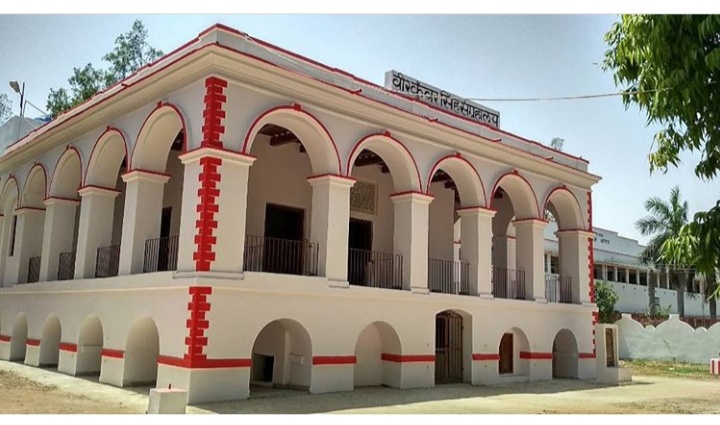
By NIA3000 – At Maharaja college Campus, CC BY-SA 4.0, https://commons.wikimedia.org/w/index.php?curid=89613159
 Mutiny Reflections