Mutiny at Nasirabad
The Nasirabad Regiments
15th Regiment of Bengal Native Infantry – Doo ka Paltan
1765 raised at Allahabad as the Hooseney Battalion by General Smith ranked as 20th Battalion
1824 became the 15th Regiment of Bengal Native Infantry
Battle Honours: “Bhurpore, ” “Punjab, ” “Chillianwallah,” “Guzerat”
30th Regiment of Bengal Native Infantry – Macdoon ka Paltan
1798 raised as 1st Btn 15th Regiment of Bengal Native Infantry following
1796 reorganisation when previous 15th became 2nd Btn 12th Regt
1824 1st Battalion became 30th Regiment of Bengal Native Infantry under Major H F G Cooper
Battle Honours: “Dehlee,” “Laswarrie,” “Deeg,” “Cabul,” 1842, “Alliwal,” “Punjab,” “Chillianwallah,” “Goojerat.”
No. 6 Light Field Battery of Native Artillery
The battery of 6 guns known as “Abbott’s Battery,” had been a part of the Illustrious Garrison at Jalalabad.
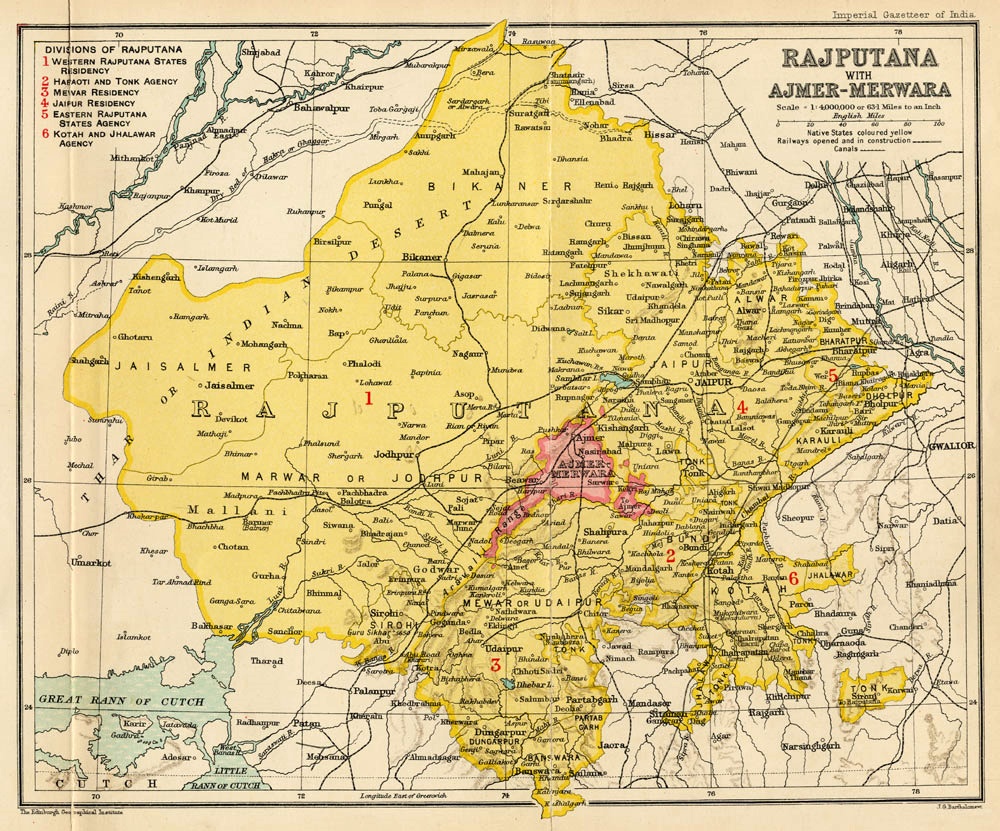
The garrison at Nasirabad was composed of the 15th and 30th BNI, No. 6 Light Field Battery of Native Artillery and the 1st Bombay Lancers. A detachment of the 30th BNI was at Jaipur under Lieutenant Swinhoe. At Nasirabad, there were no British troops, and the Bombay Infantry troops had been replaced by regiments from the Bengal army, except for the 1st Bombay Light Cavalry (Lancers).
Although it was widely believed the 15th BNI were of a mutinous bend, their own officers thought this to be “much exaggerated”, choosing instead to believe “although their men might follow the lead of others, they would not show the way.” It was a costly mistake.
The 15th BNI had but lately arrived. Their second-in-command, Iltudus Thomas Prichard, had been away on furlough until February 1857, and upon his return to Meerut, where the regiment was stationed, the order came to march to Nasirabad, a station that had, on account of their Persian Campaign, been severely depleted of men. The 15th BNI would make up the numbers.
The feeling between the men and officers was generally good. They had taken an inordinate amount of effort to ingratiate themselves with the troops; they all spoke their language with varying degrees of fluency and made it a point of attending all the festivals, nautches and celebrations in which their men participated. They regularly took part in wrestling matches with their men, fraternised with the native officers and in all, did what they could to ensure the affection and respect of those under their command. With a light step, the British officers, at least, set their sights on Rajputana. At one march past Delhi, they met up with their commanding officer, Colonel Shuldman; until then, Pritchard had been the head of the regiment. It became clear that Shuldman was a mistake. A strict disciplinarian, of the old, unwaivering kind, who was universally detested by the men he commanded, on the march through Rajputana rumours circulated that Shuldman’s life was not worth a minute’s purchase and malcontents in the regiment had plans to assassinate him. However, the regiment reached Nasirabad without incident ten days before the outbreak at Meerut.
The first idea they had that something was wrong was when the mail no longer arrived and rumours were running rife. The first confirmation they received that something was wrong in Meerut came from Mr. Courtenay, who happened to keep a hotel in that station. He received intelligence that the Meerut troops had risen, burned down his house and murdered his family. Slowly, more news began filtering through, albeit from indirect routes. The direct roads from the Punjab, Agra and Delhi were closed, but the one to the south was still open. Although Nasirabad was in a remote corner of Rajputana with no European troops within calling distance, Disa being 130 miles away, the officers, with the imperfect information they had received, did not think for a moment that it would be necessary to call on outside assistance. Their men, they believed, were staunch.
“As yet, we had no cause for suspecting that our men, who, be it observed, used to express the greatest indignation at the conduct of their fellow countrymen at Meerut and Delhi, would prove disaffected. The officers of the artillery declared that let the infantry do what they might, the artillery, the famous Jellalabad Battery, would never destroy its fair fame and ruin the character this branch of the army had always held. In addition to these fancied sources of security, we had a more tangible one in the presence of a regiment of Bombay cavalry (Lancers), which could not be supposed to sympathize with the mutinous soldiers of another Presidency.”
Despite the reassurances they received from their men, the British officers were continuously warned by the native NCOs and COs that disaffection was rife among “certain classes” of the regiment,
“…they admitted there were ill-disposed men in the regiment ready and willing to create a disturbance, but they assured us that the well-disposed so far outnumbered them, that there was not the least chance of their committing themselves; and as long as they, the commissioned and non-commissioned officers, remained faithful to their salt, as they were, it was impossible for anything of moment to occur. ‘But,’ added one man, ‘ we are not so sure of the 30th; that regiment we know is mutinous and planning a mutiny.” The men of the 30th spoke in the same strain to their officers, and impressed upon their minds that though they were faithful, there was no doubt that the 15th that had just come from Meerut, was deeply imbued with the spirit of revolt, and had they remained at that station, it was arranged that they were to have taken an active part in the insurrectionary movement there.”
So while the officers of the 30th expressed their firm conviction that the 15th was bound to mutiny sooner or later and the artillery would doubtlessly join them, their men on the other hand, were “ ..stanch, would be sufficient, headed by all the Europeans in the place, to capture the guns and protect life and property.” However, every officer of the artillery and those of the 15th and the Lancers maintained “…not merely that his own men were the only faithful ones, but that the safety of the station, and of our own lines, depended on them. The cavalry officers were, on the other hand, confident that though the whole of the Bengal troops at the place were mutinous and might break out any day or night, one charge of the invincible Lancers would at once put down any attempt at revolt.” Every officer trusted his men to a fault. The men themselves went along with it. Men of the 15th regularly reported their horror and disgust at the mutinous language of the 30th to their officers and vice versa, the same occurred. In this strange state, the ten days passed.
Up to this point, almost every other corps in the service had sent a selected party of men to the Musketry Instruction Depot to receive instruction in the new drill relating to the Enfield Rifle. However, it must be remembered that it was a drill – the men did not receive the rifle. The idea was to teach a sufficient number of men in each corps who would then pass on their training to the others in the regiments – however, the rumours regarding the cartridges had created enough of a stir that all the depots had been closed for the year and the men sent back to their regiments. Shortly before the Meerut outbreak was known at Nasirabad a small party of men was thus returning from the depot; the officers took it as a litmus test, hoping that as the men “…who had been selected to attend the depots were men of the highest caste, and, as was generally supposed, of the greatest influence in the regiment, we expected that when they came and assured their comrades that they had seen and used these cartridges and that their feelings and prejudices had not been offended thereby, a good deal of the groundless apprehension and excitement that prevailed might wear off.”
The Jemadar chosen for training at the depot was one Gumbheer Singh, who, with his faultless record, was known to be “…a thoroughly good, trustworthy, faithful, and brave man.” The report he gave was satisfactory in every way, declaring the story of the greased cartridge was a fabrication; he and the others in the party had not only seen the supposedly offensive objects but had handled them, and being men of a high caste, had not suffered as a result. With his and the assurances of the others, it was supposed at least one rumour could be quashed, but Pritchard could do nothing against the foolishness of the Government.
Following the “silly and injudicious treatment of the Barrackpore mutineers” the proceedings of the court-martial were sent to every corps to be read out to the men and as if this was not enough, “…they were accompanied by about as absurd and injudicious remarks as could well have been added, the translation and proclamation of which devolved upon me as interpreter; and had I sacrificed my credit as a linguist and made unintelligible translations of them, I perhaps might have staved off the mutiny for a day.” It was a terrible mess. “So, lest the prevalent excitement should flag or die out (and our only chance was in allaying it), the men were repeatedly told how for the gravest crime in the catalogue of military offences, their fellow soldiers in other parts of India had been let off with a nominal punishment, and how the Commander-in-Chief wished to assure them that their religion was not to be tampered with, an assurance which they would argue…, he would never have thought it necessary to give, had not there been some foundation for the supposition that Government intended to do the very thing he was declaring it never thought of doing.”
In all, the men thought the Government was, by issuing all these orders, attempting to throw sand in their eyes. Nor did it help when the new platoon exercise was released, which now informed the men they no longer had to bite off the ends of the cartridges but could tear them by hand – they reasoned, that if there was nothing wrong with the cartridges then there would have been no need for a new platoon exercise.
In his turn, Pritchard tried his best to allay the fears even further. When the party had returned from the depot, he, with the other officers, called the NCOs of their companies to his bungalow. He told them that the British were aware of the stories regarding the cartridges -“…and I assured them that such was not the case; begged them to use every endeavour to counteract the impression that was abroad; and I guaranteed to them, on my word of honour, that if new cartridges were issued that were viewed with suspicion by the men, they should purchase the materials separately in the bazaar, or I would do so for them, and they should make them up for themselves.” To his surprise, he overheard a conversation between the NCOs as they were leaving his compound, “It must be all right,” said one, ” for the Sahib says we may make up our own cartridges…” proving to him they had, after all, believed the rumours to be true. His assurances had not fallen on deaf ears. Pritchard, when he finally had the chance to examine one of the offensive cartridges himself, many months later, was forced to acknowledge they actually did look quite suspicious. He did not doubt in his mind that seen from the sepoy’s point of view, they had been right.
Nasirabad had another problem. The station commander, an old brigadier from the Bombay Presidency, made no bones about his dislike for the Bengal Army, its European officers and men, one and all. Being temporarily disabled with a broken collar bone, he had missed the opportunity to mix with the men of the 15th and spent his time in his bungalow, listening to stories. “That the Brigadier was deceived, there is not much room for doubt, but the deception was not wilfully practised; officers were themselves deceived and deceived others. It was no proof of moral weakness in those days for us to be confident in the fidelity of our men; it was our duty; but if a similar catastrophe occurs again, and similar confidence be shown, he will be a bold man who shall deny the charge of weakness almost amounting to insanity against an officer who allows himself to be duped.”
Then there was the problem of the cantonment itself, drawn out as it was, one long line. On the right were the lines of the 1st Bombay Lancers, to the left, the 15th BNI, and to the left of them was the artillery park, containing not just the lines of the men but the barracks of the European gunners; to the left of this, again, were the lines of the 30th BNI. The officer’s bungalows were scattered about to the rear of the sepoy lines, and in an empty space behind the artillery barracks was the church, “…a thatched building, with as little pretence to grandeur or architectural taste as churches usually had that were erected at the same time that the Nusseerabad one was built—a time when it appears to have been desirable to ignore as much as possible, at all events, by any outward manifestation of support, the existence of such a religion as Christianity.”
With the news of Meerut confirmed as far as possible, a picket of 1st Lancers under a European officer was told off on picquet duty to look after the guns in artillery park, where the guns were kept limbered up and loaded with grape. An artillery officer slept at night in the quarter guard, and the cantonment roads were patrolled throughout the night by the cavalry. Anyone found out after curfew without an explanation was taken to the guard. As a further precaution, a troop of cavalry was kept accoutred, both horses and men in their lines, ready to act if called. The measures were only kept up during the night for no one believed the men would mutiny in broad daylight.
Bucktuwar Singh Has Reservations
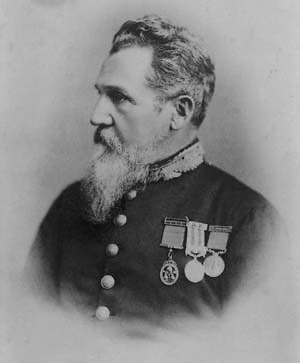
It is rare in accounts to find descriptions of sepoys – they are usually brief accounts of some deed or the other but fall short of describing the men themselves. Pritchard, however, gives us an insight into at least one of the men, Bucktuwar Singh, who had already been in the 15th BNI when Pritchard joined and had risen from sepoy to pay Havildar.
“He was a powerfully made man, six feet four inches, at least, in height, and broad-chested and muscular in proportion; indeed, he was almost a giant. The most remarkable thing about him was his voice; it was so powerful that I believe he could make himself heard to as great a distance as an ordinary bugle. He appeared to have no power of controlling it. When posting sentries in camp, he used to roar or scream out the words of command almost as if, to use a common expression, he would wake the dead. If these lines happen to meet the eye of any of my quondam brother officers, they will recall to their recollection many a time when we have sat in the mess tent and roared with laughter at Bucktawur Sing posting the sentries at the opposite extremity of the camp, and yelling at them as if they had stood at one end and he at another, instead of their being but two feet apart. I never heard that deafness was very common in the regiment, but I am sure it is a wonder any man ever went on sentry duty with Bucktawur Sing as his non-commissioned officer and came off it with the tympana of his ears uninjured.”
Sadly, by the time the 15th was stationed in Nasirabad, Bucktuwar Singh was no longer the man with the voice of a bullroarer. When he came to Pritchard’s bungalow shortly before the mutiny, he was a shadow of his former self, downcast, and his magnificent voice was silent. He informed Pritchard he was cursed – that some men of the regiment had contrived to put a spell on him, and the magic would see him to his grave. Knowing it was useless to persuade the Havildar that his fears were groundless, Pritchard suggested he consult a spiritual adviser and get himself a countercharm. Bucktuwar Singh had pre-empted Prichard, and he showed him a small talisman he wore on his arm, to which was attached a scroll of paper. Pritchard examined the charm gravely and recommended the Havildar should wear it and put his faith in it as it would doubtlessly protect him from any evil to come. The man went away reassured, and Pritchard believed not a trustworthy NCO existed in the 15th BNI.
On the 27th of May, Bucktuwar Singh returned to Pritchard’s bungalow. This time, his problem had nothing to do with faith but with rumour. In the lines, he said, the men were saying a detachment of Europeans was marching to Nasirabad from Disa, and the men, he declared, were not happy. How the regiment knew Pritchard had no idea – he himself had only recently found out, and the orders had been supposedly kept secret.
Taking the high ground, Pritchard confirmed that although the detachment was on its way to Ajmer via Nasirabad, the Government was not obliged to ask the permission of the sepoys every time they moved their troops – and as long as the men were as well-disposed as they purported to be, there could be no cause for fear. He then quickly acquainted the Havildar with a new order authorising local commandants to promote “on the spot” any man who have information which led to the conviction of a conspirator, and as he had often brought to Pritchard’s attention the names of men who talked treason, he would personally guarantee Bucktuwar Singh’s promotion to Jemadar if he so chose to catch any man in the act.
“He appeared impressed with all I said, and promised to act upon it; but when I went still further to urge the necessity of action, remarking that this was a time when it would not do to shun responsibility and that if in the execution of his duty, he found it necessary, he would be justified in using force to bring a traitor to justice, and added, that the crisis might call for the sacrifice of life, his eyes, generally so unexpressive, literally flashed fire. It was not very long before he acted on my injunction to the very letter, though not in the way that I had intended.”
It was the 27th of May. The next day would be very different.
 Mutiny Reflections