Lance Corporal John Sinnott, 84th Regiment of Foot
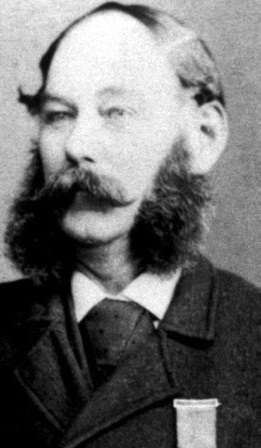
Born in 1829 in County Wexford, Irleand, John Sinnott enlisted in the 84th Regiment of Foot in 1949, in Dublin. He would be one of the 6 men of the 84th to win a VC during the mutiny.
By the 6th of October, Outram had so far consolidated his position that he was able to place pickets in outlying positions, in the Tehri Koti, the Chattar Manzil and the Farhat Baksh Palace, the small mosque just outside Innes Post and newly established posts just outside the grounds on the Cawnpore battery side. While his strategy was sound, he would still face the increased forces of the insurgents, lately reinforced by rebels fleeing Delhi. Work at the extended positions was harassing and dangerous, the sprawling palaces were hardly adapted for a complete defence, being too extensive for the force, and nearly all the manpower was expended to guarding it, and finally were obliged to restrict themselves to the palaces and gardens, “and to erect precautionary defences against any means of annoyance the enemy could devise.” One of the annoyances referred to by Robert Napier was mining.
On the 6th of October, the rebels blew up a picket that overlooked the Cheena and Khaas Bazars, which resulted in the deaths of three men. In the ensuing chaos of the blast, they forced their way into the Chattar Manzil. After a stiff fight, however, they retreated.
“For conspicuous gallantry at Lucknow, on the 6th of October, 1857, in going out with Serjeants Glinn and Mullins and Private Mullins, to rescue Lieutenant Gibaut, who, in carrying out water to extinguish a fire in the breast-work, had been mortally wounded, and lay outside. They brought in the body under a heavy fire. Lance-Corporal Sinnott was twice wounded. His comrades unanimously elected him for the Victoria Cross, as the most worthy. He had previously repeatedly accompanied Lieutenant Gibaut when he carried out water to extinguish the fire.” (Despatch from Lieutenant-General Sir James Outram, Bart., G.C.B., dated 2nd December 1857. No. 22212, The London Gazette, 24 December 1858, p. 5514)
What the citation does not mention is that Sinnott would be wounded twice during the action.
He was sufficiently recovered to continue fighting with his regiment and in 1860, now back in England, he received his VC from Queen Victoria at Windsor Castle. He completed his service in 1870 taking a discharge with the rank of sergeant and a pension of 14 shillings a week thus John Sinnott returned to civilian life. He died on the 20th of July, 1896, in London.
There is a mystery attached to his VC, which can be discovered here – a tale of theft, auction and confusion indeed.
https://www.victoriacross.co.uk/sinnott.html
 Mutiny Reflections
People today have no idea what war is. (Except for a handful).
I am always impressed by your knowledge.
Thank you for sharing
LikeLike