To Thomas Atkins

I have made for you a song
    And it may be right or wrong,
But only you can tell me if it’s true.
    I have tried for to explain
    Both your pleasure and your pain,
And, Thomas, here’s my best respects to you!

    O there’ll surely come a day
    When they’ll give you all your pay,
And treat you as a Christian ought to do;
    So, until that day comes round,
    Heaven keep you safe and sound,
And, Thomas, here’s my best respects to you! - Rudyard Kipling
Clause 6
It is ordained, with a view to place all persons on a perfectly equal footing in relation to eligibility for the decoration, that neither rank, nor long service, nor wounds, nor any other circumstance or condition whatsoever, save the merit of conspicuous bravery, shall be held to establish a sufficient claim to the honour.
Clause 13
“It is ordained, that in the event of a gallant and daring act having been performed by a squadron, ship’s company, a detached body of seamen and marines, not under fifty in number, or by a brigade, regiment, troop or company in which the admiral, general or other officers commanding such forces, may deem that all are equally brave and distinguished and that no special selection can be made by then, then in such case the admiral, general or other officer commanding may direct that for any such body of seamen and marines, or for every troop or company of soldiers, one officer shall be selected by the officers engaged for the decoration; and in like manner one petty officer or non-commissioned officer shall be selected by the petty officers or non-commissioned officers engaged; and two seamen or private soldiers or marines shall be selected by the seamen, or private soldiers, or marines engaged respectively for the decoration; and the names of those selected shall be transmitted by the senior officre in command of the naval forces, brigade, regiment troop or company; to the admiral or general officer commanding, who shall in due manner confer the decoration as if the acts were done under his own eye.”
90th Regiment of Foot
Major John Christopher Guise
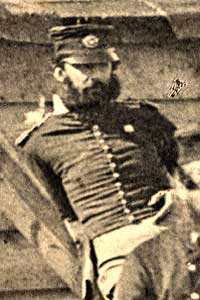
Born on the 27th of July, 1826, John Christopher Guise was the son of Sir John Guise, 3rd Baronet – a Peninsular veteran – and his wife Charlotte Diana Vernon, in Highnam, near Gloucester. After leaving the Royal Military College at Sandhurst, Guise was appointed an ensign in the 90th Regiment of Foot. Promotion came swiftly to young Guise; by 1846 he had attained the rank of captain.
In December 1854, Guise served in the Crimea and took his place at the Siege of Sebastopol but illness cut short his stay and he was invalided home. He did, however, receive the Crimean Medal with one clasp and the Turkish Medal – in 1855 he was promoted to Major.
Some years previous to the Indian Mutiny (seven, according to Eveleyn Wood in “Revolt in Hindustan) Guise had lost his right arm in an accident something which seems to have neither deterred nor inconvenienced Guise from joining his regiment in India. According to Private Wickins of the 90th, in the action before the Alambagh during Sir Colin’s advance and Garnet Wolseley, Guise could amply take care of himself.
“We met with no interruption until we were within about 7 miles of the Alam Bagh fort. We had two companies covering the guns and one company in rear of the convoy as rear guard who had been lying in ambush with four six-pounder guns, opened fire upon the rear guard, the word was soon passed to the front. We were immediately marched to their assistance, a distance of over two mile. But by this time the enemy had been dispersed. We had once officer wounded, Captain Guise, who was in charge of the rearguard. He had engaged the chief of the rebel party in single combat and had received a sword cut on the hand.The chief was killed by a shot by a man of ours and his horse received a rifle shot in the neck.“
Wolseley was somewhat more eloquent.
“Some field guns opened upon us more than once, but the “ cow battery ” we had with us kept them fairly quiet, and its shells must have cost them some loss. The enemy had no shells, and when beyond the range of
“canister ” could only annoy us with round shot, which practically did no harm. I had no one but my own company near me for a long time, but even my ninety or a hundred men were too much for the cowardly rascals, of whom we killed many. I knew that I had a first rate soldier in the officer commanding the column. Major Roger Barnston, and that if he thought I was in any serious danger he would send me reinforcements. Our detachment had a few men wounded; Captain Guise was one of them. He had already lost his right arm, but, daring to a fault, he nevertheless would engage one of the enemy in single combat with a right handed sword, in which encounter he nearly lost his left hand also.“
Between the 14th of November and 22nd of November the forces of Sir Colin Campbell were engaged in a series of battles, starting with the taking of the Martiniere College and the Dilkusha and culminating the evacuation of the Residency – although it is not exactly clear what Guise as doing on the 16th and the 17th, his acts of gallantry were of a “general character” – but they must have been distinguished in nature, that of all the officers in the regiment, Guise was chosen by them as “the most worthy and distinguished of them all. “
On the 17th Guise led the support of Barnston’s Detachment in the taking of the 32nd Mess House (Barnston himself had been wounded) – the attacking party was commanded by Woseley, a picquet of the 53rd under Captain Hopkins and a few men of the 2nd Punjab Infantry under Captain Powlett. His citation, however, neither mentions any incidents individually and is singularily terse.
“90th Regiment
Major (now Brevet-Lieutenant-Colonel) John Christopher Guise
Date of Acts of Bravery, 16th and 17th November, 1857.
For conspicuous gallantry in action on the 16th and 17th of November, 1857, at Lucknow.
Elected by the Officers of the Regiment.
His brother, Captain Henry John Guise commanding the 13th Bengal Irregular Cavalry was killed in Benares on the 4th of June, 1857. He was shot by the mutinous men of the 37th NI as his own men looked on. As for John Christopher Guise, he would command the 90th Regiment from 1861 to 1864 – he left the army in 1890 and returned home. Upon his retirement he took on the position of Colonel of the Leicestershire Regiment, a post he held until his death in 1895.
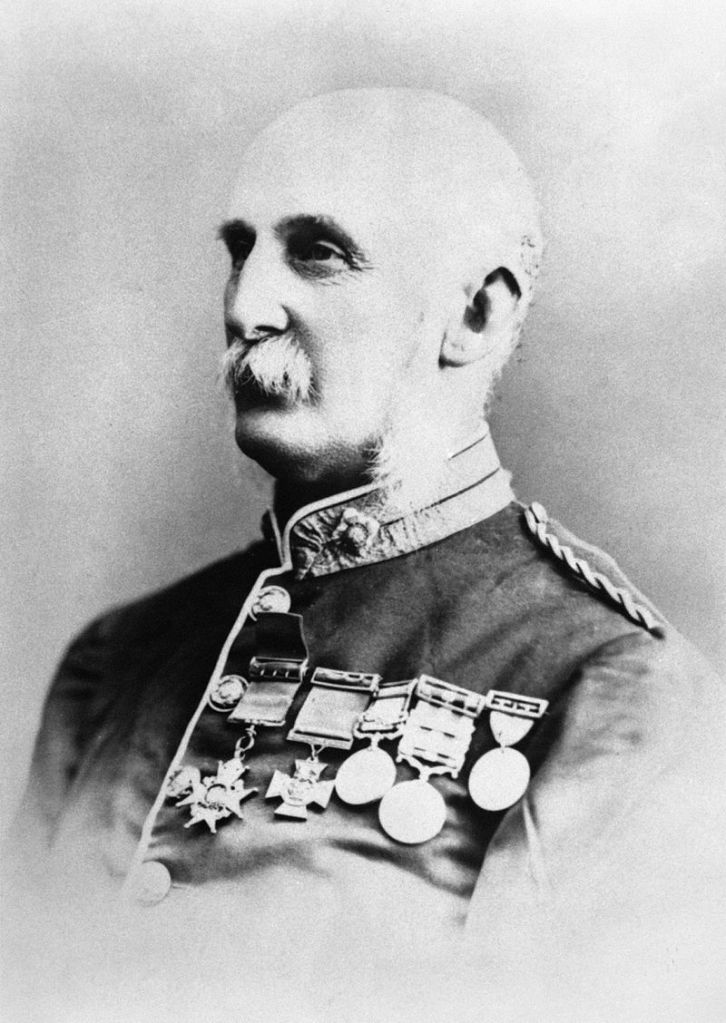
Sergeant Samuel Hill
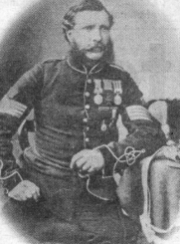
Born in 1826 in Glenavy Co Antrim Ireland, Samuel Hill enlisted in the 67th Regiment in 1844 and transferred to the 90th in 1856. Until his VC citation, there is very little known about his service before the mutiny. As with Guise, it is unclear what Hill was doing on the 16th and the 17th of November.
Although his VC citation has him saving the life of Captain Irby at the Sikandar Bagh, however, as the engagement of the 90th in the Sikandar Bagh was limited, it is likely this occurred on the 17th, either in the attack on the 32nd Mess House or the running fight for the Moti Mahal. Captain Irby who had fallen foul of a concentrated attack by a very determined rebel sepoy was saved by Hall who managed to ward off the tulwar blows directed at Irby’s head with his firelock. Had Irby died, the world of ornithology would have been deprived of one of its finest sons, who among other works, would live to write “British Birds Key List” and “Ornithology of the Straits of Gibraltar.”
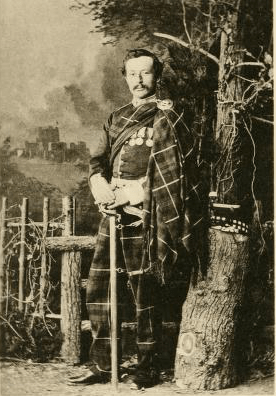
On the 16th, the 90th was engaged in capturing the Shah Najaf; they then on the 17th stormed the 32nd Mess House, captured the Tara Kothi and the Moti Mahal. The saving of Irby is equally equated in certain sources with the actions of Samuel Hill as to Guise, however, Guise, being one-armed, was not have been the one who warded off the tulwar with his firelock but Hill whose citation reads:
“For gallant conduct on the 16th and 17th of November, 1857, at the storming of the Secundra Bagh at Lucknow, in saving the life of Captain Irby, warding off with his firelock
a tulwar cut made at his head by a sepoy, and in going out under a heavy fire to help two wounded men. Also for general gallant conduct throughout the operations for the relief of the Lucknow garrison. Elected by the non-commissioned officers of the Regiment.” (No. 22212 The London Gazette. 24 December 1858. p. 5514). Unfortunately, Irby was more interested in writing very long books about feathered folk and did not leave his own account of events.
Sergeant Samuel Hill continued to serve with the 90th but he did not come to prominence again after the 17th of November. He was killed in Meerut on the 21st of February, 1863 and lies buried there in an unmarked grave. His medal, however, resides at the Tolson Memorial Museum, Huddersfield, Yorkshire where it has rested since 1930.
Private Patrick Graham, 90th Regiment of Foot
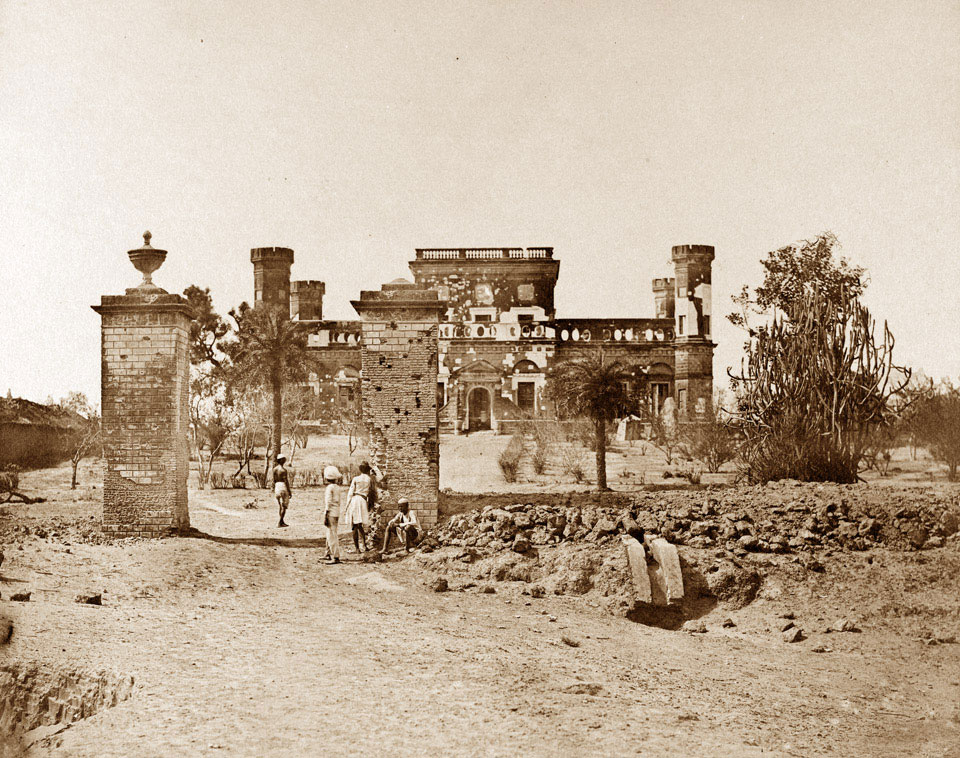
“For bringing in a wounded comrade under a very heavy fire, on the 17th of November, 1857, at Lucknow. Elected by the private soldiers of the Regiment. “(Nr. 22212, The London Gazette of 24 December 1858, p. 5514).
Born in 1837 in St. Michael’s Dublin, Ireland, the life of Private Patrick Graham is a silent history. He enlisted in the 90th but apart from his involvement in the Indian Mutiny, sadly little is known about this young man. During the fight for Mess House and the Moti Mahal on the 17th of November, Graham ran out under a heavy fire to save the life of a wounded officer. He was elected by the men of his regiment for the VC.
After the mutiny, Graham returned to Ireland but how he lived out the rest of his short life is unknown. He died, just aged 37, on the 3rd of June, 1875. He was buried in an an unmarked grave in Arbour Hill Cemetery but due to the destruction of the cemetery records, no one can now say where he rests.
The Bengal Artillery
“Elected respectively under the 13th clause of the Royal Warrant of the 29th of January, 1856, by the Officers and non-commissioned officers and non-commissioned officers generally, and by the private soldiers of each troop or battery, for conspicuous gallantry at the relief of Lucknow, from the 14th to the 22nd of November, 1857.”
– Lieutenant Hastings Edward Harington
-Rough Rider E. Jennings
-Gunner J. Park
-Gunner T. Laughnan
-Gunner H. M’Innes (“No. 22212”. The London Gazette. 24 December 1858. p. 5516)
Lieutenant Hastings Edward Harington – Bengal Horse Artillery
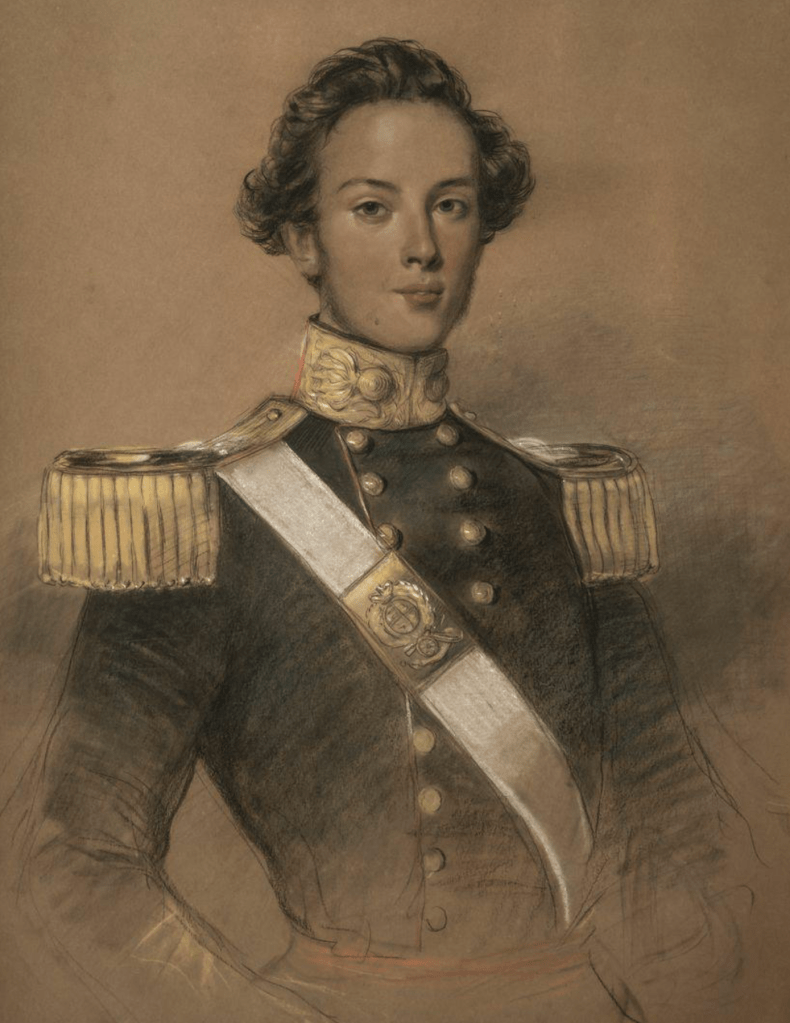
“Lieutenant Harrington, Bengal Art., and another officer (whose name I regret I never knew) belonging to H. M.’s Service, with a gunner of artillery and a drummer of infantry, did most gallant service. A man of the storming column had been wounded and left in the garden for an hour and a half. The drummer
stuck by him and dashed into the picquet to report the fact. The little party above mentioned, under a very hot fire, rushed out and brought in the wounded man. As they left the picquet a round shot struck the ground under their feet.” (Colonel George Bourchier, Eight Months Campaign)
It was not however, the most successful day for Lieutenant Harington.
In the attack on the hospital compound on the 18th of November, he dashed towards an enemy gun which was firing at him from a distance of 25 yards and silenced it, then he ran through a garden fire to reach the stricken man whom he carried to safety. ably assisted by four if not five other men which shall be seen later. Subsequently in an attack on the same compound, a bullet struck Harington’s skull under his right ear, leaving him deaf, with lockjaw and unconscious. This was not the first time he had been wounded in his very brief career. It is little wonder Harington was reported as killed on two separate occaisions.
Born in 1832 to Reverend John Harington, the local rector and Anne Spencer Young, in Hinton Parva, Wiltshire, Harington had received his education at Reading School, and at the age of 17 entered the Addiscombe Military College. In 1852, as Second Lieutenant Harington, he sailed to India. Of his eight siblings, two would join the clergy – one of whom, Reverend Charles Sumner Harington would spend some time in India, and two the Indian Civil Service – of these, one was present in India during the mutiny – Herbert Baring Harington spent 1857 in Agra Fort. The youngest, Arthur Henry Harington would not begin his ICS career until 1862. Unusually, only Hastings Harington joined the army.
Life in India for Lieutenant Harington began in the Punjab where he found himself in 1857 at the start of the mutiny. The Moveable Column under John Nicholson gave him his first headlong dash into battle and straight to the infirmary – he was injured in the foot at Trimoo Ghat. Yet the young man healed quickly – he recovered enough to join Nicholson again and this time it was off to Delhi for the final stages of the siege in August and September.
At the end of September, Harington joined Greathed’s Column and marched his way through the action of Bulandshahr which was followed quickly by Aligarh and Agra. Following the relief of Lucknow and once again fit enough to fight, Harington rejoined in the pursuit of the rebels through Rohilkhand. Unfortunately, the ill-fated battle of Rooyah, which cost the life of Brigadier Adrian Hope in 1858, would also spell the near end for Harington. Wounded once again, he was sent to the hills to recuperate – yet the bullet that had lodged itself in his back would only subsequently removed in England.
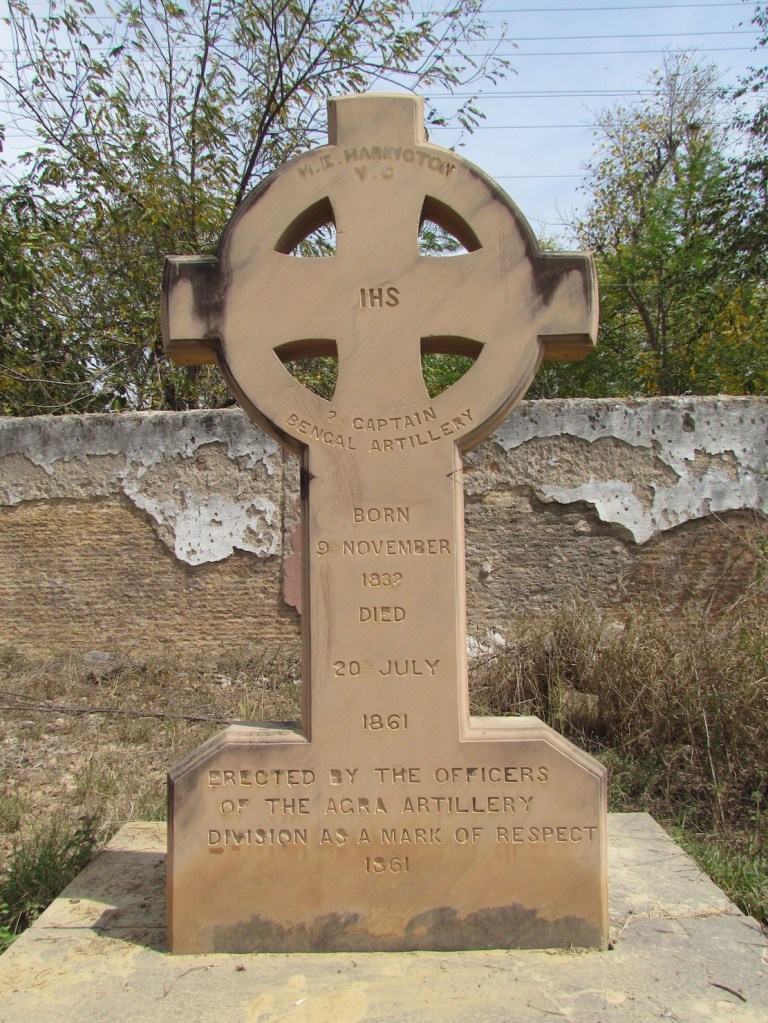
While on sick leave, his gazette entry was published and he received his VC from Queen Victoria on the 8th of June, 1859. By 1861, Harington felt fit enough to return to his active life and sailed for India as adjutant, 6th Battalion Bengal Army in the Sikkim Field Force, then resident in Agra. Unfortunately, for Hastings Edward Harington destiny led him down a doomed path and he died in Agra of cholera on the 30th of July, 1861. He lies buried at Agra Cemetery. His medals – VC and Indian Mutiny Medal, three bars – remained in the possession of a descendant until their sale at auction in 2024. It is now privately held.
Rough Rider Edmond Jennings – Bengal Horse Artillery
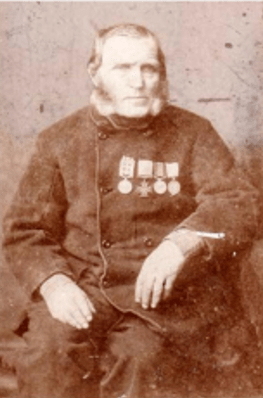
Born in Ballinrobe, Castlebar Co. Mayo in 1815, Edmond Jennings enlisted in the service of the EICo at Tullamore, Co. Westmeath in April 1836 and arrived in India 8 months later. A clerical error named him Edward and thus declared, he was posted to the 1st Troop, 1st Brigade, Bengal Artillery in 1838. He would see service in the First Afghan War (Medal for Ghuznee 1839) and the First Sikh War for which he received the medal for Aliwal but with no clasp. In 1855 he took up his duties as a Rough Rider.
During the mutiny, he served at the Siege of Delhi, where he was slightly wounded in the arm on the 14th of September but recovered sufficiently to join Greathed’s force. His VC, like that of Guise, was awarded for gallantry between the 14th and 22nd of November; however, at least in his case, we do have the following report, printed in the Civil and Military Gazette at the time of Jennings’ death:
“During the siege of Lucknow Jennings, accompanied by half a dozen of his troop, was one day entrusted with the conveyance of a despatch to a Captain Rennington. On the return journey, the attention of the party was arrested by the cries of a European. Jennings at once volunteered to go in quest, the others remained on the look-out. A high wall had to be surmounted; then the horseman galloped along a narrow street, at the end of which he discovered a British officer standing with his back against a wall, bayonet in hand, endeavouring to keep at bay a small host of excited natives armed with short swords. The trooper shouted, in the vernacular, “They are coming,” on hearing which the horde broke and scattered, not before however, the gallant Irishman had cut down at least half a dozen. The ground thus cleared, Jennings dismounted and attended the wants of his superior, whom he found bleeding freely from several sabre wounds and a gunshot wound, the most serious one on his hip. The trooper had with him some rum, which he administered, and then put the well-nigh exhausted Lieutenant on his own beast, and safely emerging from between two cross-fires of artillery, deposited his bleeding charge at the general hospital, the officer declaring that but for this intervention he could not have held out another half hour.”
The young officer Jennings had rescued summoned him to the hospital a few days later and presented him with Rs 1000.- as a gift. If legends are to be believed, Sir Colin Campbell, on hearing of Jennings’ valour and happening to be at the hospital at the same time, offered Jennings a commission on the spot – but Jennings refused as he could neither read nor write. (The Bangalore Spectator, Nov. 1880)
While the story can be taken with a liberal pinch of salt as it should make one wonder which foolhardy Lieutenant would venture off on his own during those fateful days and get himself into such a terrible predicament without any apparent explanation for his actions, which should rightly have been censured. However, as is the case in many of these exploits, the officer remains unnamed. Would Sir Colin have offered Jennings a commission, there is something of a possibility this part might be true – Sir Colin was well-known for his gallant manner among the men and his ability to assess character on a moment’s notice, he may well have seen something in Rough Rider Jennings that could be destined for greater things.
Unfortunately, the rest of Jennings’ life would not glitter in glory. He retired on the 21st of March 1859 and returned home after 24 years of service in India. His final position was that of a road sweeper in North Shields, Northumberland on a wage of 18 shillings a week, supplemented by the 7 shillings he received per week as his military pension and the £10 a year for his VC. Poverty led Jennings to sell his VC and his campaign medals which were acquired by firstly by Colonel Littledale of Cheltenham. In their lifetime, they would be auctioned off twice. Jennings died in poverty in North Shields in 1889. He remained unnoticed in an unmarked paupers grave until 1997 when a new headstone was placed over the remains of Rough Rider Edmond Jennings.
As far as the Victoria Cross goes, Jennings was the recipient of 2 medals – one, which was sent out to India for presentation and a second for the personal investiture by Queen Victoria. Unfortunately, Jennings’ ship arrived too late for the October Investiture in 1860 and the Queen never had the chance to personally decorate Jennings. Where he finally received his medal is unknown. However, both crosses are still in existence: one resides with “F” (Sphinx) Battery, 7th Parachute Regiment, Royal Horse Artillery and the other is in private ownership.
The Three Gunners
The honour of saving the officer from the hospital compound on the 17th of November could very well be bestowed upon any of these three gunners – we can only scorn Bourchier for his lackadaisical attitude towards names. Again, we do not know who they saved or what they did between the 14th and the 22nd of November, but something in these men caught the eye of their fellow comrades.
Gunner James Park – Bengal Artillery
James Park had a very short life indeed. Born in Glasgow in 1835 he enlisted in 1855 – at the age of 22 he found himself in Lucknow one of the youngest gunners present at the scene. Gunner Park died of cholera on the 14th of June 1858 in Lucknow, a full six months before his citation was published. His final resting place is unknown and the medal he never wore remains in private ownership.
Gunner T. Laughnan – Bengal Horse Artillery
He was born in Gort, County Galway, Ireland in 1824 and enlisted as a gunner in the Bengal Artillery in 1844 – his career before and after Lucknow is unknown, nor as to when he received his VC but it is most likely it was sent to him in the mail. Laughnan returned to Galway upon receiving his pension. He died on the 23rd of July, 1864.
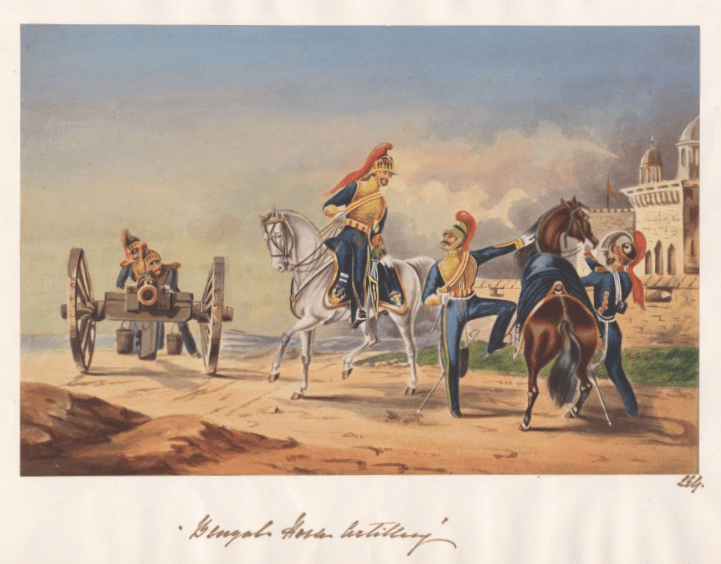
Gunner Hugh McInnes – Bengal artillery
For Gunner McInnes there is at least a past and a future history; while we may not know what he did in Lucknow, we do know he was born in Anderston, Glasgow, Scotland in 1816. Before enlisting he worked as a cotton spinner; according to one source, McInnes could neither read nor write but put his mark on all documents.
McInnes received his discharge in 1859 and his VC in the post – he returned to Scotland and took up a trade as an engineering labourer before dying in 1879 at his home in Glasgow. While his grave remained unmarked for many years, in 2004 a new headstone was erected and his name was honoured in a fine ceremony of remembrance.
Entering the Sikandar Bagh
No less than four men were awarded the Victoria Cross for being the first to enter the Sikandar Bagh. Interestingly, the men put up for this honour all entered the position through different points – it remains quite clear that the first men who actually scrambled through the breach made by Peel’s guns were all shot dead, be it Sikh or Highlander.
Three of them were nominated by the officers and men of their respective regiments.
Private John Smith – 1st Madras European Fusiliers
“For being one of the first to try and enter the gateway on the north side of Secundra Bagh. On the gateway being burst open, he was one of the first to enter and was surrounded by the enemy. He received a sword cut on the head, a bayonet wound on the left side, and a contusion from the butt-end of a musket on the right shoulder, notwithstanding which he fought his way out, and continued to perform his duties for the rest of the day.” (“No. 22212”. The London Gazette. 24 December 1858. p. 5515).
The men of the 1st Madras European Fusiliers who had been left behind at Cawnpore had been attached to the 75th Regiment of Foot and formed up a part of Major Roger Barnston’s Detachment – Private John Smith came up thus to Lucknow, together with Lieutenant Jones-Parry. While Smith did not leave an account of what happened at Lucknow, Jones-Parry did. On the 16th of November the Fusiliers advanced with the rest of the force, and found themselves facing the walls of the Sikandar Bagh at the end of a narrow lane.
“…I was with the last section of the Fusiliers when we reached an open broad road leading towards the Residency. Here Sir Colin had ordered a gun to breach the wall of the Sikandar Bagh, about 200 yards off. To effect this it was necessary to drag the gun above a smooth mound forming an abrupt termination to the hedges, at right angles to the open road way. The Chief turned and gave me his instructions, wereupon my men, scarcely waiting to hear the order, slung their rifles and pulled up the gun in about 15 seconds to his evident and expressed admiration. There was absolutely no cover for the gun nor for those who worked it, and bullets rained like hail on the metal…After about half-a-hour’s pounding, Lieutenant Lawrence Graeme of “Ours” orderly officer to Barnston, came to say the 93rd were about to assault by the breach at the corner and were to force the gateway.
I went forward with Lieuteant Dobbs and Duncan and a few of our men. Not a soul was visible between us and the reddish walls pierced by loopholes. Peeping through the cracks in the gate, I descried, 50 yards in front of me, a 6- or 9-pounder pointing, with a company of red-coated sepoys drawn up in good order behind it. I said to Graeme who was close at hand – ‘Look out for grape, there is a gun in front of us.’ Irish and Scotch sergeants and privates now came and crowded the gateway, the only place not loopholed inside. The circular towers on each side of it were full of holes, however, so I ran round that on the left to examine an iron grating which I hoped might be pulled out and then the bricks knocked away to gain an entrance. But I found the masonry too strong. Darby Cronley, a Madras Fusilier, who had followed me, said it was an impossiblity. I turned back to the gateway again, and as we passed the loopholes, my comrade fell stone dead like a dropped handkerchief…I now pushed the double gates with all my strength but they merely swung back a few inches. A gun had been sent for, but before its arrival one of our men placed his Enfield against what seemed to be the rivet of the obstructing bar of the gate and blew it away in a moment. Without further loss of time the hive was broken inot and three or four Fusiliers bayoneted every sword-bearing and shield-carrying Ghazi who resisted…”
First through the gates were Privates Leahy and Smith of the 1st Madras European Fusiliers. For his pains, Smith was bayonetted, smacked with the butt of a gun and slashed across the head with a tulwar but he fought his way out of the chaos and carried on the fight. Leahy was severely injured by a sabre cut to the hand – his day ended at the Sikandar Bagh. For his action, Smith was nominated for the VC by the private soldiers of the detachment of Madras Fusiliers.
Private John Thomas Smith was born in St.Luke’s Parish in London in 1822. He enlisted in 1841 in the 1st Madras European Fusiliers and would have been one of the men who had followed Colonel Neill through the 1st Relief of Lucknow had he not remained behind in Cawnpore. His VC was announced on Christmas Eve, 1858 and he received his medal while still serving in India. He was discharged, with his pension, in 1861 and chose to remain in India, settling down in the Trichinapoly District. It is believed he succumbed to cholera in 1866 and lies buried in an unmarked grave in Taujore Cemetery, Trichinapoly District, Tamil Nadu, India. He was 43 years old. His VC has been auctioned three times, the last time was in 2016 when it passed into the hands of a private owner.
53rd Regiment of Foot
Lieutenant Alfred Kirke Ffrench
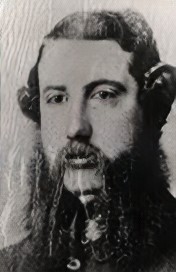
While the term “daughter of the regiment” has been applied to women, like Harriet Tytler and Annie Durand whose fathers had been military men and they in turn, showed the courage and fortitude that would have made any father proud, the Ffrench brothers were most notably, sons of the Regiment. Both were born in Meerut to the Lieutenant-Colonel Thomas Ffrench of the 53rd Regiment of Foot. Following a private education, Alfred Kirke Ffrench enrolled in the Royal Military College at Sandhurst and joined the army by purchase in 1854 with a commission as an ensign in the 53rd Regiment of Foot. In the same year and joined his regiment at Dagshai. Thomas Charles was commissioned into the 61st Regiment of Foot but would spend most of his career in the 53rd. Both men would see extensive service during the mutiny and Thomas would be injured at the Sikandar Bagh.
As for Alfred, he was promoted to lieutenant in 1855 and gained the rank of captain in 1863. He had a busy career.
“Served with the 53rd Regiment in the Indian campaign of 1857-59, including the Relief of Lucknow
by Lord Clyde, battle of Cawnpore on Dec. 6th [1857], the pursuit of the Gwalior Contingent to
Serai Ghat, action at Khodagunge and entry into Futteghur, storm and capture of Meangunge,
siege and capture of Lucknow, affair of Koorsie, passage of the Goomtee and occupation of
Sultanpore, passage of the Gogra at Fyzabad on 25th November [1858]; minor affairs; attack and
destruction of the fort of Bungeon.”
He served with the 53rd in Canada in 1860 and then, still with his regiment, he embarked for Bermuda. While the rigours of the Indian climate did not tell on Alfred Kirke Ffrench, Bermuda did nothing for his health. In 1871 he was forced to take an extended leave of absence with the hope the change of air in England would rejuvenate Ffrench – it did nothing of the sort and he died on the 28th of December 1872 at the age of 37 at his family residence in Brompton. In the Regimental Orders it was stated,
“…as a mark of respect to the memory of a lamented and esteemed brother officer, the Commanding
Officer directs that all Officers of the Regiment will wear black crape on the left arm for six weeks
from this date.”
There was very little family left to mourn his passing – his father died a year before in October 1871 and by the time of his death, his brother too had passed. Ffrench left his mother, Louisa an estate of just £3000.- Alfred Kirke Ffrench never married. As for his VC citation, it is as bland as it is uninformative.
” For conspicuous bravery on the 16th of November, 1857, at the taking of the Secundra Bagh, Lucknow, when in command of the Grenadier Company, being one of the first to enter the building. His conduct was highly praised by the whole Company. Elected by the Officers of the Regiment.” (No. 22212, The London Gazette of 24 December 1858, p. 5513)
However, the 53rd did not enter by the breach, nor by the gate – by all accounts, they battered their way through a window. As the men smashed against the bars, they were encouraged by the voice of Lieutenant Ffrench. The window was soon dust and Ffrench entered the Sikandar Bagh with his men.
Close behind or perhaps a little before, came Private Charles Irwin.
Private Charles Irwin
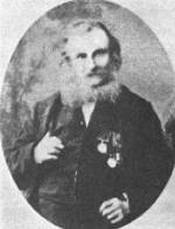
The eldest son of Launcelot Irwin a farmer of Well Parkand, Moneenshinnagh/Foxfield, Manorhamilton and his wife Mary, Charles was born in 1824 or by some accounts on the 1st of January, 1825. Though a cutler by trade, at 17 he turned his back the rural life and enlisted in the 18th Royal Irish Regiment in 1842. With his regiment he would serve in the Anglo-Burmese War of 1852/53, taking his place in the attack and capture of both Martaban, Rangoon, Prome and other skirmishes “on the right bank of the Irrawaddy.”
He followed up his Burma career with a transfer to the 53rd Regiment of Foot.
“For conspicuous bravery at the assault of the Secundra Bagh, at Lucknow, on the 16th of November, 1857. Although severely wounded through the right shoulder, he was one of the first men of the 53rd Regiment, who entered the buildings under a very severe fire. Elected by the private soldiers of the Regiment.” (“No. 22212”. The London Gazette. 24 December 1858. p. 5513)
His wound did not prevent Irwin from continuing his fight through the mutiny and a list of all his actions is extensive:
2nd of November: skirmish at Bunnee
Relief of Lucknow
6th of December: Relief and Battle of Cawnpore
9th of December: action at Sheerghat
2nd of January action at the Kala Naddi
28th of January – skirmish at Shumshabad
23rd of February – storming of Meeangunge
Final Siege and Capture of Lucknow – 2nd to the 21st of March
22nd of March – Courcy
27th of August – the passage of the Goomti at Sultanpore
25th of November – action and passage of the Gogra
3rd of December – skirmish at Bungeon
He then fought at the attack and skirmish at the mud fort of Bungeon on the 27th of April 1859, bringing his mutiny record to a close.
The 53rd Regiment ended their long career in India in 1860 but not everyone wanted to go home and Private Irwin was one of them. While 190 men of the regiment volunteered for service in China with the 99th Regiment, Irwin chose instead to volunteer for the 87th Regiment for service in Hong Kong. In 1864, Irwin requested his discharge from the 87th, having served 21 years in the army. It was not perhaps the most distinguished career – numorous appearances in the Defaulters Book over the years it would appear Irwin was something of a bad hat. When he returned home, Irwin was 40 years old, still bearing the mark of a bullet wound on his shoulder and a sabre cut across his hand – he was admitted as an out-pensioner at the Royal Hospital at Chelsea in 1864 with his pension of 8d per day – he died in 1873, aged 49 in Newton Butler, Fermanagh where he lies buried in St. Mark’s Churchyard.
Lance-Corporal John Dunlay, 93rd Regiment of Foot
“For being the first man, now surviving, of the Regiment, who, on the 16th November, 1857 entered one of the breaches in the Secundra Bagh, at Lucknow, with Captain Burroughs, whom he most gallantly supported against superior numbers.
Elected by the private soldiers of the Regiment.” (“No. 22212”. The London Gazette. 24 December 1858. p. 5514).
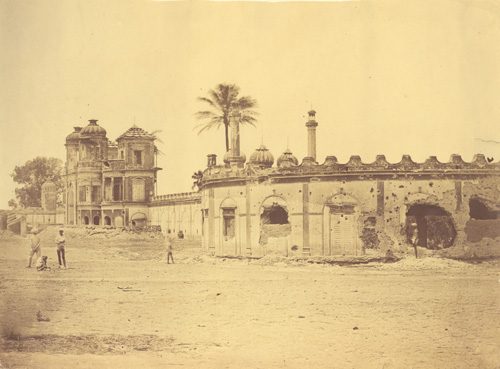
The race to the breach in the Sikandar Bagh wall was contested by the men of the 93rd Highlanders and the 4th Punjabi Rifles, each scrambling man wanting to be the first to scramble through a hole that measured not more than a yard square and about the same from the ground. Interestingly it would be widened during the course of the day, until Forbes-Mitchell would remember it as being large enough for three men to pass through.
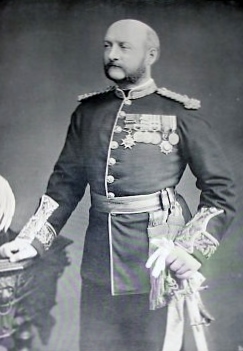
Who reached the breach first would be contested by everyone who happened to be there, though Ewart could say for sure it was not him.
“Captain Burroughs, of the 93rd, afterwards claimed to be the first in, but I have heard others state that it was Sergeant-Major Murray of the 93rd or a Sikh named Subadar Gokul Singh…At such a time it was too difficult to notice anything.” (Ewart)
In despatches of the 18th of November, Sir Colin Campbell would single out Gokul Singh, writing,
“I must not omit to name in the most marked manner Subadar Gokul Singh, 4th Punjaub Rifles, who, in conjunction with British officers, led the 4th Punjaub Rifles at the storming of the Secunderabagh in the most daring manner.”
Captain Burroughs “outdistanced the whole” and arrived first at the breach only to find he could not get through. The hole was too small and he first had to clear away much of the debris and loose stones – the work of a minute or two, according to Crombe – before he could scramble through and “tumbled headlong into a room full of excited and now startled Sepoys. His feather bonnet fell from his head, and rolled towards the mutineers, who , probably taking it for some fearful instrument of war, fired one or two ineffectual shots at the daring intruder, then hurried from the room.” This gave Burroughs enough time to collect his headgear as Corporal Fraser, Lance-Corporal Dunlay and Private William Nairn came through the breach behind him. Followed by these three men, Burroughs dashed after the sepoys in the direction of the main gateway but they had underestimated how many they would face and now vastly outnumbered, Burroughs and the others turned and retreated towards the breach, firing as they went. Somewhere in this fracas, Dunlay was wounded.
It might have spelt an end for Burroughs had not more men piled through the breach and engaged in this desperate scene of chaos; as it was Burroughs was attacked by a sepoy while engaged in hand-to-hand combat with another; a slashing blow from a tulwar cut open his right ear and cheek. The feather bonnet he had so carefully retrieved and placed on his head saved his life but it was dented “like a bishop’s mitre.”
When Ewart finally made it through the hole a man of the 93rd was killed next to him and he noticed Captain Burroughs bleeding from a severe sabre cut on his head. The officers of the regiment recommended Burroughs for the Victoria Cross but it is thought that due to internal disputes, it was not given. Sir Colin Campbell, worried about any show of favouritism, capped the VCs for the 93rd for the actions in Lucknow at 6. Of these only one was awarded to an officer. As it stands, they still received the most Victoria Crosses for actions between the 14th and the 22nd of November.
As for Lance-Corporal John Dunlay, we know little of what his life was like before Sikandar Bagh, or indeed what it would be after 1857. He was born in Douglas, County Cork, Ireland in 1831 and enlisted in the 93rd, certainly on time to be posted in Crimea and then take part in the events of 1857. He returned to England following the mutiny and was invested with the Victoria Cross by the Queen at Windsor Castle on the 4th of January, 1860. An accident put an end to Dunlay’s life and he died in the South Infirmary in Cork in 1890, aged just 58. He was buried in St. Joseph’s Cemetery. Only recently his great-grandson established the location of Dunlay’s grave – a headstone was installed in 2018, inscribed to John Dunlea VC.
His VC made its way back to India to form a part of the medal collection held at the Sheesh Mahal Museum in Patiala. Besides the cross, the musketball dug out of Dunlay’s knee is preserved as a part of the exhibition. What happened to his other medals is unknown but Dunlay certainly had a few.
Crimea Medal ( 1854-56 )
3 clasps:”Alma” – “Balaclava” – “Sebastopol”
Indian Mutiny Medal ( 1857-58 )
1 clasp: “Relief of Lucknow”
Turkish Crimea Medal ( 1855-56 )
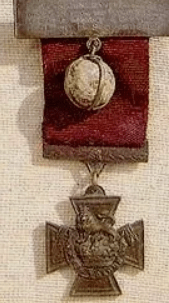
The following clauses could well apply to the last VC we shall explore in this chapter, that of the Honourable Augustus Anson.
Clause 8
It is ordained, where such an act shall not have been performed in sight of a commanding officer as aforesaid, then the claimant for the honour shall prove the act to the satisfaction of the captain or officer commanding his ship, or to the officer commanding the regiment to which the claimant belongs, and such captain or such commanding officer shall report the same through the usual channel to the admiral or commodore commanding the force employed on the service, or to the officer commanding the forces in the field, who shall call for such description and attestation of the act as he may think requisite, and on approval shall recommend the grant of the decoration.
Clause 12
It is ordained that cases may arise not falling within the rules above specified, or in which a claim, though well founded, may not have been established on the spot, We will, on the joint submission of Our Secretary of State for War, and of Our Commander-in chief of Our army, or on that of Our Lord High Admiral or Lords Commissioners of the Admiralty in the case of the navy, confer the decoration, but never without the conclusive proof of the performance of the act of bravery for which the claim is made.
Captain, the Honourable Augustus Anson, 84th Regiment of Foot
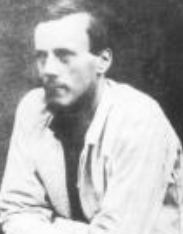
“For conspicuous bravery at Bolundshahur, on the 28th September, 1857. The 9th Light Dragoons had charged through the town, and were reforming in the Serai; the enemy attempted to close the entrance by drawing their carts across it, so as to shut in the cavalry and form a cover from which to fire upon them. Captain Anson, taking a lance, dashed out of the gateway, and knocked the drivers off their carts. Owing to a wound in his left hand, received at Delhi, he could not stop his horse and rode into the middle of the enemy, who fired a volley at him, one ball passing through his coat. At Lucknow, at the assault of the Secundra Bagh, on 16th November 1857, he entered with the storming party on the gates being burst open. He had his horse killed and was himself slightly wounded. He has shown the greatest gallantry on every occasion, and has slain many enemies in fight.” (No. 22212″. The London Gazette. 24 December 1858. p. 5513).
In a previous post – The Seven VCs of Bulandshahr – we have looked in detail at the life and career of Augustus Anson and thus shall not dwell upon it again here. Needless to say, he made rather a name for himself during the events of 1857 and later as a Member of Parliament, which should his contribution be of interest, selections can be found here – https://api.parliament.uk/historic-hansard/people/hon-augustus-anson/index.html
At the Sikandar Bagh, we do have at least the account of Lieutenant Roberts who saw Anson just as the gates burst open but it comes just after the actions of another man who would be awarded the Order of Merit, the Indian equivalent at the time of the Victoria Cross and thus deserves to be mentioned here:
“The crush now became so great in the men’s eagerness to get through the opening and join the conflict within, that a regular block was the consequence, which every minute became more hopeless…The enemy, having been driven out of the earthwork, made for the gateway, the heavy doors of which were in the act of being closed, when the Mahomedan (Mukairab Khan by name) pushed his left arm, on which he carried a shield, between them, thus preventing their being shut; on his hand being badly wounded by a sword-cut, he drew it out, instantly thrusting in the other arm, when the right hand was all but severed from the wrist. But he gained his object — the doors could not be closed, and were soon forced open altogether, upon which the 4th Punjab Infantry, the 58rd, 93rd, and some of the Detachments, swarmed in. This devoted action of Mukarrab Khan I myself witnessed, for, with Augustus Anson, I got in immediately behind the storming party.
As we reached the gateway, Anson was knocked off his horse by a bullet, which grazed the base of the skull just behind the right ear, and stunned him for a moment — the next, he was up and mounted again, but was hardly in the saddle when his horse was shot dead.”
As his exploits on the 16th of November are vague and there is nothing definite written about what his other deeds were, we shall leave this with the words of those who knew Anson:
Camp Boulandshahr
October 1st
“Did I tell you of young Anson’s sending one of our lances through the head of a hackeryman who would persist in placing his cart across the road to stop the way?” (O.H.S.G. Anson)
October 7th, Camp Ockbarabad
“Young Anson shot a man at Allyghur, just in time, for he was on the point of dealing a blow at him. Anson had lost his sword, but luckily had his pistol. His bridle-hand, you know, was wounded at Delhi, and he will probably lose the use of the middle finger of it, so he finds it rather difficult to manage his runaway horse.”
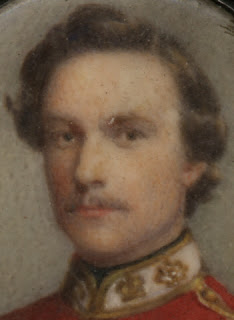
Yet we can leave our descriptions of Anson in the hands of Garnet Wolseley:
Sir Hope’s A.D.C., the Hon. Augustus Anson, was a soldier after my own heart. A man of much ability and of great common sense, but badly educated. A daring though an indifferent rider, he might have been a first class general had he stuck to the Army and not taken to politics and Parliament instead. No better, no braver gentleman ever wore ared coat. He was a keen sportsman, and his energy and determination were boundless. He possessed the great, the rare gift of a natural aptitude for war. A general favourite, Sir Hope Grant was sincerely attached to him, and that feeling was fully returned by the A.D.C. for his general. He had much influence with Sir Hope, and more than once when he and I, putting our young heads together, thought that some particular plan should be adopted, or certain movements made, he was able to induce Sir Hope to see matters as we did. But Sir Hope was very difficult to persuade, and without Augustus Anson’s backing up I should have failed entirely…”
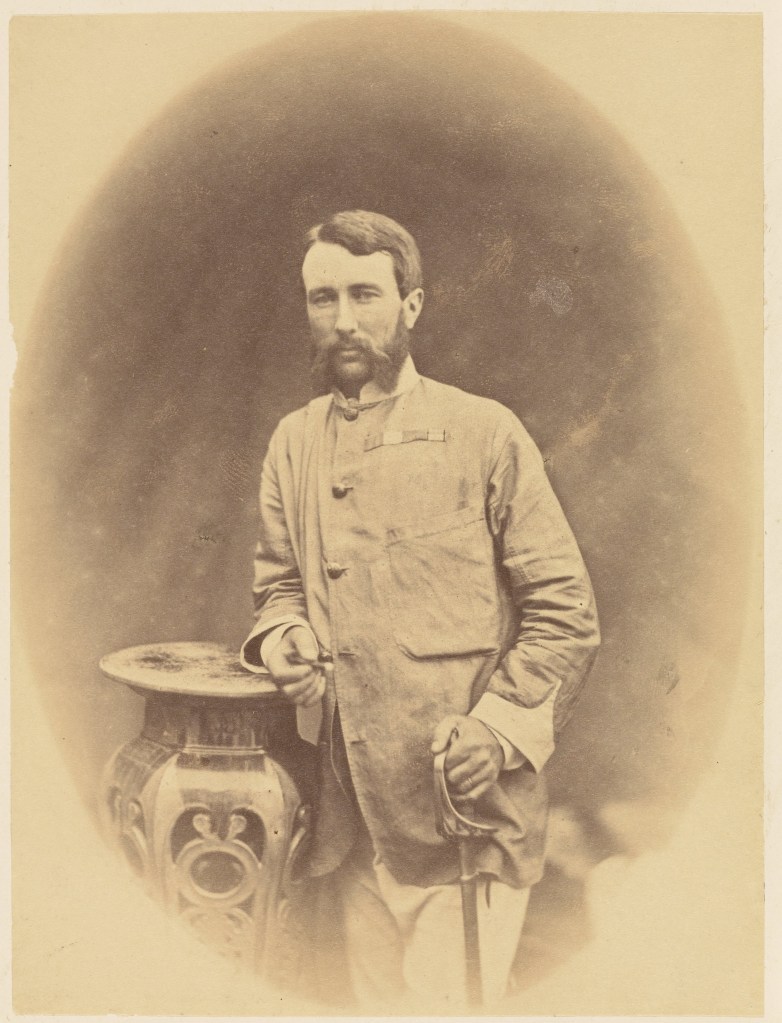
Wolseley continues:
“Augustus Anson, V.C., was riding a big flea-bitten greyish Gulf Arab that had belonged to his uncle General Anson, who died when Commander-in-Chief at the beginning of the Mutiny. Augustus, an indifferent horseman and a bad swordsman, never lost a chance of taking part in any cavalry charge that “was going” in his neighbourhood. So of course he also charged with Frazer, and joined in this mélée to his heart’s content. When I saw him after the charge, his flea-bitten grey was bleeding from many a sabre cut. During the course of the Mutiny he had had a large number of hand-to-hand encounters with individual Sowars, in which he had generally killed his man. I can see him in action in my mind’s eye now, with his mouth firmly closed and determination marked on every feature of his face. He was in every sense a soldier, absolutely indifferent to danger; he revelled in those hand-to-hand encounters. His family should revere his memory, for he was a relative to be remembered: I know that I am proud to have been his friend.”
In the next post, we shall explore the remaining Victoria Crosses awarded for Lucknow in 1857, uncover yet more courage amid chaos and shall address those very vague numbers.
Sources:
Anson, O. H. S. G. With H.M. 9th Lancers during the Indian Mutiny: The Letters of Brevet-Major O.H.S.G. Anson. Edited by Harcourt S. Anson. London: W. H. Allen & Co., 1896.
Bourchier, George. Eight Months’ Campaign Against the Bengal Sepoy Army during the Mutiny of 1857. London: Smith, Elder, and Co., 1858.
Burgoyne, Roderick Hamilton. Historical Records of the 93rd Sutherland Highlanders, Now the 2nd Battalion Princess Louise’s Argyll and Sutherland Highlanders. London: Richard Bentley and Son, 1883.
Ewart, John Alexander. The Story of a Soldier’s Life; or, Peace, War, and Mutiny. 2 vols. London: Sampson Low, Marston, Searle, & Rivington, 1881.
Forbes-Mitchell, William. Reminiscences of the Great Mutiny 1857–59: Including the Relief, Siege, and Capture of Lucknow, and the Campaigns in Rohilcund and Oude. London: Macmillan and Co., 1893.
Holmes, T. Rice. A History of the Indian Mutiny: And of the Disturbances Which Accompanied It Among the Civil Population. 5th ed., rev. and enl. London: Macmillan and Co., 1897.
Knollys, William Wallingford. The Victoria Cross in India. London: Dean & Son, 1886.
Lang, Arthur Moffat. Lahore to Lucknow: The Indian Mutiny Journal of Arthur Moffat Lang, 1st Lt., Bengal Engineers. Edited by David Blomfield. London: Leo Cooper, 1992.
Roberts, Frederick Sleigh. Forty-One Years in India: From Subaltern to Commander-in-Chief. Vol. 1. London: Macmillan and Co., 1911.
Sclater, Philip Lutley, and A. H. Evans, eds. The Ibis: A Quarterly Journal of Ornithology. 8th series, vol. 5. London: John Van Voorst, 1905.
Wilkins, Philip Aveling. The History of the Victoria Cross: Being an Account of the 520 Acts of Bravery for which the Decoration Has Been Awarded, and Portraits of 392 Recipients. London: Archibald Constable & Co., 1904.
Wolseley, Garnet. The Story of a Soldier’s Life. Vol. 1. London: Archibald Constable & Co., 1903.
Wood, Evelyn. The Revolt in Hindustan, 1857–59. London: Methuen & Co., 1908.
Wright, William, ed. Through the Indian Mutiny: The Memoirs of James Fairweather, 4th Punjab Infantry. Stroud, Gloucestershire: The History Press, 2011.
Wylly, H. C. Neill’s “Blue Caps.” Vol. 2, 1826-1914. London: Gale & Polden, 1923
Links:
https://vcgca.org/
https://www.nam.ac.uk/
https://www.memorialstovalour.co.uk/
https://victoriacrossonline.co.uk/
https://www.noonans.co.uk/auctions/archive/past-catalogues/726/catalogue/467049/
https://www.bbc.com/news/uk-northern-ireland-36456105
https://www.soldiersofshropshire.co.uk/wp-content/uploads/2021/11/Alfred-Kirke-Ffrench-VC-Word.pdf
https://www.soldiersofshropshire.co.uk/wp-content/uploads/2021/11/Charles-Irwin-VC-word.pdf
http://www.victoriacross.org.uk/bbsheesh.htm
https://vcgca.org/restoration/400/John-DUNLAY
http://www.victoriacross.org.uk/bbdunlay.htm
https://macinnes.org/hugh/hugh.html#:~:text=It%20was%20during%20nine%20days,was%20dead%2C%20buried%20and%20forgotten.
https://macinnes.org/hugh/ceremony_hughvc2.pdf
 Mutiny Reflections
👏👏👌👍🌹
LikeLiked by 1 person