Surgeon Joseph Jee, 78th Highlanders
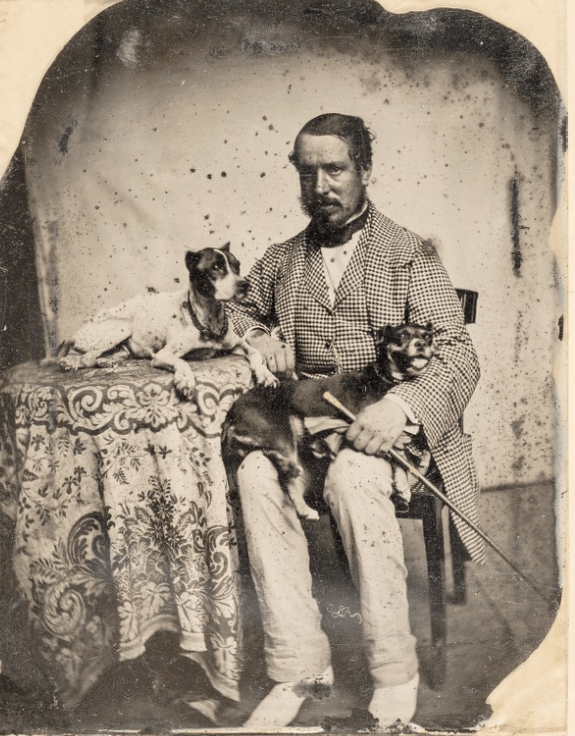
Born in 1819, at Hartshill, Atherstone in Warwickshire, the son of Christopher Preston Jee, Esq., and Nora Carola (nèe Riley), Jee was educated at universities and medical schools in Edinburgh, London and Paris and qualified MRCS in 1841, attaining a commission in the army in 1842, as Assistant Surgeon to the 15th Hussars. He rather quickly transferred to the 1st Royal Dragoons and in 1854, was promoted to the 78th Highlanders. He served with the regiment in the Persia Campaign, where at the Battle of Kooshab, he had his horse shot under him; for the Bombardment of Mohammen, he would be awarded the Persia campaign medal with one clasp. It was then off to India for the 78th and Jee would find himself embroiled in Havelock’s campaign, the final capture of Lucknow under Campbell, the subsequent Rohilkhand Campaign and finally the Capture of Bareilly. While his service in the mutiny was commendable, it was at Lucknow Jee won his VC.
At Charbagh Bridge, Jee was in the midst of the chaos and carnage – as the men fell wounded, Jee was there, attending them as he could under fire, and managed with no little danger, to convince others to carry their wounded comrades on their backs to safety, while Jee contrived to collect enough of the dhoolie bearers to return to the scene of battle and remove the dhoolies to the Alambagh. He then continued onward to the Residency, but found himself, with the wounded under his care, at the Moti Mahal. He remained with them through the night and in the morning, “voluntarily and repeatedly exposed himself to a heavy fire in proceeding to dress the wounded men who fell while serving a 24-pounder in a most exposed position.” Then, in the same effort as that of William Bradshaw of the 90th, Jee succeeded in taking the wounded to the Residency by the river bank route, steadfastly ignoring warnings not to do so, and as coolly as he could, went through a crossfire of musketry and ordnance to reach the Residency.
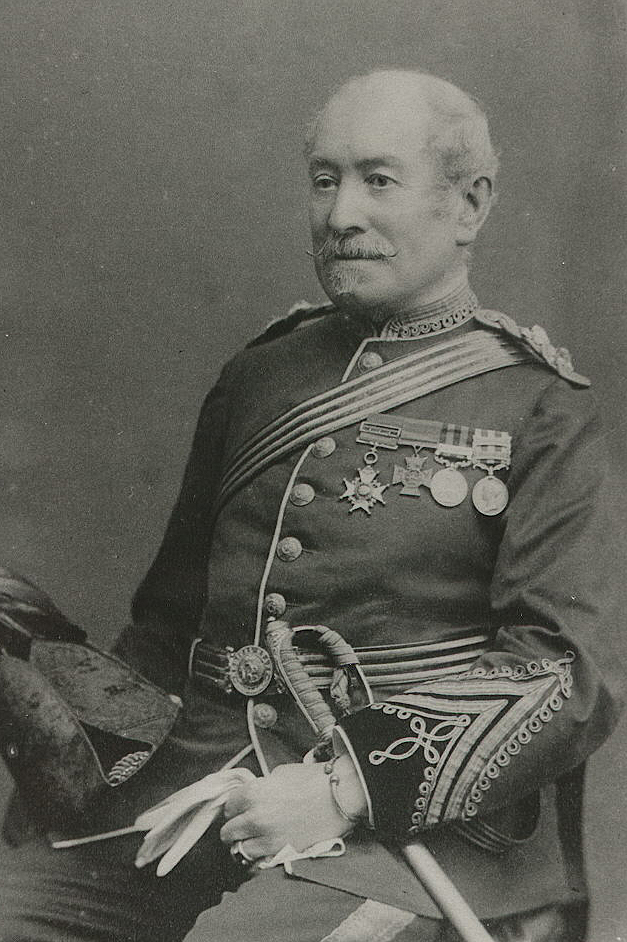
In 1864, Jee transferred to the Royal Dragoons and four years later, became Deputy Inspector General of Hospitals. He retired with the rank of Deputy Surgeon General in 1868, having been appointed Commander of the Order of Bath in 1859. He died in 1899 at the age of 80, shortly after he had been appointed honorary Surgeon to Her Majesty, Queen Victoria. Known as an honourable man by his friends, Jee also happened to be an excellent shot and a threat to pigeons having won the Pigeon Shooting Grand Prize at Monte Carlo, besides being a thoroughly dedicated salmon fisherman. “No mere man,” stated the British Medical Journal in his obituary, “ever deserved the Victoria Cross more than this gallant non-combatant.”
This leads us to
Assistant Surgeon Valentine Munbee McMaster, 78th Highlanders
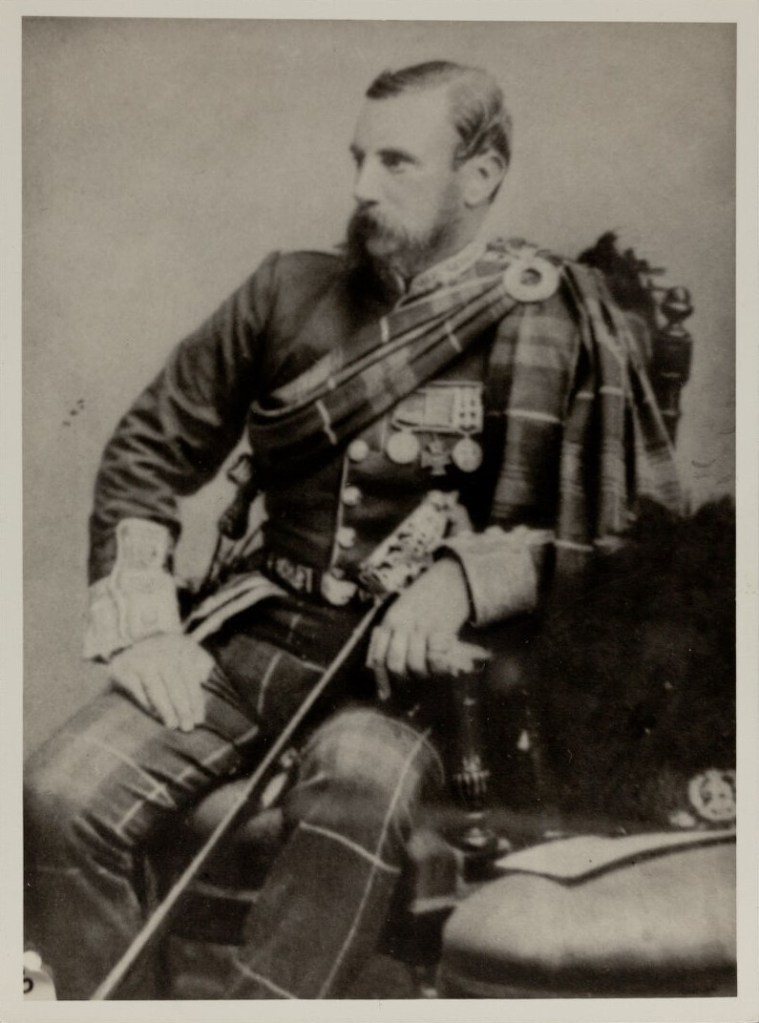
According to Maude, McMaster was honoured by the men of his regiment,
“Well,” said one to his comrade, “ who are you going to vote for?” The answer was “ So and so, and who are you going to vote for yourself ?” “Well!” replied the first questioner, “I think I shall vote for our Doctor.” The others became curious to know why his choice had fallen upon the Doctor. “ Because,” said the soldier, “ I think he’s the most likely man among us to live to wear it.” The others asked, in an amused tone, “ What makes you think that?” “Because,” was the reply, embellished with the usual affidavit, “ he takes such good care of hisself!”
While the story told by Maude might indeed be apocryphal, McMaster was not gazetted for any particular event during Havelock’s march to Lucknow. However, Jee received a very long citation and McMaster one terse line.
“For the intrepidity with which he exposed himself to the fire of the enemy, in bringing in, and attending to, the wounded, on the 25th of September, at Lucknow.” (Extract from Field Force Orders of the late Major-General Havelock, dated 17 October 1857. “No. 22154”. The London Gazette. 18 June 1858. p. 2957).
Born in 1834 in Trichinopoly in southern India, McMaster was the son of Major Bryce McMaster of the 6th NI, Valentine graduated from the Edinburgh Medical School, and was commissioned as an Assistant Surgeon on the 27th of March 1855, to serve with the 78th Highlanders. Like Jee, he first saw action in Persia. There was however something different about Assistant Surgeon Valentine McMaster.
After the 78th had routed the mutineers who were approaching south along the Cawnpore road, captured two guns and then crossed the Char Bagh Bridge to follow the main column, they mistakenly took the wrong road and instead of continuing north the Secunderabagh, they turned west along Hazartganj, where they came under heavy fire. With the Colour officers wounded, McMaster rushed forward, seized the Colours and dashed ahead. The 78th finally found their bearings at the Kaiserbagh where they met up with the main column emerging from between the Moti Mahal and the 32nd Mess House.
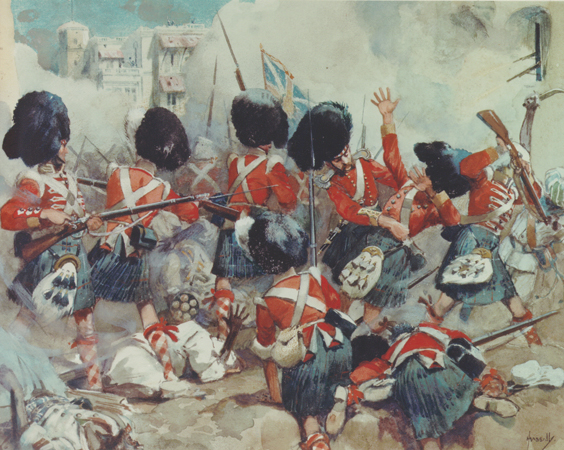
The VC citation does not mention him saving the Colours nor his subsequent actions. He would continue in a similar vein, taking part in sorties out of the Residency and he indeed was the man who lived long enough to wear his VC. He also received the Mutiny Medal with 2 clasps and was entitled to a claim of an extra year’s service. In 1860, McMaster transferred as assistant surgeon to the 6th Inskillings Dragoons and finally in 1864 to the 18th Hussars. Promoted to Staff Surgeon in 1868, he returned to the 78th the following year. In 1870, with the 78th now posted to Halifax, Nova Scotia, McMaster married Eleanor Burmeister – it should have been a long and happy life here on out for Valentine McMaster. In 1872 he died while stationed in Belfast, of lung disease at the age of 37. His second child, a daughter, was born shortly after his death.
His funeral was reported to have had a very large attendance, which included his father, and he was buried at the City Cemetery in Belfast. His widow returned to Canada shortly after and eventually remarried Canadian surgeon Campbell Mells Douglas, a VC winner himself of the 1867 Andaman Islands Expedition.
His brother, Brigadier General Andrew Cooke McMaster of the Madras Army, would die in Multan in 1879 while commanding the Madras Brigade. He too had received the Mutiny Medal.
 Mutiny Reflections
People today have no idea what war is. (Except for a handful).
I am always impressed by your knowledge.
Thank you for sharing
LikeLike