84th (York and Lancaster) Regiment of Foot
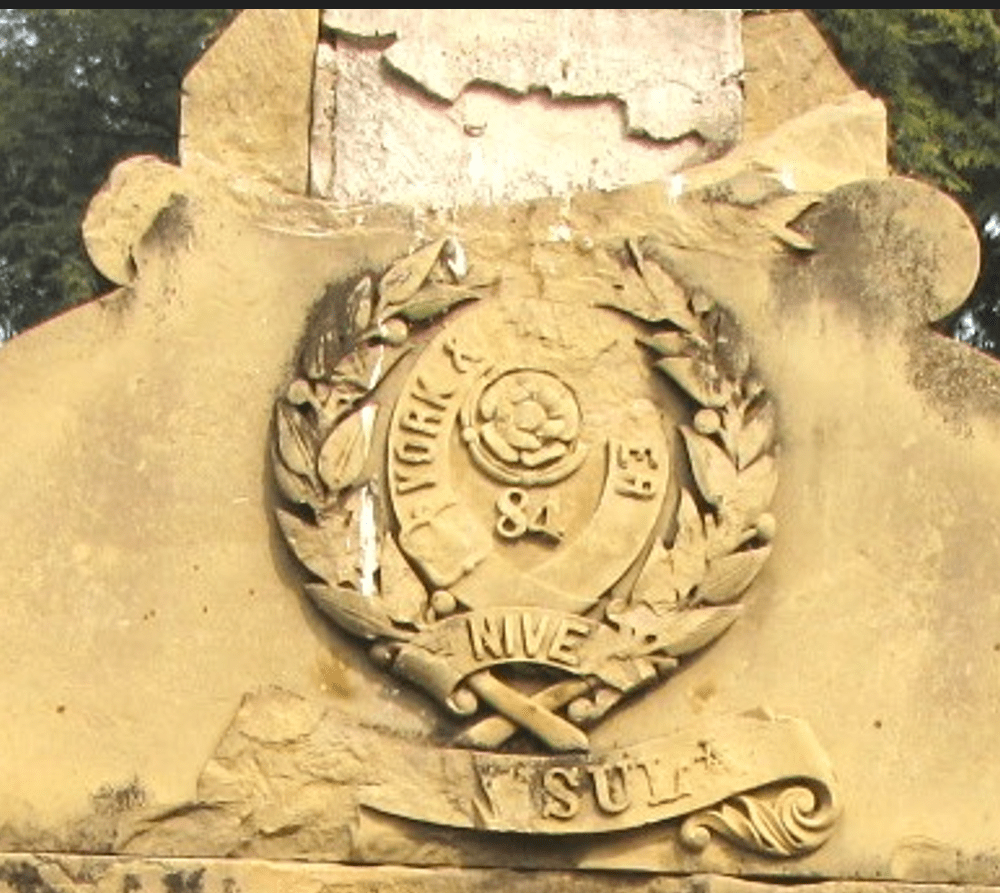
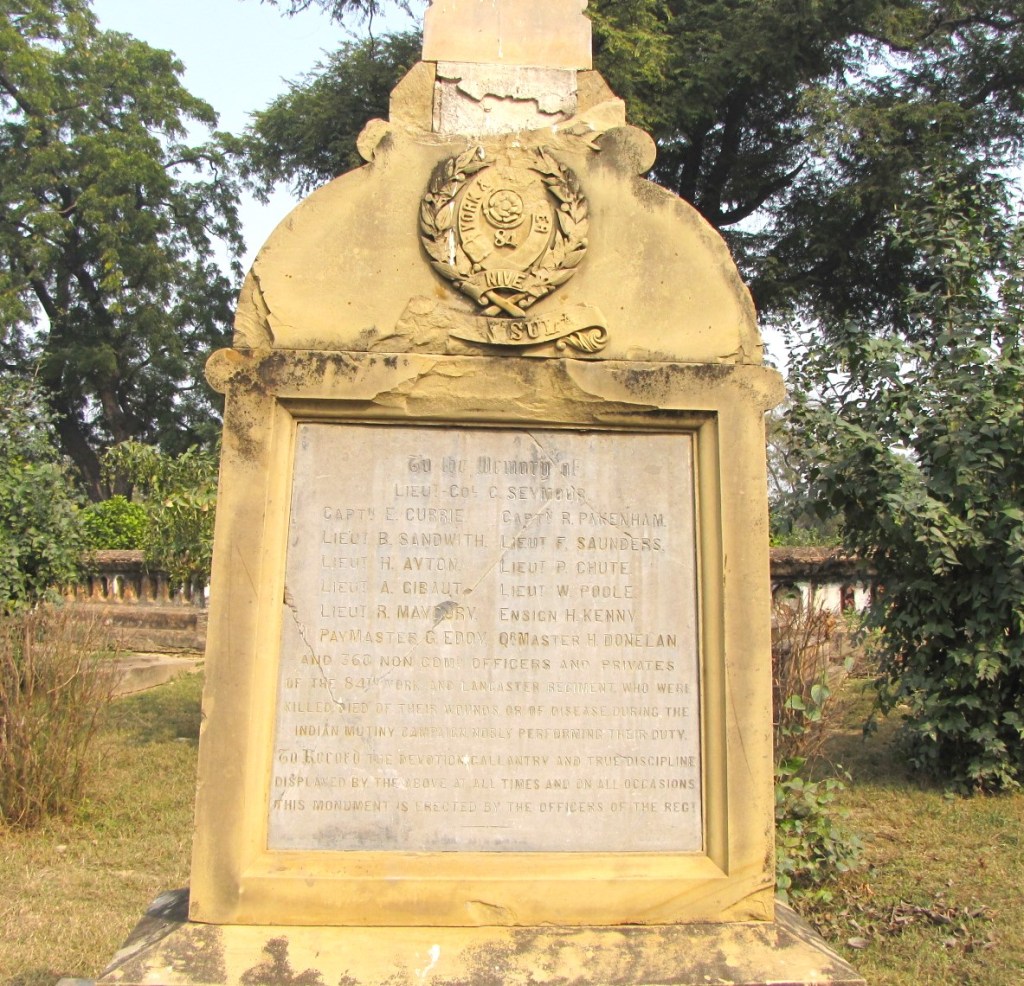
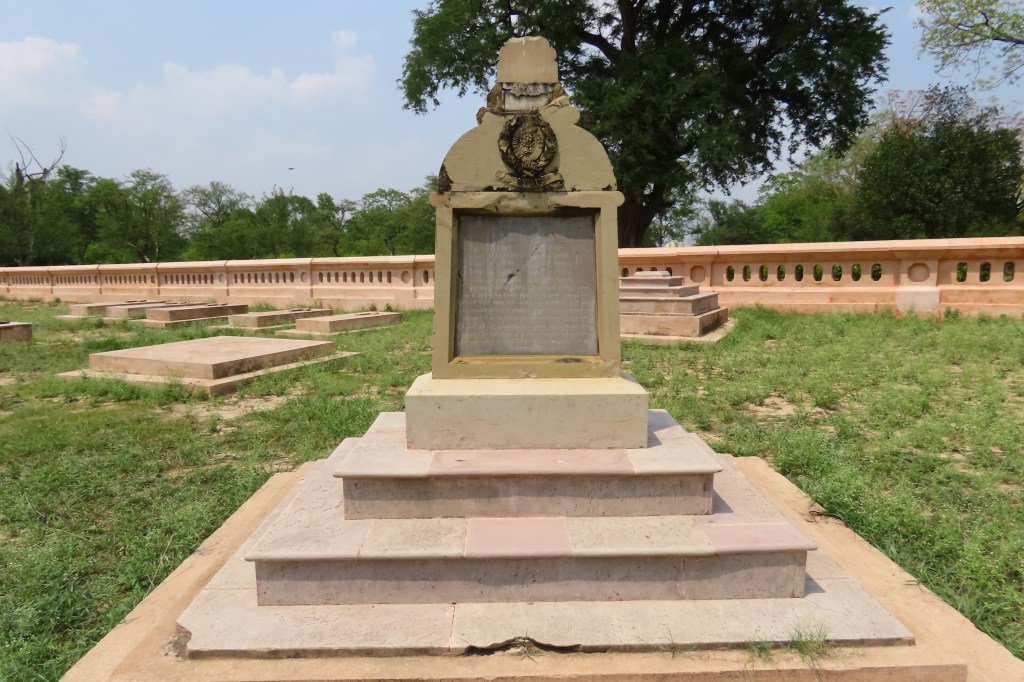
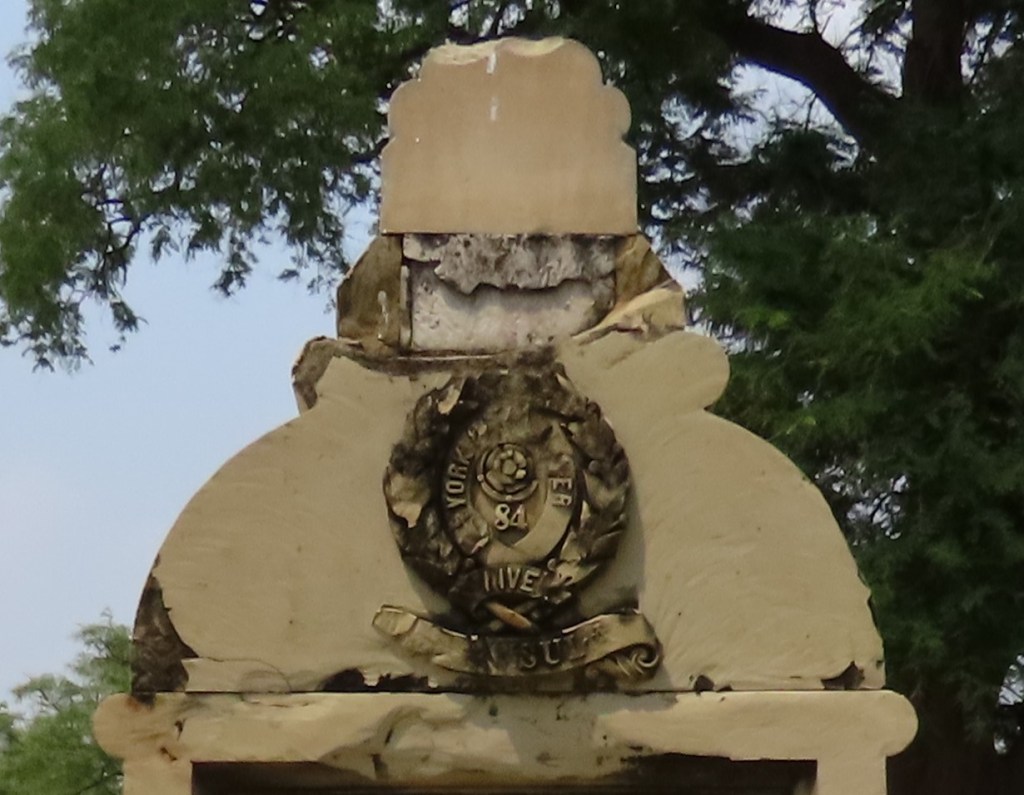
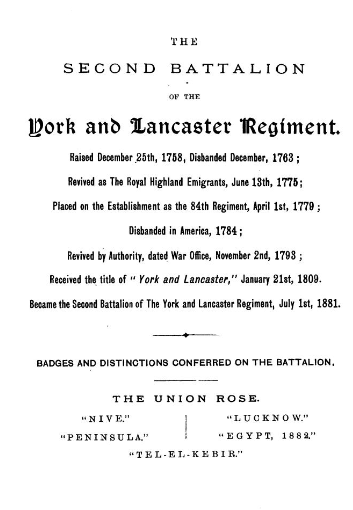
From their inception, the 84th would have ties to India – its first raising, in 1758 by Eyre Coote was made at the direct request of the East India Company for additional military support. The regiment arrived in Madras the same year where it went straight into the First Mysore War, seeing action at Wandiwash, the siege of Arcot and that of Pondicherry, and the capture of the rock fortress Permacoil. Many of these campaigns are today forgotten but are said to have been some of the most impressive achievements of a relatively small force against vastly superior numbers. The 84th bled their way through the war and were disbanded in 1763. The officers were placed on half-pay by warrants in the same year; many of the officers and men still chose to transfer to the army of the East India Company. The first Commander-in-Chief of India was none other than Eyre Coote, the first colonel of the 84th Regiment.
The 84th Foot was raised a second time on the eve of the American War of Independence. when Lieutenant Colonel Mclean was commissioned to raise 2 battalions in Canada, known as the Royal Highland Emigrants which was mainly composed of Scottish settlers many of whom happened to be former soldiers. The 1st Battalion remained in Canada while detachments of the 2nd Battalion saw service in America, taking part in the Battle of Eutaw Springs and the surrender of the British at York. Following the cessation of hostilities, the 84th was once again disbanded in 1783.
Their third raising at York by Lieutenant Colonel George Bernard as the 84th Regiment of Foot in 1793 was a response to the worrisome French Revolution; the 1st Battalion was swiftly sent to join the Duke of York’s army in the Netherlands in 1794 during the Flanders Campaign. In 1795, both battalions (the rather short-lived 2nd Battalion only survived a year, being amalgamated with the 1st in 1795) found themselves posted to the Cape of Good Hope and after that short stay, in 1798, their bags were packed for India. A detachment, which had occupied the Isle of Perim since 1799, rejoined the regiment in Goa in 1802. Operations were transferred 5 years later to Bombay.
The Napoleonic Wars saw the formation of a 2nd Battalion once again and a change of name – now the 84th (York and Lancaster) Regiment of Foot, reflecting the fact that the 1st Battalion had been raised in York, and the 2nd in Lancaster. While the 1st were sent to more tropical climes to Mauritius to oust the French from the island in 1810, the 2nd took part in the very disastrous Walcheren Campaign in the autumn of 1809 and then embarked for Portugal to fight their way through the Peninsular War in 1813. While they were chasing the French back to France with action at the Battle of Bidassoa, the Battle of Nivelle and the Battle of Nive, the 1st Battalion was settling down to very different wars in India.
During their four-year stay on the subcontinent, the 84th recaptured Kurnool in 1815 and then joined the end of the Third Anglo-Mahratha War, returning home to England in 1819. The 2nd Battalion was absorbed into their ranks. In 1826, the 84th was granted Royal approval to bear the Union Rose and the title “India” on their Colours and badges.
in 1820 when detachments were sent very far away -as escorts for convicts bound for Van Diemen’s Land and New South Wales. The battalion would then change perspective – this time, to Jamaica to quell the slave riots in 1827, where they would remain until 1839.
In 1842, Burma was on the table and the regiment would find itself in the 1st Burma War; by 1845, they were once again in India. It was Sir Hugh Wheeler who would send a company of the 84th to Sir Henry Lawrence’s aid at Lucknow in 1857 where they fought alongside the garrison during the siege. The remaining detachment of 60 men, bar one, all died at Cawnpore. Private Murphy survived the ordeal and would be part of Havelock’s Force as it fought its way into the Residency along with the main contingent of the 84th.
When they left India in 1859, after 17 years, they would be one of two regiments to receive a salute from Calcutta’s Fort William Battery and the 84th would carry home 6 Victoria Crosses. On arriving in England, the Mayor of Sheffield would greet them with a rousing speech and the men would each receive a penknife from the Cutler’s Company. The following 23 years would be a quieter time for the 84th, serving in Ireland, Canada and the Channel Islands. In 1881, they became the 2nd Battalion of The York and Lancaster Regiment.
As the wheels of war continued to churn, the 84th (would join the Eygpt Expedition of 1882 and the Battle of Tel-el-Kebir. Service in Bermuda, Nova Scotia South Africa and India followed and in 1912, the 2nd Battalion would be stationed in Limerick. They would be disbanded in 1968 and their Colours laid in the Regimental Chapel in Sheffield.
“Roll of the Officers of The York and Lancaster Regiment” (1885) better known as Raikes Roll (as it was compiled by Major G.A. Raikes) gives a comprehensive history of the regiment and includes an exhaustive list of names – a delight for readers and writers alike.
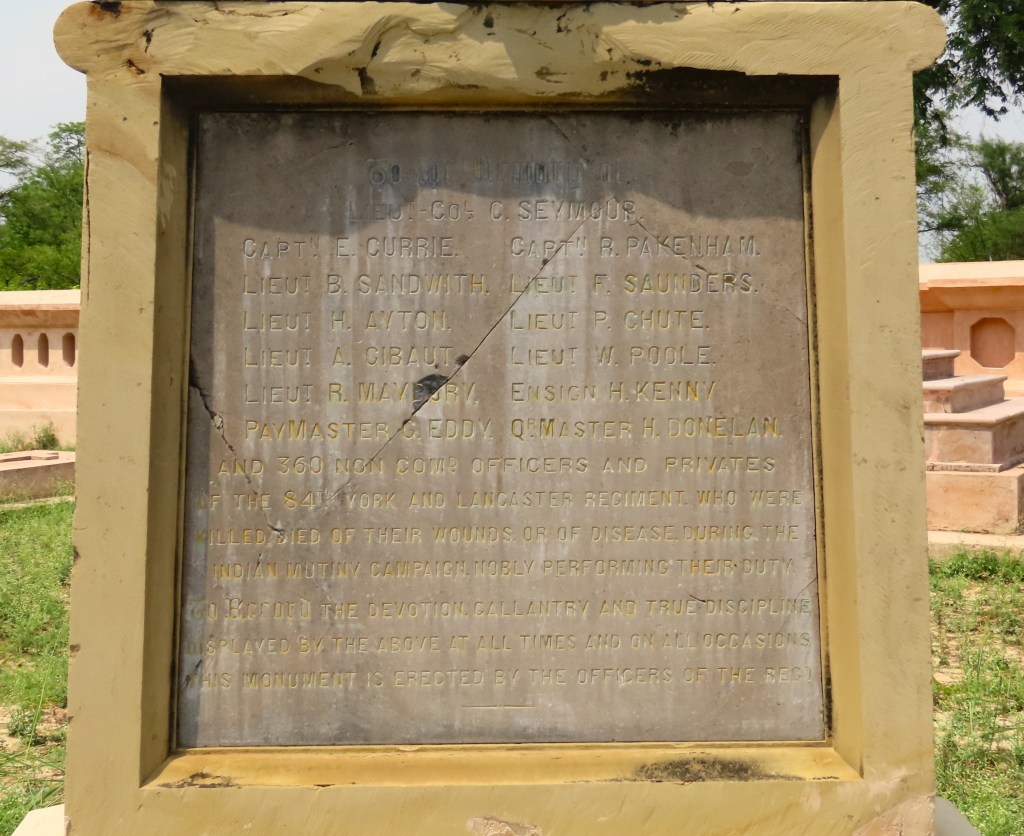
 Mutiny Reflections
The Lieut. Herford quoted here is my second great grandfather. He wrote a memoir about his Indian war experience called Stirring Times under Canvas. Although he also served in the Crimean War, it seems remarkable to me that that entire conflict only merited a couple of indifferent paragraphs while the Indian experience was clearly riveting and seared in his memory.
LikeLiked by 1 person
Thank you for the information! I have not heard of the book! I think perhaps, Crimea was a certain set of horrors – I have noticed that in other officers who served in both campaigns. There also seemed to be some kind of a justification needed for India. I will definitely be looking for his book!
LikeLike
Given your record you could up the betting stakes from a cup of tea to thali or at least tiffin.
LikeLiked by 1 person
Great historical events! Well shared with photos 👌
LikeLiked by 1 person
A strangely compelling read.
LikeLike
I wrote it on a bet – a rather interesting person told me I could never write anything in under 48 hours. The brief was to write something about Lucknow that wasn’t only Lucknow. So I sat down and wrote this in one sitting of 18 hours, with research. I chose the history of 4 well-known regiments of which I already possess a wealth of knowledge. I am still waiting for my cup of tea, which was promised.
LikeLiked by 2 people