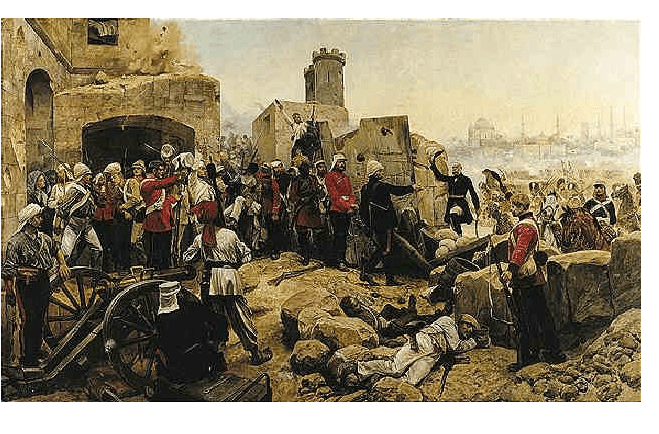
“On our arrival here, on the 25th of September, we found the garrison not nearly in the state of starvation we had been given to suppose. The ladies and children look pale and sickly, which one might expect, for although I don’t pretend to be well up in babies’ food, I fancy tough beef and chupatties are not quite the food for delicate females and growing children…”
The Lucknow Garrison had endured three months of siege, from the 30th of June, commencing after the Battle of Chinhat, to the 25th of September, when Generals Outram and Havelock strode resolutely through an opening in the Bailey Guard Gate. They had endured the relentless attack of shot and shell from the rebels, their positions were blasted in some cases, to smithereens and their casualties were counted around 400. They were tired and battle-worn but they were not starving. At least this fate had been spared them. So with mixed feelings of gratitude and astonishment, they greeted Havelock and his men who had arrived with nothing at all. The rations, which would have held out had Havelock not arrived, would now need to be stretched to accommodate a further 2000 mouthes not counting an endless stream of camp followers. Havelock and Outram had sincerely believed they were coming to evacuate the Residency – however, it was only on their arrival they realised the true state of affairs and the generals now had to re-evaluate their position. They had faced the insurgents successfully in the field and forced their way into the Residency, only the find, that there was no way out again.
To evacuate the Residency would have meant procuring carriages for the women, children and the wounded when all included amounted to over 1000 souls; there was no carriage procurable and not enough fighting men to protect them on the treacherous 5 miles of disputed suburbs. This undertaking was deemed impossible, leaving but two options. The first was to reinforce the garrison “ having first made arrangements for the safety of the garrison by strengthening it with all but four guns, and leaving behind the Ninetieth Regiment; destroying all the enemy’s works, exploding their mines, and breaking up the ground to render future mining difficult; and also demolishing the houses commanding the entrenchments. The remainder of the force will make its way back to Cawnpore.” or alternately to “stand fast” economise the provisions, and inform Major MacIntyre with his small force at the Alambagh, they would simply have to strengthen their position and hold fast until relief arrived. While it would have been possible for Outram to put the first plan into action he chose to remain in the Residency and
“By remaining in Lucknow if he could have gone out he detained that number inactive; he left to its fate the feeble detachment in the Alumbagh; he consumed rations that would have given a rough plenty to the garrison he had intended to leave; he debilitated his troops because of the necessity for their being put on reduced and unwholesome rations and he impaired his future mobility by eating his gun bullocks. And all this for what? “Our position,” he wrote later, “ is more untenable than that of the previous garrison, because we are obliged to occupy the neighbouring palaces outside the entrenchment to accommodate the Europeans, which positions the enemy are able to mine from cover of neighbouring buildings.”
So remain he did and with him, Havelock and the relieving force.
General Havelock was placed in command of the troops who occupied the three outlying positions, namely the Tehri Kothi and the two palaces, the Farhat Baksh and Chattar Manzil. Brigadier Inglis remained in charge of the Residency itself while Outram now assumed command of the entire operation. He had allowed Havelock the glory of arriving in the Residency but that was as far as Outram would go – the responsibility of the continuing campaign was now on him. His first task was to pull his force together; although Outram had secured his entrance to the Residency, much of his force was still outside the grounds and would continue straggling their way into the compound over the next two days. Encumbered by guns and wounded, it was a long column, impeded on its way by trenches and obstacles built by the insurgents.
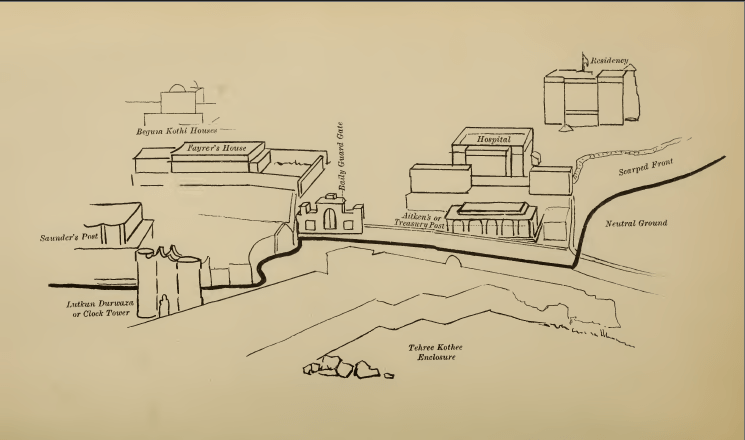
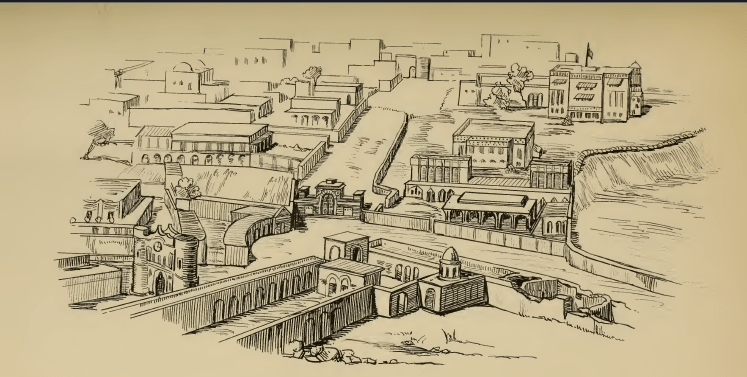
One of these was a battery just outside the Bailey Guard Gate, the Luttkur Darwaza or Clock Tower, which had, until the advance on the 25th been well armed by the rebels. They had seized the opportunity and fled in Havelock’s wake, leaving the battery free for the taking. The opportunity was taken by Lieutenant Aitken and the men of the 13th NI who had been garrisoned at the Treasury and Baily Guard for the duration of the siege. Armed with entrenching tools, they proceeded to the battery and demolished the earthworks. Aitkens then broke into and seized the adjacent posts – the jail buildings to the left and the Tehri Kothi enclosure on the right. To his surprise, instead of facing the wrath of the mutineers, he found the Tehri Kothi mostly abandoned and the few sepoys who remained were taken prisoner. Aitken and his men had not fired a single shot. For the rest of the night, Aitken bivouacked his men in the new position, allowing the wounded and guns to proceed unmolested into the Residency, with some finding their way into his new post.
 Mutiny Reflections