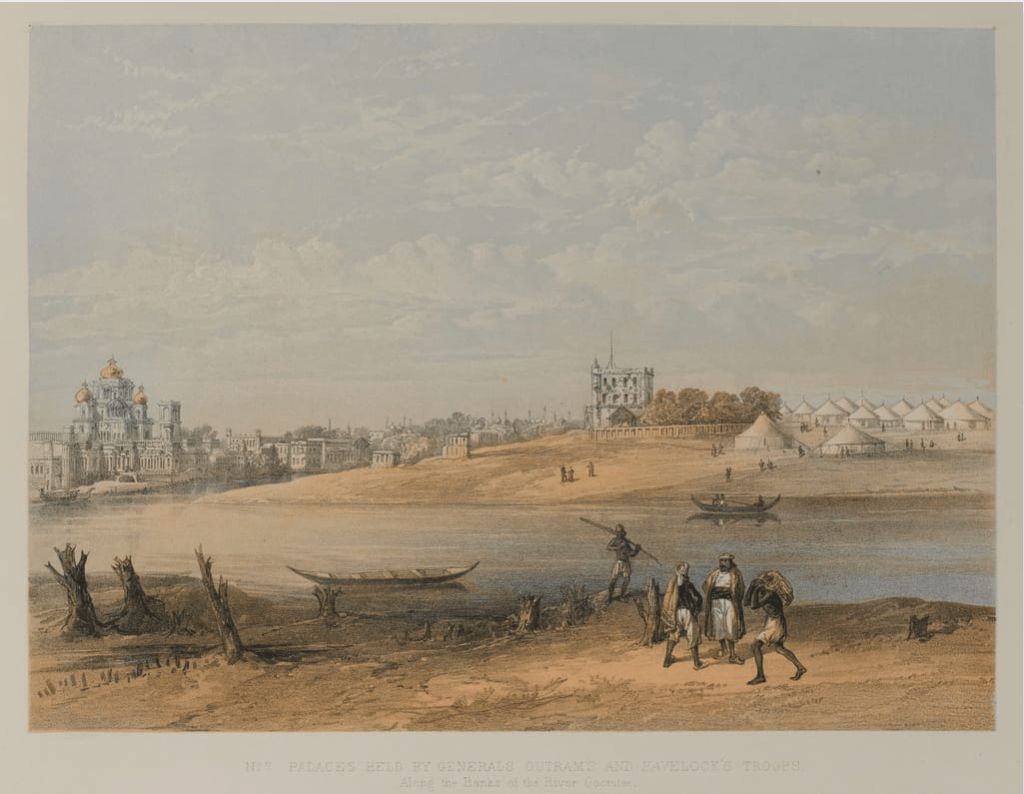
“Brigadier Havelock must reiterate his often repeated caution to the troops under his command to be careful of the expenditure of their ammunition. Nothing can be more absurd than for the most experienced marksman to suppose, as some men seem to do, that he can effect anything by answering a shot aimed at him through a loophole – the chances are thousand to one against him; neither should any soldier fire merely with a view of keeping up a responsive counter-fire to the rattle of enemy’s musketry; a well-trained soldier will never expend a cartridge, but when he sees a body of on an adversary presenting a fair mark to him within proper range, then and then only let him fire calmly and deliberately. There are the strongest reasons for husbanding the ammunition of this force.” (Oude Field Force Orders, Brig. Gen. Havelock, October 7th 1857)
For a force that had spent three months fighting, the sudden stop at Lucknow forced them into a new situation. Cut off from the Alambagh, where all their supplies were stocked, with only the clothes on their backs and served up the same dull rations the rest of the garrison had been eating for months, they faced a new situation. After all, fighting behind walls was not what they had been trained to do. The men retained at the Residency for its defence found themselves staring at the insurgents, now a mere 1000 yards further from the walls than they had been, unable to stop the near constant rattle of musketry, the shot and shell. For the siege hardened, the new commanders were a nuisance.
“Matters now were just as usual; there was never a single day or night without firing (cannon and muskets), and when we expected rest after real attacks, we were kept under arms from constant false alarms; an order would come round to be “all prepared,” as a large body of the enemy had been seen on the move; we remained belted and ready for hours, but no new enemy came in sight; all we saw were the rascals at their batteries, as usual, and every now and then we heard the ” Advance ” or “Assembly” sounded; after standing to our arms for several hours, we got the order to take off belts. This was most harassing to the men, as they had quite enough work without having to attend to false alarms.”
What the garrison had endured since July was new to the men of Havelock’s force. North complained the incessant noise of small arms fire, “together with the shouting and the shrill, discordant sound of native music at intervals” throughout the night, robbed the men of much-needed sleep; however, Rees and the others of the original garrison had stopped regarding these petty nuisances. Julia Inglis found her children slept soundly through the loudest barrages, Mrs Harris and the ladies in Fayrer’s house had long since ceased hiding in the tyekhana, and Maria Germon even ventured out to visit her husband at his post, bringing along her sewing. The men made a comfortable corner for her in the centre room, as far from shot and shell as possible, so she could spend a few hours chatting with her beloved Charlie. They had not been relieved but their situation, as she saw it, was vastly improved.
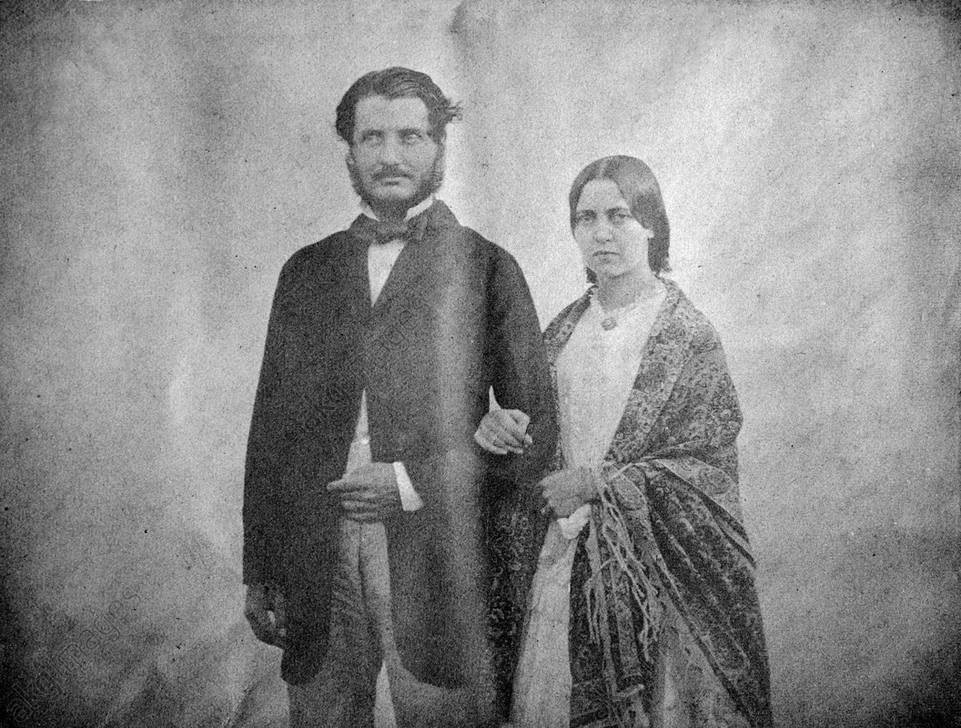
For one there was now time to attend to some of the more pressing needs of the garrison. What had struck Havelock and Outram from the onset, was just how filthy the Residency grounds had become.
“The officers commanding regiments, posts and detachments, and the senior military residents of houses not constituting posts are personally and exclusively responsible that the most perfect cleanliness be observed in the limits of their respective commands; with a view to this object, they will appoint one or more of the serving under them or residing on the premises to superintend the executive conservancy of their respective jurisdictions, and they will direct them to give full and immediate effect to any orders or hints they may receive from the Sanitary Commissioner of the Force on the occasion of his visits. The latter officer will, either personally or by letter, point out the existence he may observe, and should this be not removed within reasonable time he will report the circumstances officially to the Brigadier and also to the Assistant-Quartermaster-General for the information of the General Commanding.” (Division Orders, 4th October)
Not that it made much difference. While the new men of the garrison continued to complain of the filth, the smells and the flies, Rees noted the sanitary officer who had managed to hide his way through the first three months was now seen doing his rounds, issuing orders and generally directing affairs, while Innes remarks the camp-followers of Havelock’s force added to the comfort of the garrison, being made available for menial work. It left the boys of the Martiniere however, at a short end of what to do with their time. Relieved from the onerous duty of grinding wheat and generally being used as dogsbodies for the ladies, the older boys found a more exciting repast -exploring the new palaces. They began with the Farhat Baksh where, to their delight, they found among the discarded luxury,
“…a whole store of fireworks. This was a grand opportunity for us, and we immediately seized the rockets and began to fire them in the direction of the enemy. One of them, however, took a retrograde movement, and, exploding in the room itself, ignited the other combustibles. We cleared out very sharp and quite unobserved by the sentries. In a few minutes, the whole was in a blaze. These buildings contained valuable property of some of the Begums which was all destroyed. The place continued burning for some days, any efforts to put it out being impossible under the enemy’s fire. The cause of this conflagration was never quite brought home to us, but the soldiers had a suspicion that the Martinere boys were at the bottom of the mischief. One proof of their suspicion came home to me in a very forcible manner. A few days afterwards John Hornby, George Bailey and myself, roaming about as usual were allowed by the sentry to cross the grass plot between the Tehree Kothie (now the residence of the Judicial Commissioner) and the Chutter Manzil. The soldier averted his face in order to conceal a smile as he allowed us to pass, and we did not understand the meaning of this until we had proceeded about halfway across the plot when we were assailed with a shower of bullets, which came whistling about our ears from a Hindu temple (since demolished) across the river this causing a regular stampede among us lads, who profited by the lesson taught as we never ventured to pass that way again.”
For the ladies, the opening of the palaces was a joy. While they were not allowed to go out themselves, their husbands regaled them with plunder – shawls, crockery, handsome punch bowls and even damask footstools. Amid shot and shell, a lady could be seen bartering a pretty tea cup from a soldier in exchange for a chapatti. The doctors took hold of as many blankets as they could find for use for the wounded, while valuable cloth was torn up to make bandages. However, the situation rapidly fell out of even Havelock’s control. Everyone who could found ways to enrich themselves on the contents of the palaces, be it privates, camp followers, sepoys or Sikhs, officers or civilians, all hunting through the rooms searching for the treasure of Lucknow.
” Plunder was the order of the day. Everywhere might be seen people helping themselves to whatever they pleased. Jewels, shawls, dresses, pieces of satin, silk, broadcloths, coverings, rich embroidered velvet saddles for horses and elephants, the most magnificent divan carpets studded with pearls, dresses of cloth of gold, turbans of the most costly brocade, the finest muslins, the most valuable swords and poniards, thousands of flint guns, caps, muskets, ammunition, cash, books, pictures, European clocks, English clothes, full-dress officers’ uniforms, epaulettes, aiguillettes, manuscripts, charms; vehicles of the most grotesque forms, shaped like fish, dragons, and sea-horses; imaunns or representations of the prophet’s hands, cups, saucers, cooking utensils, chinaware enough to set up fifty merchants in Lombard Street, scientific instruments, ivory telescopes, pistols, and, what was better than all, tobacco, tea, rice, grain, spices, and vegetables, — the provisions, however, unfortunately, in very small quantities.” (Rees)
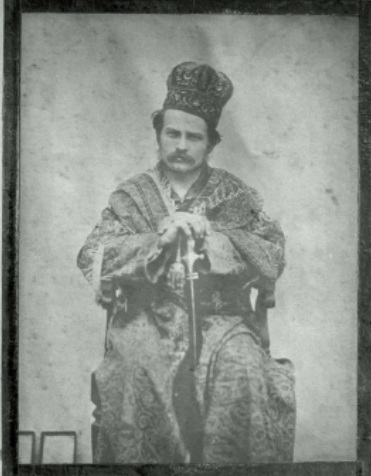
Rees found he was, after all, a hopeless plunderer. He went out on these expeditions to “bring something home” but inevitably returned empty-handed, taking at the most any eatables he could find. He had become ” so indifferent to property” that he would in later years regret his lack of prudence! Several men made their fortunes.
“…an overseer succeeded in obtaining several boxes of tea, tobacco, soap, candles, and other useful articles of household furniture, which a few days afterwards fetched very high prices; so that, when we finally evacuated the place, he must have had above a thousand pounds in cash alone: and, with singular good fortune, he not only managed to convey all his valuables away, but was enabled to travel in a magnificent phaeton, which had been abandoned by the owner, and to which he had succeeded in yoking bullocks, that he had obtained equally cheap. There are some men on whom Fortune smiles even in the worst of times. This was one of them, and there were several others similarly favoured by the blind goddess.”
The problem was so rampant, that Havelock quickly appointed prize agents (Major North being one of them) and instructed all sentries to check anyone who was passing back into the Residency for plunder. Anything found was to be confiscated and handed over to the proper authorities, however, the system was flawed. Much of what was stolen remained in private hands and would never see the books of the Prize Agents.
“It has come to the knowledge of Brigadier-General Havelock, Commanding Oudh Field Force, that officers, soldiers and other individuals, have in their possession jewels and other valuable property which are strictly part of the booty captured by the above-mentioned troops, so long as no arrangement has been made for the safe keeping and distribution of these effects, they might have been considered the property of no one, and too exact inquiries will not be made as to how they came into the possession of the several parties, but Prize Agents have now been duly nominated…The Brigadier General…now peremptorily calls upon all persons to deliver up…all such property… Those who fail to do this must incur the odium of defrauding the captors of their lawful rights. If officers or soldiers, they will be placed under arrest and court-martialled; if persons of civil life, they are reminded that Lucknow is under Martial Law and that they will be dealt with summarily as having embezzled or receiving knowing it to have been embezzled, prize property intended to be thrown into a general fund.” (Field Force Orders, 10th October)
The fault lay in part with Outram and Havelock. After visiting the various posts in the Residency, Outram announced he owing to their viligance, gallantry, zeal and valour the volunteers of the uncovenented service would receive three months gratuity as thanks from the government. However, civilians not in government employ, (like Rees, a private merchant or Parry, a banker), received nothing. That they would resort to plundering and hoarding valuables after having lost everything was, in their eyes, justifiable. For the soldiers, their grievance with Outram on this score lay in a different field and could be seen as a genuine misunderstanding.
In his zeal to secure the continued loyalty of the Indian troops serving in the Residency and with the Field Force, Outram went out of his way to show generosity. The European soldiers grumbled they were being overlooked and once again the “damned fellows” were being petted by their officers. However in the estimation of Outram, Havelock and Inglis, the Indian troops had lost everything by being loyal – home, name, family and prestige – the rewards bestowed upon them were a payment of sorts to make up for everything they had lost. The Europeans, they argued, were essentially only fighting for their own selves, on the order of Queen and Country; they had effectively, lost nothing at all.
 Mutiny Reflections