The Fighting Continues
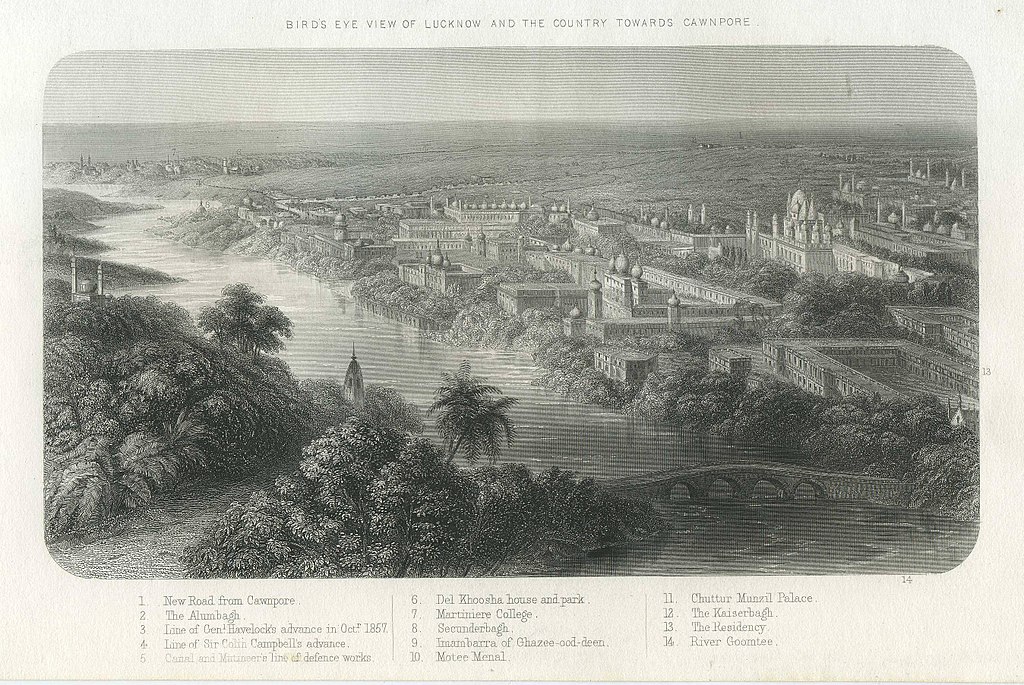
Outside the Residency, the momentary shock of Havelock’s march was quickly shaken off; the insurgents continued their daily bombardment of the garrison, occasionally engaging in strange acts such as waving food on poles to entice the Indian soldiers to desert and throwing all manner of things at the buildings, including heavy blocks of wood and trunks of trees (one of which Surgeon Home found exceedingly useful as a seat) and shells which only fizzed and sputtered. Spies informed the garrison the rebels were badly off for shells as they chiefly fired hammered shot, something the artillery picked up and threw straight back at them. However, where musketry was concerned, they continued being the accurate shots they had always been and casualties in the Residency continued to mount. In his exasperation, Havelock issued another order, exhorting his men in the palaces to desist from engaging the insurgents and he requested Brigadiers Hamilton and Stisted to instruct all Commanding Officers of the regiments to “warn all officers commanding picquets and outposts that they are on no account to permit their men to be absent from their posts except for a few minutes at a time, for special purposes and in very moderate numbers, and carefully to note their return, as, unless the men are constantly at their posts, they cannot be prepared for the sudden attacks so frequent on the part of the enemy, but the palaces may in one moment be lost.”
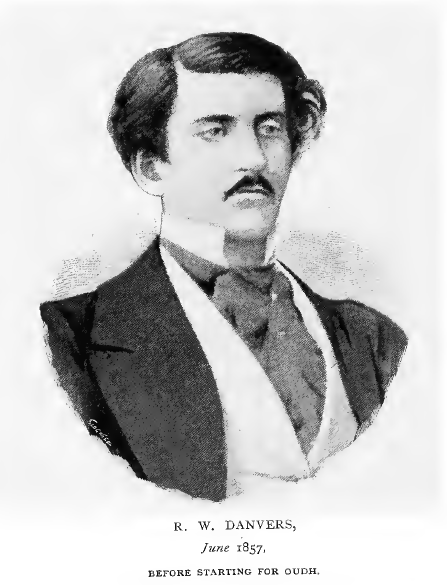
On the 6th of October, the insurgents made a determined attack against the Farhat Baksh – nicknamed the “Ferrret Box” for all the winding corridors – starting with blowing up a mine at the newly raised mosque picquet. Lieutenant Robert Danvers (of the 70th Bengal NI, then attached as interpreter to the 5th Fusiliers), found himself firstly perilously exposed and as the day wore on, disgusted by the fighting.
“The enemy swarmed everywhere, and you heard them yelling out defiance and abuse. I was the only officer at the time at the headquarters (Scott had gone away for a few minutes), and accompanied a guard of twenty men ordered out to assist in repelling the attack. I had a house to keep, or rather a ground story of a house, on a level with the garden where these fellows were swarming and yelling horribly. I stationed men at the iron-barred windows, concealing them as much as possible, and kept others right and left of some small doors through which I expected the enemy would try to effect an entrance. We shot several men as they came rushing into the garden with drawn swords, muskets, and matchlocks, hallooing out, ” Maro, Maro! chelo, Chelo! ” (“Kill, kill ! Come along ! “) They gave me very much the idea of men intoxicated with bhang, for they seemed to come on without any definite design, and rushed madly about apparently unconscious where they were going to. They came within a few yards of us, and so excited were my men that they missed many even at that distance. Some Seikhs who were in the house with me were much cooler and more collected and did not throw away their fire nearly so much. After some time the enemy managed to get into the rooms above us, and before our men in another part of the garden, and in an exposed position, were aware of it, opened fire upon them, wounding many men.
Scott, who had joined another party of his men, was wounded and had gone to the hospital. Now, therefore, I withdrew my men, having first seen that my part of the garden was cleared, and assisted in driving them from the upper rooms. They fought from room to room, and from one corridor to another, and we made our way over the corpses of the killed. It was wretched fighting. In one small room, we shot and bayonetted no less than eight. This kind of fighting went on till dark, and we found our further picket near the mosque, from which they had been driven in the morning, leaving the enemy, I am sorry to say, in possession. From this place, they kept up a fire upon our picket, and any man exposing himself at the windows, even though behind the wooden Venetians, was nearly sure to be shot. Two men in the 90th, who would foolishly expose themselves, were shot close by me.”
On the 11th of October, the mosque was retaken, at a loss of 11 men wounded.
Danvers noted the conditions in the Farhat Baksh were dangerous at best and was frequently the target of shells bursting in and around his post and tearing through the upper lookout rooms, and this, with surprising regularity at all times of the day and through the night. On the 17th yet another mine was sprung by the rebels, this time blowing in the gate at Danver’s post and a second one was directed at the mosque, killing two sentries of the Madras Fusiliers and one Sikh and wounding four others.
By the 23rd of October, exasperated by the heavy loss of officers at the Farhat Baksh Palace, Havelock strove to “bring it to the recollection of all, that though nothing better becomes an officer that fearlessly to expose his person at moments of decisive and vigorous attacks, yet that, behind walls and in all purely defensive positions, his first thought should be to screen his men from fire, and it must be an inevitably wanton and unjustifiable waste of life to expose himself when his men are, by his special orders, safely ensconced behind the best cover he can find for them.”
The fighting was against an enemy who vastly outnumbered Havelock’s own and they were soon reinforced by the troops who had left Delhi, looking for other fights. He was trying to not just husband his provisions, but his men – recklessness was not the order of the day, but his force was severely tried in patience, sitting behind walls, being fired by an enemy they could not actively engage. Surgeon Home noticed while staying at the Chattar Manzil, that the rebels seemed to always know where he and the other officers were and would accordingly open fire on them; Home suspected a cunning network of spies feeding their position to the insurgents. It was not a new notion – in the old garrison, when Sir Henry Lawrence was wounded, Dr Fayrer noted how quickly the guns of the rebels were directed Lawrence’s room at his house and ceased when Lawrence died. Captain Alexander Orr, with his network of spies, repaid the compliment between September and November – his spies always informed him providentially before the rebels could launch any decisive attack, thwarting them or meeting them as needed. While the firing and fighting continued, it was no longer the same ferociousness the old garrison had long become accustomed to. Rees could hardly repress a smile when he saw the new men duck at the sound of musketry – he had long since given up the habit. Even Danvers picked up the habits of the old garrison – by November he found he was getting ”quite accustomed to this kind of life” and slept soundly through yet another attack by the rebels.
Back in the Residency, the sanitary arrangments continued to irritate Havelock, a prim and neat man at all times, and he issued note after note, admonishing the garrison to do better, to burn their accumulated trash and barring that, dispose of it neatly outside the Bailey Guard, all stable and cow house litter was to be disposed outside the palaces. The extremely offensive carcass of a dead horse that was thrown in a newly dug tank meant for “watering commissariat cattle” instead of being taken to the river as directed to be disposed of, vexed Havelock entirely and the Sanitary Commissioner was requested to “communicate the name of any officer” who failed to dispose of carcases as ordered. Although concerned there were still men in the hospital without blankets he was remiss that at the hospital itself, there was a lack of sanitary arrangements; the amputated limbs that continued to fester in the garden do not appear on any of the problems to remedy.
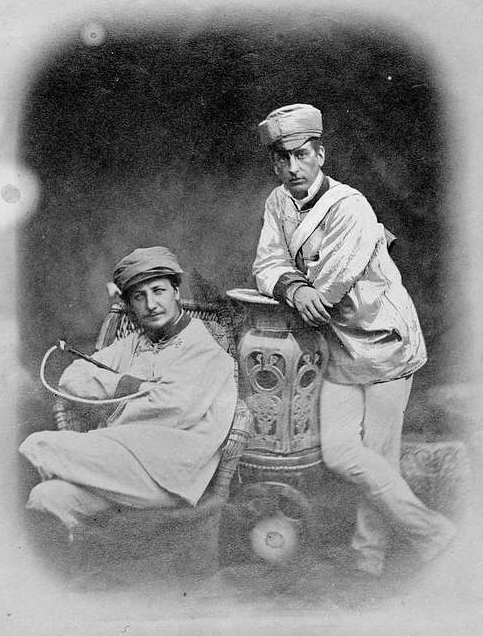
Captain Francis Cornwallis Maude, handled the siege better than others, throwing all his energy into the artillery. From the first week of their new situation, they concentrated on silencing the rebel batteries – Eardley Maitland with his detachment engaged in a prolonged “duello” with one of their guns, which fired up a narrow lane barely 100 yards from his post. To his frustration, it was ingeniously protected by shutters, and all the rebels had to do was run out and fire it whenever they saw the Europeans were not ready for them or just after Maitland had discharged his. Maitland contrived to construct a “dispart sight” which he fastened to the muzzle of his gun and in this way “made some capital practice,” and eventually succeeded in knocking the gun over. Maude had four batteries in the Residency under his charge but he rarely found reason to interfere with the capable officers who superintended them. Only one he found so endearing to his artillery nature, and that was of course, the Redan Battery. When “a provoking little battery” of the rebels just across the river continued to do substantial damage by firing up the slope which led to the river bank, Maude, after witnessing a British soldier lose both his legs to one of their very devastating shots, decided it was high time to silence the battery. He found, as Maitland had, the rebels had protected their gun with heavy shutters on the embrasure, behind which they could observe the men of the Redan as they went out to fire their guns. When Maude had fired off his, the rebels would quickly open the shutters, run out their gun and fire “a more or less chance shot into our camp.” After watching and observing their movements and being perfectly aware he could blast his way through their shutters if he could time it correctly and Maude resolved the avenge the death of the poor soldier.
One night I laid a trap for them and mounted an 18-pounder iron gun in the embrasure of our dismantled piece. I also had an 8-inch mortar brought down into the battery. In the early morning, I stationed an officer in the Residency Tower, instructing him to keep an eye on the enemy’s gun. We fired the usual four guns at the Mosque battery; and then treated them to the novelty of a well-timed shell from the 8-inch mortar. While the latter missile was distracting their attention, I carefully laid the new 18-pounder. Shortly after the mortar shell had burst, my friend in the tower called out: ” They are opening the shutters! ” I at once fired our reserve gun, and, as luck would have it, the shot went clean into the enemy’s embrasure, and knocked their gun over. They never fired from that place again.“
Pleased with Maude’s “feat of arms,” Outram came down to the post bearing the only reward he could give his intrepid artilleryman, and smiling he handed him a Manilla cheroot.
Maude, however, could very well have been one of the men Havelock alluded to, for wasting ammunition. Having seen Captain Graydon carried past him, mortally wounded, he decided that death too required an avenger and Maude took the role to heart. Maude borrowed a musket, a trusty Brown Bess, took 6 cartridges and copper caps and went up to Graydon’s Post to see exactly how the man had been killed. Hiding in what remained of Innes’ Post, Maude watched as three sepoys hastily snuck out of their position at the mouth of a lane that led straight towards the picquet where Graydon had lost his life. Maude raised the musket and “let drive at the leading man, and had the good fortune to bowl him over with a broken thigh. He made two or three ineffectual attempts to rise, and I hoped to use him as a sort of bait for others. But they were too clever for me. A garden wall ran parallel with and opposite to the picquet, the wall of the lane being at right angles to it; and there must have been a gateway just at the corner, for as I watched I saw spadefuls of earth being thrown up on the picquet side of the wounded man. In a very few minutes he was concealed from view, and no doubt was removed where he could be treated for his wound. Poor fellow! I rather hope he recovered.” It was the only time Maude fired a musket in the whole campaign and found that at a distance of 80 yards, the Brown Bess was not such a bad weapon after all.
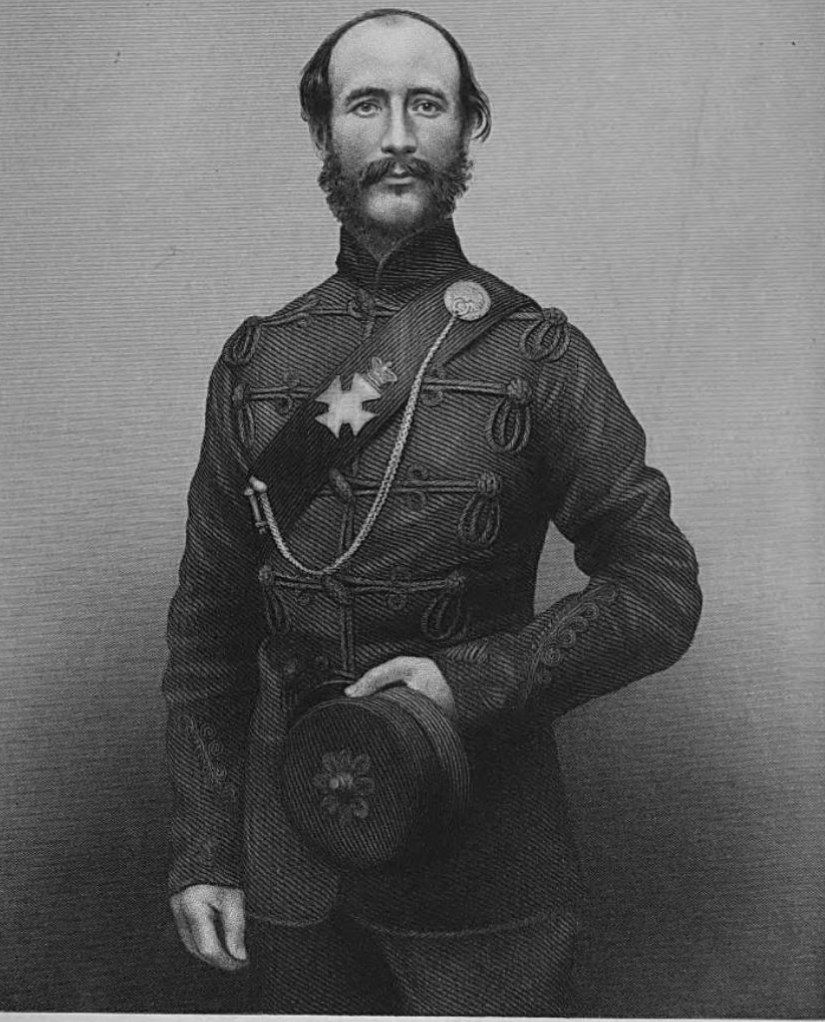
What they needed, however, was ammunition for the Enfield rifles. Having been used with such success during the advance, the men were reluctant “to dally with the somewhat antiquated Brown Bess” and Major North volunteered to undertake the task of manufacturing cartridges. During the siege, there had only been one Enfield and that belonging privately to Lieutenant Sewell, who happened to have a bullet mould, though subsequently another one was found. North set up his factory in rooms at the Treasury at the Bailey Guard on the 7th of October and worked 8 hours a day with Sewell as his pupil. North had been an apt student at a school of musketry and now “busy as a bee” threw himself into his new work. Sewell received an allowance of £ 25.- per month as compensation which North considered was barely enough, “considering the utility of the service and the risk which it involves. So exposed is this place, and so highly inflammable are the ingredients in use, that we are liable at any moment to be blown up; but the knowledge of our danger teaches our men caution.” He and Sewell were scarcely alone in their task – North was authorised to draw the following rates of pay per day for the men he employed under him:
1 Sergeant Conductor – Rs. 3.-
6 European soldiers – Rs 2.-
5 Native Soldiers and workmen – Rs 1.-
1 Sergeant Conductor – Rs 2.80
Despite all his work, North still had time to lament the final throes of the last of candles, of which he had only had three, and amid all the chaos, one man was marvelling at how much he missed candlelight and realising quite surreally how he had never appreciated the “value of artificial light before.”
While the leaguer of Lucknow continued unabated, a new force was slowly winding its way towards Cawnpore. By the end of October it was clear Sir Colin Campbell was only weeks away and with him, moved a battle-hardened force: the men who had fought at Delhi. They were on their way to save the Lucknow garrison, once and for all. In their wake came the men of the Shannon with their terrifying guns, ready to lay waste to this already battered city. The final chapter of the story of Lucknow begins.
Sources:
Anderson, R. P. A Personal Journal of the Siege of Lucknow. Edited by T. C. Anderson. London: W. Thacker & Co., 1858.
Bush, June. The Warner Letters: The Experiences of Two English Brothers in India, 1833–1857. Barnsley: Pen & Sword Military, 2008.
Danvers, Robert William. Letters from India and China During the Years 1854–1858. London: Imperial Press, 1898.
Gubbins, Martin Richard. An Account of the Mutinies in Oudh, and of the Siege of the Lucknow Residency. London: Richard Bentley, 1858.
Hilton, Edward. The Tourist’s Guide to Lucknow. Lucknow: Murray’s London Printing Press, 1891.
Home, Anthony Dickson. Service Memories. Edited by Charles H. Melville. London: Edward Arnold, 1912.
Inglis, Julia Selina. The Siege of Lucknow: A Diary. London: James R. Osgood, McIlvaine & Co., 1892.
Innes, J. J. McLeod. Lucknow and Oude in the Mutiny: A Narrative and a Study. London: Innes & Co., 1895.
Joyce, Michael. Ordeal at Lucknow: The Defence of the Residency. London: John Murray, 1938.
Kavanagh, T. Henry. How I Won the Victoria Cross. London: Ward and Lock, 1860.
Maude, Francis Cornwallis. Memories of the Mutiny. Vol. 2. London: Remington & Co., 1894.
Morrison, C., ed. Siege of Lucknow: Brigade Orders Issued Between October 2nd and November 18th, 1857. Presented to the Officers of the 78th Highlanders. Lucknow: London Printing Press, 1897.
North, Charles Napier. Journal of an English Officer in India. London: Hurst and Blackett, 1858.
Rees, L. E. Ruutz. A Personal Narrative of the Siege of Lucknow, from Its Commencement to Its Relief by Sir Colin Campbell. London: Longman, Brown, Green, Longmans, & Roberts, 1858.
 Mutiny Reflections