The Announcements
The announcements started on the 9th of October and the first regiment to be thus honoured was the Ferozepore Regiment that had accompanied Havelock to Lucknow.
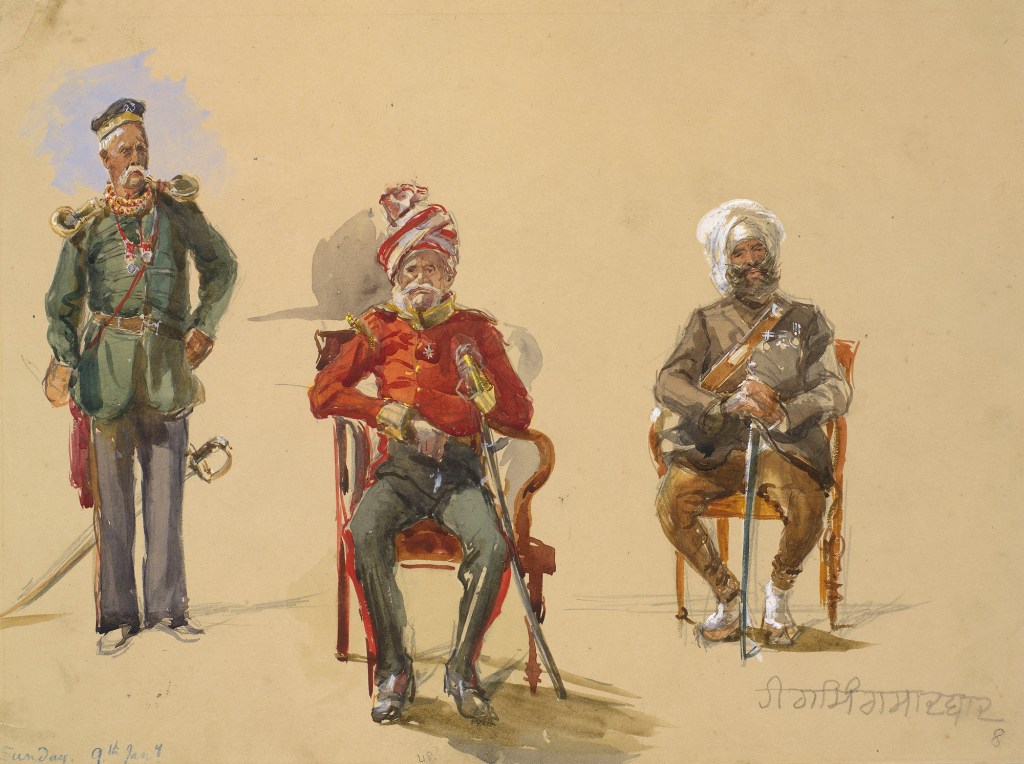
For great gallantry and untiring zeal the following Native Officers were awarded the 1st and 2nd Class of the Order of Merit:
Subadar (now Subadar-Major) Mahan Singh, 1st Class Order of Merit
Jemadar (now Subadar) Bhoop Singh, 1st Class Order of Merit
Havildar (now Jemadar) Gohen Singh, 2nd Class Order of Merit
Havildar (now Jemadar) Herat Singh, 2nd Class Order of Merit.
The order included promotions for a further 303 soldiers
For the 1st Oudh Local Infantry “in consideration of the loyal and good conduct to the State when their regiment mutinied.”
Peer Khan, Jemadar to be Subadar, and to receive 2nd Class Order of Merit
Putrain Singh Missa, to be Jemadar
Pisasur Singh to be Havildar
Gujray Singh to be Havildar
Mahabul Singh to be be Havildar
Madho Dooby to be Havildar
Dandam Dooby to be Havildar
Juggernauth Pandy to be Naik
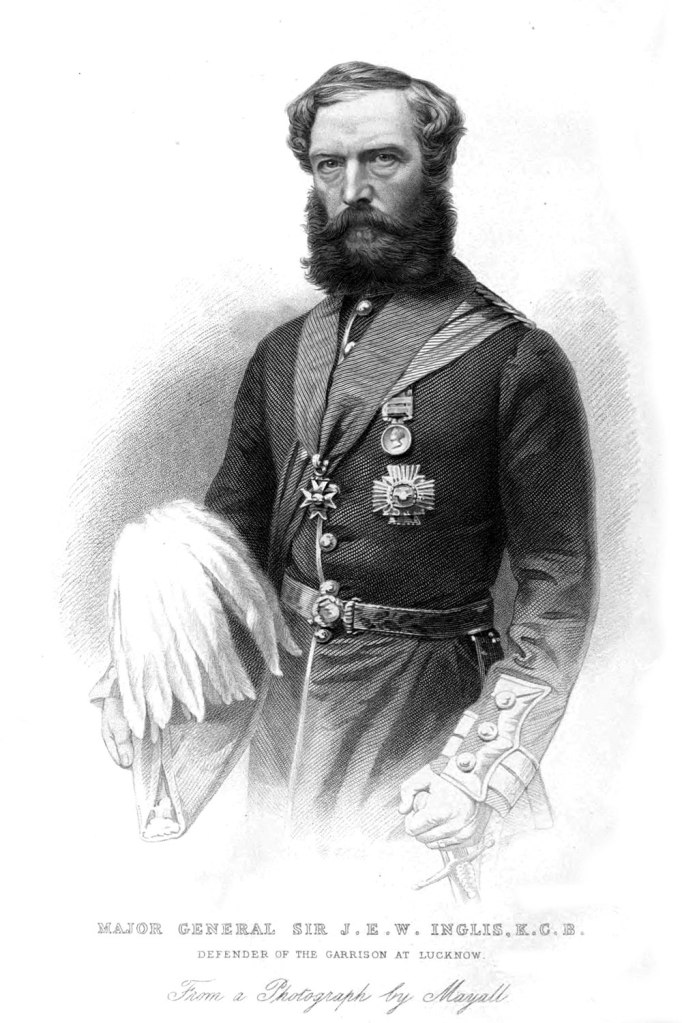
By the 15th of October, Brigadier Inglis had forwarded the names of the Indian Officers and NCOs who, in his estimation had shown “loyal, good and gallant conduct” during the siege of Lucknow.
Subedar Major Deen Mahomed, 1st Class Order of Merit
Jemadar Ramprasand, 2nd Class Order of Merit
Naik Moor Ali, 3rd Class Order of Merit
Naik Kalie Ram, 3rd Class Order of Merit
Driver Sirdar Ram Singh, 2nd Class Order of Merit
Driver Seetul, 2nd Class Order of Merit
Driver Davy Singh, 2nd Class Order of Merit
1st Battery, Oudh Irregular Force
Naik Ram Singh, 2nd Class Order of Merit
1 Naik to be Jemadar
2nd Battery Oudh Irregular Force
Subadar Davy Singh, 2nd Class Order of Merit
Havildar Sham Singh, 3rd Class Order of Merit
1 Havildar to be Subadar
8 Havildars to be Jemadars
3rd Battery Oudh Irregular Force
Subadar Heerah Singh,1st Class Order of Merit
1 Jemadar to be Subadar
1 Havildar to be Jemadar
Magazine Establishment
1 Sirdar to be Jemadar
Reserve Company of Artillery
Havildar Kulsa Singh, 3rd Class Order of Merit
1 Havildar to be Jemadar
2nd Company 8th Battalion Artillery
1 Jemadar to be Subadar
3 Havildars to be Subadars
3 Naiks to be Jemadars
7th Regiment, Light Cavalry
Jemadar Doorga Singh, 2nd Class Order of Merit
Jemadar Buddam Singh, 2nd Class Order of Merit
2 Jemadars to be Subadars
13th Regiment BNI
Subadar Major Hummar Singh, 1st Class Order of Merit
2nd Class Order of Merit
Subadar Buddam Singh
Subadar Ramdeen Singh
Subadar Anooke Singh
Subadar Dungur Singh
Subadar Buldel Singh
Jemadar Goordut Singh
Jemadar Seneechuman Singh
Jemadar Davydeen
Jemadar Anoopa Singh
Jemadar Larlol Singh
Jemadar Loolea Sewany
3rd Class Order of Merit
Havildar Davydean Missa
Havilar Kuli Khan
Havildar Drill Davydean Missa
Havildar Ram Narain Pandy
Havildar Kalka Tewani
6 Jemadars to be Subadars
1 Havildar to be Subadar
18 Havildars to be Jemadars
1 Naik to be Jemadar
7 Naiks to be Havidars
48th Regiment BNI
Subadar Major Gyaud Singh, 1st Class Order of Merit
2nd Class Order of Merit
Subadar Jawell Singh
Subadar Sheikh Jungly
Subadar Matadeen Singh
Subadar Lutlar Buksh
3rd Class Order of Merit
Jemadar Sheikh Jungly
Jemadar Minchum Ring
Jemadar Matadeen Singh
Jemadar Lulloor Baksh
Jemadar Bulder Ram
Jemadar Loabdham Singh
Jemadar Bissom Singh
Jemadar Heralal Doobey
8 Jemadars to be Subadars
16 Havildars to be Jemadars
1 Bzar Chowdry recommended for a situation in the Commissariat Department
71st Regiment BNI
Subadar Doorga Prasad Dooby, 2nd Class Order of Merit
Subadar Len Singh, 1st Class Order of Merit
Subadar Buldas Singh, 2nd Class Order of Merit
Jemadar Sheikh Mulbee, 2nd Class Order of Merit
Havildar Ram Charem, 3rd Class Order of Merit
1st Oudh Infantry
Subadar Bahadur Jung Singh, 1st Class Order of Merit
Havildar Sunnsud Pandy, 2nd Class Order of Merit
Native Pensioners
Havildar Ranjit Singh 2nd Class Order of Merit
Sepoy Sendeen Singh, 3rd Class Order of Merit
1 Havildar to be Subadar
The pensions of all the old pensioners were doubled. The artillerymen who had served at Gubbins’ Post throughout the siege were rewarded stipends for life, while his foot levies were similarly recompensed.
Interestingly the only soldiers exempted from rewards and pensions were the Sikh Cavalry who had “caused so much anxiety” during the siege.
Detachment, 1st Regiment Oudh Irregular Infantry
1 Jemadar to be Subadar
3 Havildars to be Jemadars
New levies of Cavalry and Infantry who were raised at Lucknow under the authority of their Chief Commissioner:
Light Cavalry
1 Naik Rissaldar to be Rissaldar
7 Sowars to be Duffadars
Infantry
1 Sepoy to be Havildar
1 Sepoy to be Naik
Interestingly, Brigadier Inglis did not forget the Indian doctors who had served during the siege. Each of them mentioned here was promoted to Doctor of the 1st class, and given a sum of Rs. 500.-
Sheikh Keramut Ali, 71st NI
Sheikh Emaus Baksh, 7th LI
Rashermath Triveli 10th OI
Meer Jam, Civil Hospital
A further reward of Rs 500.- was also paid out to 1st Class Native Doctor Lachman Singh of the Oudh Irregular Cavalry.
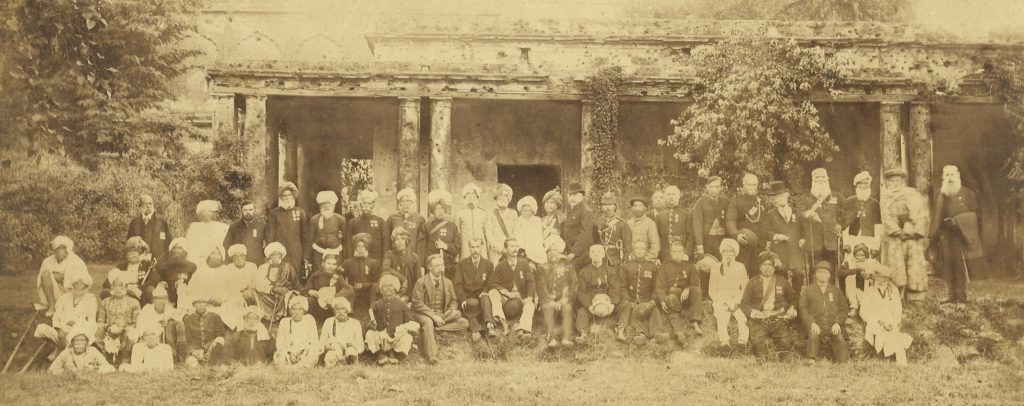
The European soldiers hoped fervently that they would receive a part of the prize money. By the time the army left Lucknow for the final time, it was estimated that the prize agents had collected over 1.25 million pounds sterling in plunder. Yet, each soldier who had served through the relief and final capture of Lucknow received a payout of Rs.18.- and this, years after the mutiny was over. That some men profited by the mutiny goes without saying; but there would be no solace for the soldiers, discharged and on a merger pension, too poor to return home, who died penniless paupers in the several alms-houses of the Calcutta District Charitable Society.
Relations, however, remained poor between the loyal Indian troops and the newly arrived Europeans, especially those who were still reeling from what they had seen in Cawnpore. Havelock ordered all Indians (soldiers, camp followers, servants, indeed anyone who was not European) to wear red armbands to prove they were “one of us” and prevent his men from murdering them. The Brigadier General further issued an order that any man wounded by sentries at outposts and when captured was to be immediately sent to the Major General for examination, “and no further violence is to be offered them in the meantime.” The order did not protect the helpless civilians of Lucknow or, indeed, anyone the soldiers stumbled upon in the palaces and streets. It was left to men like Kavanagh to fight for their lives. During the sortie on the 2nd of October, several innocent traders were killed, including “an aged man, hiding under the petticoat of his venerable wife, for whom I pleaded in vain to men who laconically uttered their favourite war-whoop CAWNPORE! – the garden house was blown down – the shops in the neighbourhood pillaged…” This attitude led to instances of bad feeling between the old and the new garrison – those who had been besieged from July to September knew without a doubt their position would have been untenable without the 700 Indians who had stood by them; the new garrison still had to learn this lesson, and many of them never would. Many of the men under Havelock, inflamed by the horror stories they had heard or those written by unscrupulous members of the press, by false rumours and what they had seen for themselves in Cawnpore, had no sympathy in their hearts for India and Indians in general. It was a sad state of affairs that would never be fully repaired.
The deep pockets of Outram were extended to the cossids or messengers, he sent out from the Residency to the Alambagh and further afield, to Cawnpore. These men, should they be caught with a letter, faced instant death, while more than one was maimed for life, with noses, ears and hands cut off as punishment. Inglis had also relied on messengers, but only one had managed during the siege to convey three messages to Havelock, a man only named Ungud, who would not be given the Order of Merit he so richly deserved but was rewarded with a full-pay pension of subadar. Inglis had paid him £500.- per confirmed message, so he added to his pension, the princely sum of £1500.-
Reading through the Division and Brigade Orders, the coffers at Lucknow were reasonably full. While Outram would repeatedly desire officers to spare no expense, he was equally cognisant that men worked better when they were paid and stipulated rates of pay for work done. He authorised double pay for drivers, doolie bearers and others employed by the Commissariat Department to grind wheat; European miners received Rs 5.- per day and Native miners Rs 3.-, while Europeans, Native soldiers and camp-followers “for ordinary work in the trenches” Rs. 1.- for four hours work “or more or less in proportion to the time of work.” Officers, when not drawing Staff pay and “in actual command of work parties”, were allowed to draw Field Engineer allowance.
 Mutiny Reflections