Outram Finally Decides to Stay
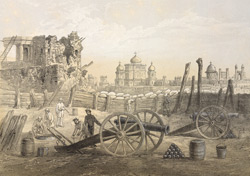
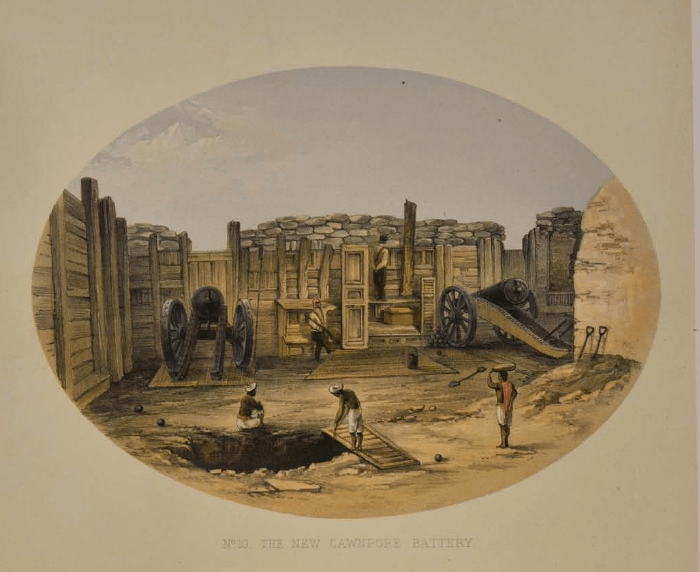
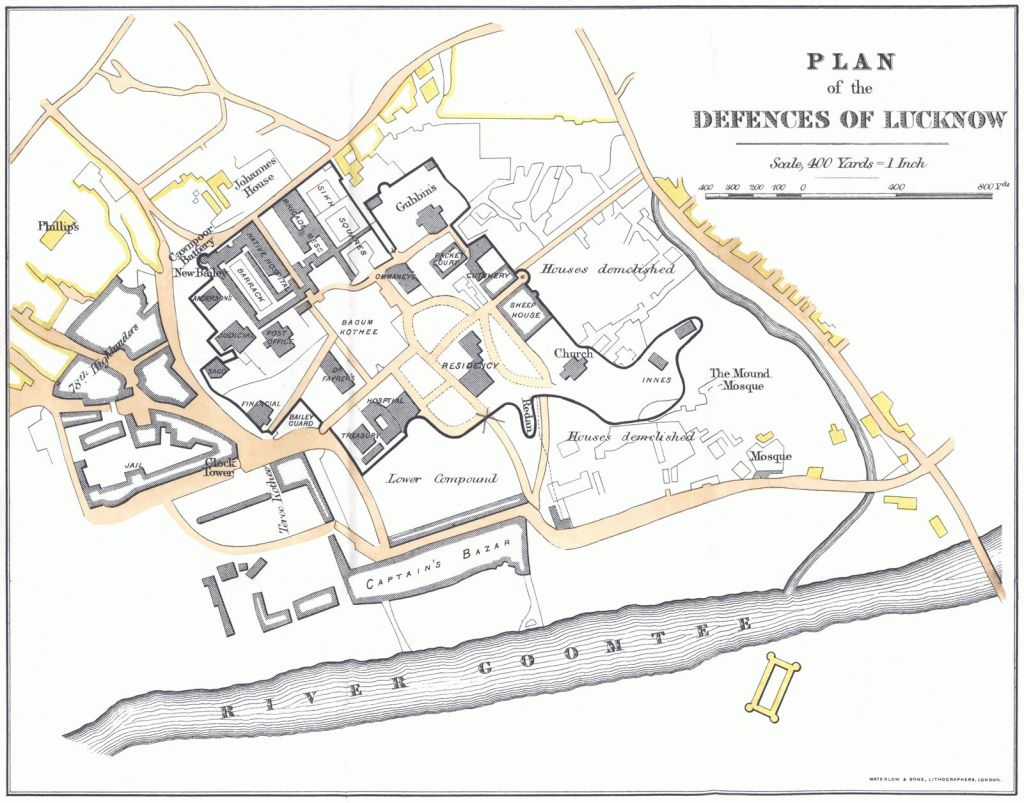
Realising he could not leave the Residency, Outram put in action his next plan of fortifying it instead. The gaps on the sides of the Brigade Mess were repaired, earthworks and barricades thrown up at all the outlying posts, and the Cawnpore Battery was rebuilt so it now harboured a functioning gun battery on the right armed with two 18-pounders and a 9-pounder with a strong musket battery on the left. The platform too was lowered, thus providing better protection to the men who manned the guns.
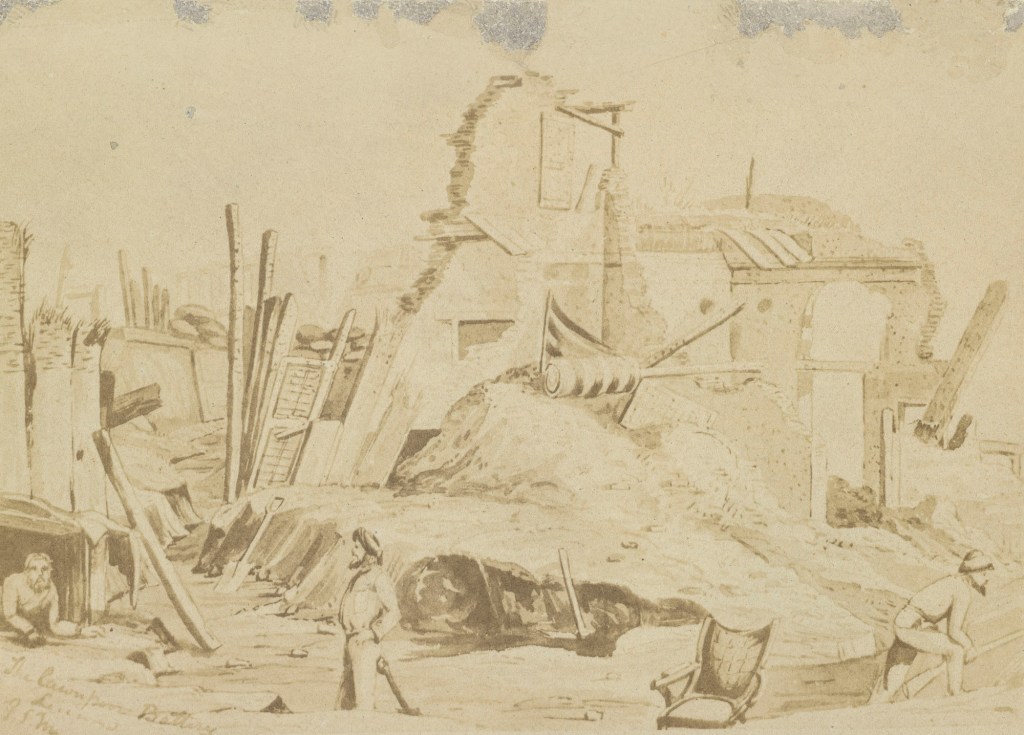
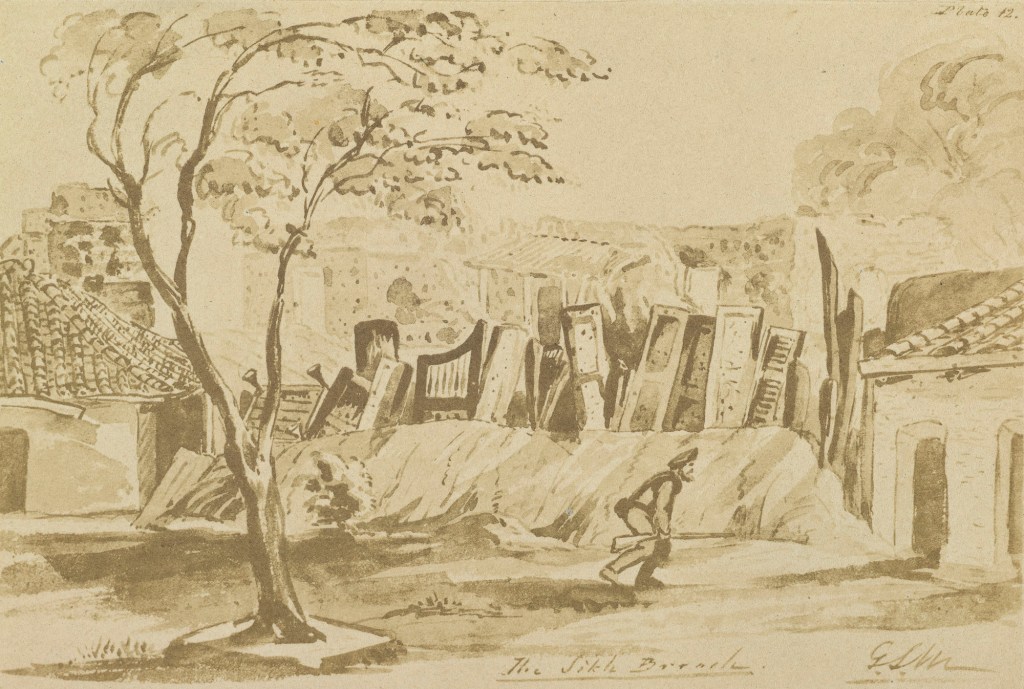
The Sikh Square was repaired, while Innes’ Post was extended and the breach barricaded.
Ruutz-Rees, the Swiss merchant who had spent most of the siege at Innes’ Post was part of a sortie to capture the mound and mosque which had so harassed his post during the early days of the siege.
“The enemy had seriously molested us during a feeble attack they made on us in the middle of October; and we were warned to prepare for its capture. It was easily effected. We left at five in the evening, and silently stole up, with bayonets fixed, and our muskets loaded. On we went, made a sudden dash, and found — nobody. We set up a loud laugh, and congratulated ourselves on the ease with which the conquest was effected. The enemy had apparently only occupied the mound temporarily, on extraordinary occasions.”
The mound soon became one of the strongest positions in the extended lines. The tombstones (it had at one time been a Muslim cemetery) were dug up to serve as bastions, deep trenches were dug to ensure safe passage from Innes’ Post to the mound, while the nearby mosque would be fought for and subsequently occupied. Rees narrated the events.
“A sergeant of the 32nd, named Purdell (a man who had always been foremost, not only in fighting, but also in the peaceable occupations of carrying out sanitary improvements in our garrison), a volunteer, Mr. Alone, and myself, had been ordered to put up a barricade in an exposed place, during a hot fire of the enemy. The sergeant fell dead at our feet, struck by a rifle ball in the forehead. This event stimulated our captain in his endeavours to obtain possession of the mosque. A gun was brought to bear on it, and we occupied it the next day. It was well barricaded, and earth was thrown on the dead bodies of the insurgents who had there fallen by our hands.”
6 October
On the 6th of October, Outram finally resolved to continue the defence in the now extended position, abandoning all plans to fight his way back to Cawnpore. Food, though of an inferior quality, was sufficient to last the next three months, and by the 8th of October, the position had thus far been consolidated to allow for an effective blockade. He now had the old Residency entrenchment which had been extended down to the river, the Chattar Manzil extension from the Tehri Kothi through the Farhat Baksh to the Chattar Manzil and the advanced gardens, the new post, just outside the junction of the palaces which was now held by the 78th under Captain Lockhart. This new post filled the gap between the southern face of the Residency to the Tehri Kothi leaving the 90th Regiment in the Chattar Manzil, Brayser’s Sikhs holding the right towards the Pyne (Pain Bagh!) Bagh and the 5th Fusiliers in the middle at Farhat Baksh.
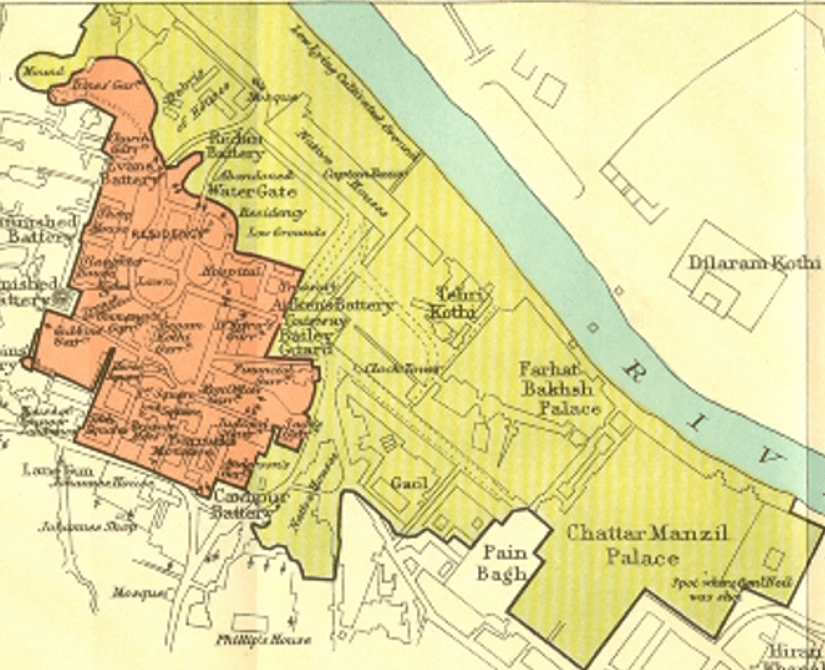
Dr. Anthony Dickson Home was not distressed that he and his regiment – the 90th – were ordered out to the Chattar Manzil – he found the Banqueting Hall, which had been converted into a hospital, dreadful beyond description and
“One night spent in trying to rest in a closely-packed hall was quite enough for a lifetime, so, like a good many others, I moved to a covered terrace in the garden outside, and rested very well…”
However, it was not all it appeared to be.
“What we at first called the ” Palace ” was soon found to be only a fraction of it. The Chutter Manzil was of vast extent; it consisted of a series of buildings, with courts within courts in all directions—in fact, a small town. Knowing the intricacies of the place, small parties of the enemy hid themselves about after we seemed to be in possession of it, and it was dangerous to stray from the principal squares. One of our men on this day was caught very close to the large square, and his decapitated body showed how far off from security the military possession was. In the afternoon we captured five of our friends the enemy in a tower which they had made their den...After making the garden my headquarters for a couple of nights, I had to leave it; there seemed to be a great deal too much method in the frequency with which shells burst just about the part a number of us occupied. It was said, and possibly it was the case, that the spies of the enemy had noticed the fact that many persons used the garden as a sleeping quarter, and the firing was not aimlessly directed. The next change was back to the palace, where, with Dr. Bradshaw, I took a room.”
Captain Spurgin of the Madras Fusiliers was not fairing any better than the doctors, in the Farhat Baksh. He found the palace was a “scene of filth” and the dead bodies of sepoys and the carcasses of animals lent a perfectly impossible stench to the place, he could hardly find a place to sit without the smell in his nostrils. All around him lay the ruins of former grandeur – rooms filled with crockery, now mostly broken, “shawls and ornaments kicking about.” He watched as cook boys sat on damask stools to prepare meals and whenever anyone could – soldiers, servants and civilians – set off on rounds through the palace to find something to plunder. Destruction had only begun its work in Lucknow.
Sources:
A Personal Journal of the Siege of Lucknow – Captain R.P. Anderson (1858)
An Account of the Mutinies in Oudh – Martin Richard Gubbins (1858)
Journal of an English Officer in India – Major North (1858)
How I Won the Victoria Cross – T. Henry Kavanagh (1860)
A Personal Narrative of the Siege of Lucknow – L.E.Ruutz Rees (1858)
Lieutenant General Crommelin C.B. – A Memoir and a Retrospect – Lieut.Gen. Charles Hervey C.B. (1887)
The Siege of Lucknow – A Diary – The Honourable Lady Inglis (1892)
Lucknow and Oudh in the Mutiny – Lieut. Gen. Mcleod Innes ( 1895)
Service Memories – Sir A.D. Home (1912)
Ordeal at Lucknow – Michael Joyce (1938)
The Warner Letters – June Bush (2008)
 Mutiny Reflections