HM’s 5th Regiment of Foot
(Royal Northumberland Fusiliers)
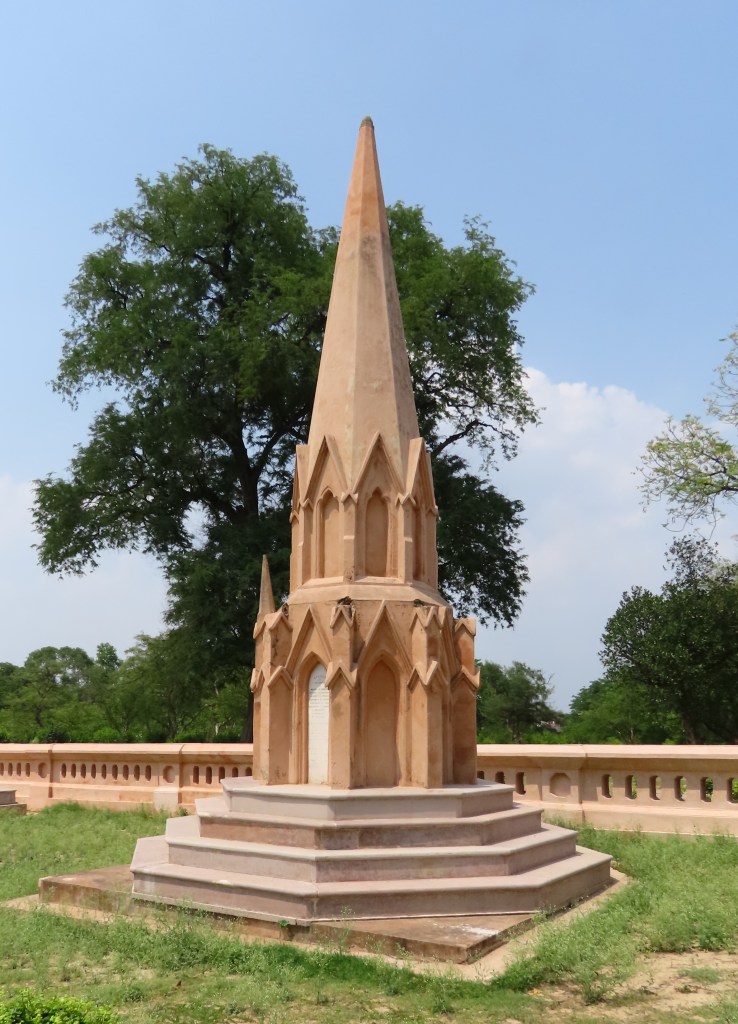
Raised in 1674 as the Irish Regiment or Viscount Clare’s Regiment, they would become known as the 5th Regiment of Foot in 1751, in 1782 as the HM 5th (Northumberland) Regiment of Foot, in 1836, the 5th (Northumberland Fusiliers) Regiment of Foot, and subsequently in 1881 the Northumberland Fusiliers. It would only be in 1935 they would become the Royal Northumberland Fusiliers and finally, in 1968 the 1st Battalion of the Royal Regiment of Fusiliers.
Throughout the 17th and 18th centuries, the regiment fought its way through history – the Franco-Dutch War (1672-1678), in Ireland at the Battle of Boyne the 2nd Siege of Athlone, and the 1691 Siege of Limerick; then off to Flanders for the duration of the Nine Years War. In 1707, the regiment was sent to Portugal for the first part of the War of the Spanish Succession. 1713 found them in Gibraltar, which would be home for the next 15 years – 1727 saw them defending the garrison during the Anglo-Spanish War when the Spaniards besieged Gibraltar for four months. As Europe was somewhat less peaceful then than now, there was hardly a war the 5th Regiment was not involved in.
During the Seven Year’s War, they took part in the Raid of Cherbourg, the 1760 Battle of Warburg, 1761 Kirch Denkem, where, to the mortification of the French, they captured an entire French regiment. In 1762, it was the Battle of Wilhelmsthal before their return to Ireland following the Treaty of Paris in 1763. With the Americans becoming increasingly antsy, the 5th was told off for duty to Boston, Massachusetts in 1774. They would remain in North America until 1778, with elements of the regiment fighting in the Battle of Lexington and Concord in 1775, and the Battle of Bunker Hill in the same year. The expedition to New York in 1775 led to their fighting their way through the battles of Long Island, White Plains, and the capture of Fort Washington and Fort Lee. In 1777, they joined in the campaign against Philadelphia at Brandywine Creek. Following the fight at Monmouth Court House, upon the withdrawal of the British army, the regiment found itself sent off to the French West Indies, landing in Saint Lucia in 1778. Once again, the French were embarrassingly trounced in a succession of battles on the small island and in 1780, the regiment was back in Ireland.
For a short time, the regiment was not involved in any fighting, but the start of the 19th century saw them packing their bags again – this time it was off to the Peninsular War, Portugal 1808. Here they would stay, leaving their dead and wounded strewn across several battlefields, from Roliça and Vimeiro in 1808 to the Battle of Corunna in 1809 and the Battle of Bussaco in 1810. They then went on the Siege of Ciudad Rodrigo in 1812, the Battle of Badajoz and the Battle of Salamanca – all in 1812, finishing up their tour of Portugal with the Battle of Vitoria in 1813. France was next on the list as they chased the French army into France, fighting at the Battle of Nivelle in 1813 with Orthez and Toulouse in 1814.
Having seen what they could of Europe, the 5th was increased to two battalions in 1857 and saw active service not just during the Indian Mutiny but the 2nd Afghan War in 1880.
Their Battle Honours, as can be expected are numerous:
17th-19th Century
Wilhelmsthal
Roleia
Vimeira
Corruna
Bussaco
Ciudad Rodrigo
Badajoz
Salamanca
Vittoria
Nivelle
Orthes
Toulouse
Peninsula
Lucknow
Afghanistan -1878-1880
20th Century
The regiment received 2 honours during the 2nd Boer War – Modder River and South Africa 1899-1902 and a further 67 for the First World War of which 9 were selected for the Colours.
Another 29 were added for the Second World War of which 10 were selected and four more for the Korean War of which 2 were selected for the Colours.
In 1968, the regiment was amalgamated into the newly formed Royal Regiment of Fusiliers.
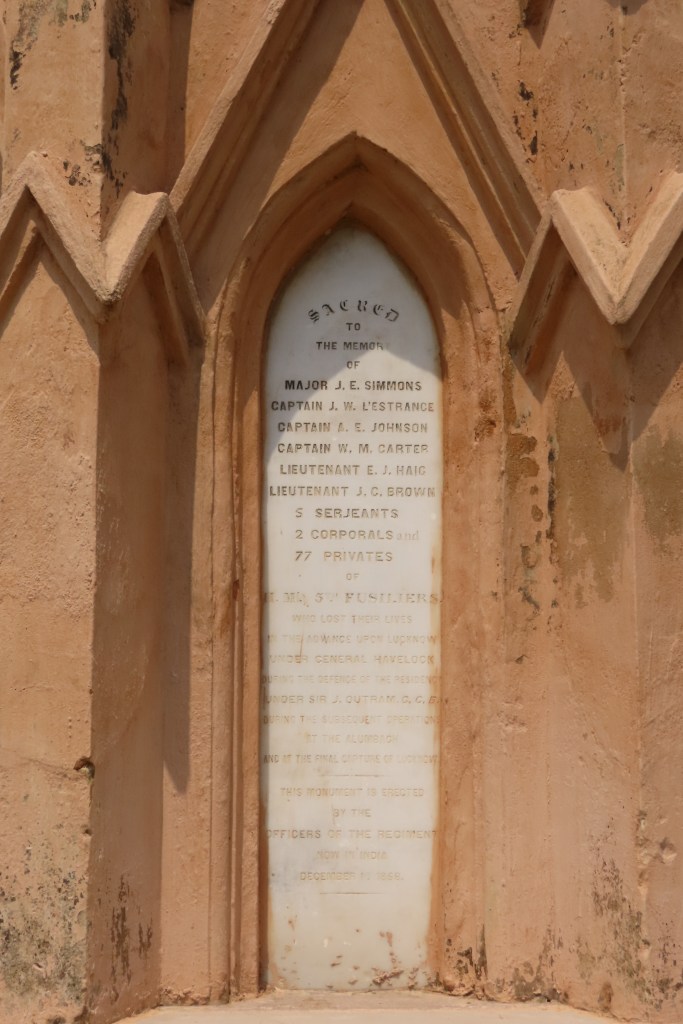
 Mutiny Reflections
The Lieut. Herford quoted here is my second great grandfather. He wrote a memoir about his Indian war experience called Stirring Times under Canvas. Although he also served in the Crimean War, it seems remarkable to me that that entire conflict only merited a couple of indifferent paragraphs while the Indian experience was clearly riveting and seared in his memory.
LikeLiked by 1 person
Thank you for the information! I have not heard of the book! I think perhaps, Crimea was a certain set of horrors – I have noticed that in other officers who served in both campaigns. There also seemed to be some kind of a justification needed for India. I will definitely be looking for his book!
LikeLike
Given your record you could up the betting stakes from a cup of tea to thali or at least tiffin.
LikeLiked by 1 person
Great historical events! Well shared with photos 👌
LikeLiked by 1 person
A strangely compelling read.
LikeLike
I wrote it on a bet – a rather interesting person told me I could never write anything in under 48 hours. The brief was to write something about Lucknow that wasn’t only Lucknow. So I sat down and wrote this in one sitting of 18 hours, with research. I chose the history of 4 well-known regiments of which I already possess a wealth of knowledge. I am still waiting for my cup of tea, which was promised.
LikeLiked by 2 people