Before the Storm
There was one task left before the final assault on Delhi – to ascertain whether the breaches were sufficient to allow the force to advance into the city. There was only one way to find out if the guns had done the damage intended, and that was by sending four engineers to take a look. Chosen for the task were Arthur Moffat Lang and Julius George Medley to inspect the Kashmir Bastion breach, while William Wilberforce Greathed and Duncan Home were told off for the Water Gate Bastion.
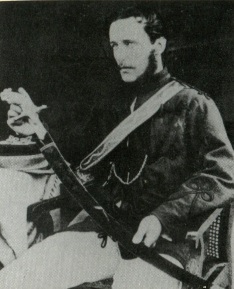
Lang preferred to reconnoitre the position while there was still light; he wrote in his diary, “As I cannot see in the dark – some fellows can – I asked the favour to be allowed to do the work at once. Taylor exchanged a few words with Nicholson, said, ‘All right,’ with a nod, and gave me a note for the officer commanding at Kudsia Bagh, and told me to make my own arrangements.”
To allow Lang to proceed, the guns at No. 2 Battery fell silent; Lang hurried to the Kudsia Bagh, requested the officer in charge to cease his firing and order the covering parties to do likewise for a moment and borrowed four riflemen. The five men passed the No. 3 Battery, slipped through the dense gardens south of the Custom House and thus made their way to the Kashmir Bastion.
Leaving the riflemen in the shelter of some bushes, Lang ran quickly up the glacis for about 60 yards. He then lay down on the crest to present as small a target as possible to musketry fire which was now whizzing around him. Calmly, he examined the breach, noted its height, width and characteristics, then he “leapt smartly to his feet, rose to his full height, and ” legged it down the slope for all he was worth.” The firing was bad, as was also the powder used; Lang ran well, and, though a driving hail of bullets swept the slope, he reached the orange trees and his supports, untouched.”
They were not as safe as they thought. On falling back to the Kudsia Bagh, they suddenly found themselves fired upon by their own men. The sentries who knew Lang was out on reconnaissance had, in the meantime, been relieved, and the new guard, hearing movement among the trees, sent a volley of musketry in the party’s direction. It was only luck they were terrible shots, and no one was hit. The action should have granted Lang a VC, but before he could make his report, he met Julius Medley, who had just been ordered by Baird Smith to examine the same breach, and Lang chose instead to accompany Medley.
Medley left a detailed account of how he proceeded, and it seems he left nothing to chance.
” I went to the officers commanding the Batteries and requested them to fire heavily on the breach until ten o’clock, and then to cease firing, as the attempt would be made at that hour. We then returned to the Kudsia Bagh, and arranged with the officer commanding that six picked riflemen belonging to H.M.’s 60th Rifles
should accompany us and that an officer and twenty men of the same regiment should follow in support, and should be left at the edge of the jungle while we went on to the breach; if he saw we were being cut off, he was to come to our support, and to sound his whistle to us to fall back; if we had a man wounded, or wanted his support, we would in like manner whistle for him. These preliminaries being arranged, and the ladder having arrived from the Park, we sat down quietly at the picquet and ate our dinners.
It was a bright, starlit night with no moon; the roar of the Batteries and clear abrupt reports of the shells from the mortars alone broke the stillness of the night; and the flashes of the rockets, carcases, and fireballs lighting up the air made a really beautiful spectacle. Presently, an 8-inch shell from the enemy buried itself in the ground close to where we were sitting, and, bursting well below the surface —luckily for us—covered the whole party with a shower of earth and made us scramble away in the most admired confusion.
The gharis struck ten, and the fire of the Batteries suddenly ceased. Our party was in readiness; we drew our
swords, felt that our revolvers were ready to hand, and, leaving the shelter of the picquet—such as it was—advanced stealthily into the enemy’s country. Creeping quietly through the garden mentioned above, we quickly found ourselves under a large tree on the edge of the cover, and here we halted for a moment, conversing only in whispers. The enemy’s skirmishers were firing away on our right, some thirty yards from us, and the flashes from their muskets gleamed like fireflies. The shells and rockets of the enemy illumined the space around for a moment as they sailed over our heads and then left us in total darkness. Lang and
I, with the six men who were to accompany us, emerged into the open—leaving the Rifle officer and his eighteen men in support—and pushed straight for the breach.
In five minutes, we found ourselves on the edge of the ditch, the dark mass of the Kashmir Bastion, immediately on the other side, and the breach being distinctly discernible. Not a soul was in sight! The counterscarp was sixteen feet deep and steep; Lang slid down first. I passed the ladder down and, taking two men out of the six, descended after him, leaving the other four above to cover our retreat. Two minutes more, and we should have been at the top of the breach, but, quiet as we had been, the enemy was on the watch, and we heard several men running from the left towards the breach. We reascended, therefore, though with some difficulty, and, throwing ourselves down on the grass, waited in silence for what was to happen. A number of figures immediately appeared on the top of the breach, their forms clearly discernible against the bright sky, and not twenty yards distant. We were in the deep shade, however, and apparently, they could not see us. They conversed in a low tone, and presently, we heard the ring of their steel ramrods as they loaded. We waited quietly, hoping they would go away when another attempt might be made. Meanwhile, we could see that the breach was a good one, the slope easy of ascent and that there were no guns in the flank. We knew by experience, too, that the ditch was easy of descent.
After waiting some minutes longer, I gave a signal; we all jumped up at once and ran back towards our own ground. We were discovered directly; a volley came whistling about our ears, but no one was touched. We reached our supports in safety and retreated quietly to the Kudsia Bagh by the same road by which we had come. Lang went off to the Batteries to tell them they might open fire again, and I got on to my horse and galloped back to camp as hard as I could to make my report to the Chief Engineer.”
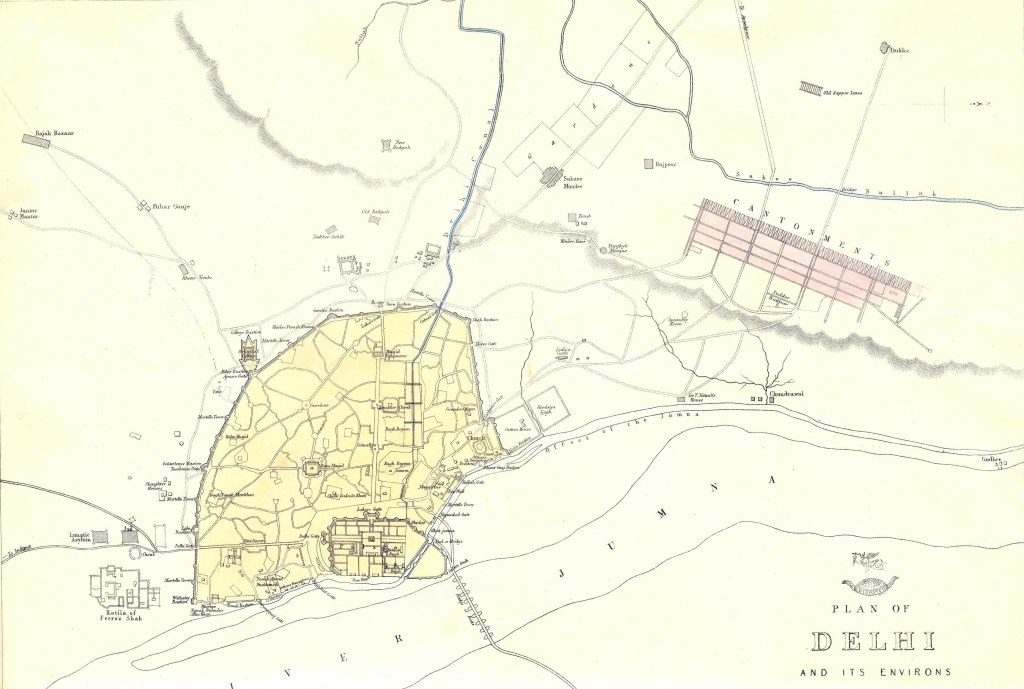
In the meantime, Greathed and Home too had returned from the Water Bastion. They had found the breach was practicable but had not been as destroyed as they had hoped – they asked Baird Smith for another 24 hours to improve it. Taking the reports of his engineers into consideration and the fact that the artillerymen in the batteries were exhausted Baird Smith decided against any further delays. The same night a note was sent to General Wilson that a general assault could be ordered for the next morning.
Medley rode back to the batteries to inform all the officers on duty to be ready at their posts with the different columns – the arrangements for the assault had already been made; all Wilson had to do now was issue the order. The four main columns and one reserve were told off to fall in at 3 o’clock in the morning of the 14th of September. General Wilson and his staff would remain at Ludlow Castle during the assault. Colonel Turnbull, who happened to be on Wilson’s staff, remembered “leaving our horses outside, on his asking whether anyone knew the way up to the top of Ludlow Castle. I led the way—we were all on foot—up the grand drive to the house. The General, behind me, when a shell tore up the ground, across the road, between us —turned round; the General smiled, and merely said: ‘ All right; go on.‘
Sources:
Barter, Richard. The Siege of Delhi: Mutiny Memories of an Old Officer. London: The Folio Society, 1984.
Cave-Browne, Rev. J. The Punjab and Delhi in 1857. Vol. 2. Edinburgh: William Blackwood and Sons, 1861; repr., London: Forgotten Books, 1911.
Forrest, George W., ed. Selections from the Letters, Despatches and Other State Papers Preserved in the Military Department of the Government of India, 1857–58. Vol. 1. Calcutta: Military Department Press, 1893.
Griffiths, Charles John. A Narrative of the Siege of Delhi: With an Account of the Mutiny at Ferozepore in 1857. Edited by Henry John Yonge. London: John Murray, 1910.
Innes, Lieut.-Colonel P. R. The History of the Bengal European Regiment, Now the Royal Munster Fusiliers, and How It Helped to Win India. London: Simpkin, Marshall & Co., 1885.
Kaye, Sir John William. Kaye’s and Malleson’s History of the Indian Mutiny of 1857–58. Vol. 4. Edited by Colonel G. B. Malleson. London: W. H. Allen & Co., 1889.
Leasor, James. The Red Fort: An Account of the Siege of Delhi. London: Werner Laurie, 1956.
Medley, Julius George. A Year’s Campaigning in India: From March, 1857, to March, 1858. London: W. Thacker and Co., 1858.
Norman, General Sir Henry Wylie, and Mrs. Keith Young, eds. Delhi-1857: The Siege, Assault, and Capture as Given in the Diary and Correspondence of the Late Colonel Keith Young. London: W. and R. Chambers, 1902.
Reid, Sir Charles. Extracts from Letters and Notes Written During the Siege of Delhi in 1857. London: Henry S. King & Co., 1858.
Roberts, Field Marshal Lord. Forty-One Years in India: From Subaltern to Commander-in-Chief. Vol. 1. London: Richard Bentley and Son, 1897.
Rotton, John Edward Wharton. The Chaplain’s Narrative of the Siege of Delhi: From the Outbreak at Meerut to the Capture of Delhi. London: Smith, Elder and Co., 1858.
Taylor, A. Cameron. General Sir Alexander Taylor: His Times, His Friends, and His Work. Vol. 1. London: Williams and Norgate, 1913.
Thackeray, Colonel E. T. Two Indian Campaigns: In 1857–58. Chatham: Royal Engineers Institute, 1896.
Vibart, Colonel Edward. The Sepoy Mutiny as Seen by a Subaltern: From Delhi to Lucknow. London: Smith, Elder and Co., 1898.
Vibart, Colonel H. M. Richard Baird Smith: The Leader of the Delhi Heroes in 1857. Westminster: Archibald Constable and Co., 1897.
Walker, Colonel Thomas Nicholls. Through the Mutiny: Reminiscences of Thirty-One Years’ Service in India. London: Gibbings & Co., 1907.
 Mutiny Reflections
Fantastic, glued to it till last line.
thanks
LikeLike
Thank you so much! I am so glad you find it interesting!
LikeLike
Another fascinating and detailed read! Thank you for sharing your work with us! The last name on your list of officers caught my eye – is he perhaps related to the Younghusband who wrote several books about the Himalayas?
LikeLiked by 1 person