The Batteries
Siege Battery No. 1- Brind’s Battery
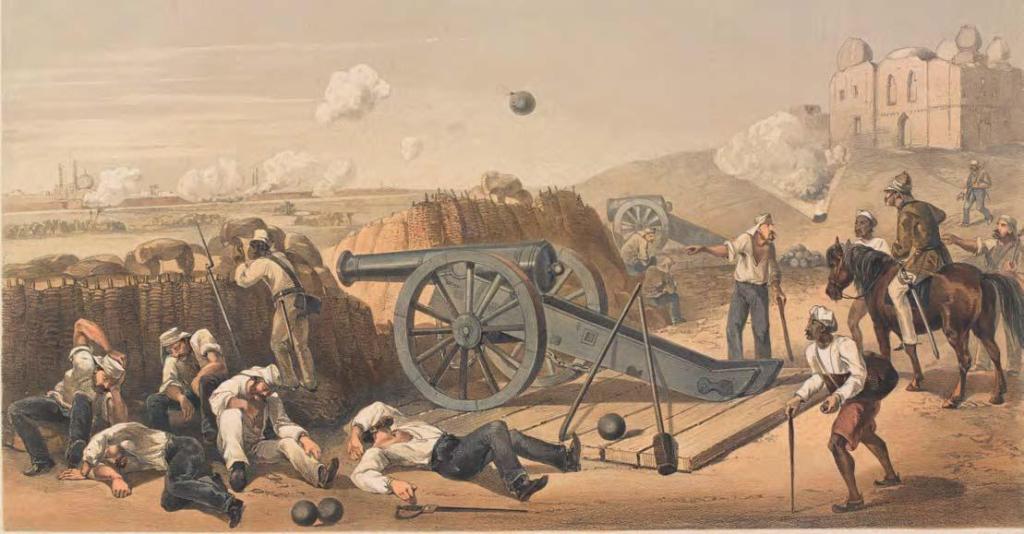
As soon as the tracing was complete, strong covering parties were sent out to support the sentries posted further away. While these companies made their way to their assigned positions, camels began to arrive carrying the fascines and gabions, accompanied by the working parties. These were told off in silence to assigned work.
“The moon rose on a busy scene; hundreds of camels arriving, dropping their loads and returning; and hundreds of men, busy as bees, raising up a formidable work, which was to be finished and ready to open fire in the morning…The work was progressing merrily, when suddenly a bright flash from the Mori, a loud report, and a heavy shower of grape literally ploughed up the ground on which we were working, knocking over several men. After a short interval, another equally well-aimed shower came down and upset some more men. Singular to relate, however, Pandy, who, of course, couldn’t tell how well he was shooting, seemed quite
content, and only fired one more shot during the whole night, being, in fact, in perfect ignorance of what we were about. If he heard a noise, he probably thought it was one of our ordinary working parties cutting brushwood. So, with a deep sigh of relief, the work went on rapidly.
The night was very hot, but we had taken care to bring plenty of drink with us, and the excitement prevented anyone feeling fatigued until the work was over. I went up to Hindu Rao’s, got some tea, and met the Artillery officer who wanted to know when we should be ready for his guns. On returning, 1 found we had at length got rid of our camels, but now long strings of artillery carts laden with shot, shell, etc., began to arrive, and, as bullocks and bullock drivers are particularly stupid creatures, I am afraid there was a considerable amount of cursing and swearing in getting these stores over the rough ground into the Battery.
Then came the huge guns, drawn by twenty pairs of bullocks each, and the sort of smothered row that ensued
beggars’ description. At three o’clock the place presented a scene of awful confusion: Sappers, Pioneers, Artillerymen, and Infantry, all mixed up together with an inert mass of carts, guns, and bullocks, struggling together in a heap.
Scarcely another hour remained before daylight, and then we knew what we might expect from the irate enemy when he saw what our amusement had been during the night. The confusion, however, was apparent, but not real; everybody knew what his work was, and everybody did it. Men and officers worked like horses, and the chaotic mass of carts and animals cleared off to camp; the Artillery stowed their ammunition in the magazines, and, as fast as our platforms were ready, the guns were dragged into position.” (Medley)
By dawn however, although the battery had been built, only one gun was in its place and the platforms for the others were still to be placed; Alexander Taylor decided to let the bulk of the exhausted working part go as it was too dangerous to let them cross the open ground between the battery and the Ridge in daylight and he sent them off not a moment too early. At the first break of day, the mutineers were finally apprised of what the camp had been up to and they opened fire from the Mori Bastion, sending across round after round of shot and grape while attempting to take the battery in flank. For the workmen who had been kept it was too much and quite terrified by this sudden onslaught, Taylor quickly called for reinforcements from the Ridge. The work, supervised by Lieutenant Maunsell continued – but for the efforts of Major James Brind of the artillery who dragged one of his howitzers well to the rear and opened fire over the parapet to answer the Mori Bastion, it is likely the battery would have been destroyed. However, while keeping the mutineers thus occupied, gun after gun could be mounted on each successive platform – before long they were all in place and successively opened fire on the Mori Bastion. By evening, nothing remained of the bastion but a heap of ruins. Brind’s Battery had come into its own.
With the covering fire from this battery, work on the succeeding batteries could commence.
Siege Battery No. 2 – Kaye’s and Campbell’s Battery
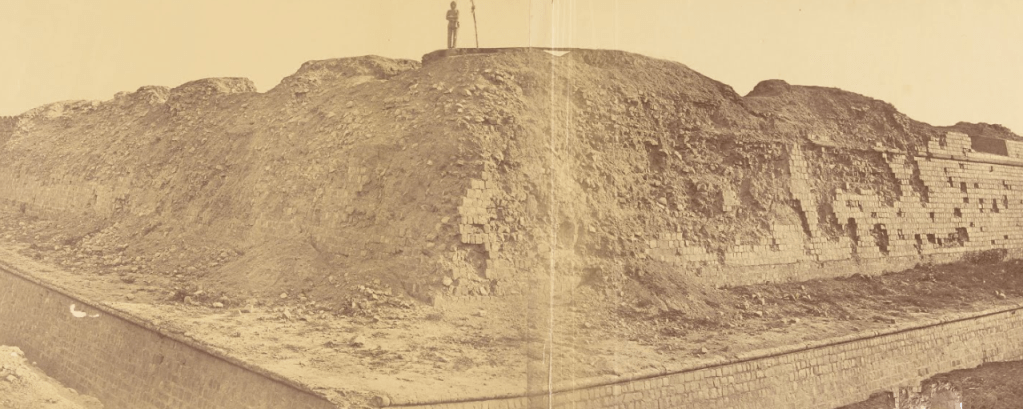
Constructed slightly east of Ludlow Castle, it would be commanded by Major Kaye and Major Campbell. On the evening of the 8th of September, strong working parties were sent out to start the work but it was decided, due to the experience gained by building No 1, it was too much of a stretch to anticipate completing it by daybreak. The same evening work on Siege Battery No 3 was to have begun, but the engineers, upon examining the site found it faulty and work was postponed until a better site could be found.
During the construction, some 80 men of the Wilde’s Punjabis and 100 Beluchis were also put to the task. Unused to being under fire from heavy guns and somewhat disgruntled at being employed, as one of the Sikhs put it to his officer, “…we don’t mind being killed or wounded as soldiers but we don’t like it when working as coolies…” However, they were fortunate enough to be working during the night.
They were relieved by Alfred Moffat Lang who found motivating his men turned out to be something of a chore. Alfred Lang notes the Beluchis “funked so that they would rush into a hedge a lie-down and drop their pickaxes and shovels; he resorted to standing the middle of the road, pelting them with stones, shouting and physically dragging a few from their shelter. Within an hour of leaving them with the young Sapper sergeant, Lang found the Beluchis had once again thrown down their tools and were steadfastly refusing not only to work but to come out from under the hedges. Infuriated, Lang “rushed like a shell amongst them, knocked a dozen down, kicked as many more and swore I would hang the first who hesitated to obey me…” The effect was instant, the work party took up their tools under the gaze of Lang who walked up and down the lines of men, likening them to trembling women. By 7 pm he marched his men back to camp. During the night the following night, three platforms were constructed and two magazines were completed and the battery was made, as far as possible, shot-proof. Before daybreak, the five 8-inch howitzers and two 18-pounders were moved into position and on the 11th of September, Battery No. 2 opened fire. By evening, the Kashmir Bastion was in ruins.
Siege Battery No. 3 – Scott’s Battery and No. 4 – Tombs’ Battery
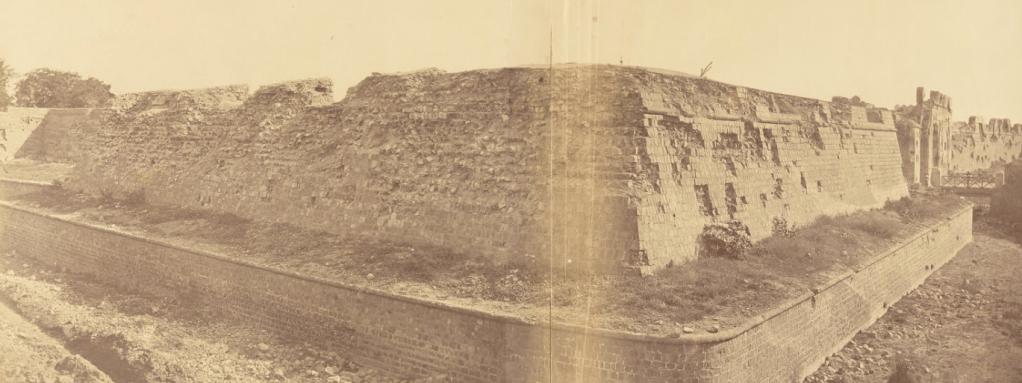
Taylor located a new site for Battery No. 3 – to his surprise, he found an outbuilding of the old Customs House would serve the purpose. By some oversight, the Customs House too had been overlooked by both the British and the mutineers. It stood only 160 yards from the Water Bastion and seeing the mutineers had thus far neglected to occupy it, the British quickly took advantage. On the night of the 11th of September, construction on Battery No 3 commenced.
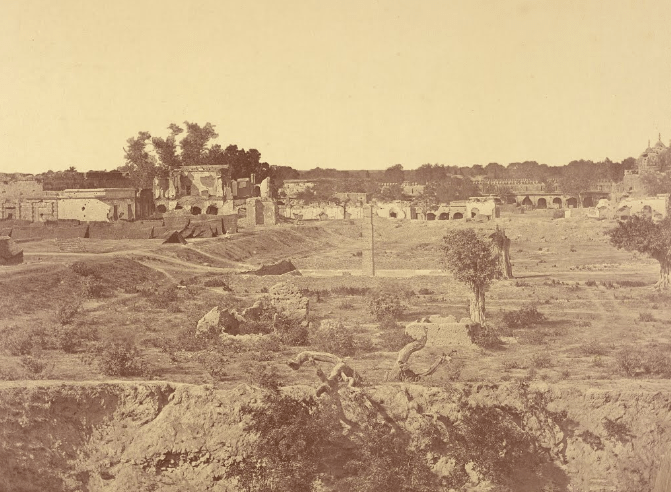
It was by far, wrote Julius Medley
“a task that required no ordinary nerve and skill to resolve on and carry out. Pandy (the mutineers) did not know where we were at, but at any rate, he knew that people were working in that direction, and he served out such a liberal supply of musketry and shell that night that the working party lost thirty-nine men killed and wounded. They were… the unarmed Native Pioneers… and not meant to be fighting men.”
No. 4 Battery, which would be armed with ten heavy mortars under Major Tombs, was also placed under the shelter of an old building in the Kudsia Bagh. It was completed quicker than the others, and the mortars opened fire on the 10th of September, shredding the curtain connecting the Water and Kashimir Bastions. No. 3 would begin operations on the 12th of September.
In the four days and nights it had taken to construct and arm the batteries, over 300 men lost their lives.
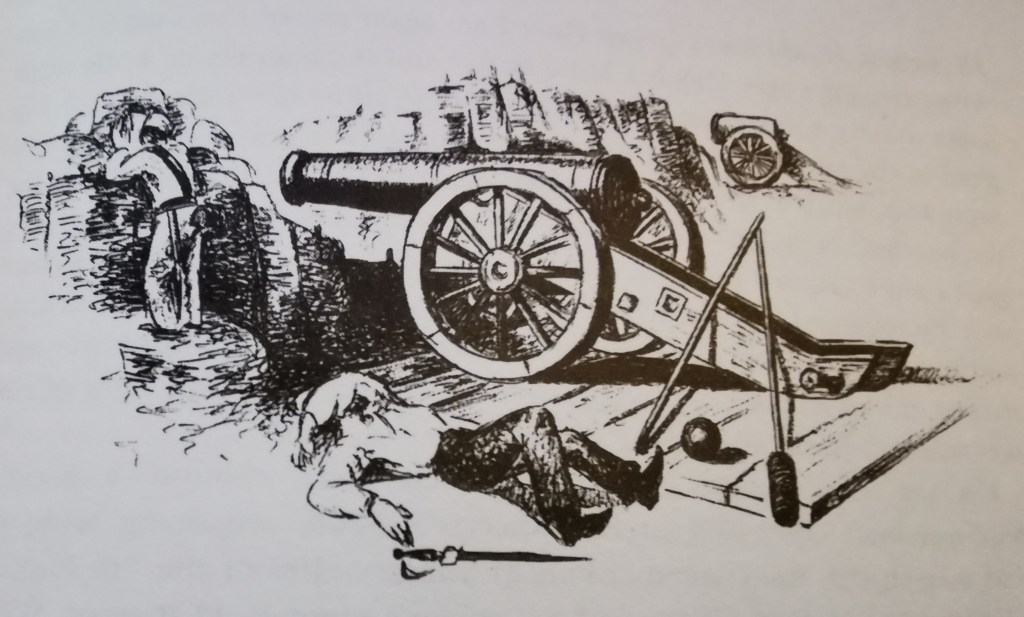
“At 8 o’clock in the morning of the 11th, the great breaching battery opened fire. A salvo from the nine 24-pounders was followed by three tremendous cheers from the Artillery in the battery. As the site of the breach was struck with the iron hail, great blocks of stone fell, and the curtain wall fell clattering into the ditch. The howitzers soon after followed suit. In ten minutes the Cashmere Bastion was silenced…the stonework crumbling under the storm of shot and shell, the breach getting larger and larger, and the 8-inch shells, made to burst just as they touched the parapet, bringing down whole yards at a time. The guns fired all day long on the 11th…”
The engineers, meanwhile, were far from finished. Their work continued unabated, and Medley, on the morning of the 12th, made his way down to No. 2 Battery as the Engineer on Duty.
“A more unpleasant 24 hours I never spent in my life. The enemy, now thoroughly alive to his danger, lined his advanced trenches with men and threw crowds of skirmishers over the broken ground and jungle in front, who maintained one incessant storm of musketry into the batteries all day long, rendering it most dangerous to venture, even for a minute, beyond the protection of the parapets. Every now and then, they were so annoying and became so bold that the Artillery officers substituted grape for round shot in the guns and ploughed up the ground in front with the iron shower. The ground, however, was so favourable to the enemy that this only checked their approach and scarcely diminished the severity of their fire…The enemy had constructed a battery beyond our extreme right, and so well placed that our old ridge guns could not see it, and from this, he enfilated No.1 and No.2 Batteries with fearful effect. The fire in front could be seen and replied to, but it was very trying to the nerves to see the battery raked from end to end, almost every half hour, by an 18-pounder’s round shot, which came tearing through, upsetting everything in its course and smashing many a brave fellow. I lengthened the right epaulement and constructed an additional traverse, which somewhat protected us, but the fire was still so severe, that at length we had to withdraw a gun from play on the breach, and put it in the epaulement, to keep down the enfilading fire…”
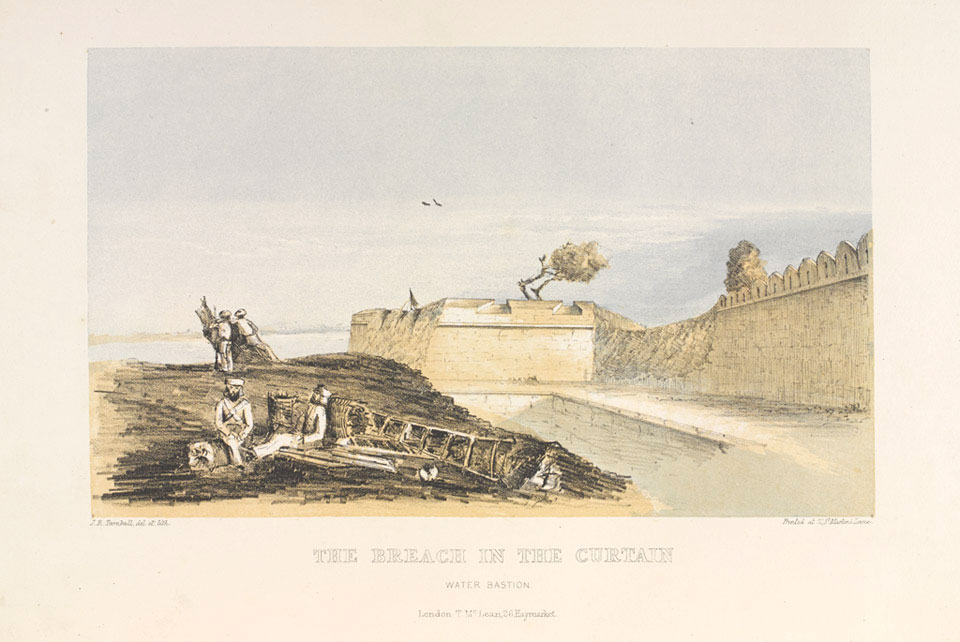
On the morning of the 12th, No. 3 Battery was finally ready, the unmasking of the embrasures was done in broad daylight under sustained fire from the walls. The engineer and the Indian sappers, however, managed to complete the task without sustaining any losses, and the 6 guns opened fire. At such a short distance from the Water Bastion (160 yards), the effect was tremendous. The mutineers’ guns were either dismounted or smashed almost immediately, the parapet disappeared in a cloud of splinters and fragments, while the opposing face of the bastion was pulverised. Despite the damage the British did in the first few minutes of the barrage, the mutineers, even though they did not have a gun to answer them with, poured a violent fire of musketry into the post, and this at such a short distance, quickly told on the men in the battery.
Shot and shell apart, all the batteries faced another danger. The material used to construct them and their very forms made them highly flammable, and several times burst into flames from the discharge of the guns. It was then the job of the engineer on duty to “jump on the parapet, or stand in the embrasures, and put it out..” Each battery was equipped with chatties of water kept ready to pour on the blaze. No. 2 Battery caught fire on the 10th of September with disastrous results – the sandbags first caught fire, then the fascines which were made of dry brushwood, followed quickly by the whole battery and threatened to reach the right section which housed the magazine. With the fire spreading quickly, Major Kaye suggested to Lieutenant Lockhart (then doing duty with Reid’s Gurkhas, of which two companies were doing duty in the connecting trench between the two sections), he might try to control the blaze from outside and on top of the parapet. Lockhart immediately jumped up on the parapet and, followed by seven Gurkhas, started opening the sandbags to use the sand to smother the flames. The enemy artillery decided that Lockhart should not succeed, and they brought out every gun to bear on the blazing battery, pouring a horrendous storm of grape and musketry on the men. Two of the Gurkhas fell dead, and Lockhart rolled over the parapet, his jaw smashed by a musket ball. The shot penetrated through his right cheek, passing then under his tongue and exiting through the left jaw – wounded and in pain, Lockhart and his remaining men persevered and put out the fire.
It is unfortunate that because Major Reid, who witnessed the incident and subsequently recommended Lockhart for a VC, wrote his report in pencil – something which General Wilson found so loathsome, he destroyed not only Reid’s report but many more of his dispatches for not being in regulated form and thus, in his estimation, unofficial. That Reid was writing under fire did not interest Wilson in the slightest. As a consequence of Wilson’s stubbornness, many of Reid’s subsequent reports were left unattended, and even his mentions of appreciation for the services of the Engineers and Artillery officers remained unpublished. In February 1859, Lord Clyde, when he received Major Reid’s supplementary despatch, simply replied, “The time had altogether passed for publishing any further despatches relative to services of officers at Dehli, which, however meritorious, are now of old date.” Lockhart would eventually command the 107th as a colonel, but Reid’s second-in-command, John Fisher, who commanded the Sirmoor Battalion during the assault (and would be the only officer out of nine to escape unhurt), would not even receive a brevet following the Siege of Delhi.
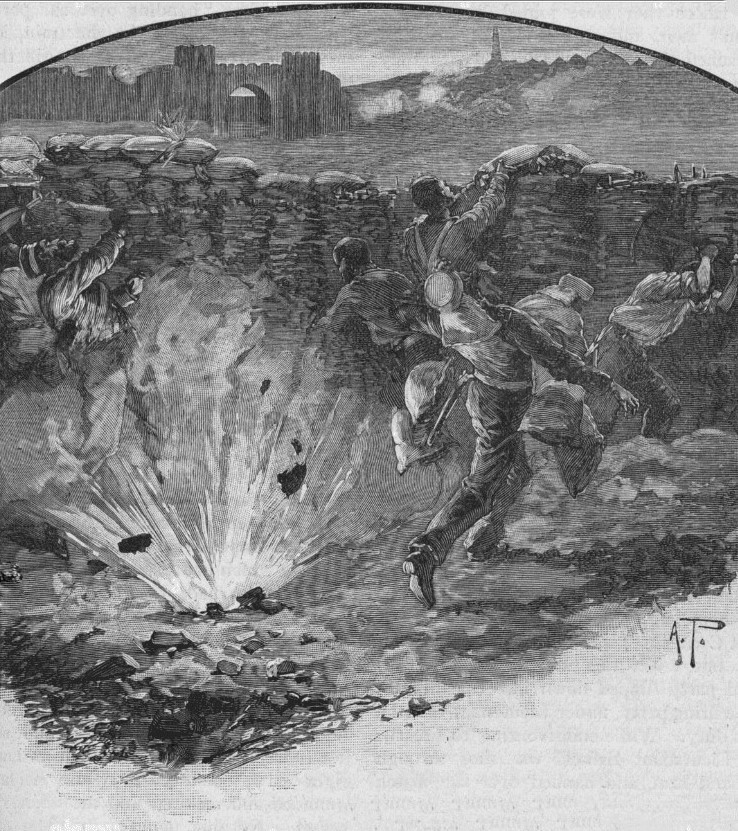
The sepoys had suddenly been made very aware that they were now the besieged. Between the 8th and the 13th of September, they made every effort to counterattack the British artillery with their attempt to enfilade and bombard the siege batteries. They managed, in just as much time, to construct and bring into action two batteries of their own, one at Kisanganj to try and take out Siege Battery 2, while the second battery was located across the Jamuna River to take on No.3 and No. 4 Siege Batteries. They further set to work mounting heavy guns along the long curtains (which they should have done weeks ago) and some light guns in more covered places. In one night, they dug an advanced trench parallel to the left side of the attack running along the entire front at some 350 yards from the British positions, from which they sent an unceasing rain of bullets against the British positions, subsequently causing terrible casualties. It was not enough. The British were determined now to take Delhi – with the fire from their 56 guns and mortars plying ceaselessly on the defences, by the 13th of September, they had managed to make two breaches in the formidable walls of the city.
 Mutiny Reflections
Fantastic, glued to it till last line.
thanks
LikeLike
Thank you so much! I am so glad you find it interesting!
LikeLike
Another fascinating and detailed read! Thank you for sharing your work with us! The last name on your list of officers caught my eye – is he perhaps related to the Younghusband who wrote several books about the Himalayas?
LikeLiked by 1 person