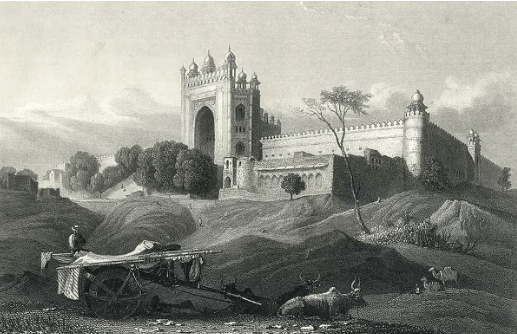
The City That Failed
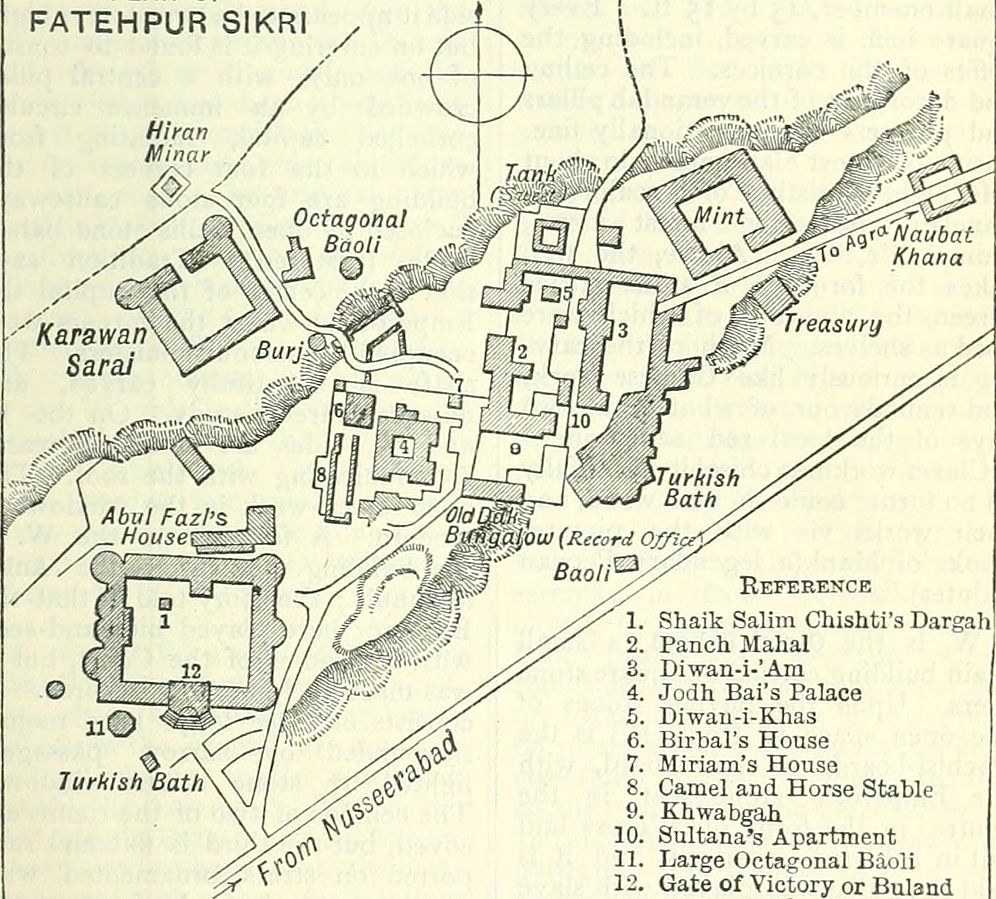
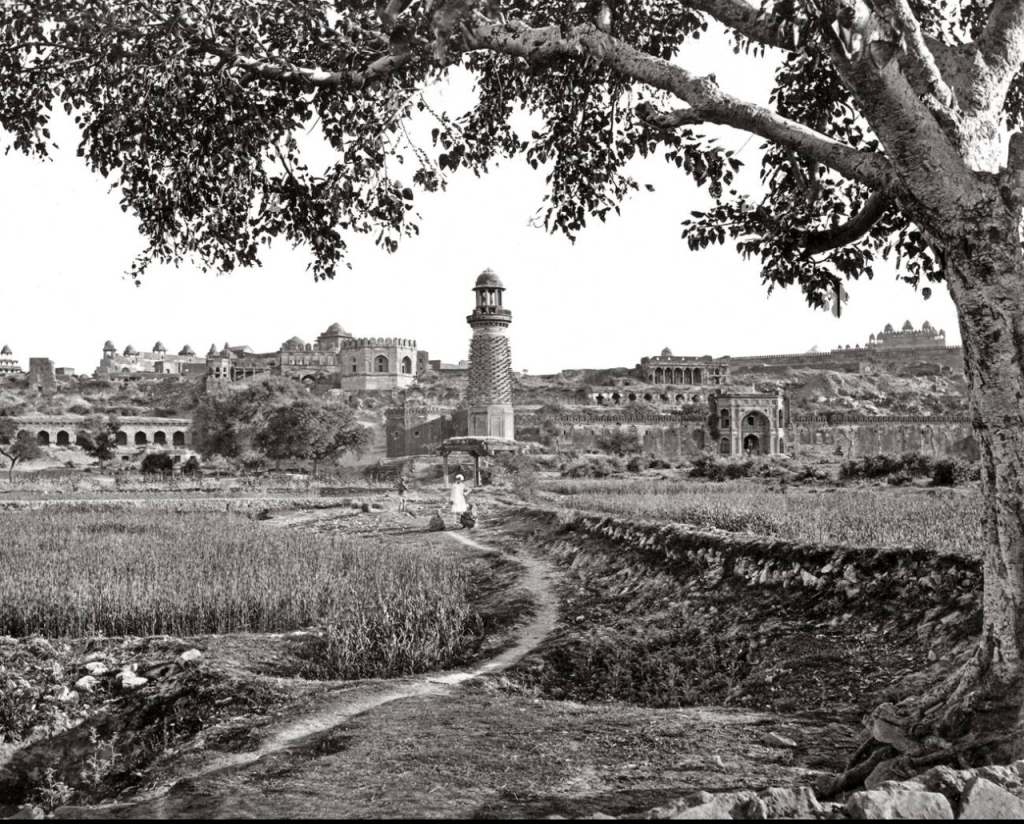
Twenty-three miles southwest of Agra lies the city of Fatehpur Sikri, on the site once occupied by Babur’s camp in 1527 during the battle between the Mughals and the Rajputs of Chitor. In ancient times, the village of Sikri stood here, the abode of stone cutters employed at the local quarry and of little importance until a noted Sufi saint, Salim Chisti, took up his abode in a nearby cave. His sanctity and, above all, his miraculous powers soon reached the ears of the childless emperor, Akbar.
On his return from a campaign against the revolted Uzbek nobles, Akbar stopped at Sikri to ask the saint for his blessings and prayers. Like so many tales, this one is wrapped in myth. According to one such story, Chisti sent Akbar away twice -on his third visit, Chisti’s little son cried out, “Father, why do you send the Conqueror of the World away in despair?” Chisti replied, “Because no son is destined for him unless somebody will give the life of a child.” His son, filled with ardour, exclaimed, “I will!” and promptly died. However, Akbar’s first son was born with less dramatics, but the tale is still rather curious. Chisti advised Akbar to send his wife, Mariam-ul-Zamini, to live in Sikri. She took up her abode in the saint’s domicile, and within a year, Akbar had a son, whom he named Salim. Salim, for his part, changed his name to Jahangir. So the story goes that in honour of the saint, Akbar vowed to build a magnificent city and make it his capital. In 1571, two years after the birth of his son, Akbar kept his promise.
“The City of Victory” — named so after Akbar’s victorious Gujarat campaign — took two years to construct and was the first planned city of the Mughals. Sitting on a rocky ridge, the city stretched 6 miles (9.66 km) from one end to the other, surrounded by on three sides by a wall of no less than 8 feet (2.44 m) in depth, the fourth bordered by a lake. It was to be the new capital of the Mughal Empire, and Akbar spared no expense on its grandeur. Built of red sandstone with a beautiful blend of Hindu and Islamic architectural elements.
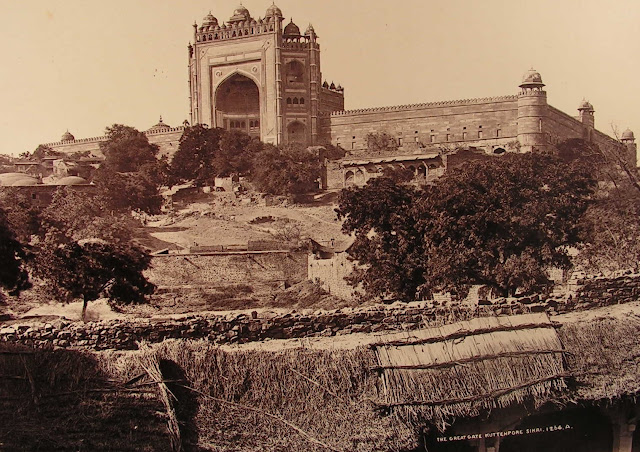
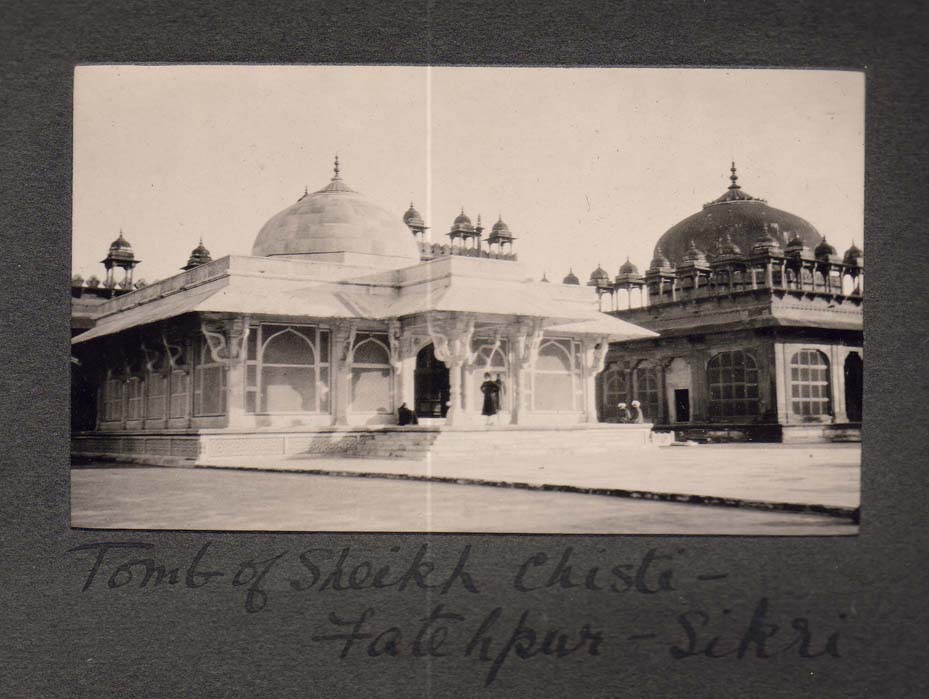
The main entrance to the Jama Masjid, the Buland Darwaza, was certainly built to impress. At 131 feet (ca. 40 m) high and 167 feet (ca. 51 m) from the ground, the total structure stands at 177 feet (ca. 54 m) from ground level and is an impressive 15 storeys. Like the gateway, the rest of the city would boast of the finest architecture Akbar and his architects could envision and the Sufi saint was not forgotten — his tomb, which was incorporated in the Jama Masjid complex, was completed in 1581 with further embellishments added by Jahangir.
Ralph Fitch, a gentleman merchant of London, on a visit to Fatehpur Sikri in 1585, wrote,
“Agra and Fatehpore Sikri are two very great cities, either of them much greater than London and very populous. Between Agra and Fatehpore are 12 miles (Kos) and all the way is a market of victuals and other things, as full as though a man were still in a town, and so many people as if a man were in a market.”
Beautiful as it was, after 14 years, Akbar abandoned Fatehpur Sikri in 1585 when pressing issues on the farther reaches of his empire. He saw Lahore as a better option for a capital. When he returned in 1599, Akbar took up his seat in the flourishing city of Agra and Fatehpur Sikri, though not completely abandoned, remained a mercantile centre that excelled in carpet making and the manufacture of indigo. However, over time, it gradually turned into a city of ghosts. Akbar continued to visit — his last in 1601 was to his wife Mariam, who continued to live there, and it remained, for a time, a retreat for his sons and grandsons. There are many theories as to why Akbar lost interest in his magnificent city — the most popular is the city was ill-provided with water, however, this, like the death of Chisti’s son, is more fable than fact. Besides the lake, the city boasted 13 step wells and at least 8 tanks. A myriad of public baths, garden channels and numerous water works fed by an ingenious network of storage tanks and aqueducts speak against this theory — the largest step well still supplies water to the town today. The move was most likely political as Akbar had to face issues in the Deccan, for which Agra was better suited rather than this marvellous city out in nowhere. Another theory is his waning interest in Sufism, however, it is unlikely this would have led him to abandon his masterpiece.
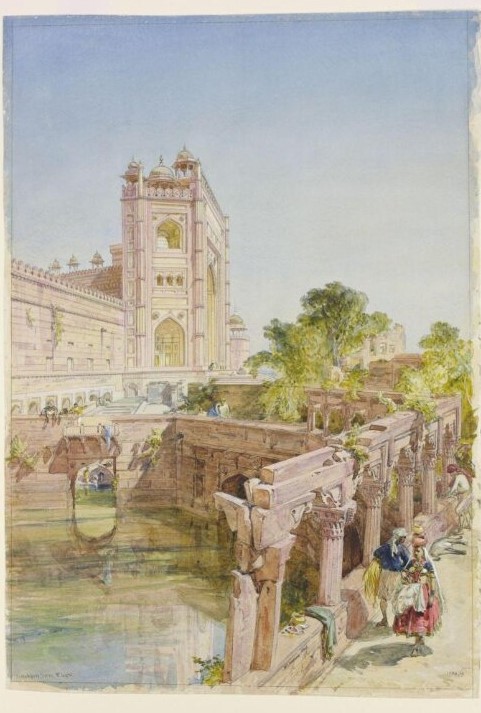
The British, on the other hand, saw all sorts of advantages in Fatehpur Sikri. After occupying Agra in 1803, Fatehpur Sikri became their administrative centre (which it remained until 1850). Warren Hastings, in 1815, instigated the first much-needed repairs to the monuments, and Lord Curzon, in 1881, took up the baton of restoration.
Fatehpur Sikri in 1857
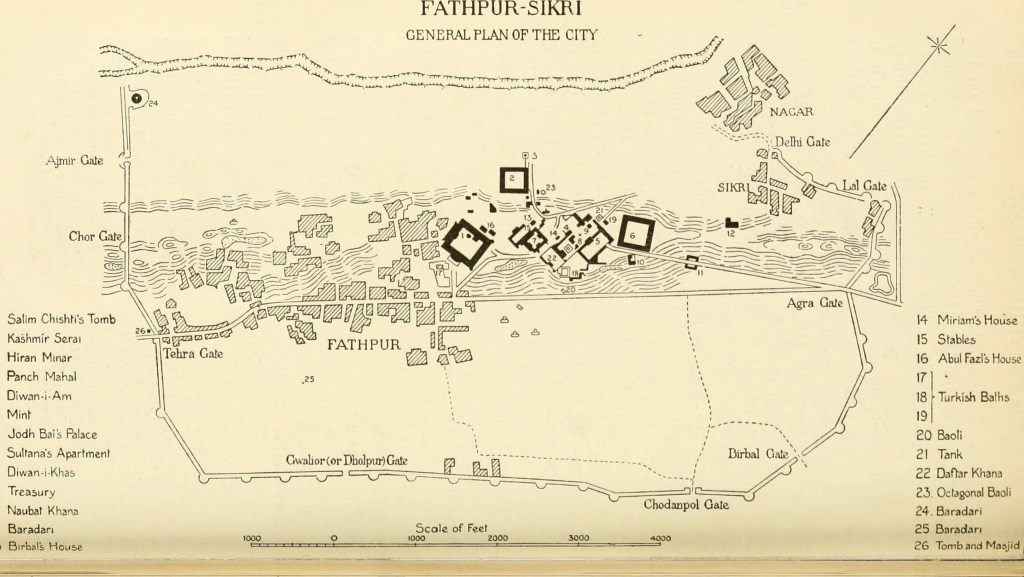
As such, Fatehpur Sikri only came to light once in 1857. The British had wisely retreated into Agra Fort and left the surrounding areas to their own devices, including Fatehpur Sikri. Besides a local police post, useful for gathering intelligence, the city remained in the hands of the local tehsildar, who kept up correspondence with the officials in the Fort. In October, following the rout of the rebels from Agra on the 10th, the countryside was alive with mutineers, directionless and confused. Eseri Singh, a spy for the fort, reported to William Muir on the 16th of October the following:
“At 6 p.m., on the 15th, midday, 200 cavalry, with muskets, etc., came to the Tehseeldar at Futtehpore Sicri and were there yesterday morning at 6 a.m. They say, “If we go towards Bhurtpore, the Rajah attacks; if other places, the Europeans.” — therefore, they hold on. It isn’t apparent what they will do – stay or go.”
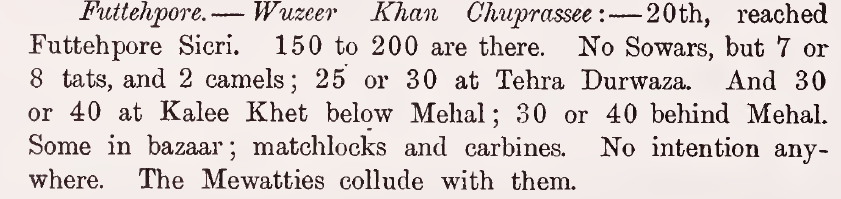
On the 20th, the situation suddenly became even more interesting. Muir noted the movements of another spy, Saligram.
“20th, Futtehpore Sicri — Saligram on the 17th went to Futtehpore Sicri; reached it in the evening. On that day, there were 150 to 200 men in the Theseel. In the evening, they came out, and some went to Adheen Shah’s Tukia (residence) and some to the Tehseeldaree Darwaza and some to the Serai.
I (Saligram) stayed all the 18th there. I left on the morning of the 19th. During the day, they wandered about the bazaar armed. At night, they go to their several places. 5 or 6 large horses for Sowars and about 20 tattoos for burdens.
They say they have no road and will die there. The Mewattees on the hill collude with them – some 40 men, 20 like Telingas. None have on a uniform. They have matchlocks and carbines and some 10 or 20 flint guns. Some had sold their arms.”
Another spy noted, on the same day, the men had been gathering for 10 days — 300 sowars had come from the west and had “no intention of going anywhere.” They arrived with no infantry and no artillery but were encamping themselves not just within the walls but in the hills. A day later, a messenger had a different report.
However, on the 22nd, another messenger painted a different picture. He saw 60 sowars at the main gate, their horses were picketed in the main square, and a further 500 were scattered, “here and there” along the hill. There was still no report of infantry or artillery. The ones in the city were starting to become bossy, interfering with the small administration and starting a rumour that their reinforcements were coming from Indore — 24 regiments. However, the news was fragmented. Some 500 rebels had Fatehpur Sikri during the night of the 21st, and by the 22nd, only 20 Mewattis from Gwalior remained. They were swiftly joined by a further 50 sowars of “Beree” who made themselves at home in the tahsil. They said, “We and 500 men are in Beree. We have come to see, and we report, all will come.” By now, the tehsildar was worrying himself sick.
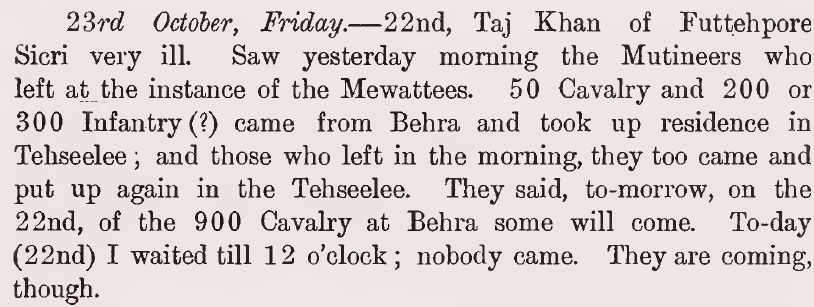
Meanwhile, Muir received another message, this time from a spy reconnoitring along the roads and contradicting everything. According to his report, when he arrived at Fatehpur Sikri on the 21st, he only saw 50–60 horses but no sowars. However, some 350 infantry, “Mewatties and Mussulmans”, were hiding in the tehsildari. They were armed with lathis (long, bamboo sticks) and matchlocks, but no English rifles; the local people were feeding them. As for the sowars, they had fled towards Behra, leaving some 60 at a small outpost on their road. By the 24th, the same spy reported only 200 men at Fatehpur Sikri.
Back in Agra Fort, Colonel Cotton, “full of military ardour,” was desperate to be allowed to do something, anything at all. As soon as Greathed’s Column had disappeared from sight, Cotton began a long litany of petitions to the sombre officials at Agra, to be “permitted to sally out on some expedition.” Finally, partially to gratify Cotton and seeing there was a need for it, they allowed Cotton to organise a column to traverse the surrounding countryside. The objective was to “restore confidence” in the rural population of the power and authority of the government. They were to pass through Agra and then make their way towards Muttra.
As eager as he was to return to Muttra, Mark Thornhill, who would accompany the column, was not convinced the Agra authorities had read the situation correctly. He objected to any show of force, believing the authorities to be “ignorant of native feeling at the time” and the passage of a large force “would merely increase the evils it was intended to remedy.” He said a few soldiers and a couple of guns would be enough to inspire confidence — but the Agra authorities were having none of Thornhill’s wise recommendations.
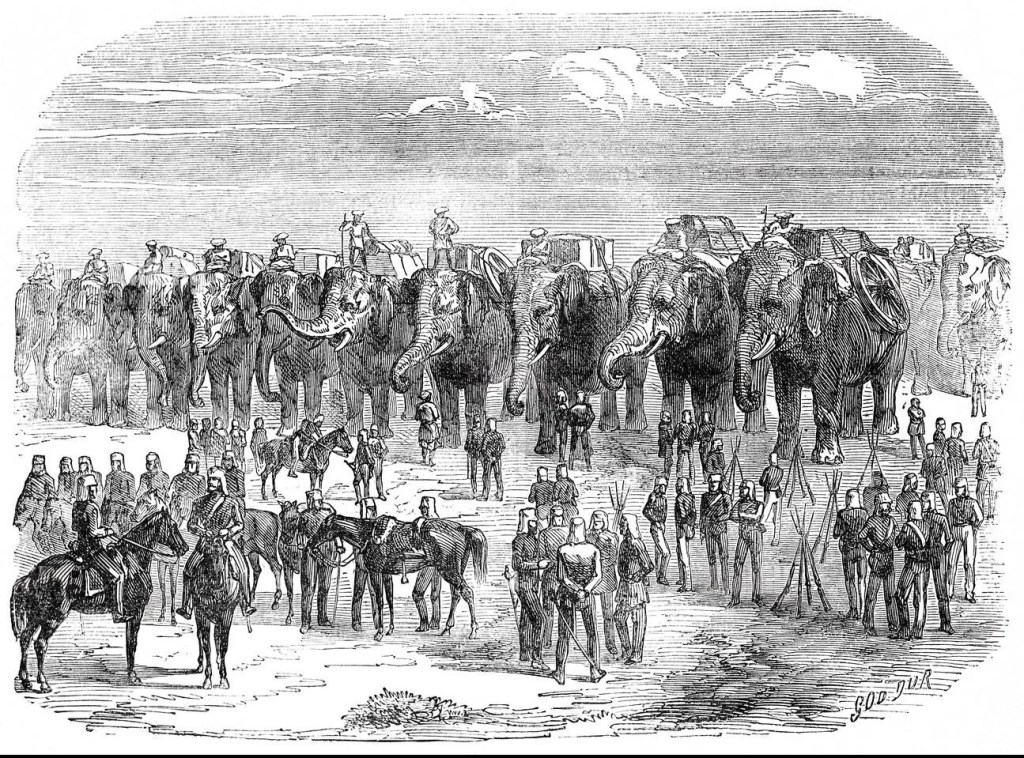
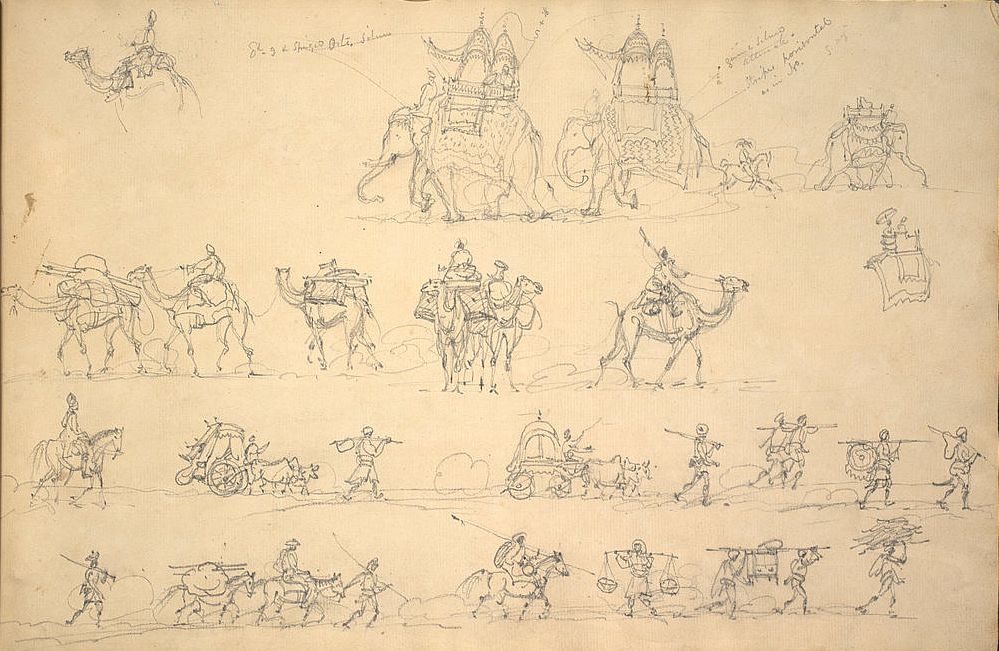
Instead, they sent out a column of 1800 men, comprising some English troops, both cavalry and infantry, the Agra volunteer cavalry, native sappers and miners, a whole bevy of artillery, including heavy guns and field batteries, and “any amount of Sikhs, horse, and foot.” The nearly endless line of baggage camels, elephants, carts, bullocks and ponies and some 5000 camp followers would ensure the column reached cumbersome proportions. Thornhill curiously remembered the names of three of the elephants, many years after the event, possibly because they struck him as particularly fanciful – “Fairy Rose”, “The Doctor’s Darling”, and “Blossom of the Forest,” all marched with the column.
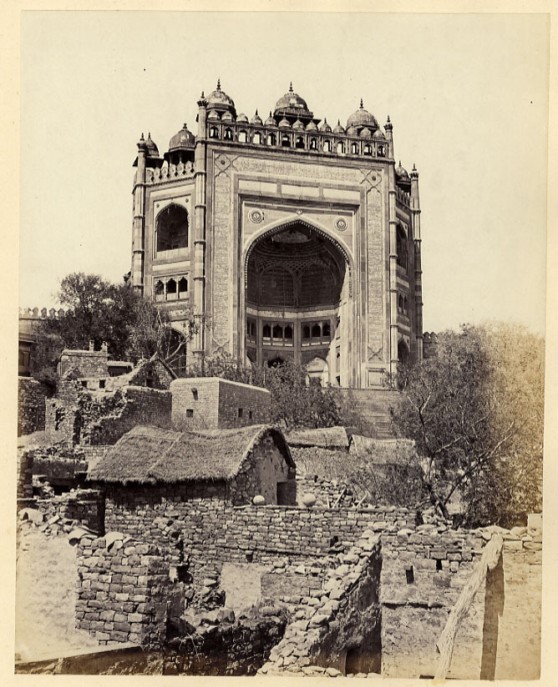
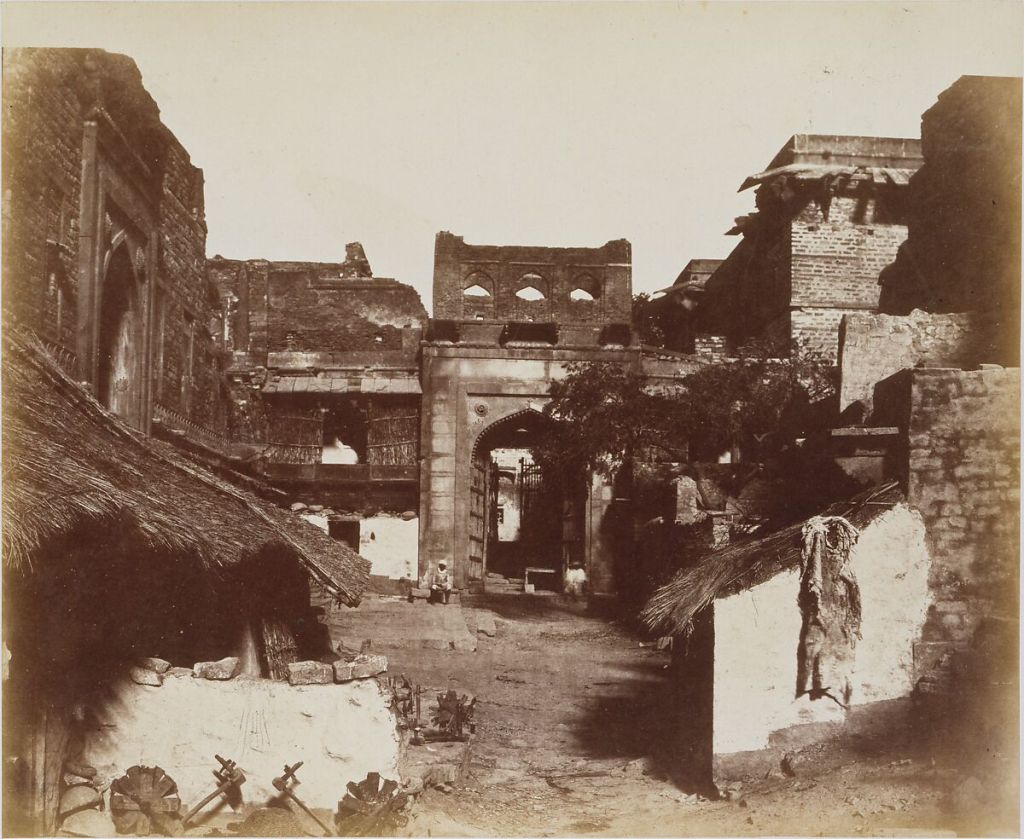
On the 27th of October, “a lovely, bright morning” the column left Agra and the next day, reached Fatehpur Sikri. As the rebels were supposed to be hiding in the interior of the ruined city, the troops advanced to the Buland Darwaza while DeKantzow and the Agra cavalry were sent around to the opposite side to cut off any fugitives. The gates were found to be barred, and when no one answered the summons to open them, Cotton ordered the guns forward. Two shots were fired – the first went wide, and the second, better aimed, smashed the gates open. Thornhill noted it was a shame that a portion of the “delicate stone feathering that ornaments the interior of the arch” was carried away. For good measure, a few more shots were thrown in to clear out anyone considering a stand – in their wake, the Sikh and English infantry rushed up the stairs. To their disappointment, they found the complex empty.
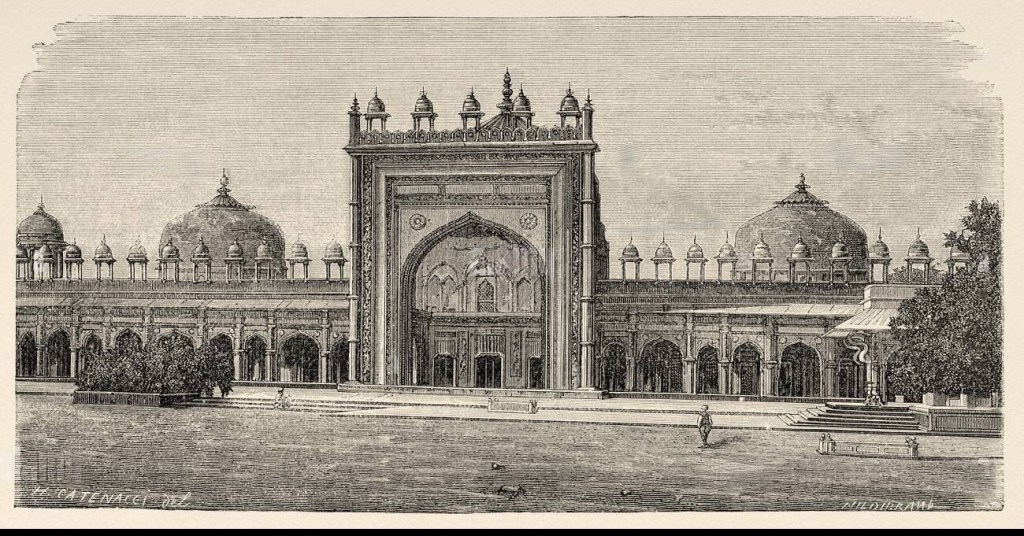
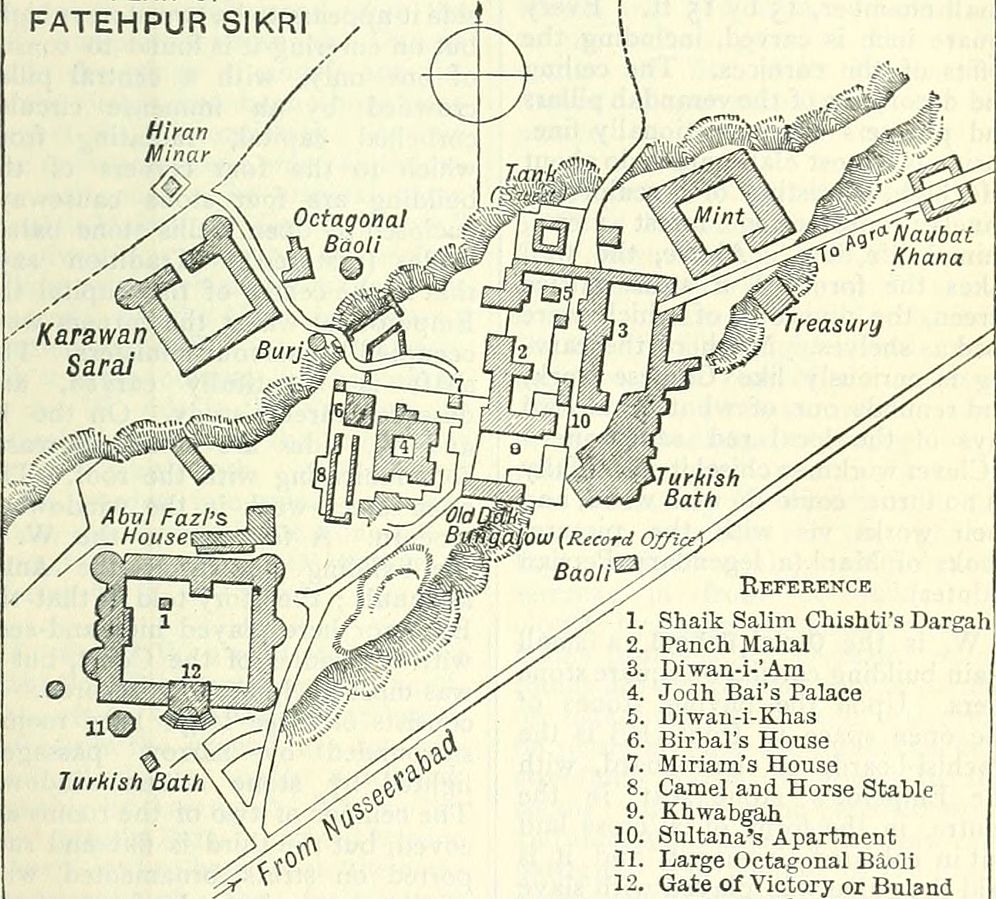
The mosque, one of the finest ever built in India, was surrounded by a courtyard housing the tomb and shrine of Salim Chasti’s tomb. Over a century earlier, Suraj Mul of Bhurtpore had raided Fatehpur Sikri, making off with most of the treasure, including the decorative silver lamps and ornaments in the shrine. What was left behind was of little value, but the irritated troops started to plunder them anyway. The Sikhs tore up the Koran and broke open some sandalwood chests, while the English picked out the mother-of-pearl embellishments from the marble canopy with their bayonets.
Amid the general pillage, another party of troops advanced to the centre of Fatehpur Sikri through a “wilderness of ruins” that adjoined the mosque. Some portions, however, were in relatively good order and from one of these – Jodh Bai’s Palace – a perfect barrage of musketballs suddenly rained over their heads.
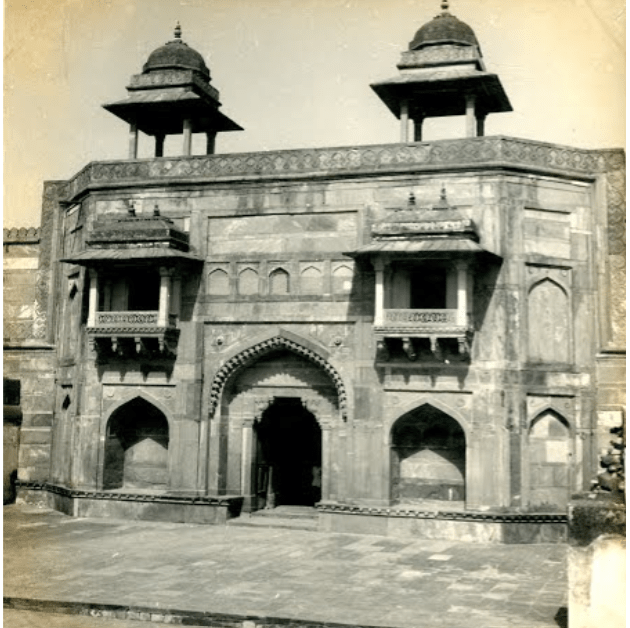
Enclosed, like a fortress, by walls of red sandstone, the rebels took to tossing bricks and other missiles down on the heads of the troops, while Cotton quickly figured out how to open the barred gates. A job for the sappers: they promptly laid a bag of powder, and with one swift charge, the gates were blown open. In rushed the troops led by their officer, Lieutenant Glubb of the 38th NI. Glubb did not last long; still at the bottom of the passage that led to the courtyard, he was shot through both legs. Conductor James Miller (who was in charge of the heavy howitzers and ordnance stores) saw him stagger and, without any concern for the shower of balls that were coming down the passage, nor the shots from the other three sides of the square, rushed up to Glubb. Seeing the lieutenant could not walk, he slung Glubb over his back and carried him out of harm’s way. Lieutenant Wimberley (3rd Bengal European Infantry) watched Miller dashing off with Glubb on his back and then, a moment later, saw him again at the same spot where Glubb had been wounded. As Wimberley asked after Glubb’s welfare, Miller was shot in the leg. Leaving Miller, Wimberley turned his attention back to the fight at hand and dashed after his men into the courtyard of Jodh Bai’s Palace.
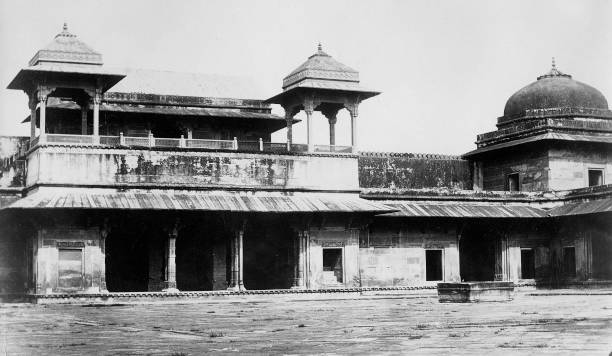
With no artillery and armed with matchlocks and lathis, the rebels must have known they did not stand a chance. They were called on to surrender – the rebels replied with shots. The troops rushed forward and ended their brief but valiant stand. Thornhill was surprised to find there were no more than 12 men in all – the bulk of their companions had had the sense to leave during the night before, well-apprised of Cotton’s approach. De Kantzow managed to capture another three, but the rest escaped. Long before the afternoon was over, the battle of Fatehpur Sikri was history. The wounded, including Lieutenant Glubb, were treated in a makeshift hospital, set up in one of the halls of the Jama Masjid, before being carried back to Agra.
“Patches of blood on the pavement, and the fragments of the Koran and the shrine remained, however, evidence of the conflict, as also did the fallen masonry. One of the shells had burst below an inner gateway, and the explosion had brought down a wagon-load of stone and mortar. Less effect had been produced by another shell against the wall of the palace. A large blue stain was the only result; a pumpkin could not have produced less apparent injury.” (Thornhill)
The column left Fatehpur Sikri the next day. The rest of their march, as Thornhill writes, in a tone of much resignation, is tedious and painful, “sad to recall and better to forget”. Instead of the few soldiers and 2 guns Thornhill had wanted, he was now part of a “scourge and a terror” that unleashed itself over the countryside. The Sikhs, “under no sort of discipline beyond that essential for fighting” plundered their way along the route, while the cries of vengeneance, against no one in particular as the mutineers had been well nigh dispersed from around Agra, were quenched by the terrible acts of misery perpetrated on the helpless villagers by Gun Cotton’s Column. They were to have marched towards Delhi and then return through the Doab; instead, midway through their confidence restoration objective, when they reached the outskirts of Muttra, the skittish Agra authorities recalled them.
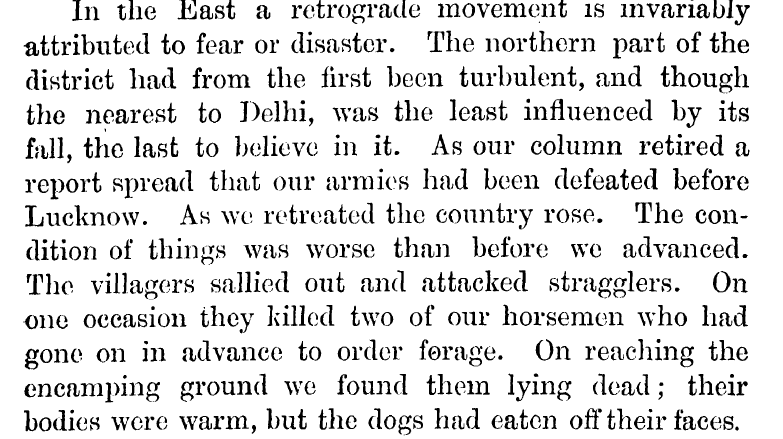
Thornhill, de Kantzow, Mr Joyce and a young customs officer quickly bid the column good riddence and rode, unmolested, to Muttra. As for Lieutenant Glubb and Conductor James Miller, they had preceded the column by many days and were safely in the hospital at Agra Fort.
Conductor James Miller, VC
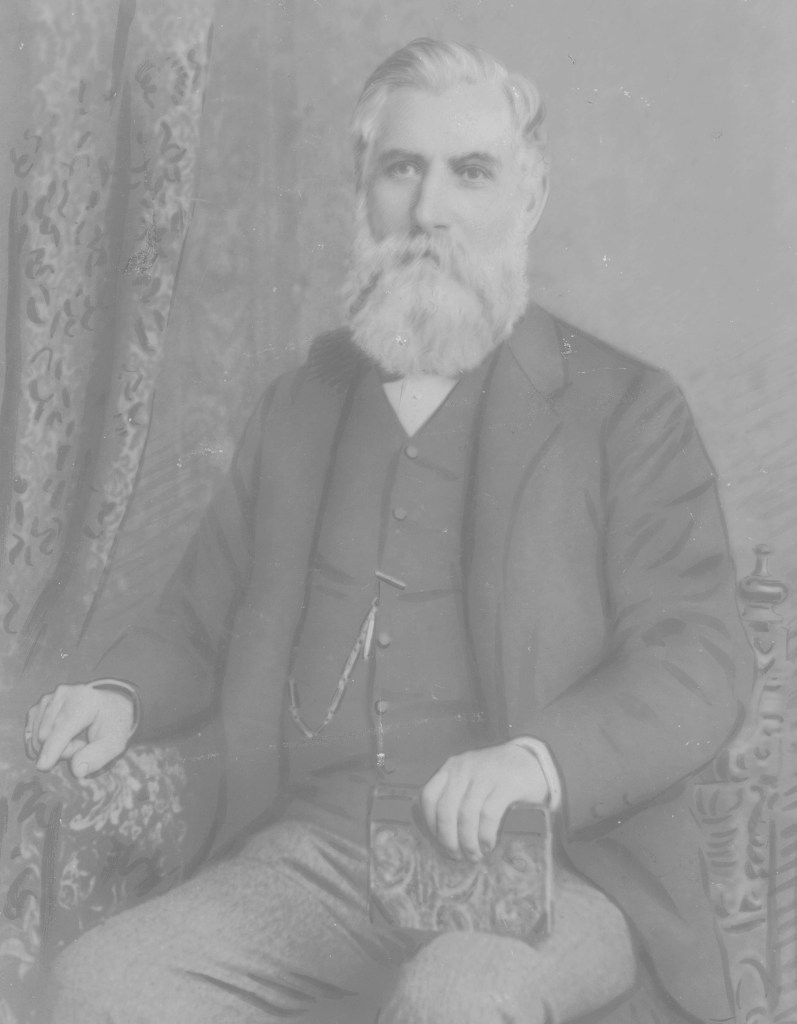
Conductor James William Miller was born on the 5th of May 1820 in Glasgow (Parish Glasgow, town Glasgow County Lanark), the son of James Miller. In 1841, when he enlisted in Glasgow, his trade was “candle-maker. ” He was contracted for unlimited service and sailed for Bengal on the “Warrior” in 1841. He arrived in Calcutta in January 1842 and joined the Bengal Artillery as a gunner, 1st Company, 3rd Brigade. Promoted to Bombardier in 1844 and, shortly after in the same year to corporal, he attained the rank of sergeant in 1845, shortly before he joined the arsenal at Fort William, Calcutta, as Acting Staff Sergeant. Then followed a list of appointments: he was posted at Dum Dum in 1850, in 1851 as Blacksmith Sergeant, followed by another stint at Fort William in 1853 in the arsenal and in 1856 we find Sub-conductor James Miller at the Ordnance Depot. His work was by no means simple – conductors were the veritable life of the army; they received and delivered stores, attended the magazines when in garrison and looked after the ammunition wagons when in the field. In 1857, he appeared in the Agra Fort Directory as J. Miller, Officiating Subconductor, together with his wife and two children.
He was a good family man with a fine character and meticulous in his work, as his multitude of certificates, references, and valedictory letters testify. Captain Mitchell, Commissary of Ordnance at Agra, writes of Miller’s exemplary conduct having, taken “without guards or assistance a large amount of arms and ammunition to the Lieutenant-General’s house” on the very night the mutiny became known at Agra, he moved 2 guns with “a small native escort” through the district and brought the guns back again showing great steadiness and self-reliance when “literally surrounded almost by rebels.” Miller further took a small infantry escort through Agra following the Battle of Sassia to search for victims and survivors, and, on the same day, he even brought in one of the 9-pounder guns left behind on the battlefield. Colonel Glassford, of the engineers, found Miller to be “most energetic and attentive in his duties” and highly recommended him for promotion in August 1857. Major Montgomery, who worked closed with Miller in August at the affair of Maun Singh’s Garden, wrote:
“Certified that Sub-conductor Miller was under my command when out with a detachment towards Ally Gurh, he had charge of two 5-inch mortars, and elephant harness for the light guns. I have much pleasure in stating that he gave me great satisfaction on the line of march, he not only looked well after his own stores, but gave me great assistance in bringing up the baggage hackneys and keeping them together, a very laborious work. When at Allygarh from information he received from a native, he found in a house in the town a large quantity of shot and shell, also some English iron. I gave him hackneys and he conveyed the whole into Agra and returned to Ally Gurh, a distance of 100 miles without halting. He again accompanied me with two 8-inch howitzers against Futtypore Sickree, and he having been there on a former occasion with another detachment, his knowledge of the place was of great service and the bursting of the shells (the fuses of which were regulated by him) was so correct that I found pieces of them in the building at which they were fired. He afterwards carried a wounded officer out of danger and received a musket ball through his leg, he is a most zealous, useful and trustworthy man and always ready when wanted. The fatigue and hardship he has undergone since the mutinies commenced, and the cheerful and able manner in which he has done his duty, entitles him to great consideration.
Signed Major P. Montgomery
Commanding Detachment
Fort Agra, 30th December 1857
Major Montgomery, December 1857
Lieutenant Brown found him to be one of the best warrant officers he had ever had the pleasure to meet, while Lieutenant John Matthew Glubb wrote in a letter to his brother, Lieutenant Orlando Manley Glubb of the 37th NI,
“I think he is deserving of any reward that can be bestowed upon him….I wish I had known before that there was any chance of his being recommended as he deserves, but owing to my absence on sick leave to England, I was out of the way of hearing of it before you wrote to me. I shall be happy at any time to serve Conductor Miller if it is in my power, for had it not been for him, I might not now have been alive when this testimony to his meritorious conduct.”
It was finally Colonel F. Turner, Agent for Gun Carriages, who wrote a most detailed letter to Sir Hugh Rose, recommending Miller for the VC and ends it with,
“The Conductor holds testimonials of his good conduct throughout his career, and I have pleasure in bearing testimony to the excellence of his behaviour in all respects during the period that he has been under my authority.
I believe I am only performing my duty towards a very good soldier in venturing thus to bring his act of bravery in the Field to the notice of His Excellency the Commander-in-Chief, and humbly trust His Excellency may think that even the Victoria Cross Her most gracious Majesty’s most valued gift to her bravest soldiers may not unworthily be bestowed upon Conductor Miller in approval of his excellent conduct on the occasion referred to.”
Miller’s citation appeared in the London Gazette in February 1862, somewhat tardy as the final letter from Lieutenant Glubb was delayed. Miller’s medal was presented to him later that year in India.
Miller remained in India for the rest of his life, attaining the rank of Honorary Captain. and retired from service in 1882 after 41 years. He died on the 12th of June 1892, aged 72, at his home in Simla. Sadly, it appears his VC was stolen in India from a family member during a railway journey sometime after WWII.
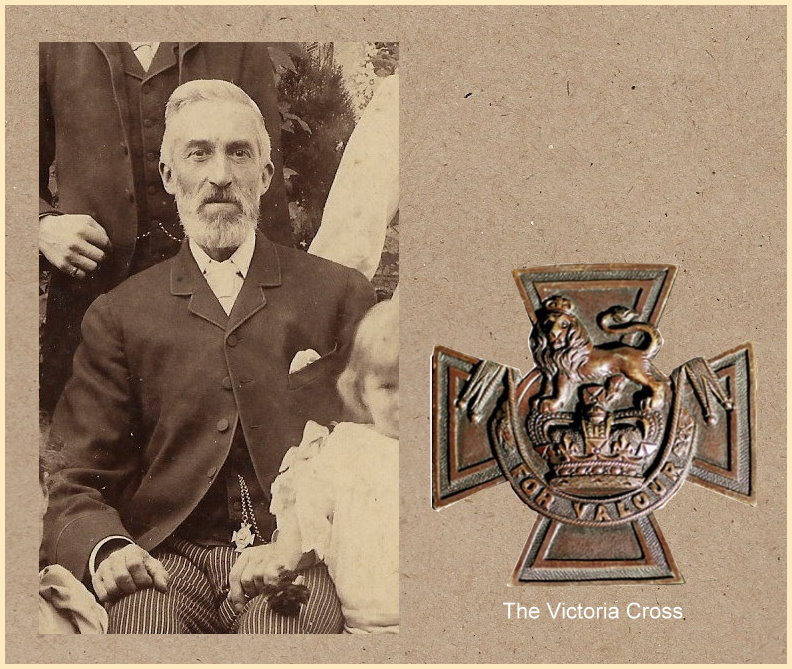
What, however, happened to Lieutenant J.M. Glubb?
The youngest child of Reverend John Matthew Glubb, John Matthew was born in 1837 at Cowfold in Sussex. He was commissioned as an ensign to the 38th NI in December 1854 and held a First Class Certificate from the School of Musketry at Hythe. He was promoted to Lieutenant in June 1857. Following the mutiny of his regiment at Delhi in May 1857, he escaped to Ambala. Glubb joined the Delhi Field Force and served through the Siege of Delhi. As he does not appear in the Agra Fort Directory, Lieutenant Glubb would have arrived, most likely, with the Greathed’s Column.
His injury, sustained on the 28th of October- shot in both legs and a wound to his right heel – had him sent home for what would appear to be a long recovery as he wrote to his brother, regarding Miller, from Thermandbury Rectory, Sussex, in 1860. In 1864, he married Mary, the widow of Major Wriford of the 1st Bengal Fusiliers, at Chelsea. Their son (also John Matthew, and later Reverend) was born a year later at West Brompton. Although Lieutenant Glubb’s profession is listed as Assistant Commissioner at Jansi (at the time of his marriage), he died as John Matthew, Esq., the late captain of the 38th Regiment Bengal Light Infantry on the 25th of October 1896, “quite suddenly,” in Hove, at the age of 59.
Curiously, this generation of Glubbs was destined to early deaths and sad graves- his brother Lieutenant Orlando Manley Glubb of the 37th NI, died at the age of 33 in Meerut of cholera in 1861. However, the next generations, at least from the side of Lieutenant Orlando Manley Glubb, would rise to great heights. His son was none other than Major General Sir Frederic Manley Glubb, KCMG, CB, DSO of the Royal Engineers (born in Calcutta on the 19th of August 1857), who served in the Boer War (for which he was awarded the DSO) and WWI. He was mentioned in despatches 8 times and awarded a knighthood. His grandson was the highly decorated Lieutenant-General Sir John Bagot Glubb (KCB, CMG, DSO, OBE, MC, KStJ, KPM), but better known as “Glubb Pasha.” Perhaps the two Glubb brothers, Orlando and John, would have been proud.
Sources:
Muir, Sir William. Records of the Intelligence Department of the Government of the North-Western Provinces of India During the Mutiny of 1857. Edited by William Coldstream. Vol. 1. Edinburgh: T. & T. Clark, 1902.
Newell, Herbert Andrews. Three Days at Agra: A Guide to Places of Interest Including Fatehpur Sikri, with History and Map. 6th ed. Bombay: H.A. Newell, 1922
Thornhill, Mark. The Personal Adventures and Experiences of a Magistrate during the Rise, Progress, and Suppression of the Indian Mutiny. London: John Murray, 1884
Links:
Fatehpur Sikri:
https://eavr.wordpress.com/2012/05/09/fatehpur-sikri/
https://www.peepultree.world/livehistoryindia/story/places/fatehpur-sikri
https://whc.unesco.org/en/list/255
For the Glubb family:
https://teresa-goatham.me.uk/genealogy/getperson.php?personID=I23365&tree=tree1
https://www.fibis.org/
James William Miller VC:
FIBIS Journal No. 18 (Autumn 2007) – The Army Rank of Conductor and the history of an HEIC Conductor VC – Lawrie Butler
https://www.rlc-conductor.info/Profiles/Miller.htm
https://www.simonprophet.com/ftz.gggf.jw.miller.htm
https://vcgca.org/our-people/profile/1068/james-william
 Mutiny Reflections
Fatehpur Sikri reflects the vision and artistic excellence of the Mughal Empire. Though it was abandoned due to practical challenges, its historical and architectural significance endures. The site continues to attract scholars, historians, and tourists, offering a glimpse into India’s rich cultural heritage.
https://www.indianetzone.com/fatehpur_sikri
LikeLiked by 1 person