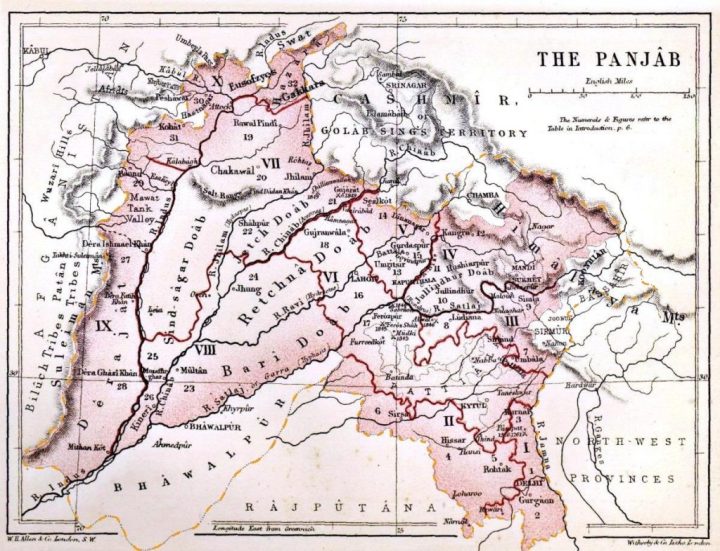
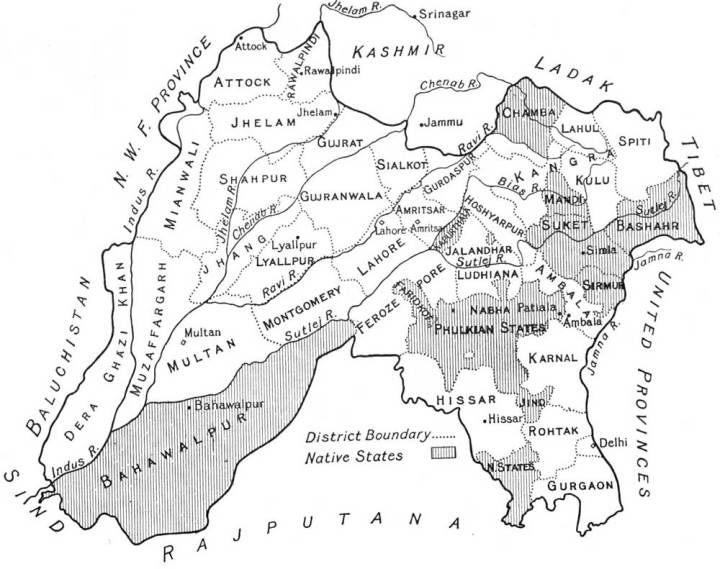
John Lawrence had recognised a problem in the Punjab that officers in other districts had chosen to ignore: there were 60’000 troops in the Punjab but only 10’000 of them were Europeans – 36’000 were Bengal regiments and 14’000 Punjabi Irregulars.
The Punjab itself had only recently been annexed, and he could not take any chances. However, unlike other areas in India which had been annexed, the Punjab was not a hotbed of sedition. Wherever he could, Lawrence ordered European garrisons to take over all important forts – besides Lahore, they were soon stationed in Amritsar, Multan and Phillor. Following the mutiny in Ferozepore and unrest in Peshawar, one of his first measures was to split up the Bengal regiments into numerous detachments and quickly deploy them to the Afghan frontier, where they were less likely to rebel and kept more than busy with the hostile tribes. Following the suggestion of John Nicholson, Lawrence ordered the organisation of the Moveable Column under the command of Brigadier-General Neville Chamberlain. Lightly equipped and manned by both European and Punjabi troops, the column moved swiftly through the Punjab, quelling any signs of disaffection they found. While thus engaged, Lawrence never ceased for a moment to harangue General Anson to march as quickly as possible to Delhi. Lawrence believed everyday delay was more of a blow to the company’s prestige, and prestige was, at times of mutiny, the most valued of currency.
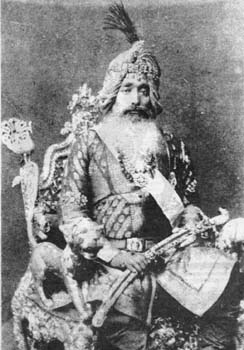
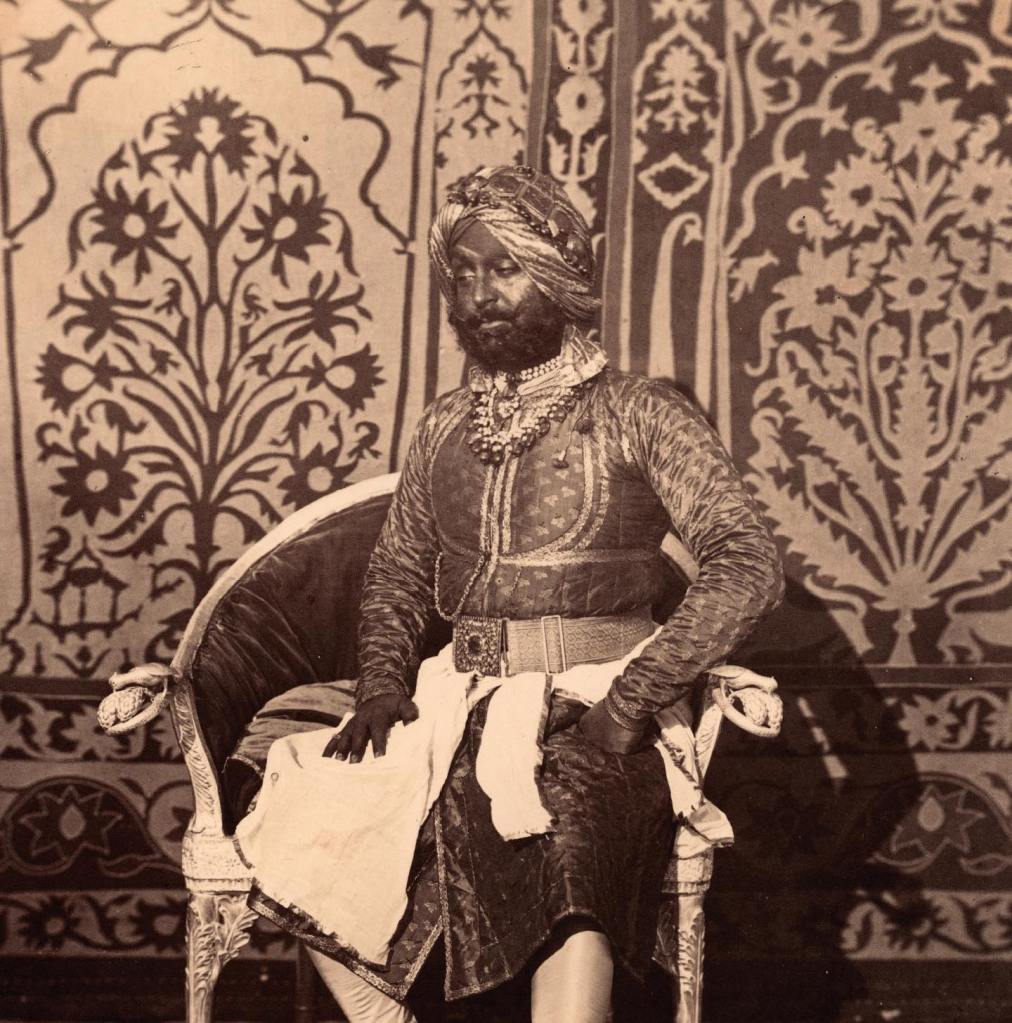
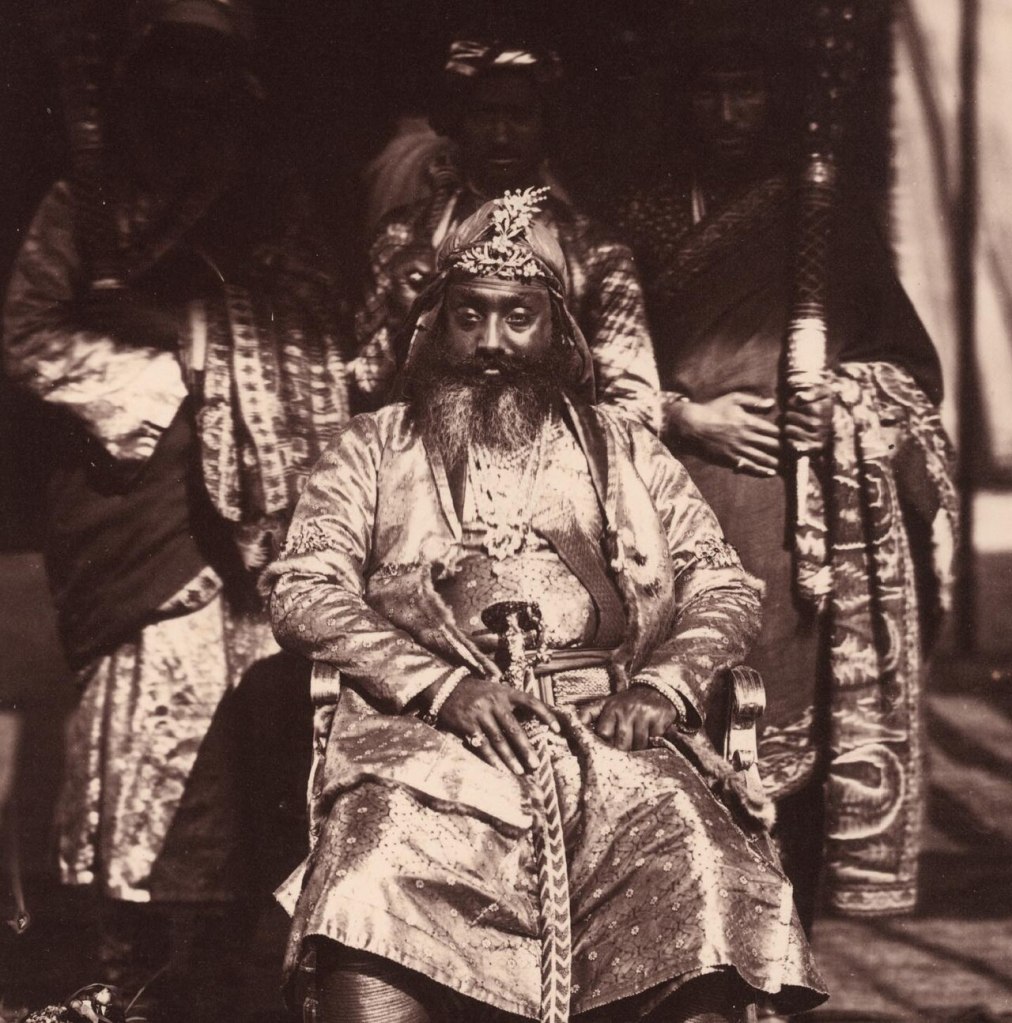
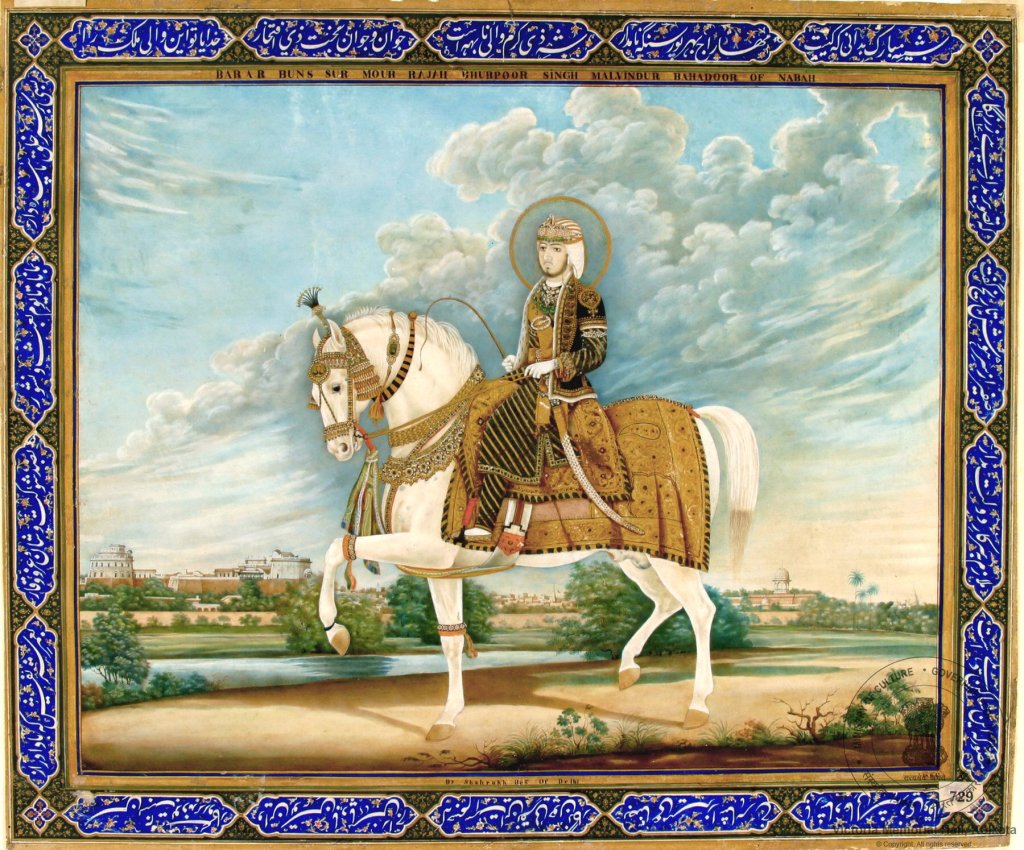
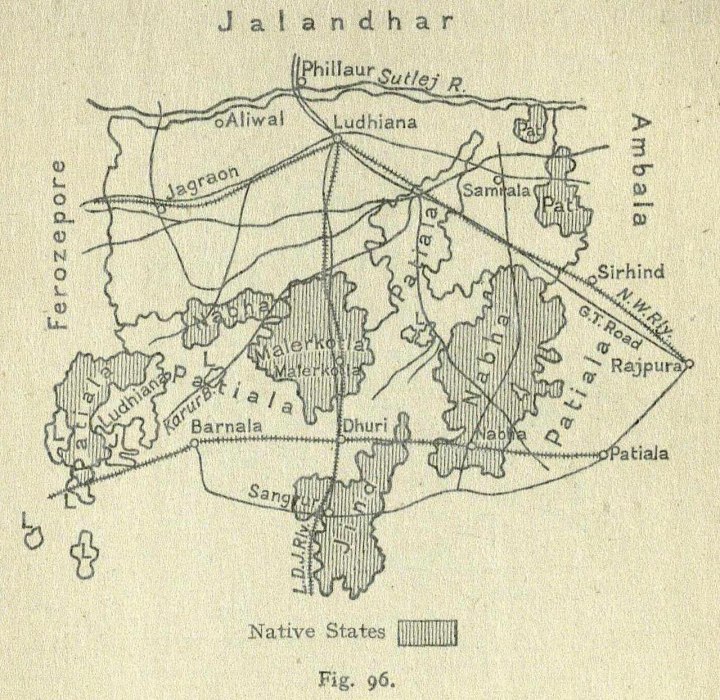
Calling in what favours he had, John Lawrence approached the Sikh chiefs with requests upon their honour: they had been dealt with leniently during the annexation of the Punjab, and a little gratitude was now in order. Those who did respond did so in more than just words. The chiefs of Patiala, Jhind, Nabha and Kapurthala not only professed their loyalty, but they also offered Lawrence troops and money to fight the mutiny. Lawrence had thus also ensured that the lines of communication between Delhi and Lahore remained unhindered. Later, the Nawab of Karnal lent his support to the British.
As for the Sikhs themselves, they had fought two wars against the British, in 1845-46 and then again in 1848-1849. After the first war, they had lost valuable territory to the EICo, including Kashmir, and the second war saw them annexed completely by the Company. Although it would serve to reason that they would be the first to rise up against their occupiers, and there were isolated cases of mutiny, a full-scale uprising did not happen in the Punjab. In fact, the Sikhs became very strong supporters of the British. Their position was unique – they bore a significant grudge against the sepoys of Bengal who had fought against them in the Sikh wars – and on the whole, the Sikhs could not give their loyalty to men who had willingly participated in the annexation of their kingdom. It was this long-standing animosity that John Lawrence and his compatriots were counting on. On the whole, the mutiny that raged in India in 1857 did not carry much weight with the Sikhs at large. They were not attracted to a cause that was ultimately not theirs. Their history with the sepoys was not one based on any kind of trust or confidence, and they were not inspired by their leaders. In other words, this was not their fight.
“The people of the Punjab were the worst and the most recent sufferers at their hands. In addition to the Poorbia sepoys who fought against them under the British in 1845-46 and 1848-49, it was the Poorbia soldiers of fortune, Tej Singh and Lal Singh, the Commander-in-Chief and Prime Minister of the Punjab, who had entered into secret agreements with the British and had betrayed the Sikhs in the first Anglo-Sikh War. Again, it was mostly with the help of the Poorbia regiments and Poorbia civilian subordinate officials that the Punjab was being held under British subjection in 1857 when the mutiny took place. As such, the people of the Punjab, particularly the Sikhs, could not have looked upon them as worthy of their support in a cause which threatened them with the re-establishment of Mughal tyranny of the seventeenth and eighteenth centuries…””The Sikhs could not volunteer to help these erstwhile enemies of the Punjab, nor could they, for obvious reasons, espouse the cause of the Mughal Emperor, Bahadur Shah II, whom the mutineers had raised to the throne. For over two centuries, the Sikhs had fought against the Mughal tyranny, and they could not now be persuaded to support an alliance which might have resulted in its re-establishment. Moreover, as the mutiny later turned out to be, there appeared to be nothing national or patriotic in it to appeal to the noble sentiments of the Sikhs to attract them to the side of the mutineers.” “The Indian Mutiny Of 1857 And The Sikhs – Dr. Ganda Singh”
It must also be mentioned that although one Sikh regiment did mutiny, it was not exclusively made up of Sikhs. The 3rd Sikh Infantry, stationed at Dera Ismail Khan, of which 50% were Punjabi Muslims, Pathans from across the Indus, Dogras from the Shivaliks and the rest were Hindus from the “other side of the Jamuna,” and it was later found that the plot to murder their officers was hatched by the Hindus. The EICo’s efforts to recruit Sikhs into the Bengal Army had been less than successful, and this was because the sepoys themselves opposed it. However, those who did participate in the revolt were all stationed outside the Punjab at the time – the Ludhiana Regiment of the Sikhs revolted in Benares in June, and some of them went to Delhi to assist the rebel army. 90 Sikhs of the 23rd Regiment revolted in Mhow, and those stationed in Allahabad were held in check by their officers after being collected together and surrounded by gunpowder trains. “Lieutenant Brayser…appealed to their feelings and swore by their gods and then threatened if they did not obey, they would be killed by the explosion of the magazine. These soldiers, being few in numbers and away from their homes, obeyed Brayser…”
Although it is fashionable in modern sentiment to blame the failure of the 1857 uprising on the Sikhs, it must be mentioned that this is not only unfair, but it is also inaccurate. It wasn’t just the Sikhs who kept themselves out of the Mutiny. Bengal, Madras, Maharashtra, Gujarat, Sindh, Rajasthan, Jammu and Kashmir and the North-Western Frontier Province did not join in on the mutiny – the pockets of rebellion in Rajasthan, for example, were caused by mutineers from the Bengal Native Army and by internal strife within the Jodhpur Legion; the rajas of Rajputana held no open sympathy for the rebels. The Jats, Dogras and Garhwalis kept themselves aloof. It must also be pointed out that the educated communities in both Bengal and Madras were very vocal in their condemnation of the mutiny, denouncing not just it but the mutineers themselves.
With this said, Sir John Lawrence was aware that if the crisis in the Bengal Presidency was not swiftly contained, there would be repercussions and while he was confident that for now, he could hold the Punjab, the longer the mutiny raged, the more difficult his position would become. He could not contend with an uprising in the Punjab; to contain the province, Delhi had to fall.
The Mutiny in the Punjab – May & June 1857
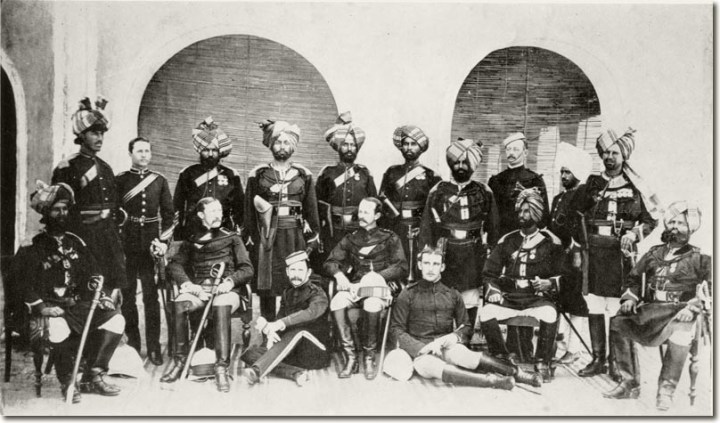
Among the many measures taken by the British in the Punjab was the use of moveable columns and irregular units. The most famous of these was the
The Corps of Guides
who would find themselves in Delhi.
In May and June, a problem of quite another nature presented itself in the hill stations of the Punjab, with a most startling outcome.
In the Hills – Simla and Kasauli
Meanwhile, mutiny was still on the horizon in the Punjab as events moved towards July and August.
The Punjab in July and August
 Mutiny Reflections