May -June 1857
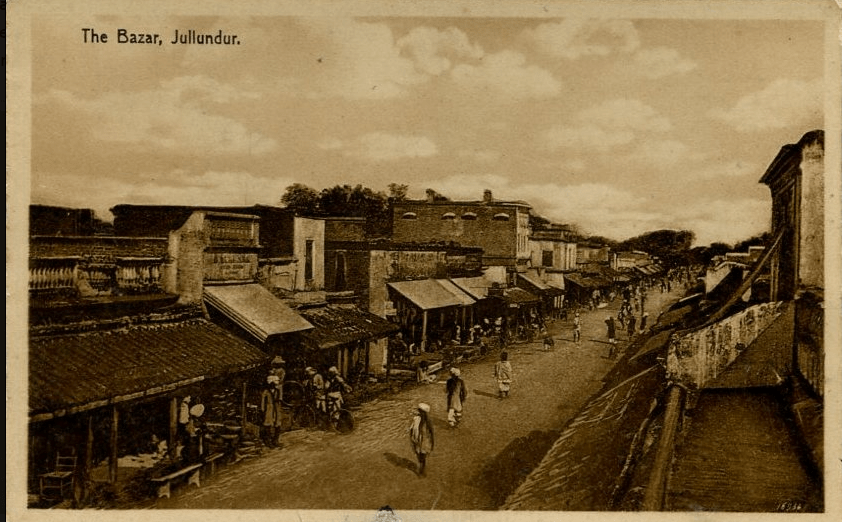
The force at Jalandhar in May 1857 consisted of HM’s 8th Regiment of Foot, Major Henry Olphert’s Horse Artillery troop (the cousin of William Olpherts of the artillery, then in Benares), the 6th Cavalry and two Bengal regiments, the 36th and the 61st. They were both old regiments – the 36th was raised in 1799 as the 1st Battalion, 18th Regiment and had most recently done service in the 1st and 2nd Sikh Wars, while the 61st had been raised in 1818 as the Benares Levy and had served in Afghanistan. The 36th had only recently arrived from Meerut, while the 61st had only the year before been stationed at Lucknow in the company of the 19th and the 34th BNI, who would win their notoriety in 1857 for events at Berhampore and Barrackpore.
The cantonment at Jalandhar had been established in 1846, four miles west of the town proper. The cavalry lines were at the extreme right of the cantonments, followed by the artillery with the 36th completing the line; the European barracks, built at right angles, formed the left flank, while the lines of the 61st were on the opposite side of the station. The cavalry lines and the artillery lines were separated by a broad road which crossed the station, terminating in the civil lines. The officer in command at the station was Brigadier Hartley (officiating due to the absence of Brigadier Johnstone), who called a council on 12 May. At the meeting, Major Lake voiced his objections to disarming the native regiments because he “imagined that it would compromise the Europeans at Hoshiarpur, Philor and Nurpur.” Basically, by not disarming at Jalandhar, Lake hoped it would show the troops in the other stations there was nothing to fear and they would remain loyal, by example. However, not everyone was as optimistic as Major Lake.
Hartley ordered Phillour Fort was to be secured without delay, and furthermore, an electric telegraph was to be established for swift communication with Jalandhar. By 10 o’clock the same night, the telegraph was already working, and at the same time, 150 men of HM’s 8th Foot relieved the men of the 3rd BNI in the fort. The two guns at Phillour were moved to Jalandhar and, together with the two guns already there, were placed under the guard of the 8th Queen’s Regiment. The guns were so positioned to command the cavalry parade, while two more swept the lines of the 36th, with the rest remaining in position on their own grounds. This was much objected to by the sepoys, who viewed the positioning of the guns as a question of their faithfulness. Olpherts, however, was not moved by their appeals, and the guns stayed where he placed them, pointing out some of the guns actually pointed to the artillery barracks as well, so their argument was, in his estimation, moot. Hartley further ordered two post guns to be equipped and moved at short notice to any part of the district when needed.
Hartley, expecting the cavalry would rush the guns if they mutinied, ordered heaps of stones to be scattered about the broad road – a simple but adequate defence which would break a cavalry charge but leave the guns free to manoeuvre. As such, with all the preparations in place, it should have been clear to the sepoys how little they were trusted.
Farrington took the precaution of putting public buildings in Jalandhar in a defensive state; he even saw to it that the electric telegraph was removed from the lines of the 61st and taken for safety to one of the artillery barracks. He then placed the treasure under European guards and called the men of the police battalion from the district to return to Jalandhar. Farrington sent out messages appealing for assistance from the Raja of Kapurthala, Rabnir Singh, who, although away from his district on a pilgrimage, was ably represented by his vakeel, who responded to Farrington’s request by sending 500 men and two guns, allowing Farrington to protect the civil buildings, the cacherry, the jail and treasury, thus ensuring protection for the civil station.
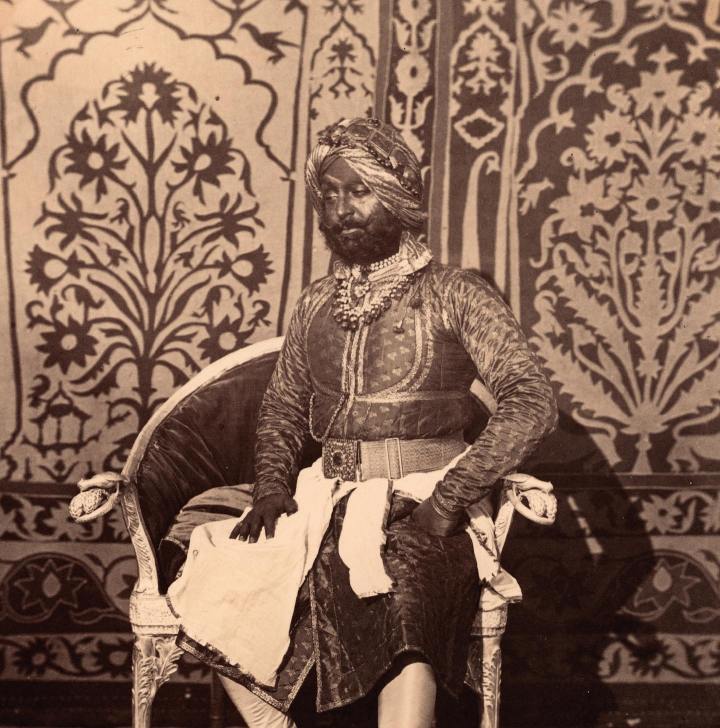
The Raja of Kapurthala, whose territory lay between Jalandhar and the Bas River, was more than aware of the danger ahead. Upon returning from a pilgrimage to Hardiwar, he had made camp on the banks of the Sutlej when sepoys of the 3rd BNI, stationed at Philour, started circulating in his ranks and attempted to turn his men. At the same time, his vakeel arrived from Jalandhar with Farrington’s appeal for troops. The Raja wasted no time in breaking up his camp the same day and marching directly to Jalandhar. His vakeel had already given Farrington the two guns and the men, but the Raja now placed all the troops of his escort at Farrington’s disposal and “threw himself, heart and soul, into the work.” It would be due to his influence over his people that Jalandhar and the district would mostly remain quiet in the coming months.
A party of mounted artillerymen, led by Major J. Brind who was given the position of permanent station field officer, took to patrolling Jalandhar at night and due to his indefatigable nature, visiting parts of the station during the day as well, while Olpherts and his subalterns slept at night by their guns, and during the day, there was one officer and at least half the men permanently present. Colonel Hartley and his staff slept in the artillery orderly room. The women and children were placed either in the Royal barracks or in the Artillery schoolroom and library, bringing them safely out of harm’s way.
Meanwhile, the days continued onwards with the usual signs of discontent. Fires broke out in the cantonments sporadically at first and then finally, becoming a regular occurrence. Hartley was urged to disarm the troops, but he refused. Open acts of defiance had become commonplace but were dismissed even when seditious notices were found posted up in the Pay Office Treasury, openly threatening the native officers who had shown their loyalty to the Government; nothing was done. This was swiftly followed by writing done in charcoal on a wall in the lines, pointing to three men, known to be loyal to the Government, as “bad men,” to be regarded “as devisers of evil counsel.” On the opposite wall, the threat continued, stating that on the day “that the event will occur, they shall not escape, mind this. He who erases this writing will share the same fate.” On the night of 4 June, the hospital of the 61st BNI was burned to the ground. When a 6th Cavalry trooper taunted a comrade and an Indian officer of being Christians, the other native officers interceded on his behalf, “anxious to maintain the credit of their corps”, and the brigadier conceded to allow the man to be tried by a regimental court-martial. It is a small wonder he was acquitted. Not long after, one of the sepoys was found spreading false alarms among the men of the 61st. Meanwhile, merchants and tradesmen began deserting the Sadar Bazar, moving their property into the city, even though they no longer trusted the sepoys.
Colonel Hartley made impassioned speeches to the men of the cavalry, the 36th and 61st, professing to “give them full credit for their staunchness, yet making them understand that he was ready for them at the first sign of mutiny. So long as they remained quiet, not a hair of their heads would be touched, was his promise, but the warning implied was death to the traitor.” For a time, it seemed to work even if Hartley had to speak to the men through an interpreter. Unfortunately, on 16 May, Brigadier Johnstone rushed down from Simla and resumed command of Jalandhar.
He wanted to disarm the sepoys without delay, but Hartley convinced him it would have been to break the solemn word he had given the men. Convinced Hartley was right, Johnstone, an irresolute and vacillating officer, decided to “restore full confidence in the sepoys.” He removed the treasure from the European guards and insisted it be placed in “equal proportions” under the care of the two Indian regiments instead. When the treasure was returned to the men, they insisted that the bags be opened and the money counted in their presence so they could ascertain for themselves it had been returned in full. When Sir John Lawrence heard of Johnstone’s decision, he brought it before General Reed, who immediately countermanded the order, but by the time the telegraphic message reached Jalandhar from Rawalpindi, it was too late. The order, on the suggestion of the Jalandhar civilians, was cancelled, and the treasure remained with the main guard. Unbeknownst to them, Farrington took care that the treasure should grow “small by degrees and beautifully less” with every payment drawn now from the regiments’ treasuries. He forwarded the remittances from several districts directly to Phillour, and then by paying away all “claims on Government alternately from the treasure chest in the custody of each regiment, this confidence in the guards did not cause the loss of more than Rs 5000.“
Meanwhile, Major Lake, the Commissioner of the Trans-Sutlej States for the Jalandhar Division, organised the safety of Kangra and Hashirapur – seeing the state of things in Jalandhar, he changed his tune and insisted the regiments be disarmed. He had men enough to carry it out – one troop of European artillery with a troop of Indian horse artillery had just arrived from Hashirapur; Rothney’s Sikhs (4th Sikhs) were just passing through the station and small body of the 2nd Punjab Calvary under Lieutenant Charles Nicholson (brother of John Nicholson) were on their way from Lahore. Lake kept Rothney’s Sikhs in the station to assist with the disarming, and the date was set – Saturday, the 6th of June. Unfortunately, Brigadier Johnstone had a change of heart and Rothney, with his Sikhs, continued their march to Delhi.
It was decided to disarm the troops the next day – on the 7th – but now Major Lake changed his mind, thinking that “so unusual a parade” might arouse suspicion, and it was once again called off. Whether someone had told the sepoys of the indecision of their officers or if they finally decided to push the events forward themselves, at 10 o’clock that night, Colonel Hartley’s bungalow burst into flames followed by a report of musket shot which broke the stillness of the night – the sepoys at Jalandhar were finally up.
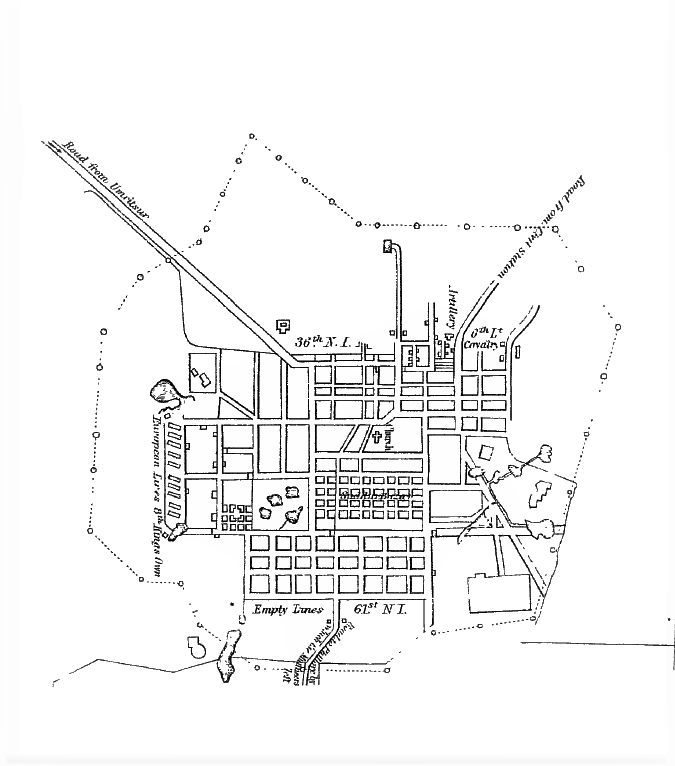
From here, the events are pieced together from conflicting reports. What can be ascertained for sure, is at the first sound of musket fire, a general call to arms was sounded, the officers hastened to their respective parades while the ladies and their children – those who had been imprudent enough to return to their bungalows – flocked to their assigned barracks while HM’s 8th turned out. 200 of them were brought, commanded by Colonel Longfield, to the artillery lines. Olpherts and his men were standing at the ready – everyone was where they should be, anticipating the crisis which was now upon them.
Now began the general confusion.
6th Regiment Bengal Light Cavalry
Raised in 1800
Fought at Laswaree, Sitabuldi, Bhurtpore, Chillianwallah and Gujerat
Honorary standard for Sitabuldi
As in Meerut, the cavalry headed the mutiny. Some of them passed down the back of the parade ground of the 36th BNI, and firing their carbines and pistols, rushed through the lines, declaring the Europeans had turned on them. This ruse had been used before, but to complete it, the mutineers used a new trick – sepoys dressed in white undress uniforms had been sent out as skirmishers across the parade from the direction of the European lines – in the dark, it would have been impossible to differentiate them from the Europeans whose summer uniforms were white drill.
They then galloped, as predicted, towards the artillery approaching Captain Smyth’s native troops on the far right, entreating the gunners to join them and turn their guns on their officers. “This appeal was promptly responded to by a volley of grape, followed rapidly by two or three rounds more, which brought down some of the leading mutineers and a couple of horses, besides wounding a considerable number, and sent the rest in quick retreat.”
Simultaneously, a small body of cavalry and a larger number of infantry came up front near the guns, and they opened fire on the artillery. At this point, however, Brigadier Johnstone stepped in and forbade the artillery to return fire “lest any should really be staunch…” At the same time, a party of troopers moved swiftly through the civil lines and the town, calling out to the Karputhala Raja’s men, who were on guard there, to join them – to their dismay, the Raja’s men opened fire, and the troopers beat a hasty retreat back to the cantonments.
As for the regimental officers of the 6th, they had gathered on the cavalry parade ground. Major Macmullen, known to be respected by his men, was trying his best to restrain them, even physically, as the case may be. “Seeing a trooper in the act of mounting, tried to pull him off, when the wretch drew his pistol and fired, and the ball wounded Major Macmullen’s left hand.” With no words left to oppose them and utterly ignored by his men, Macmullen fell back on the quarter guard. Finding several troopers standing quietly aside, he ordered a roll call and at least for the night, these men remained with their officer.
The 36th Regiment Bengal Native Infantry
(Markum Ka Paltan)
Raised 1800, late 1st Batt. 18th BNI
Battle Honours: Seringapatam, Bhurtpore, Aliwal, Punjab, Chillianwallah, Gujerat.
On the parade ground of the 36th, the adjutant, 30-year-old Lieutenant Frederick John Salmon Bagshaw, was fairing as badly as Macmullen. Bagshaw “rallied about one hundred men of the regiment around him and was apparently bringing them to reason when a trooper rode up and shot him.” Bagshaw lingered on for a few days before dying of his wounds – a veteran of Aliwal and Chilianwallah brought down by a sowar of the 6th Cavalry. Ensign Bates, standing nearby, was wounded severely by a sword, though blunt, which still disabled his right arm for months to come. Only a few sepoys remained faithful and even saved the regimental treasure chest from plunderers.
The 61st Regiment Bengal Native Infantry
Raised 1823, late 1st Batt., 31st BNI
In the lines of the 61st, things were different. The sepoys stood together in small groups, some openly cursing their officers, others in quiet anticipation of what would happen next. Into their midst came Major J.C. Innes, followed by the other officers, calling on his men to remain staunch. He might have succeeded since his men, though talking loudly, were still wavering when a body of the 36th, headed by some sowars of the 6th, moved towards the lines of the 61st. A havildar and some 40 sepoys saw them before Innes did – perceiving the danger, they quickly bundled the officers off the parade ground to the quarter-guard. They quickly threw sheets over the officers and made them sit on the ground while they shielded them bodily from the view of the approaching mutineers. Within moments, the door of the quarter guard opened, and men of all three regiments entered, intending to break open the treasure chests which were very close to the concealed officers. Seeing their discovery was inevitable, an old havildar, just pensioned, called out to the mutineers in an angry voice. He was laying a charpoy in the quarter guard and as everyone knew, he had been recently invalided for rheumatic pains – shouting at the men they were disturbing his rest and he would curse the lot of them if they didn’t cease their infernal racket at once, the mutineers, astonished and perhaps a little ashamed, quickly backed out of the quarter guard, dragging the treasure chest with them.
With no time to lose, the door was bolted shut by the remaining faithful sepoys. They lifted their officers up through a trap door, which led to the roof of the building, and then told the officers to lie down out of sight behind the parapet. The sepoys closed the trap door, and the ones who had joined the officers on the roof resolutely sat down on it to make it impossible to open from below. The mutineers had lost interest in hunting for the officers if that had ever been their intention – instead, they fell upon treasure and commenced squabbling over the contents of the chest, filling their pockets with money. Innes and the other officers remained for the rest of the night on the roof.
It is perhaps a testament to Major Innes more than anything else that at least some of his men stayed true. He had served 29 years with the 61st, and his whole career from ensign to commandant had been spent with his men – he had never requested a transfer or looked for employment in an irregular unit nor had spent more than a day away from his regiment. All the men who saved his life had grown in the 61st with him – as much as he trusted them, they, in turn, believed in him. For their fidelity, Innes ensured they all received promotions; the invalided havildar, for whom there was no rank left to give, was presented with 150 rupees and the other havildar, who had taken Innes off the parade ground, received 200. Unfortunately, not all the officers were shown the same consideration as Innes – three were wounded, Captain Basden, Ensigns Hawkins and Durnford – Hawkins subsequently died of fever.
The Civil Lines
Meanwhile, in the civil lines, another drama was playing out, which could have had fatal consequences had there been a little less luck going around. A Mrs Fagan (the wife of Captain Fagan of the Engineers) and her sister-in-law had from the first absolutely refused to sleep in the barracks. “She had not for a single night left her own house, though it was so isolated from and remote from the barracks; nor on this eventful night of the outbreak would she leave it.”
The engineers had their own treasure chest, and this was kept in the compound of Fagan’s bungalow, guarded by a few sepoys. When the first rattle of musketry broke the night’s peace, Mrs Fagan brashly marched up to the havildar of the guards and told him there were only women and children in the house – their lives, she said, were, on his honour, in his hands. After a moment’s thought, the havildar told Mrs Fagan to return to the bungalow and put out all the lights and told her, “Do not suffer a single person to enter the house, and I will answer for your safety with my life!” He was unable to save the engineers’ treasure, but in the morning, he was found still standing guard, and Mrs Fagan and her family were safely given over to a European patrol sent out to look for them. In similar circumstances, the wife of Lieutenant Bagshaw owed her life to the loyalty of the sepoys; she too was unharmed.
The work of mutiny in Jalandhar, unlike Meerut, lasted no more than an hour and a half, during which the mutineers, after ridding themselves of their officers, left the station – all this in sight of two well-armed contingents of European troops and a ready-to-fire artillery. Johnstone held them back – he refused to allow them to engage with the mutineers, and by 3 o’clock in the morning when they were well on their way to Philour, only then Johnstone resolved on pursuit.
In the next post, we shall see what Brigadier Johnstone did next and what the consequences of his actions meant for Mr. George Henry Mildmay Ricketts in Ludhiana.
Mutiny at Jalandhar June 7th 1857
6th Bengal Light Cavalry
Brevet Major Stephen F. Macmullen – slightly wounded
36th Bengal Native Infantry
Captain Charles Brenton -slightly wounded
Quartermaster Sergeant George Nelson – slightly wounded
Lieutenant F.J.S. Bagshaw (35th BNI) – dangerously wounded. Died of wounds 12th June.
Ensign Charles E. Bates – slightly wounded
61st Bengal Native Infantry
Ensigns
Durnford, H. – killed
Hawkins, F. – killed
Sources:
Cave-Browne, J. The Punjab and Delhi in 1857. Vol. 1. Edinburgh: William Blackwood and Sons, 1861.
Chick, Noah Alfred. Annals of the Indian Rebellion. Calcutta: Sanders, Cones, and Co., 1859.
Cooper, Frederic. The Crisis in the Punjab: From the 10th of May until the Fall of Delhi. London: Smith, Elder and Co., 1858.
Dodd, George. The History of the Indian Revolt and of the Expeditions to Persia, China, and Japan, 1856–7–8. London: W. & R. Chambers, 1859.
Kaye, John William. A History of the Sepoy War in India, 1857–1858. Vol. 2. London: W. H. Allen & Co., 1870.
Punjab Government. Gazetteer of the Jalandhar District, 1883–1884. Compiled and published under the authority of the Punjab Government. Lahore: Government Press, 1884.
Punjab Government. Selections from the Punjab Government Records: Mutiny Reports. Vols. 7 and 8. Lahore: Punjab Government Press, 1911.
Tavender, Ian T. The Casualty Roll for the Indian Mutiny, 1857–1859. London: J. B. Hayward, 1983.
 Mutiny Reflections