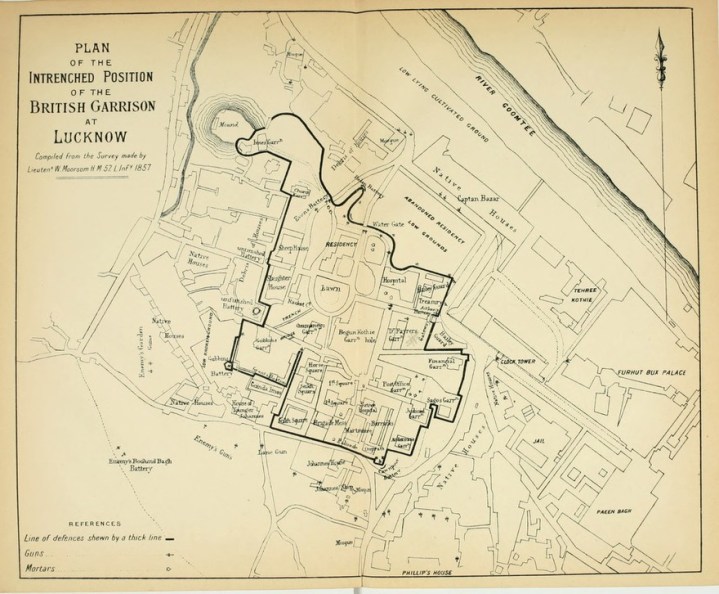
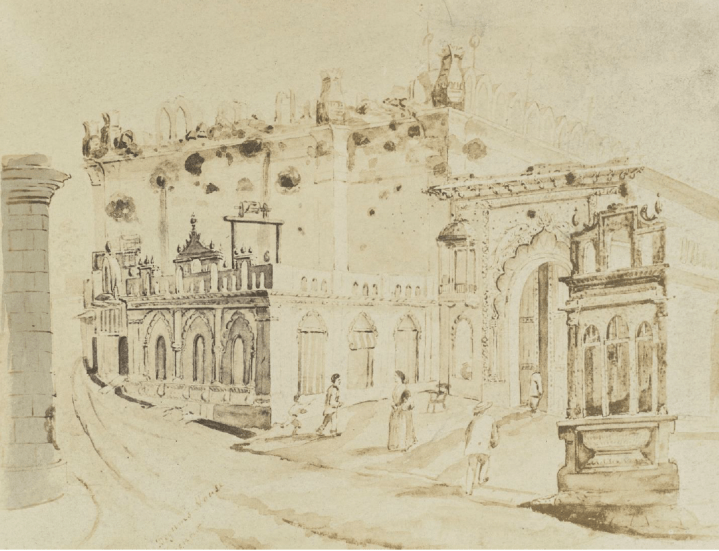
The Siege of Lucknow began immediately after the Battle of Chinhat. There was no more time for preparations. Over the next few months, until the first relief by Sir Henry Havelock in September, the garrison would be on its own. The rebels surrounded the grounds on all sides; anyone attempting to leave faced certain death; the few messengers who did manage to carry notes out of the Residency did so at considerable risk. There would be no fresh supplies, no home comforts, no relief from the heat, the dust and the flies. The near-constant cannonade, the firing of muskets over ground, and the danger of mines underground made these 30 acres of land the scene of one of the deadliest sieges in mutiny history. We will explore the Lucknow Residency, not in terms of deeds or battles, but in terms of the buildings that stood there, and the people who defended them.
Of course, things have changed considerably at the Residency since 1857. The site is open to visitors; however, it remains woefully underappreciated by the history-loving public. Instead, the ruins are now the scene of many an assignation between young couples searching for privacy.
I have been visiting Lucknow and the Residency for just over 25 years – my tenth visit was in 2023; the very first time was puzzling as I had expected to find a museum and instead found a pile of ruins, weeds and above all wasps. Getting to the cemetery was nearly impossible, and finding the posts, such as Germon’s or Anderson was impossible due to the lack of signage. Considering the jungle-like environment I was faced with, it is not surprising I half tumbled over the ruins, which were conveniently hidden in bushes and behind trees. Since then, I have seen many changes, and sadly, not all have been for the better. However, the Residency will remain on my “must visit” list, if only see what has happened in the intervening years.
 Mutiny Reflections