The foresight of Sir Henry Lawrence in stocking the Residency with grain and other necessities prevented the garrison from undergoing the added hardship of starvation. As all contact with the outside world had effectively been cut off, the garrison had to rely on its own supplies and provisions from the beginning of July onwards. Nor did the situation improve when Outram and Havelock arrived: although they succeeded in reinforcing the garrison with some 2700 men, they only brought three days’ worth of supplies with them and precious little baggage. Believing they would be able to evacuate the garrison, they had left almost everything behind at the Alambagh. It was not long before some in the garrison ungraciously looked upon their saviours as more mouths to feed.
Rations
For some, food remained plentiful throughout the siege, especially in those posts where the owners had laid in their own stocks. For others, it was a lean time, and not everyone was fortunate, as Mrs Bartrum sadly writes:
“…rations were served to us: attar, or flour, which we made into chupatties; rice; dall, or peas; salt and meat…These, consisting of meat, peas, attar, rice and sea biscuits, were put together in a saucepan with some water and made into a stew..”
The food itself when turned out, was often green in colour, on account of it being cooked in copper pots which could not be relined during the siege. So what little appeal the stew had to begin with was certainly not aided by its luminous appearance. Mrs Bartrum also notes that the dal “by grinding it between two stones and making it into flour…this is a good substitute for soap, but we have so little of it, that it is a question whether we shall use it to wash with or to eat.”
In the early stages of the siege, full rations were issued daily to everyone in the garrison, of beef, rice, flour, tea or coffee, sugar and biscuits. However, as time went on, the meals consisted mainly of some beef and chapattis. Sugar was non-existent, and though some people, like Mrs Inglis, kept some goats for milk, most of the garrison went without. Tobacco soon ran out, and the men took to smoking neem and guava leaves, with many of them becoming ill as a consequence. By smoking it through an old pipe, there was at least an illusion that the leaves tasted like tobacco!

By the 25th of August, things took a turn for the worse and the garrison was put on half-meat rations. Men were given 12 oz of meat, as opposed to 1 pound. Women and children over the age of 12 received 6 oz, children under 12 were not reduced and continued to receive 4 oz, but children under 6 now were given only 2oz, half of their previous rations. The food itself was neither nutritious nor well cooked. Rees complains his “chef-de-cuisine…a filthy fellow…whom I am obliged to pay 20 rupees a month, results in an abomination which a Spartan dog would turn up his nose at.”
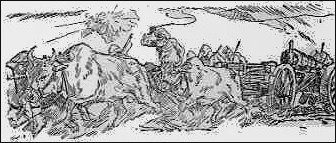
The meat came in varying conditions and quality, invariably consisting of a large quantity of gristle and bone – women and children, more often than not, got more of the latter. Too tough to roast, it was served up as stew. Mrs. Bartrum tried to tenderize the meat by beating it with stick for half an hour and ineffectually cut it into pieces with a pair of nail scissors before stewing it. The meat came mostly from gun-bullocks, which were neither well fed nor the youngest animals.
The grain was coarsely ground and made into chappattis, while lentils and rice made up the rest of the standard fair. There were no bakers in the Residency and it was considered that baking bread for the whole garrison would be a task too difficult for the ladies. Only those who had private means could avoid drawing too heavily from the commissariat for rations, and many, like the Martiniere boys, ended up eating broth made of animal heads. The lack of fresh fruit and vegetables led to cases of scurvy, unhygienic food preparation gave rise to bowel disorders and poor nutrition complicated the recovery of those already weakened by illness and injury. In late August a large supply of grain was found stored in a plunge-bath near the banqueting-hall. As a consequence, there were more provisions available to the garrison – this grain had been the contribution of local merchants, was not on the military commissariat role and had subsequently been “forgotten”. It was this late discovery that saved them from starvation when the reinforcements arrived in September but by no means did it waylay the fear. Mrs. Inglis narrated the following: “A poor woman, Mrs. Beale by name, whose husband, an overseer of roads, had been killed during the siege came to-day to ask me to give her a little milk for her only child, who was dying for the want of proper nourishment. It went to my heart to refuse her; but at this time I had only just enough for my own children, and baby could not have lived without it. I think she understood that I would have given her some if I could.”
It is to be understood, that the grain was not ground before it was stored. As a consequence, it had to be ground before use – a task often given to the older Martiniere boys who were strong enough to undertake the task.

Chapati recipe
Sieve 230gm of atta flour with a pinch of salt in a large bowl, make with a well in the centre and gradually add small amounts of water as required. Kneed well until the mixture is smooth firm and elastic. Then form the dough into a compact ball. Cover and set aside for at least 15 minutes. Make individual balls the size of golf balls.Flatten the individual balls into a circular shape with your hands and dip both sides into flour. Scatter a little flour onto a rolling surface and using a rolling pin, roll the dough outwards into a circular shape about 1/8″ thick, turning it over as required. Heat a tawa on a high heat and then turn down to a medium heat.Place the rolled chapatti on the tawa and allow to cook for about 30 seconds. Turn and cook the second side for a minute until small brown bubbles form. Turn over once again and place onto the flame until the chapatti fills with air. remove from the flame and serve.
 Mutiny Reflections
This proves once more, we are only able to hold up our so-called sophistication, ethical standards and rationality, as long as our life’s and comfortable living conditions are not under threat. As shocking as it must appear to us over civilised members of the human species, extreme circumstances as those you have described, inevitably revive the survival instincts of the beast.
LikeLiked by 1 person