Tinned Food
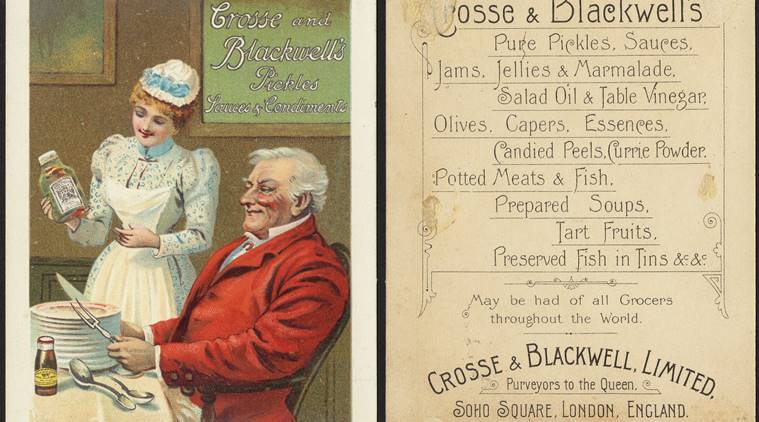
The merchants Deprat and Sinclair, had been allowed to bring the stocks of their stores into the residency but in the case of Deprat it wasn’t necessarily standard siege fare, consisting of a large supply of pickled salmon and truffle sausages. It must be remembered, that preserving fresh food in 19th century India without refrigeration was problematic so eating tinned food was not uncommon, although it would probably have not been procurable outside larger stations.
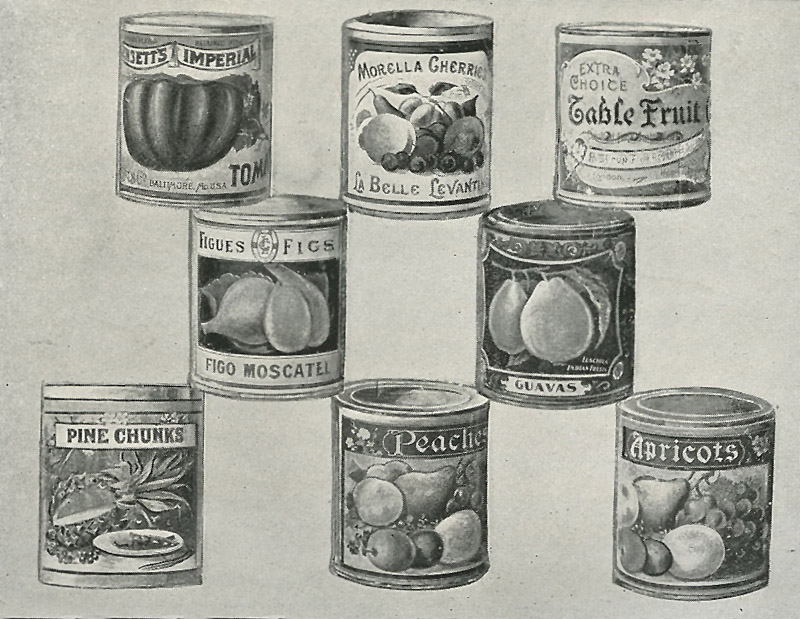
The first patent for canned food was granted by King George III in 1810 to a British merchant named Peter Durand. It is then no surprise, that eventually cans made their appearance in India. However, it was not a British invention – in 1795, it was Napoleon who offered a prize of 12’000 francs to anyone who could invent a way to preserve food for the army and navy. The first attempts might have been shady – the winner of the prize, Nicolas Appert – a young and very enthusiastic inventor – it would take him 15 years, but finally Appert revolutionised a technique of preserving food by partially cooking it first and then sealing it in bottles with corks and finally immersing the bottles in hot water to make them airtight. His reasoning was right – an airtight container would keep food fresh. He initially used champagne bottles sealed with a concoction of cheese and lime. He understood the principles of preservation but could either remove the air or preserve the food with heat, he just could not do both. He moved on to using wide-necked glass bottles and eventually, by 1804 was sending his goods (which now included a variety of foods from fruit and vegetables to dairy products and fish), to navy to try out – he even added preserved meat to the menu. It was a rousing success. It was another Frenchman, Philippe de Girard, however, who came up with the idea of cans. These first cans, made of tinplate, with a soldered lid, though heavy, were certainly better than Appert’s glass bottles which were liable to explode under pressure. The method was simple – he placed the food in the container, sealed it, put it in the cold water which was gradually brought to boil, the lid would then be opened slightly and then sealed again. If the tin did not swell up, it was safe to eat. French red tape forced Girard to come to London and try out his invention on members of the Royal Society. Girard would eventually make use of the merchant Peter Durand as an agent to patent the idea – as Girard, being French and England at war with France, made it impossible for him to use his own name.
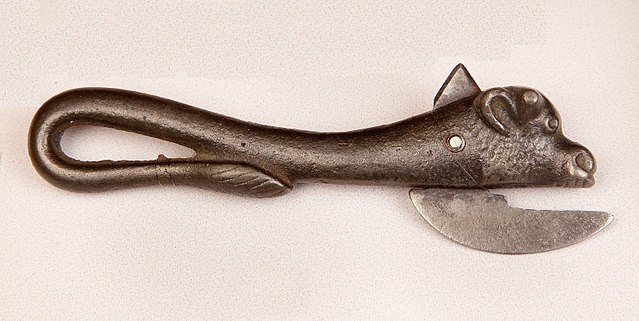
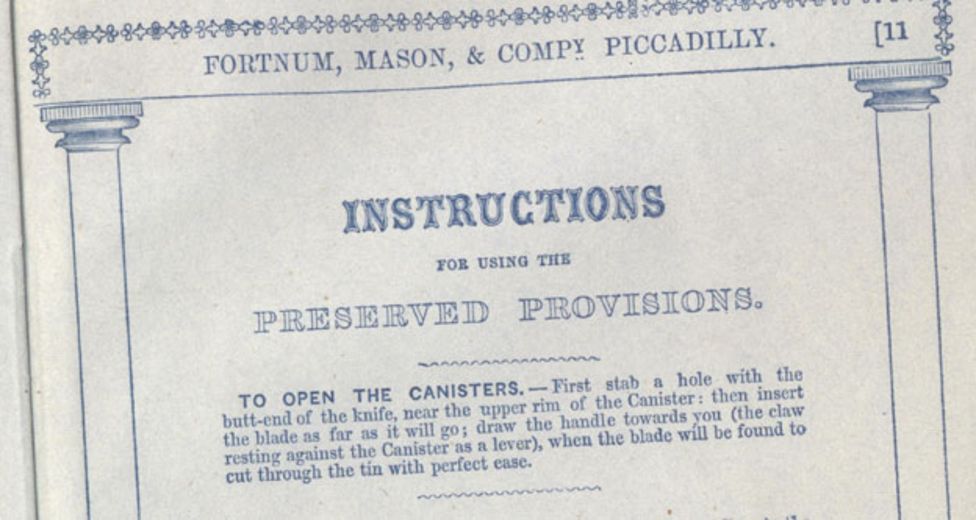
Tinned food, unfortunately, pre-dated the humble tin opener by nearly three decades. Early cans were heavy and made of tin-plated steel or cast iron, so the lids had to be hammered open or stabbed open with a bayonet. The first tin opener was patented in England in 1855 – but these worryingly dangerous inventions were hardly a staple in the kitchen. Only with the invention of the wheel tin opener in 1925 did they become more common.
When the joy of the arrival of Havelock’s relieving force had subsided, the garrison was heard to
grumble – there were boxes of clothes at the Alambagh, but no one had thought to bring them.
They had failed to bring a single baker, and that there was nowhere to bake bread did not seem to
have occurred to anyone) or provisions of any sort with them– the garrison, already hard pressed
and for food, Havelock’s men would now have to feed themselves, too. To his defence, Havelock had not expected to become one of the besieged nor had he anticipated being cut off from the supplies he
had left at the Alambagh.
Alcohol
There are indeed very few recorded cases of drunkenness and these only in the first part of the siege. That a quantity of alcohol was kept in the hospital stores is not without credibility – indeed patients too weak for chloroform, were put “under” with champagne or brandy as a way to help them face the horrors of amputation. Deprat’s stores were broken into and Rees leaves us his following account, with more than a hint of irritation:
“We are at night several times, called “to arms,” but these alarms prove to be false ones. This was fortunate, for if the enemy had made an attack he would have found most of our men at the Cawnpore battery in the last stage of intoxication. The men had found their way for some days, notwithstanding all precautions, into our cellar, and had of course diminished the large quantities of champagne and brandy stored up there. The claret and Haut Sauterne had not found many admirers, and remained untouched; but Deprat’s chests, with valuables and gold and silver watches in them, had likewise been broken open and rifled. In the position in which we were, no search could be instituted, nor could the culprits be punished. The only thing which could be done, and which the Brigadier did, was to get what remained removed to the school-houses and have it sold by Mr. Schilling, the principal, to whatever gentleman desired any. Officers, of course, had the preference, and in the course of a couple of days, nothing remained.”
Alcohol was a common component in 19th century medicine and the Siege of Lucknow bears witness to this. It played a part in the daily routine, not for its intoxicating effects but for its medicinal qualities – it was believed to aid as a digestive, and, in the place of flour and other carbohydrates, the consumption of alcohol,
especially beer, served as a replacement for a lack of nourishment. As it began to run out towards the end of the siege, great care was taken to preserve the remaining supplies for the sick and patients in need of sustenance. Porter was especially in demand; known for its restorative properties; during his recovery from a bullet wound, Dr. Brydon was liberally dosed with brandy to aid convalescence.
 Mutiny Reflections
This proves once more, we are only able to hold up our so-called sophistication, ethical standards and rationality, as long as our life’s and comfortable living conditions are not under threat. As shocking as it must appear to us over civilised members of the human species, extreme circumstances as those you have described, inevitably revive the survival instincts of the beast.
LikeLiked by 1 person