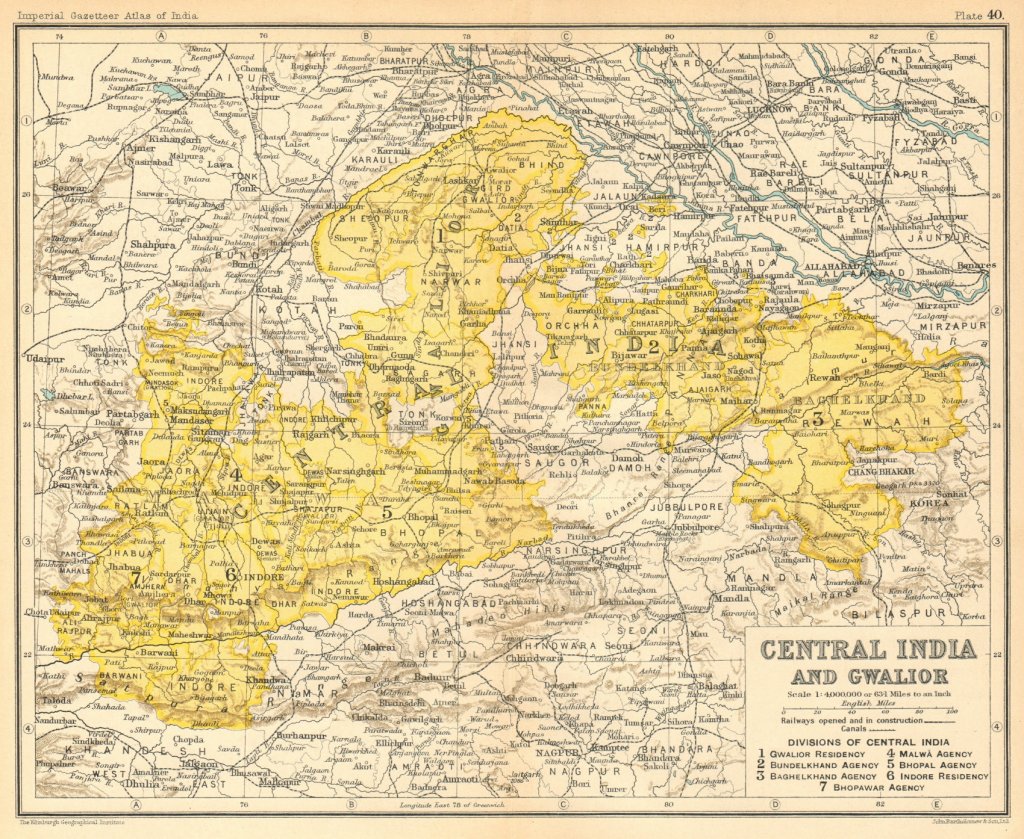
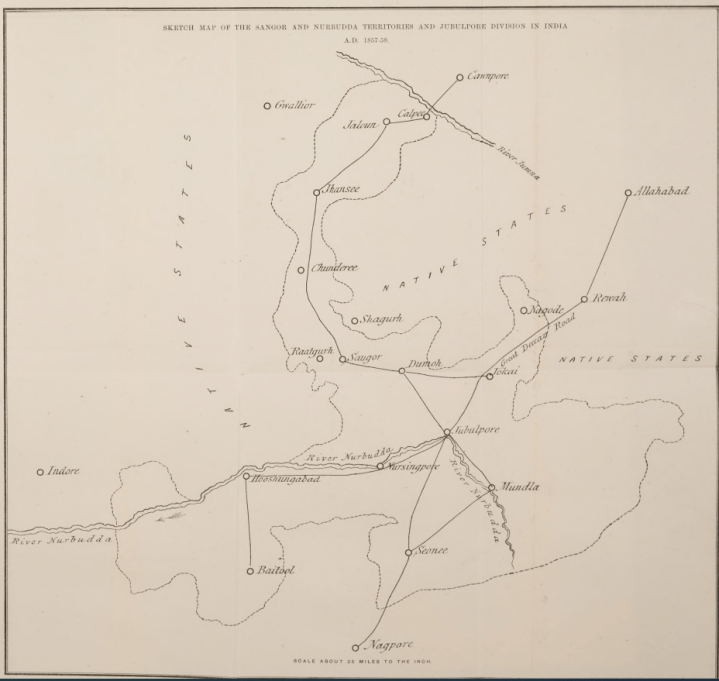
Central India was, as it is today, a vast area, comprising mostly of the tableland of Malwa, a highly cultivated area, broken up by small flat-topped hills and low ridges. A multitude of rivers flow through the area, including the Chambal, Sindh, Banas and Betwa, all draining into the Jamuna on the north, with the Narbada and its tributaries on the south. Much of the country was, in 1857, densely forested, especially in the hill regions, and these at the time were but sparsely cultivated. The inhabitants of Central India are as varied as the landscape – Pathans, Mahrattas and Rajputs, and the forest and hill-dwelling aboriginal Bhils and Gonds. With such a variety of castes, creeds and languages, Central India could be seen as a country of its own – the Marathas certainly thought so.
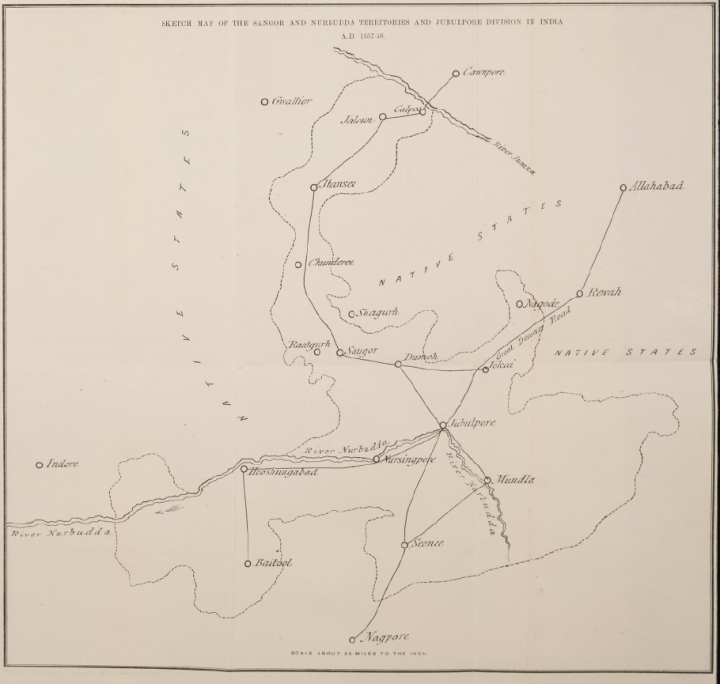
Many of the regions in Central India where the rebellion took place had been the scene of operations during the Anglo-Maratha War of 1817, which had led to the end of the Maratha Confederacy, the nation founded by Shivaji, broken up, and the territories of the last Peshwa annexed. Included in the theatre of operations in 1857, south of the Cawnpore-Agra line, included Central India -Gwalior, Western Malwa, Indore, and Bundelkhand with Jhansi, a portion of the Central Provinces then called Sagar and Narbada Territories and parts of Rajputana (today called Rajasthan)
As we have already seen, Peshwa Baji Rao II, overthrown in 1817, was still not quite the distant memory the EICo would have wished him to be. His successor was his very disgruntled adopted son, Nana Sahib, whose understandable fury at Dalhousie and the Doctrine of Lapse aside, had aspirations not just to overthrow the English but to reinstate the Maratha Empire. Although not everyone wanted Nana Sahib in particular as their leader, there was certainly little opposition to his actual plans, and it took but “little encouragement to kindle into a blaze…the whole country from the Jumna to the Krishna and Tunabhdra…” It was not only a revolt of the army in Central India but of a nation. The Nana Sahib had been busy for months, possibly years, before the uprising of 1857, sowing seeds of dissension throughout the lands he thought by right were his; his childhood friend, the Rani of Jhansi, had her own grievances against the EICo, and she would finally follow the Nana’s call. The Nana had spent much of early 1857 travelling, even as far as Kalpi on the banks of the Jamuna, and had sent his agents far and wide throughout the former Maratha country. He was hoping it would seem for a clear and decisive uprising, all of Central India falling in behind his flag. With Gwalior and its mighty contingent 70 miles from Agra, it was no wonder the Nana was particularly keen to have Scindia as an ally, yet had already seen that things did not go exactly to plan. He also had Holkar at Indore to contend with. We shall look into Holkar’s history later and in some more detail than presented here.
On the eve of rebellion, Central India stood, it can be said, on the threshold of change. The EICo, as in many of their territories, had to a greater extent taken their strategies of so-called development to extremes, encouraging capital gain, promoting trade and removing without much care the traditional institutions of farmers and their landlords. What they continued to forget, as bad as a leader might be in the eyes of the EICo, he was the man the people of the land understood and would follow. A foreign government, no matter what their intentions were, would remain what they were – invaders. Although the British were able to prove that, in some cases, their rule was profitable for the people, it always came at a loss for the same people who were, in essence, robbed of their identity. In Central India, one of the main problems was debt. The British viewed the situation with some disgust: “…many of the chiefs own very large estates, either rent free or from which they pay a quit rent to government, and nearly all of which are neglected or grievously mismanaged. The chiefs are illiterate, some of the debauched…and are so deeply involved in debt that many of them cannot honestly maintain themselves, families and numerous other adherents, nor satisfy their creditors, or their followers, and the latter…greatly plunder their neighbours…”
It was, to some extent, a rule of lawlessness and the British were determined to put an end to it. They treated the indebted chiefs with severity and, in 1856, called into life direct management.
“…owing to their being exempt from the operations of the ordinary Civil Courts, shall be called on for a schedule of their liabilities, and to make immediate arrangements for the settlement of their debts, if they fail in doing so, the creditors shall also be called on to come forward and register their claims…The Chiefs…shall be invited to place their estates under the management of the District Officer…Should the Chief not agree…the same shall be reported to the Commissioner, who will either direct the estate be taken in trust, or place the Chief, at once, under the ordinary Civil Courts. When an estate is taken in trust, the chief’s management shall cease. The District Officer will then nominate a paid manager…The District Officer shall, after paying the Government Demand, put aside a fair sum for the maintenance of the Chief and his followers. If the Chief should become again involved…he will be at once declared liable to the Ordinary Civil Courts…The District Officer may lease out the villages of an estate as he sees fit.” (W.C. Erskine to W.C. Western, 11 July 1856)
Despite this, many estates continued to wither away under massive financial problems. There was nothing noble in the EICo’s intentions. They were not as concerned with the welfare of the chiefs but more so with the loss of revenue a failing estate meant for the company. To maximise their profit, the government continued to investigate cases of maufi land – land which had been granted revenue-free in return for services to the state – and quite deliberately encroached on traditional lands. There was, of course, much confusion in this regard, and the EICo simply added to it by trying to figure out to whom the land had belonged initially and returning it to the “rightful” owners in the settlement drive that plagued District officers throughout their territories for years. Gubbins and many others spoke out against this since there really was no way to ensure it was fair; someone would always lose out. In 1855, they attempted to crawl out of this rather large hole they were digging by detailing officers to deal with the larger estates and leaving settlement officers to handle the smaller cases. Although this hurried the process along for smaller plots, it did not really help much with larger ones. In 1856, the government declared “that incumbents at cession were to hold for life, but their heirs would hold for the term of the settlement progress. Otherwise, the state was to resume all maufi grants” (David Baker, Modern Asian Studies, 1991)
Though this might have cleared up one point, it did not deal completely with the larger estates. The EICo still saw these as hindering rural progress, and they had begun investigating tenured rights as far back as 1834, but the problem was more far-reaching than that. The breakup of a large estate meant the inevitable loss of status for its current owner, so the government took up a policy of investigating these when the owner died, taking into consideration the rights of the incoming heir. Settlements were often changed, revised, opposed and granted in cases which could take years, during which time, the progress the EICo so craved was hampered, and the problems of bad management and debt were not actually solved. A combination of “high assessments, coercion and failing seasons” had forced many a landowner even deeper into debt, thus alienating them further from the government, which saw them as sinners, one and all.
Not everyone on EICo pay was happy with this situation. Sleeman often complained loudly and very vocally that the government assessments were too high, they had failed to consider the actual effects of drought, and that much of the debt incurred was not just due to their “debauched” ways but due to nature herself. It was a very complex problem without any easy solutions. It started with the chiefs and went all the way down to the tenants, who were more often than not in debt with moneylenders simply to pay off the exorbitant rates demanded from the landowners, leaving them poor and starving.
Amid this mess, the EICo still had time to consider how it was going to turn a profit. They instituted forestry departments to manage more effectively the vast tracts of jungle, from which valuable teak and other hardwoods could be extracted. Sleeman forbade the indiscriminate cutting of trees without a permit because the land belonged not to the people but to the government. By 1852, the first official conservators of woods and forests were appointed for all forest that was not part of a settlement case and in 1854, it was proclaimed that “the Government reserves to itself the rights to all large forests, where valuable timber exists….Where large tracts of lands either forests or cultivated exists, the Government also reserves the right to dispose of such as it may think proper.” Officials in forested districts were instructed to stop issuing permits for cutting and to hand over the teak and other forests to the appointed officers. In the same year, the provincial government of the Northwestern Provinces, under which Central India fell at the time, prepared to demarcate and reserve entire forests simply to utilise them for their own profit. While they portioned and parcelled off forests, the indigenous people, namely the Bhils and Gonds in Central India, who lived in the forests and hills, were being trampled on.
The government, in its drive for development, determined who could do what. They slated much of the fertile land in Central India to grow wheat as it was the most profitable crop for them, regardless of whether the peasant population could do anything with the surplus, without taking into consideration the traditional crops of the region. Wheat eventually won the war, becoming the prime export of Central India by 1853. They also implemented projects to move goods more quickly and efficiently out of the area – roads, bridges and railways. The intention on the outside was “development”, but in essence, it was simply a way to shift profits more quickly from one end of the country to the other. Besides wheat and wood, there was much to be made of the iron and other metals which naturally occurred in the area. On the upside, this led to an improvement in the economy of Central India. With goods shifted out, others were brought in and traded. Salt, sugar, spices, brass and copper utensils from the north and rice from the south were the principal imports. Iron, cloth, leather and timber flowed in ample quantities out of Central India. A substantial merchant community sprang up that quickly took control of the import and export trade, and as communication improved and the demand for agricultural produce increased, prices, too, started to go up and stabilise.
Where the Central India Agency stood in 1857 was described quite fittingly as such: “In short, every aspect of agriculture and agricultural life was either in the process of change or at the point of incipient change…far more rapidly in the lowlands than in the hills, and in the Cotton and Wheat Zones than in the Rice Zone.”
This foreign government had essentially turned Central India on its head. The local chief, depending on their debt, had either had to relinquish their holdings altogether to outside management or had had to see their estates decreased or settled with losses. It cannot have been much of a surprise when these chiefs rose in rebellion. The main opposition the British faced was from a multitude of disgruntled Bundlea chiefs, many of the same mindset that had made Scot’s escape from Nowgong such a misery. In other parts of Central India, they would meet marked resistance from the Gonds, a tribal people who had been ruthlessly trampled on by the EICo’s forestry claims, leaving many barred from their traditional homes. They were further exploited by the settlement of farmers into their lands, and in all, their demands had been largely ignored by the EICo. Many Gond thalukdars and thakurs openly joined the rebellion. In other areas, Lodhi Rajas and thakurs participated in the revolt, notably, in Damoh, Mandla and Narsimhapur, with additional outbreaks in Sagar, Jabalpur and Seoni. Everywhere, they joined the Gonds and Bundelas in defying the EICo. Their intention was to reverse the efforts of the government to change the very structure of their homeland. The rebellion in Bundelkhand started in Jhansi and quickly escalated, swallowing Nowgong and the little station of Lalitpur in the Jhansi District. There was not exactly a mutiny in Lalitpur -the officers, suitably terrified of the local Bundelkhand chiefs, took the decision to leave before anyone got the idea to cut their throats. However, by abandoning their post so prematurely, they left an open door for rebels to march practically unhindered and put themselves in all sorts of trouble.
Jhansi
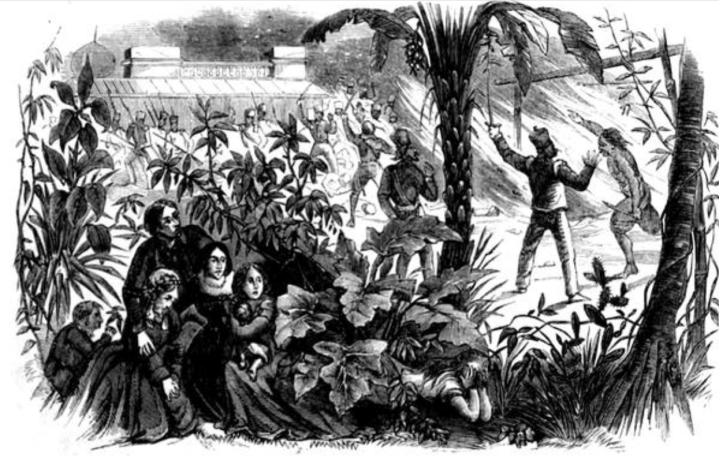
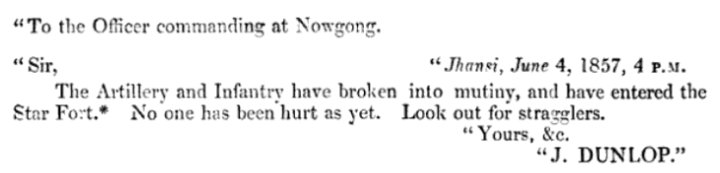
Mutiny reared its head at Jhansi on the 1st of June with the tell-tale sign of incendiary fires with some officers’ bungalows being burnt to the ground; this was considered a mishap caused by the dry, hot weather and prevalent winds; however, four days later, Captain Dunlop and two other officers of the 12th BNI (one wing, the other was at Nowgong) were shot dead by their men, who promptly joined their comrades in the one squadron of the 14th Cavalry. Only now did Captain Skene perceive any danger and ordered the Europeans into the fort. It was a small and sadly pathetic force, made up of 55 people, including many women and children: only four of the men were soldiers or had had any military experience at all. They had nothing but ill luck in abundance. On the 8th of June, even this ran out, and the terrible conclusion to the siege was a massacre.
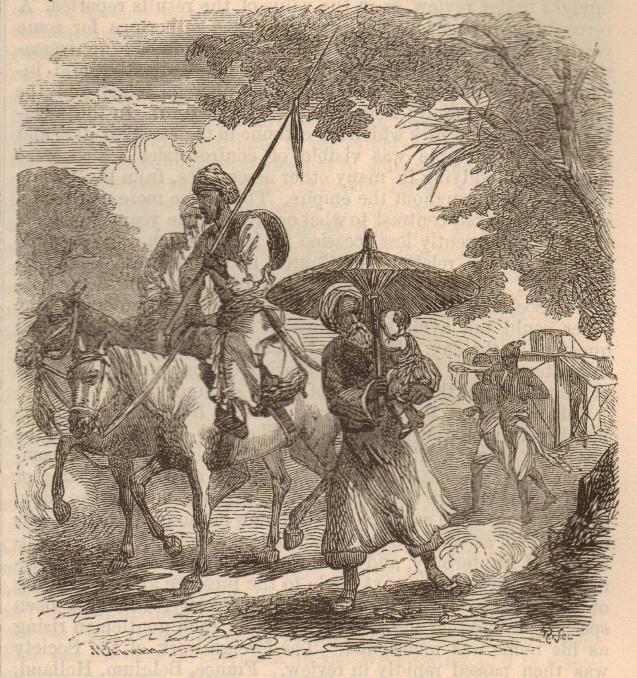
At the nearby station of Nowgong, things were only marginally better, and there would be escapes. However, the escape would turn, first, into a chase and then an all-out hunt for the fugitives, who would now have to face the horror of the heat and the anger of the peasantry as they vainly try to make it to safety.
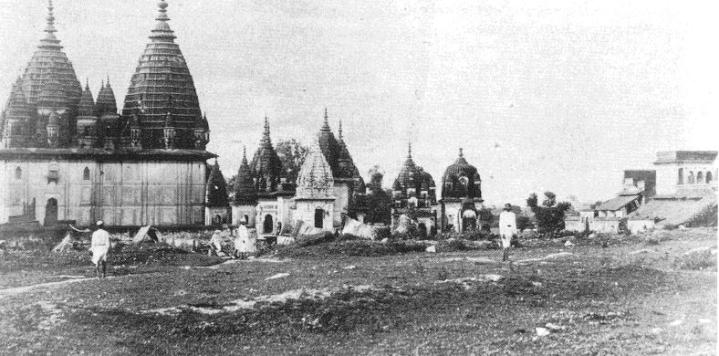
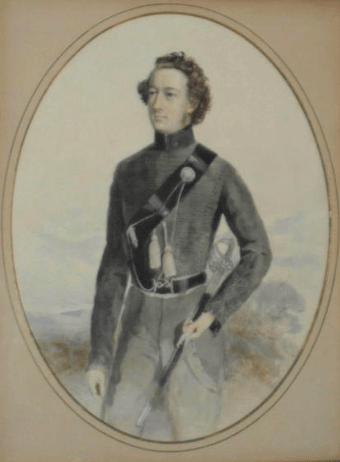

Other Mutinies in Bundelkhand
These complicated and often overlooked events of the Indian Mutiny play out well away from the epicentres of Delhi and Lucknow. There are mutinies, escapes, reluctant rajas, moody rajas and shouty officers, all set in a nearly inhospitable landscape, hundreds of miles away from assistance of any kind, and the story of the Central India Agency continues in
- Lalitupur & Sagar
- Damoh & Jabalpur
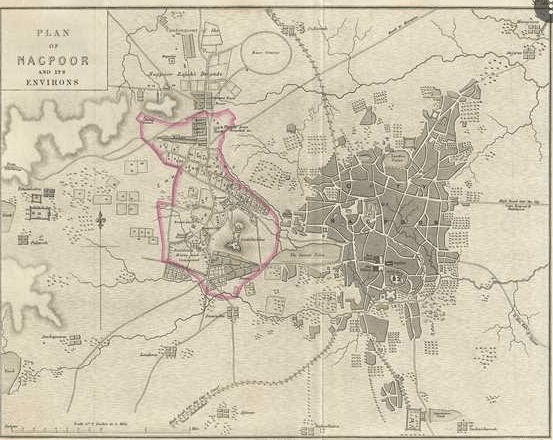
- Nagpur – the mutiny, or not, and the birth of the Nagpur Moveable Column
In the final chapter, we explore the demands made by the various officials on the Nagpur Moveable Column and the demise of the 62nd BNI.
Sources:
The Indian Mutiny to the Fall of Delhi – compiled by A Former Editor of the Delhi Gazette (1857)
Central India During the Rebellion of 1857 and 1858 – Thomas Lowe M.R.S.C.E., L.A.C. (1860)
Kaye’s and Malleson’s History of the Indian Mutiny of 1857-58, edited by Colonel Malleson, C.S.I, Vol V. (1907)
The Revolt in Central India 1857-58, compiled in the Intelligence Branch (1908)
Baker, David. “Colonial Beginnings and the Indian Response: The Revolt of 1857-58 in Madhya Pradesh.” Modern Asian Studies, vol. 25, no. 3, 1991, pp. 511–43. JSTOR, http://www.jstor.org/stable/312615. Accessed 20 Aug. 2022.
 Mutiny Reflections