The Kampti Movable Column
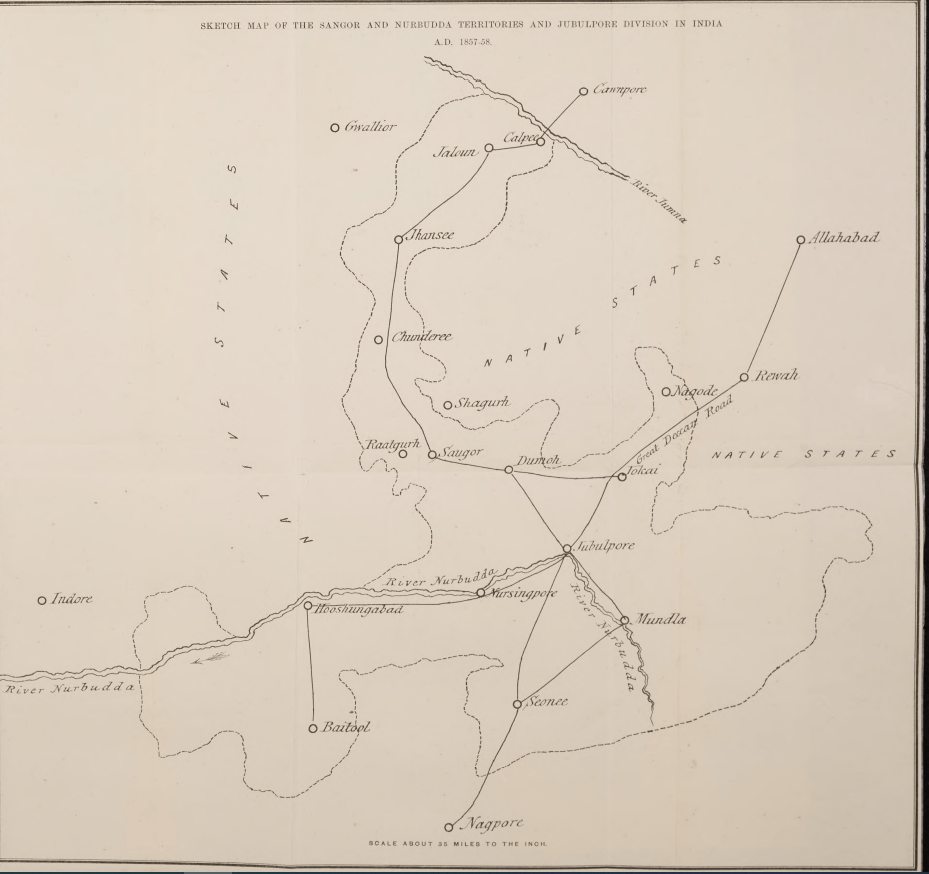
Commanding: Colonel Millar, 33rd Madras Infantry.
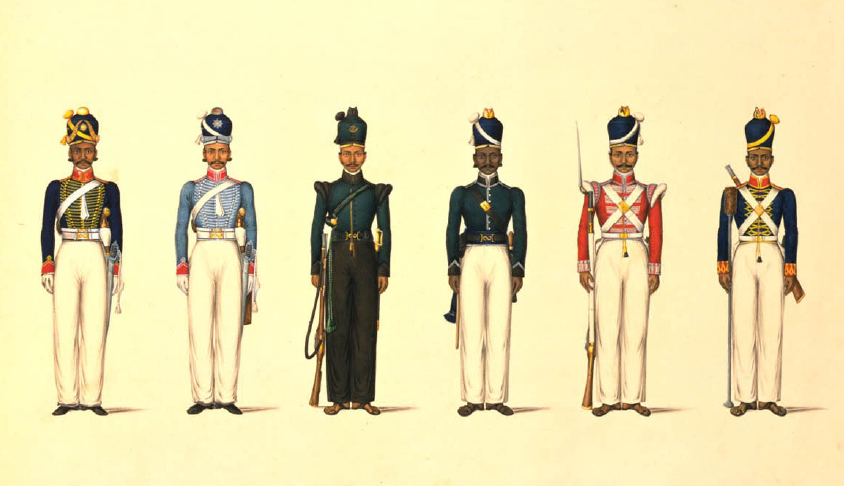
One Squadron. 4th Madras Cavalry—92 sabres under Captain Tottenham.
D Company, 3rd Battalion, Madras Artillery – 64 rank and file, (Europeans) six guns, under Captain Jones.
Headquarters, 33rd Madras Infantry— 425 rank and file.
Rifle Company, 1st Nagpore Irregular Infantry – 91 rank and file, under Lieutenant Pereira.
On 17 July, Colonel Millar took to the field with the newly formed Kampti Movable Column, raised with the sole purpose of moving through the Sagar and Narbada and stamping out the rebellion. It was not a particularly large force, but it was well-organised and the Madras men of which its ranks mainly consisted had, by and large, shown themselves to shun mutiny. They could also be employed to keep an eye on the Nagpur Irregular Infantry and its small contingent of 91 men.
Their first stop was Jabalpur, where they arrived, “ much to the delight of the European and loyal native inhabitants; and, strange to say, the majority of the 52d went out unarmed in their undress to meet them, though only a few days before they had expressed great fears of being disarmed by this force.”
It was truly an odd state of affairs.
Colonel Millar was immediately beset by Major Erskine, who requested him to garrison his force in Jabalpur. Millar replied that his orders were to move against the rebels. He would go wherever Erskine sent him, but he would neither remain in Jabalpur nor divide up his force. Erskine had hoped to realise his own plans –
“The Commissioner had all along resolved to leave a portion of this little force at Jubulpore, and to take the rest with him out towards Dumoh, Shahgurh, and Saugor, recover the European prisoners, and resettle his districts; and he increased the force by bringing up two companies of the Madras 28th Native Infantry from Nursingpore, also some irregular cavalry he had raised, and two companies of the 52d were also added to it..”
Millar remained adamant – even when Erskine asked him to just leave 150 men and two guns at Jabalpur instead of the whole force, Erskine met with a resounding no from the Colonel. Miller’s assessment of Jabalpur was quite reasonable. Unless the rebels moved in with artillery, the garrison and their defences were actually quite safe. He did not think it likely there would be an artillery attack, and as such, he determined to leave Jabalpur as soon as possible. Messages were coming from Damoh, and they were certainly more urgently in need of aid than Jabalpur. As such, Miller determined to march to Damoh. It was only 65 miles away, but the monsoon rains were falling hard, and he had no choice but to stay in Jabalpur and wait for the rain to abate.
Although unable to move from Jabalpur with the heavy guns, Millar sent off the two companies of the 52nd that had just been attached to his column. Lightly equipped, they were sent off under four of their European officers to secure the boats at Katangi on the Hiran River to ensure that when Miller finally arrived, his force could cross unhindered.
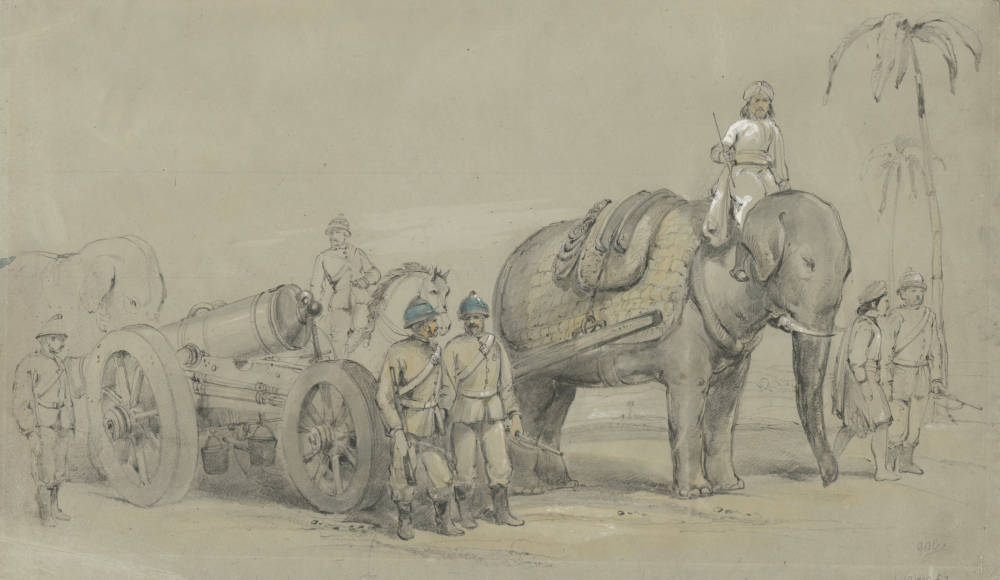
The ever-enthusiastic Major Erskine approached Millar’s impending march with much zeal. He ordered the making of large basket pontoons covered with leather used for crossing rivers, organised light bedsteads for every European gunner, distributed waterproof covers to all the soldiers, both European and Indian, to roll their bedding in, and if needs be, shelter them at night. He wasn’t quite finished. Jabalpur was thrown into a frenzy of work: supplies had to be procured, a commissariat department established, and lastly, Erskine coerced the local chiefs to lend him elephants. He used a similar tactic as with the bankers: if the chiefs refused, it would show Erskine they were disloyal to the Government – if the chiefs did not know the consequences for disloyalty by now, they must have been asleep. The pachyderms were to be used to draw the guns and carry supplies – any animal lost, injured or killed would be replaced. To make up numbers, Erskine even bought a few outright. He then promised all the troops double batta – since he had practically set up his own mint at this point, who was going to pay the batta was anyone’s guess. But as an incentive, the promise certainly went a long way.
The two companies of the 52nd had been sent on ahead – their destination was Katangi on the Hiran River. They had marched on the 7th, and after securing the boats, their commander, Lieutenant Oakes, after posting a detachment to keep the place safe, marched the rest off to Damoh, from whence the pleas for help were by now most persistent, and Oakes found himself obliged to answer. With his men, he forced his way to Damoh, skirmishing with the rebels for most of the two-day march. There was much work to be done on Damoh, and Oakes elected to stay – the attacks on the town by the rebels were now daily, and every reinforcement was needed to keep them at bay.
The districts of Damoh and Sagar were still, except for the larger stations, entirely in the hands of the rebels. All the police had either deserted or been driven away, and hundreds of Malguzars, well-intended or otherwise, were forced to either join the rebels or assist them with supplies – if they failed, their villages were plundered, and they themselves were often tortured into compliance. Postal services – the ever-reliable daks – had stopped, and the messengers were either dead or too terrified to carry out their tasks, for many had been stopped by the insurgents and mutilated. Into this state of utter anarchy, Millar’s force was about to move.
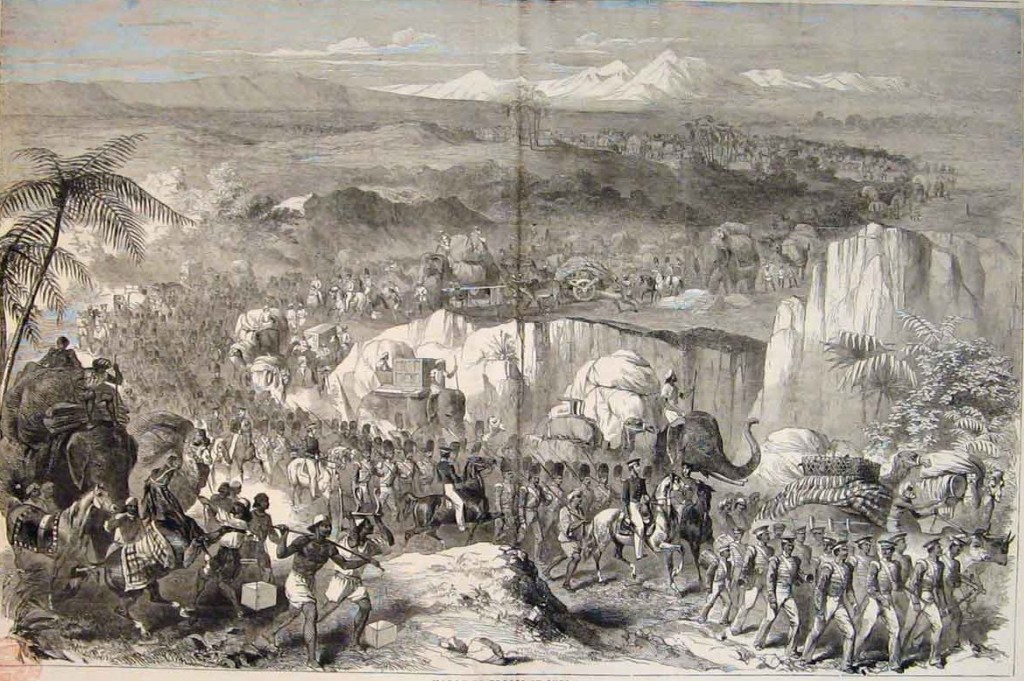
The rain had certainly put a damper on Millar’s plans. He finally decided it was useless to stay in Jabalpur any longer, and, with a small gap in the weather, the movable column left the station on 17 August. The advance had “a good effect on many of the rebel chiefs, and it encouraged the faithful.” However, the first day’s march, much hindered by the muddy roads and awful rain, only saw the force 9 miles out of Jabalpur. “Indeed the 9 -pounders daily stuck deep in the muddy roads, and could not have been moved had it not been for the ever handy elephants, some of whom pushed with their foreheads, others put their shoulders to the collars made for them by order of the Commissioner, and others turned the spokes of the wheels with their trunks.”
After one more march, Millar arrived at Katangi. The detachment of the 52nd, left there by Oakes, was delighted by their arrival. Being housed in a comfortable serai, the men quickly brought out their own tents and pitched them for the rain-drenched Madras sepoys. They would need them: the guns and a portion of the infantry would only arrive three days later, and Miller would be forced to halt at Katangi until 26 August, on which he would manage to march his force only 17 miles to Jabbera.
He had sent the Rifle Company on ahead to seize the boats at Nohta on the Birma River, and while the elephants struggled through the mud, pushing and pulling the guns, Miller could do nothing but ride on slowly ahead of them. They finally reached Damoh on 28 August, and Miller was able to ride up to the jail fort, to find that the treasure was safe, and all the troops, including the two companies of the 52nd, were doing their duty most admirably. He also had the satisfaction of watching the rebels, who had until then been annoying the town to no end, move off, putting a reasonable distance between themselves and the movable column.
 Mutiny Reflections