Brigadier Sage Makes Demands
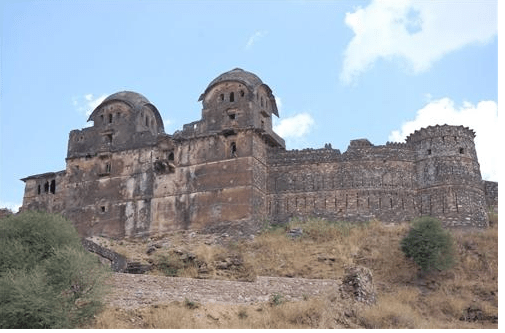
No sooner had Miller arrived in Damoh than the senior officer with the detachment of the 31st told Colonel Miller that Brigadier Sage, still holed up in Sagar, had ordered the Madras column to disarm the 42nd BNI at Damoh. Whatever Sage’s problems might have been in Sagar with the 42nd, they certainly did not present themselves in Damoh, and if it had not been for the staunchness of the 42nd under their Havildar Ranjit Singh, the town and the treasure would have long been lost. Miller refused, but Brigadier Sage wasn’t finished. As the senior-most officer, he then told Miller to hand over the command of the moveable column to him; he intended to keep the column in Sagar and use it at his discretion, not dissimilar to what Erskine had tried to do in Jabalpur.
Messages were sent to Plowden back in Nagpur – livid, Plowden sent a message directly to Lord Canning. Canning, who, probably bewildered by this petty but serious bickering, sent instructions back to Damoh and, indeed, Sagar and Nagpur. The column would remain under Colonel Miller and the Commissioner – all interference by Brigadier Sage was to cease immediately. Sage remained in his fort with his staff, the ladies, the children and the artillery – the rest of the men, civil and otherwise, had long since been sent on other duties: Pinkney was already in Damoh with his men, and the others were keen to join Miller’s force. Sage would have to hold out a little longer.
The Kampti Movable Column was again doing anything but moving. They needed supplies, and parties were constantly being sent out to deal with insurgent forces. They were also charged with bringing some order back into the immediate vicinity, and as such, there was much work to be done, reinstating the abandoned police posts and securing the roads.
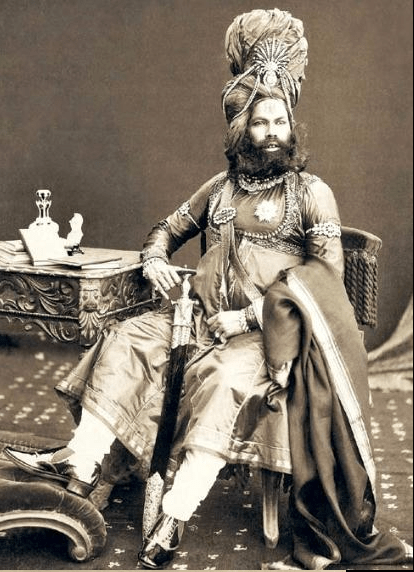
In Damoh, however, the British did have one admirable ally – Narpit Singh, the Raja of Panna State, whom we have already met in “Duty Over Life.” He had for some time been employing his forces to not only hold Kalinjar Fort but also actively fight the rebels in Damoh. He used his considerable influence to protect outposts around Damoh, and his assistance would soon be called on for more difficult work. As September progressed, the 52nd BNI was about to shake off its last vestiges of loyalty and rise in open rebellion. It was not completely unexpected, but it might have been avoided.
For this, we must take a look at two incidents – Nagode and Jabalpur.
Until September 1857, the 50th BNI had been holding firm, obeying orders and performing an admirable duty, though surrounded on all sides by disaffection.
It was now September 1857. Miller had spent his time chasing insurgents and rebels, attacking the small hill fort of Balkot and putting the erstwhile raja of the place to flight. He had attempted to relieve Sagar but with little success, having got as far as the right bank of the Sanar river when intelligence reached him that the Dinapore mutineers were causing havoc in Rewa territory, still held by Osbourne, and there was a chance they might shift course and make for Jabalpur. The Raja of Rewa had intimated to Osbourne he was no longer able to protect him, so Miller ordered his column back to Damoh, where he found the rebels were gathering their forces. Lieutenant Dickins and his men of the 31st BNI had been keeping them at bay from the position in Rewali Fort, exchanging shots with the enemy’s picquets. What Miller could not anticipate was the events at Jabalpur. As if his column was not harassed enough, he would soon have to deal with the 52nd BNI.
The problem started when the old Rajah of the Gond dynasty, Shankar Shah and his son were convicted of plotting to kill the Europeans at Jabalpur. Early in September, Major Moxon of the 52nd was informed by the pundit and some men of his regiment that ten sepoys had fallen into the habit of visiting the raja and, along with some disaffected Malguzars, had openly started speaking about mutiny. It was decided to raid the Raja’s house, and the Raja, his son and 20 others were arrested. The house was thoroughly searched, right down to the Raja’s pockets. In one, he had a small piece of paper on which he had written a prayer to his goddesses, asking for the speedy destruction of the English. This was not enough to convict him, but the letters and other documents found were. A trial was speedily convened; as expected, the Raja and his son were found guilty and sentenced to death. In 1857, there was little mercy; mutiny and dissension were punished by death.
“They were tried, by order of the Commissioner, by a special commission of three officers, and sentenced to death; but on this becoming known to the 52d, they formed a plan to release them. Consequently, the special commissioners hastened the execution; and on the first news of the plot reaching the Commissioner, he persuaded Colonel Millar to detach two guns, some infantry and cavalry, to Jubulpore; and the weather being fine, they quickly reached the ” garrison ” (as the fortified house was called), and in time to assist at the execution, by blowing the rajahs away from guns.”
As barbaric as this sounds, it needs to be pointed out that although the act of blowing someone from a gun was a macabre spectacle, it was certainly a quick death – hanging was not just humiliating, it often went deliberately wrong, and the poor man would be left to strangle to death. Blowing from guns was also not, as many modern writers like to conjecture, a British invention. The Mughals had come up with this one, and it was certainly preferred to the horrid practice of squishing heads using specially trained executioner elephants, still used in India as late as 1868. It must be noted, however, that the British did not condone the use of elephants for executions and during British rule, this was mainly found in the states where they had little or no control, such as Goa, and the practice was likewise dying out. Nor was this exclusive to Asia – ancient Rome and Carthage had employed this method to deal with mutinous soldiers.
The practice of blowing from guns took hold under the EICo well back in 1760 when the British were examining methods of punishment, then currently in use in India. It was found that the most common mode of capital punishment was death by flogging. This was considered even too brutal for the British, who found that the Mughal method, of blowing from guns, was not only a better deterrent, it was also more public and infinitely more humane. However, it was not as common a punishment as we are led to believe – the scale and frequency increased in 1857 when it was used to dispatch larger groups of mutineers rather than the laborious process of hanging. The last recorded use of this method of punishment in India was in 1871, but during the Tajik reign of terror in 1929 in Afghanistan, 11 Afghans were executed from guns. It was not lost on the punishers that this method made the last funeral rites for both Muslims and Hindus alike impossible, thus condemning the person to suffer punishment beyond death, and as such, this implication served as a warning to others, so to speak.
 Mutiny Reflections