19 March
9th Lancers
Captain Thomas William Henry Hutchinson – dangerously wounded. Died of wounds.
Hutchinson was shot through the eye with an arrow. He never recovered consciousness, and in the few moments of lucidity he did have, he neither recognised those around him, was unable to speak and did not appear to even be aware of those friends who came to speak to him. He died at 10 pm on the 21st of March – the doctor would state there had been a piece of skull pressing on his brain, which “accounted for his condition after receiving the fatal wound.” Hutchinson was buried in a walled garden by the riverbank just below the Dilkusha, shortly before sunset on the 22nd. The band of the 42nd Highlanders accompanied the funeral procession; Brigadier Hagart and the 9th Lancers, in their entirety, were present, carrying their lances with the flags reversed. It was mentioned that Hutchinson was a “£2000 a year” man – that is, a man of substantial private means; however, this did not change the fact that he was buried, sewn into a clean white sheet. No amount of income could procure a coffin in Lucknow, and he was laid to rest the same as everyone else.
Corporal Samuel Newman – dangerously wounded. Died of wounds
Privates
Andrews G.G. – slightly wounded
Donohoe, P. – slightly wounded
Pragnell, G.J. – killed in action. He was buried by Reverend Mackay the next day.
79th Highlanders
Privates
Jack, Peter- dangerously wounded. Died of wounds
Munro, Tomas- dangerously wounded. Died of wounds
Taylor, William – dangerously wounded. Died of wounds
Royal Artillery
Acting Bombardier Joseph Tucker – slightly burnt by a powder explosion
Gunner and Driver Patrick McCarthy – severely wounded
Punjab Pioneers – 1 rank & file wounded
7th Hussars
Captain W.H. Slade – wounded
Lieutenant H. J. Wilkin – wounded –
Lieutenant Wilkin nearly had his foot cut through, and partly losing command of his horse— a stallion— which would not leave the ranks, was unable to give his men another lead, who were, so to say, a little put out at so suddenly losing their officers.” (Grant)
Cornet William George Hawtrey Bankes – dangerously wounded. Since dead. Aged 21. Although he was awarded a VC for his actions on that day, it was only awarded after the rules were amended to allow for a posthumous VC – he led three charges against the rebels on that day, before falling. His injuries were so severe, his right arm and leg were both amputated. He lingered on until the 19th of April.
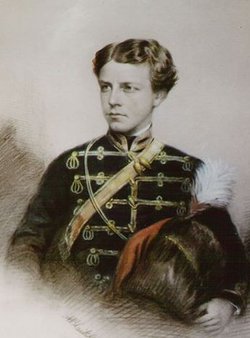
“It was only owing to the courage of Colonel James Hagart, commanding the 7th Hussars, that he (Bankes) was brought out alive. Hagart rode to Banks’ rescue almost, if not quite, single-handed, cutting his way through the enemy two or three times. Three of the rebels he shot with his revolver, and knocked over a fourth with the hilt of his sword, which was attached to his wrist by a silk pocket-handkerchief. Everything he had about him bore traces of his gallant struggle. His saddle and his horse were slashed about both in front and behind, his martingale was divided, his sword-hilt dented in, the pocket-handkerchief severed as cleanly as with a razor, and a piece of the skin of his right hand cut away. He undoubtedly saved poor Banks’ life for the time, and I recommended him for the Victoria Cross. Sir Colin Campbell did not, however, forward the recommendation, as he considered the reward an inappropriate one for an officer of so high a rank as Hagart.
Two Sikh Sowars now rode up, one of whom attacked the Daroga while the second engaged another powerful rebel; but finding that their enemies were getting the best of it, these two gallant Irregular horsemen dismounted and renewed the combat on foot. The Daroga three times struck down his antagonist, who defended himself with his shield, until, when a favourable opportunity presented itself, the Sikh gave his foe a back-handed cut across the neck, which laid him low. The other Sikh also despatched his opponent.” (Grant)
Russell, as long as he was in Lucknow, visited Bankes with some regularity, bringing him papers to read and keeping him company. “His eyes looked clear and bright, but his injuries are of a frightful description. One leg lopped off above the knee, one arm- cut off, the other leg nearly severed, the other arm cut through the bone, and several severe cuts on the body. A band of Gazees, who issued out of an old mud fort and charged the guns and the party of the 7th Hussars covering them, had got the lad down and hacked at him in that cruel way till he was rescued by his comrades. It is perfectly astonishing to witness his cheerfulness and resignation. “ If I get over this, Russell,” he said, “ they tell me I’ll be able to go yachting, and that’s all I care about. We’ll have many a jolly cruise together.” “If it please God,” he added, after a moment.”
Privates
Kelly, John – slightly wounded
Harrison, Thomas – severely wounded
1st Battalion, 5th Fusiliers
Ensign Frank Astley Cubbit – slightly wounded
Privates
Johnson, Thomas – severely wounded
Mara, William – slightly wounded
McGee – slightly wounded
1st Battalion 23rd Fusiliers
Private John Kiely- severely wounded
78th Highlanders
Private George Maycock – slightly wounded
Royal Engineers
Corporal William Hamilton – Killed in action
1st Bengal European Fusiliers
Privates
Burns, Denis – severely wounded
Johnson, Benjamin – slightly wounded
Moore, James – severely wounded
Hodson’s Horse – 2 rank & file killed, 7 rank & file wounded
 Mutiny Reflections
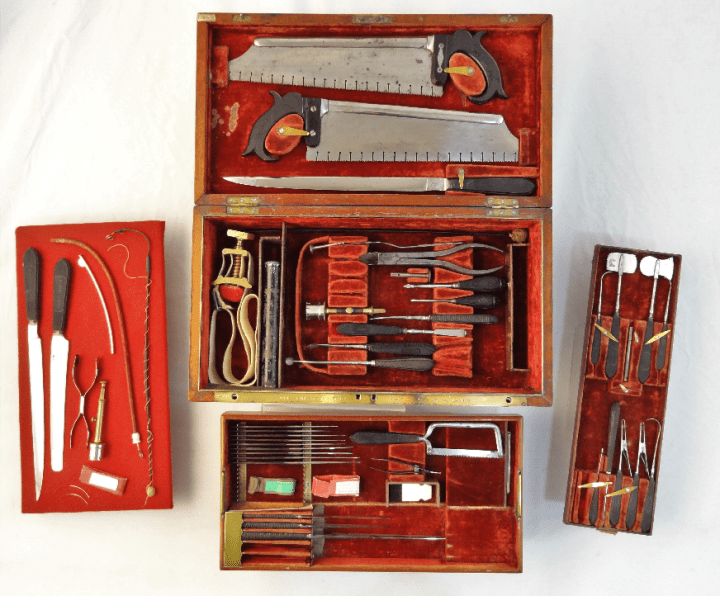
Surgeons medical equipment, fit for a bugers shop; one could only imagine the pain during those operations.
LikeLiked by 1 person
A good surgeon could amputate a limb in no time at all, but yes, the horror of it all. It was all quite grim!
LikeLiked by 1 person