17 March
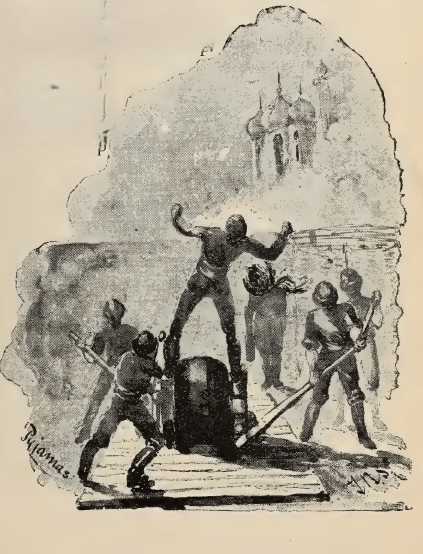
The day was marred by the dreadful explosion at the well, close to the Jama Masjid. The Engineers were tasked with disposing of nine carts of gunpowder that had been found in a back courtyard of the masjid. As the powder was either in leather bags or tin cases, it was decided, before any mischief could occur, to throw the whole of it down a large, brick well close by. Captain Clarke and Captain Elliot Brownlow were supervising, although Brownlow was only there as a volunteer, when one of the cases, striking the side of the well, ignited. The men, who had been standing in a line, passing the powder from one to the other, found themselves caught in an inferno as a column of flame shot out of the well, igniting the entire line and blowing up the carts. Two officers, sixteen European Sappers and thirty Sikhs were either killed outright or desperately wounded.
Arthur Lang, a great friend of Brownlow, was one of the first men on the scene. He narrowly escaped the same fate as he had been sent to the rear to bring up some Pioneers to assist in the work of disposing of the powder.
“Before I reached the scene of operations, I saw a cloud of smoke and heard the thunder of the explosion. I dashed forward to see what had happened, and found the blackened ground strewn with the bodies of the poor Royal Engineers, who had pushed on unknown to me, wretched men I could not recognise; but they knew me, and called out – ‘Mr. Lang, for God’s sake, shoot me.’ Nowhere could I find Elliot, but as the doolies were carrying away the still living men, I followed the line till I heard him calling me, and remained with him till he died…”
9th Lancers
Privates George F. Arnold – slightly wounded
1st Battalion 20th Regiment of Foot
Major William Pollexfen Radcliffe – severely wounded
Captain Augustus Riversdale Warren – slightly wounded
79th Highlanders
Sergeant James Blythe – severely wounded. Died 21 March
Private John Dawn – slightly wounded
Royal Artillery
Bombardier John France (6/13) – killed
Gunners & Drivers Henry Bracey (6/13) – slightly wounded at Cawnpore 6 December. Killed in action on 17 March
Royal Engineers
Captain A.J. Clarke – died from the effects of a gunpowder explosion
“…a tall, deep-chested, fine fellow, blue-eyed, tawny-maned, the old Scandinavian type, full of energy… dying to see service, hurrying to the front with a wound, received in the first encounter he had with the enemy, not quite healed.” (Russell met him first in February)
According to Alex Taylor, Clarke had been very disappointed when he was put in charge of repairing the Dilkusha Bridge on the 10th & 11th of March instead of being included in the engineering party told off for the taking of Banks’ House and subsequent operations.
The next time Russell saw Clarke, he was “the most dreadful object I ever beheld… burnt, black, covered with blistered skin from head to foot..But he was at peace, poor fellow, and great as his agony must have been, he carried none of it out of the world, for his face, at the moment of death, wore a calm and peaceful expression.” Clarke mercifully never regained consciousness and died two hours after the blast. Mackay sat with him until the end and continued to pray until he drew his last breath.
Reverend Mackay also attended the other men who had been burnt, 13 of whom had been taken to the Dilkusha hospital. The surgeons were busy applying oil and covering the men with cloth when Mackay arrived; they all cried out for water, but Mackay was warned only to give them a little. He tried to minister to their souls, but so great was their agony, none of them took much notice of his words. Before he left the Dilkusha, the hospital orderly told him their graves were already being dug.
The Sombre Funeral
The funeral of Clarke, Brownlow and the others was held the next day. A large pit was dug in one of the gardens in the Kaiser Bagh to receive the remains of all the men who had died as a result of the powder explosion. The funeral party was a large one, and Russell attended.
“It was a sad and affecting spectacle…The clenched hands and feet of some of the poor fellows protruded through the blankets in which their bodies were sewn, but in mercy to the living, the faces of the dead were concealed. One of the officers was buried in a rude coffin made by his men. Brigadier Napier and every officer of the Corps of Engineers who could get away from duty assisted at the ceremony. A party of Sappers and Miners with reversed arms followed the bodies to the graves…As we passed silently on, it was piteous to hear the cries of one of the burnt men, who lay in a tent close to the spot where his comrades were lying… There hobbled out some of the men who had escaped the fatal violence of the explosion, but now still bore marks of its severity on faces and hands, to join in the procession; and it was effecting to see one of these poor fellows trying, with crippled hands, to gather up some of the mould of the garde, that he might pay the last tribute to a departed friend – Earth to earth, ashes to ashes, dust to dust.”
Lieutenant George Swetenham – slightly wounded
Corporal Frederick Morgan – dangerously wounded in a powder explosion. Died of wounds
Second Corporal James Fletcher – slightly wounded
Sappers
Ancell, John – wounded at Kudjwa and again on 17 March
Beer, George – killed in powder explosion
Bunting, James – killed in action
Chapman, James – suffering severely from the effects of a gunpowder explosion
Cuterson, William – killed in powder explosion
Daily, Michael – killed in powder explosion
Davis, James – killed in powder explosion
Fairservice, Andrew – killed in powder explosion
Fisher, John – dangerously wounded. Died of wounds, 31 March
Ford, John – killed in powder explosion
Morgan, Frederick – killed in powder explosion
Northwood, David – killed in powder explosion
Robinson, William – killed in powder explosion
Slade, James – killed in powder explosion
Smith, Alfred – killed in powder explosion
Stokes, James – wounded
Swanton, Edward – severely wounded. Died of wounds 11 September 1858
Tucker, Charles – killed in powder explosion
Wills, Abraham – dangerously wounded
Yeo, John – killed in action
Bengal Engineers
Lieutenant Elliott Packenham Brownlow – mortally wounded in a powder explosion. Died of wounds, 18 March. Son of Henry Brownlow Esq., and his wife Amelia (née Chester). Born 10 April 1833 in Chinsura, India. His brother Henry, also with the engineers, was wounded during the Siege of Delhi.
The treatment for burns of this nature at Lucknow was primitive at best, and the men, after being seen by the surgeons, were oiled and wrapped in cotton cloth. Liberal doses of opiates were given, and it was simply hoped they would die under the influence. Brownlow was so severely burnt, he was blind in one eye and from the other, he could only dimly still see. Lang recalled his face was so scorched, he did not recognise him. Reverend Mackay was in attendance shortly after Brownlow was brought to the Kaiser Bagh.
He…lay in a doolie on the floor, naked, and burned most fearfully. His face was black, and his eyes were scarcely visible through the blistered eyelids. The skin of his arms and legs was peeling off. Patches of scarlet, perhaps a foot square, covered his back and legs. His chest and stomach were hopelessly scorched…Once, for a few moments, the intolerable pain made him frantic, and he suddenly kicked his foot, covered with blisters, through the strong roof of the doolie. To relieve him in some degree, the doctors who were present prescribed laudanum, but he was most unwilling to take it, lest he should die in the dark.”
Beside him was Arthur Moffatt Lang, who remained with him through the rest of the day until he died at midnight. Mackay was touched by the affection Lang showed to his friend as he knelt by the side of the doolie, whispering passages of the scripture in his ear at the very end. Lang procured water for him and tried to persuade him to take the laudanum – he finally relented and took a little from Mackay’s hand. The reverend prayed for Brownlow, who, while still conscious, said, “Pray for me, and continue to pray for me, when I cannot pray for myself.” There was nothing anyone could do for the poor sufferer, mad with pain, except give him what little solace faith could provide. Shortly after he took the laudanum, his pain subsided enough for him to fall asleep. He never woke again.
Punjab Pioneers – 1 rank & file killed
2nd Punjab Infantry – 2 rank & file wounded
18 March
1st Battalion 20th Regiment of Foot
Captain A.R. Warren – slightly wounded
Sergeant K. Buckley – slightly wounded
Privates
Opeay, Robert – dangerously wounded
Peck, Thomas – slightly wounded
Winning, John – slightly wounded
79th Highlanders
Privates
Andrews, George – slightly wounded
Brown, John – slightly wounded
Todd, James – slightly wounded
97th Regiment of Foot
Sergeant A. White – slightly wounded
Royal Engineers
Sapper Nicholas Garrett – dangerously wounded
Naval Brigade
Able Seaman Thomas Sullivan – severely wounded
1st Bengal European Fusiliers
Privates
Brian, Robert – slightly wounded
Martin, Thomas – killed by a mine explosion
Regiment of Ferozepore (Brayser’s Sikhs)
2 Native officers killed, 6 rank & file wounded
 Mutiny Reflections
Surgeons medical equipment, fit for a bugers shop; one could only imagine the pain during those operations.
LikeLiked by 1 person
A good surgeon could amputate a limb in no time at all, but yes, the horror of it all. It was all quite grim!
LikeLiked by 1 person