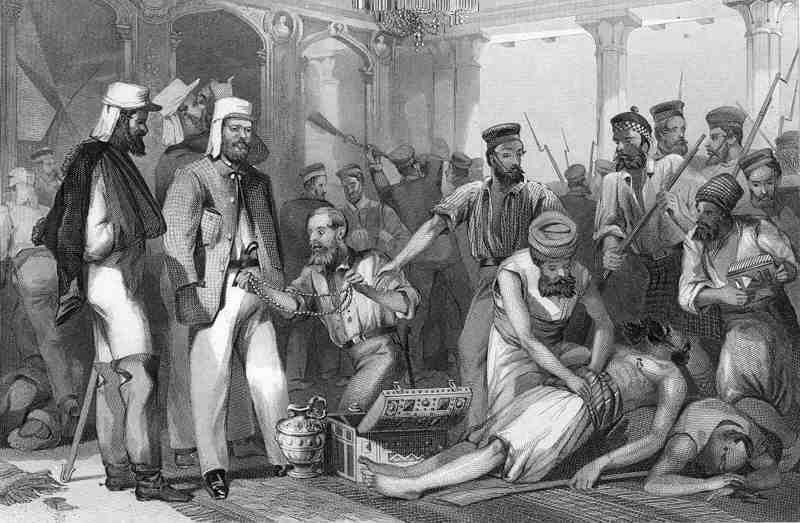
Wealth
The city of Lucknow was well-known for being one of fabulous riches. The opulent architecture had earned it the nickname the City of Palaces, upon which successive nawabs had spent over and above a king’s ransom, adding to its splendour. The rulers were perhaps unwise in their spending, and it certainly added to the reputation of opulent decadence. This was very much borne into the imaginations of the public in 1855 with the publication of William Knighton’s book, “The Private Life of an Eastern King.” Knighton served in the household of Nawab Nasiruddin Haider, who ruled Lucknow for ten years, commencing in 1827. While it captured the general imagination, Knighton’s introduction had anyone astute read it, stated in its final paragraph,
“Much there was that was strange—much there was that was horrible about that life; I witnessed many scenes which I could not describe without offending against conventional propriety, but, in all that the reader will find recorded, exaggeration has been strictly guarded against.
That Oude is one of the most miserably governed countries under heaven is no secret, and that it would be a blessing to its numerous Inhabitants were the Indian government to do for it what has been so well done for the Punjab, Everyone will admit.”
Curiously, this mirrored the exact sentiments of some officials of the East India Company, who, besides believing Oudh would certainly look fine when it was added to their growing collection of provinces, were adamant that the current ruler was so debauched that Oudh would be better off without him. It was one of the excuses used in 1856 to annexe Oudh and send Nawab Wajid Ali Shah into exile in Calcutta. It was the end of a dynasty that had begun in 1722 in the twilight of the Mughal Empire, when members of the nobility of that empire established the Kingdom of Oudh in 1724 with the two capital cities of Faizabad and Lucknow.
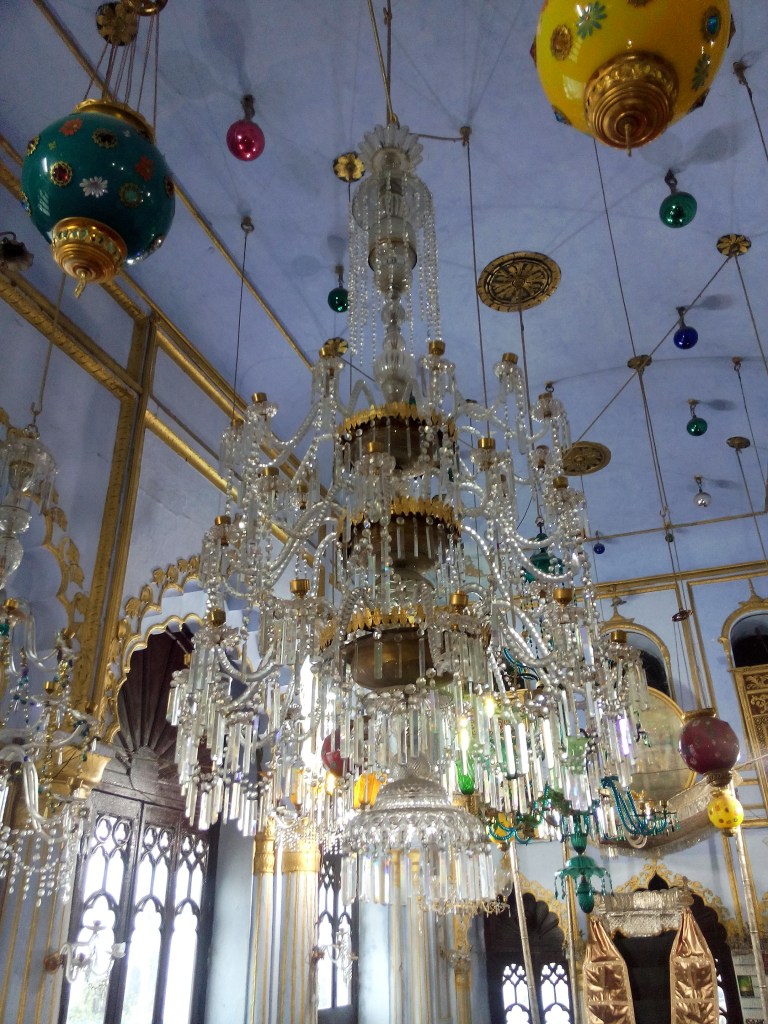
The households of the Nawabs were vast. Each married a veritable hen house of wives, possessed large harems, all of whom, in turn, upon his death, would fall under the care of his successor. For over 100 years, the families accumulated wealth, not so much in ready cash, which the British, when they finally gained a foothold in the Oudh court, found was often in desperate short supply, but in gold, silver, jewellery, cloth, rich furnishings and palatial surroundings. An entire industry of artisans was built in Lucknow with the sole purpose of providing for the Nawabs, their families and courtiers. Whims and fancies of the Nawab were never ignored – one particular one had such a fancy for European mirrors and Belgian chandeliers that he imported so many that even today, an entire room in the Chota Imambara is still decorated with a fraction of what survived the ravages of 1858. Although intended as a religious congregation hall, it is still better known by its other name, The Palace of Lights.
 Mutiny Reflections
The destruction and retributions are horrible to read – so very sad
LikeLiked by 1 person
This was quite a terrible chapter of mutiny history and not am easy one to write – it was a tainted victory in many ways and was the capture of Lucknow was practically over the minute the first shot was fired. It is from here that one can say the mutiny was basically over.
LikeLiked by 1 person