Mentions in Despatches
Amongst the long list of names Franks mentions in his final despatch, he did not fail to mention the Gurkhas.
Το Colonel Pulwan Singh, commanding the Goorkha Force, I am under great obligations for his hearty co-operation, and he has been well supported by his Lieutenant- Colonels, Shumohere Sing and Indra Sing, and by the senior major, Chumpa Sing. The steadiness and intelligence of the Nepaulese troops under these excellent leaders have been the subject of general admiration, and I have had occasion specially to allude to the conduct of the right brigade in the action of Amereepore.”
Franks was not sparse in his compliments and gives an excellent insight into the workings of the Jaunpore Field Force and the men behind its success.
Brigadier (Frederick C.) Evelegh, C.B., commanding the British Brigade, and Lieutenant-Colonel Wroughton, in military charge of the Goorkhas, and the officers on their staff, viz. Captain A. B. Johnson, 5th Regiment Native Infantry, brigade-major, British Brigade; Ensign Burne, 20th Regiment, brigade-quartermaster; and Captain Bennett, 20th Foot, orderly officer to Brigadier Evelegh; and Captain Steel, 17th Native Infantry, staff officer to the Goorkha force.
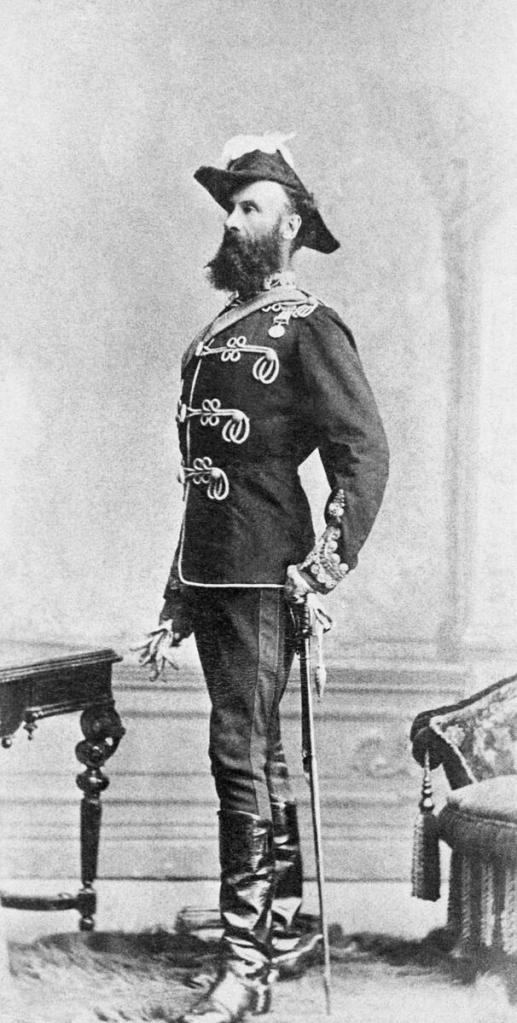
Lieutenant-Colonel E. (Evan) Maberly, Royal Artillery, commanding the artillery of the force. Lieutenant-Colonel Maberly speaks in high terms of the staff officers attached to him, Lieutenants Smart and Strange of the Royal Artillery.
Lieutenant-Colonels Fenwick, Lys, and Ingram, commanding respectively the 10th, 20th, and 97th Regiments. Lieutenant-Colonel Longden, 10th Foot, is an officer second to few in Her Majesty’s service in attainments and experience, and I specially selected him on all occasions to command my advanced guards of marksmen and light guns, a duty invariably performed by him with an intelligence and gallantry not to be surpassed.
Major Cotter, commanding a battery of Madras Artillery, Captain Middleton, commanding his own battery of Royal Artillery, Captain Thring, commanding a battery of 9-pounders, and Captain Waller, Royal Artillery, in charge of two 18-pounders, rendered most efficient service by the masterly way in which they handled their guns.
Lieutenant Simeon, Bengal Artillery, commanding two bullock guns, and Lieutenant Percival, Bengal Artillery, deputy commissary of ordnance, have merited my approbation.
Lieutenant J. J. McLeod Innes, Assistant Field Engineer – it is my intention to recommend him for the honourable distinction of the Victoria Cross.
The cavalry was commanded at Chanda by Lieutenant Tucker, 8th Light Cavalry, at Sultanpore by Captain Matheson, late 13th Irregular Cavalry, and the excellent services of these officers are duly appreciated by me; the first-named officer made a most dashing charge at Sultanpore, with the twenty- five mounted men of Her Majesty’s 10th Regiment, and killed numbers of the enemy.
Lieutenant Cary, 37th Regiment Native Infantry, in charge of the treasure-chest, and Captain Middleton, Her Majesty’s 29th Regiment, provost-marshal, invariably accompanied me in the field and were most useful in carrying orders. The latter officer has already been mentioned as actively instrumental in withdrawing the captured guns at Dhowrara, and throughout the time he has been with the force, he has displayed, in no small degree, activity, intelligence, and daring.
The medical arrangements of the force under Surgeon C. A. Gordon, M.D., 10th Foot, have met with my entire approval; and the commissariat officers, Lieutenant Chalmers, 53rd Native Infantry, Lieutenant H. R. Wroughton, 40th Native Infantry, and Lieutenant Bolton, 50th Native Infantry, have been most assiduous and successful in the discharge of very arduous duties; as has Lieutenant Rawlins, 17th Madras Native Infantry, baggage master.
Messieurs Lind, Jenkinson, and Venables, Civil Service, accompanied the force in the actions at Chanda and Amereepore. In the former action Mr. Venables charging the flying enemy with the cavalry, with whom he did good service, received a severe spear wound through the thigh.
Mr. P. Carnegy, Special Commissioner, with the force, and head of the Intelligence Department, has rendered me most valuable aid. His information regarding the enemy has proved so correct, that on it alone the whole of my operations might have been planned; he has always accompanied me in the field, and assisted in carrying orders under the heaviest fire.
Captain Havelock, 18th Royal Irish, late 10th Foot, Deputy Assistant Adjutant-General, merits my special acknowledgments.
Lieutenant J. Wall, 87th Royal Irish Fusileers, Deputy Assistant Quartermaster-General, and my Aide-de- Camp, Lieutenant H. Henderson, 10th Foot, have afforded me the most zealous and efficient support in their respective positions, and I beg to commend them to the favourable consideration of his Excellency the Commander in -Chief.
I should be committing an injustice were I to omit to mention the officers who commanded the rear and baggage guards of my force: Lieutenant-Colonels Turner, C. B., Legh, and Burton of the 97th, Majors Radcliffe and Butler of the 20th, Chichester of the 97th Regiment, and Pennycruick, Royal Artillery. To the strict performance of most unattractive duties by these officers, not less than to the patient endurance of exposure by day and night, of fatigue and hunger by the men under their command, do I owe the fact that not one single article of baggage, nor one animal, has fallen into the hands of the enemy. To estimate correctly the value of these services, it must be recollected that a train of upwards of 2000 carts, drawn in many instances by very inferior cattle, has been safely conducted, most of the time without any aid from cavalry, over roads often unbridged and nearly impassable, and through a country swarming with a hostile population. Amongst these officers, Lieutenant-Colonel Turner, C. B., 97th Regiment, claims my special commendation for his masterly disposition of his rear and baggage guards at the village of Loramow during the battle of Sultanpore.
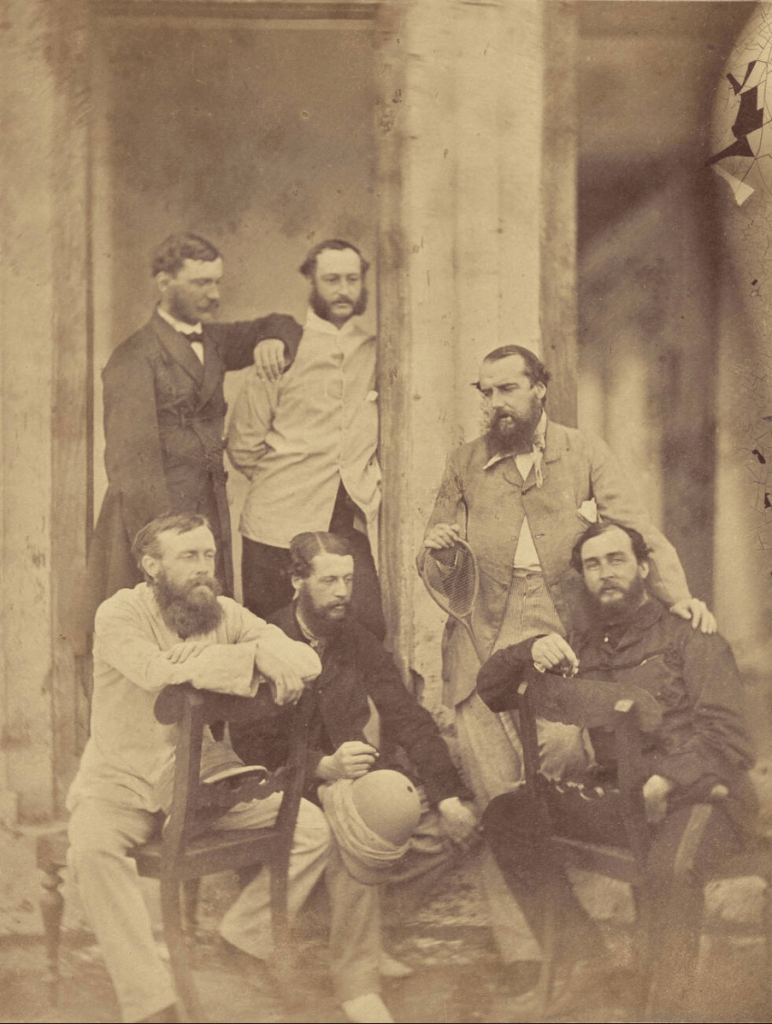
I beg to record here, before too late, my thanks to the officers who invariably commanded the three companies of selected marksmen, (who formed my advanced guards and were always the first to encounter the enemy,) Captain Norman, 10th Foot, Captain Lyons, 20th, and Major Chichester, 97th Regiment.
 Mutiny Reflections
I have taken part in a short story competition please put your valuable opinion through the link by Google account 🙏😊
LikeLiked by 2 people
Hello Priti
I have read your short story and left my comment! I wish you every success, the story is wonderful!
LikeLiked by 1 person
Brave soldier 💪 well shared
LikeLiked by 1 person
Thank you so much! I am glad you are enjoying reading the posts!
LikeLiked by 1 person