The Battle of Sultanpore, 23 February
“Three days after, we engaged the rebel Chief at Sultanpore. His force was much stronger now, for
He was joined by other bands, and the rebels at Lucknow had sent him troops. The number of the enemy must have been twenty-five thousand. Their position was strong, but our General soon found out its weak place, and while he diverted the attention of the rebels by a false attack, secured almost unnoticed this point of advantage. From that moment, the rebel force was almost panic-stricken and began to give way. We captured the entire camp, also twenty guns, including one thirty- two pounder.” (Malcolm, A Soldier of the 10th Foot).
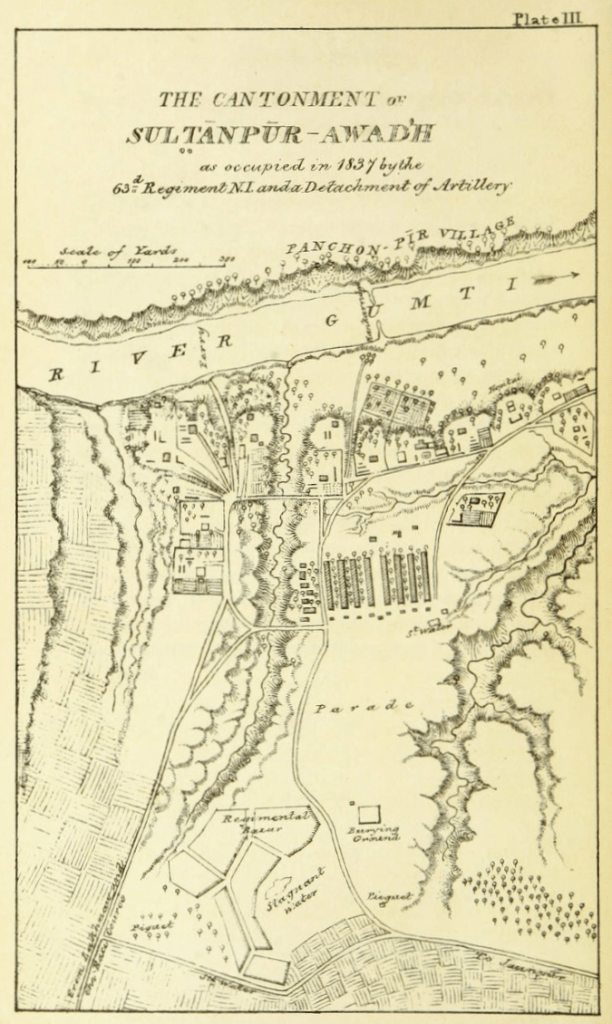
The rebels had posted their line behind the deep and winding ravines which run into the Gumti River; his left rested on the Sultanpore Bazaar, his centre behind the destroying police lines and his right was covered by low hills, just in advance of the village of Badshahganj with its strong masonry serai. In all, their position was nearly a mile and a half in length. Their main artillery battery was placed where the Lucknow road crossed a deep ravine or nullah; three guns were posted in a village near the bazaar and six in the serai and Badshahganj village. As formidable as their position was, Mirza Guffur Beg had forgotten that the road from Allahabad to Lucknow crossed a ravine which led to ground behind his position to the right, and he had pushed neither cavalry nor scouts out in that direction. What was Beg’s oversight was Franks’ one advantage, and he would turn the rebel right. He would feign an attack to the rebel front but would move his infantry and light guns obliquely to the left and seize the Allahabad road. Thus occupied, the rebels would miss Franks’ infantry that would then take Beg’s rear.
On 23 February, without the promised cavalry reinforcement, Franks took the fight to Sultanpore. At 6 am, he formed up his men in front of Bhadaiya Fort, in the same order as previously on Chanda:
“The advanced guard, composed of the whole of our small party of cavalry, of 240 selected marksmen of the three British regiments, and four horsed guns, under Lieutenant- Colonel Longden, 10th Regiment, was followed by the British Brigade, under Brigadier Evelegh, C. B., and by the six battalions of Goorkha Infantry, under Colonel Pulwan Singh, in column of route. The rear and baggage guards, consisting of five companies of the 10th, 20th, and 97th Regiments, and of three companies of Goorkhas, with two horsed-guns, under Major Radcliffe, 20th Regiment, closed the rear.”
They had not gone a mile when, close to the village of Loramao, his cavalry caught sight of the rebel outposts. Leaving his baggage and and rear guards under Lt.Col. Turner (HM’s 97th) in the rear of the village, Franks now formed his force in battle order: “the front being covered by the 240 selected marksmen of the British brigade, and eight horsed guns, under Lieutenant- Colonel Longden, 10th Foot; the guns being 100 paces in rear of the skirmishers; the two 18-pounders advanced in the centre along the high road, which runs through the enemy’s position. The British brigade was formed in contiguous quarter-distance columns at twenty-five paces’ interval, supported in second line by the six battalions of Goorkhas, in quarter-distance columns at deploying distance.”
Moving through Loramao, when, in sight of the rebel pickets, Franks advanced with the Matheson’s Benares Horse and a detachment of 25 mounted men of the HM’s 10th under Lieutenant Tucker, and in one swift rush, drove the pickets out beyond an intervening nullah, ensuring his force remained concealed beyond a thick belt of trees. The Benares Horse was then left to prevent the pickets from reconoittring against the advancing force and Franks moved with the mounted detachment to the left to examine the head of the nullah, “which I felt convinced disappeared in the plain; and this proved to be the case, for my search found a point where the road from Allahabad crosses it, where the troops and heavy guns could pass the ravine out of reach of the enemy’s fire. Some rising ground here gave me a good view of the rebel position, and ascertaining that it might be turned by its right, I ordered the whole force to take ground obliquely to its left.”
Still unseen by the rebels, Franks moved his force around to the right, out of firing range – when they realised what he was about, their shell fell far short of Franks’ columns. His skirmishers, who had been moving in file as cover, now turned to the front, “and with the light guns closed on the enemy’s position, the whole force advancing in two lines in their rear, on the right flank of the enemy, who, disconcerted
by being thus turned, was compelled to change the position of his heavy guns, most of which it rendered useless.”
Beg had realised his mistake too late, and Franks’ men pushed on with such determination there was no time to rectify the error. In advance of the skirmishers was Macleod Innes, who secured the first gun as quickly as the rebels abandoned it. They rallied around the next gun, further back, but Innes was having none of it. Putting spurs to his horse, alone and with no support, he shot the gunner before he could apply the match and then remained, undaunted, where he was, “the mark for a hundred matchlockmen who were sheltered in some adjoining huts, kept the artillerymen at bay till assistance reached him.”
The left of Franks’ force now came on the Lucknow high road and divided the rebel lines: these in part immediately retreated along the road, taking with them four guns, which should have covered their right. Franks’s right now rested on Badshahganj on the nullah and his left just beyond the village of Badshahganj. His left continued circling forward and drove the rebels from their positions, one after the other, until they were driven to banks of the river and cut off from the line of retreat. Only the centre, with their five heavy guns, held on until the last, the gunners standing courageously by their pieces, loading and firing until Franks himself, “cap in hand” led the skirmishers of the 10th right up the guns and the last man was put to the bayonet. The Gurkha regiments took care of the three guns by the bazaar; by now, most of the rebel infantry and cavalry were flying in “utter rout” over the river and off into the plains beyond. One body of horse and foot had packed up their guns early on in the fight and set off at pace on the high road to Lucknow – they were followed up by the infantry for four miles and by the mounted volunteers of HM’s 10th for a further nine, before the chase as called off.
Matheson’s horse and a part of Middleton’s battery managed to overtake another batch of runaways and brought back two of their guns. When it was all over, Franks had taken 21 guns (nine of siege calibre) and left 1800 dead and wounded men on the field, including the son of Rajah Hassan Ali Khan; the Jaunpore Field Force won the day with only eleven casualties. He halted his men for the remainder of the day at Badshahganj, and towards evening, Captain Balmain arrived with his 250 sabres.
The next day, the baggage, guns and ammunition left behind by the rebels were sorted through. As he had no carriage for the guns, Franks ordered them destroyed; he then turned his attention to the Nazim’s Badshahganj depot, blowing up not only his ammunition stores but all the material in his gun-carriage manufactory.
“That night, the Artillery ammunition waggons had to be replenished and the captured guns destroyed before the force marched off. So Jingo’s hands were full. Until late and again early, long before day, was he trying to burst the beautiful long bronze guns, highly ornamented and sonorous as a bell. But the beastly things refused to be burst and became more dangerous in their death than in their life. At last, he loaded some of the longest with native powder up to the muzzle, jammed in a couple of shot, then finding a dry well handy, he threw them into it, muzzle down, 24 and 18-pounders, previously connecting a fuze with the touch holes up to which the well was tamped with earth. The fuze was lighted, and everyone went under cover. With a roar a column of dust and smoke rose, and out of it appeared three majestic demon rockets; like the Prince’s plume of the heir apparent of hell, it seemed to the terrified Jingo, who watched this pyrotechnic display as it soared almost out of sight, falling later like destroying angels in the direction of the camp.“
On the 24th, Franks received a telegram from Sir Colin Campbell that he was to join him for the taking of Lucknow; Rowcroft and the Sarun Field Force would remain behind. However, they would have plenty of work ahead of them.
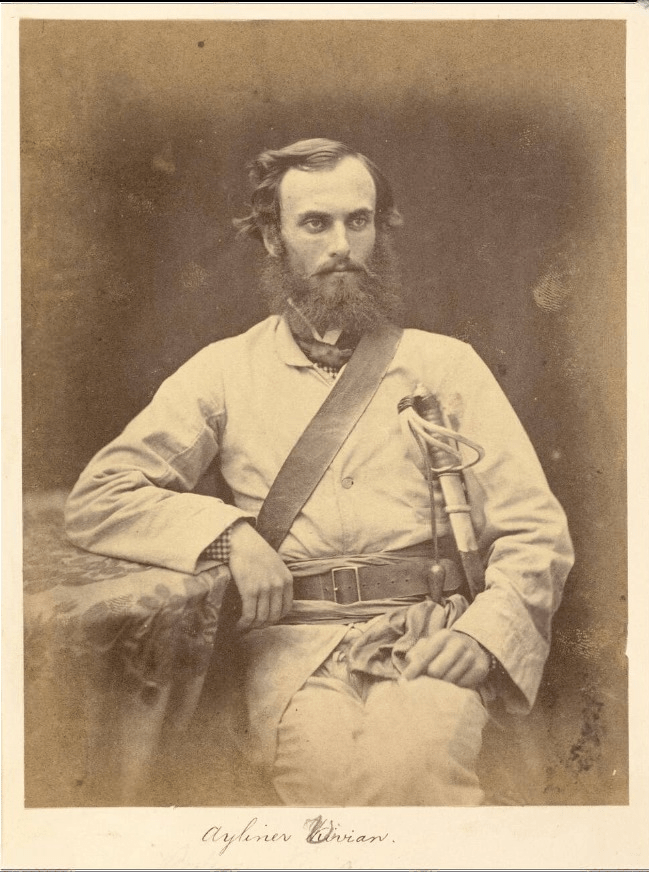
The same evening, Franks received a welcome surprise – the Jalandhar Cavalry (subsequently absorbed into the 3rd Sikh Cavalry) rode into his camp. Raised at Jalandhar by Deputy Commissioner Lake a few months earlier on the Guide principle, they were equipped and drilled by Lieutenant Frederick Aikman. They had ridden from the Sutlej to join Franks with hardly any halts, covering the last 40 miles in a day. “I did not expect you for a fortnight,” exclaimed Franks as he welcomed Aikman. “Had I known you would have been here, I would at any cost have postponed the action.” Aikman’s arrival brought his cavalry up to 600 sabres, and there would be plenty of fighting for them to do.
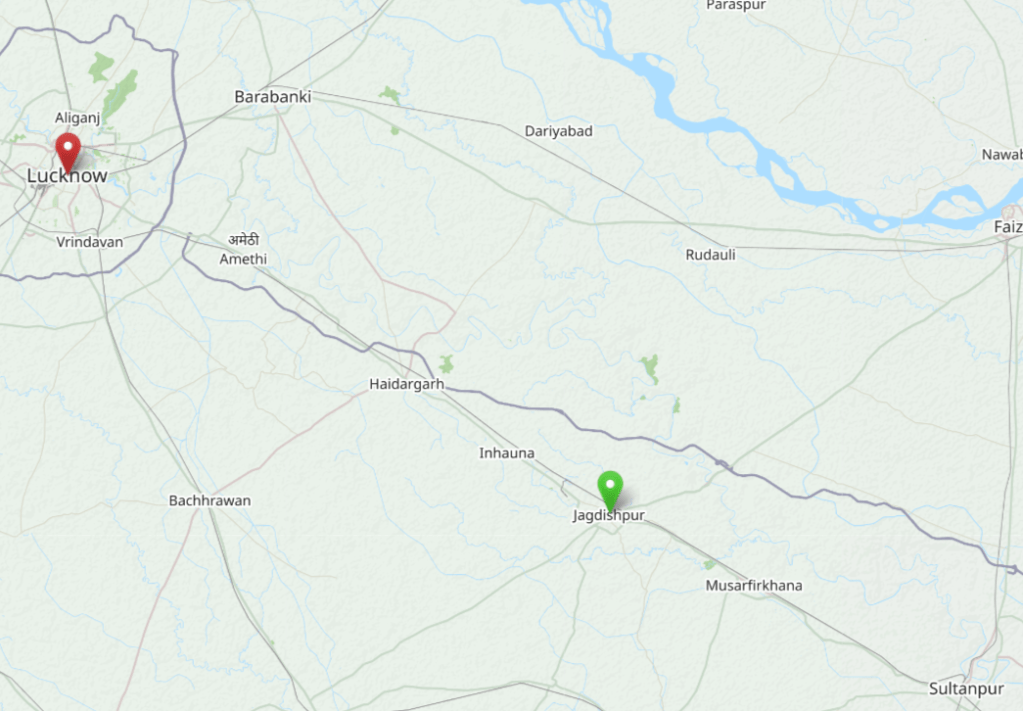
On the 25th, the force resumed its march, reaching Musarfirkhana on the same day, a distance of 20 miles and then a further 16 the next day to Jagdishpur. With his cattle exhausted and his men footsore, Franks called a halt. On the 28th, he reached Haidargarh, another 16 miles, and by the 1st of March, Selimpore, a mere 18 miles from Lucknow, as directed by the C.in C., who was within one march of the city.
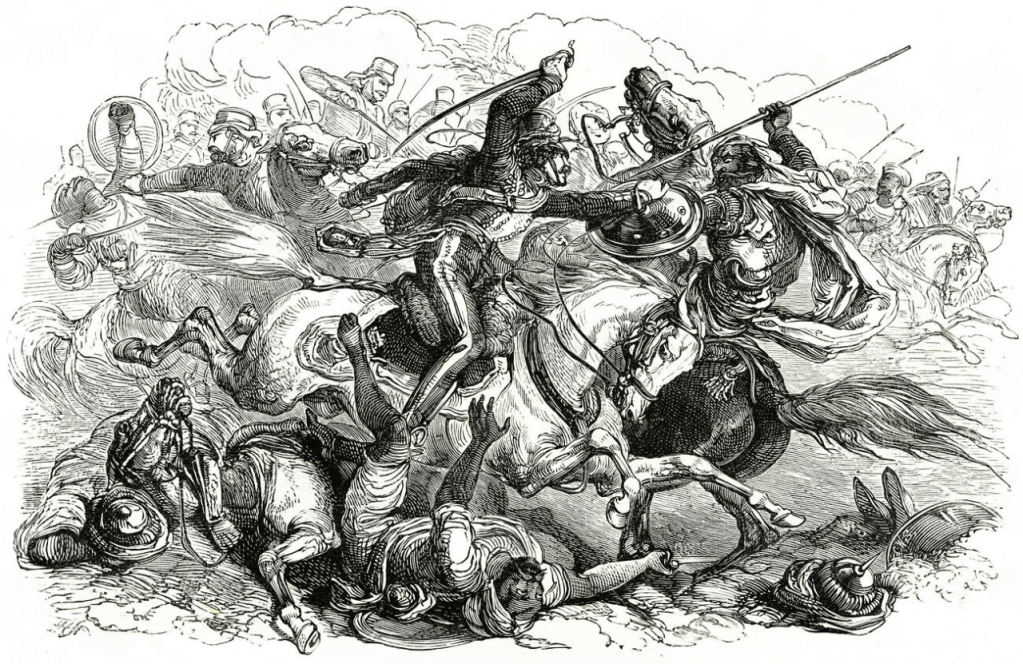
Early on the morning of the 1st of March, Aikman, who had been posted three miles in advance of the camp with 100 of his sowars, learned that a formidable body of rebels, with 500 infantry, 200 cavalry and two guns under the rebel chieftian, Mansab Ali were encamped on the banks of the Gumti only three miles off the high road. Aikman sent a cursory message back to Franks to bring up the cavalry and the guns as quickly as possible – he then gathered up his men and set off in Ali’s direction. Galloping through broken ground, Aikman found the rebels in the open, but some had taken cover under the walls of a small fort. Undeterred by their flanking fire, Aikman and his sowars charged.
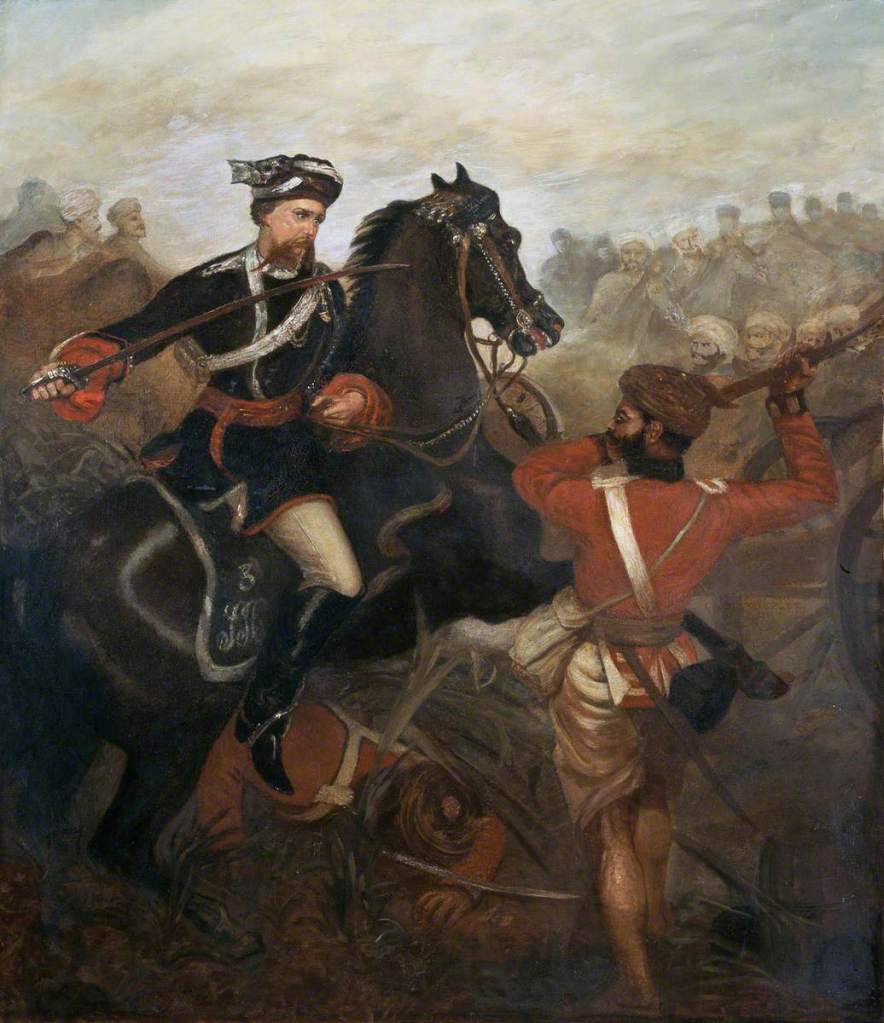
In the ensuing scrimmage, Aikman would find himself, on more than one occasion, surrounded by several rebels at once, but his sowars came to his aid – ferocious hand-to-hand combat, another charge and the day was won. Aikman received a severe sabre cut to the face, but despite the odds, he and his men cut up 100 rebels, captured two guns and sent the rest of Mansab Ali’s force scrambling across the river. By the time Franks came up, it was all over.
“I regret to add that Lieutenant Aikman received a severe sabre cut in the face, which will not, I trust, long deprive me of the services of so enterprising an officer,” wrote Franks in his despatch, but it was, “one of the most dashing cavalry combats,” he had ever heard of.
The same evening, the Jaunpore Field Force reached Selimpore and encamped along the ravine of the Gumti, with the river half a mile to their right – the rebels had been in the process of building fabulously strong earthworks around Selimpore, but with these unfinished, they chose, at the first sight of the cavalry thundering across the plain, to abandon their plans and leave through the other end of the town. Here, Franks would remain until he received further instructions from Sir Colin Campbell – and accordingly, on 4 March, on receiving orders to proceed to Lucknow, he marched the same evening to a mosque, one mile past the town of Amethi, only eight miles from Lucknow.
 Mutiny Reflections
I have taken part in a short story competition please put your valuable opinion through the link by Google account 🙏😊
LikeLiked by 2 people
Hello Priti
I have read your short story and left my comment! I wish you every success, the story is wonderful!
LikeLiked by 1 person
Brave soldier 💪 well shared
LikeLiked by 1 person
Thank you so much! I am glad you are enjoying reading the posts!
LikeLiked by 1 person