The 4th of June – Our Throats are Safe for Tonight
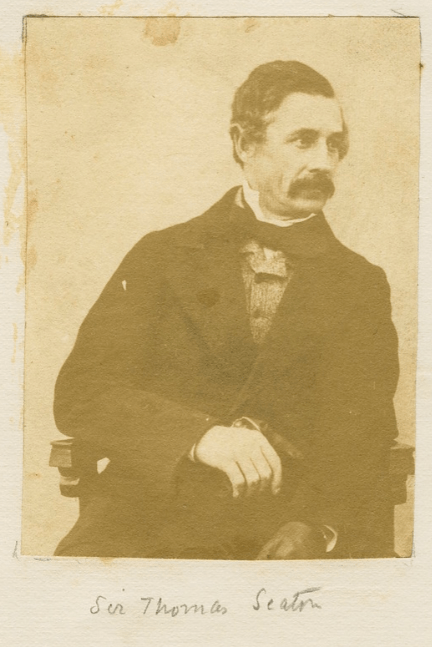
As Seaton sat in the mess tent, writing his report to the adjutant-general, generally bemoaning the fact that the regiment was indeed a lost cause. He hoped he could hear that Delhi had been taken or that there had been some success against the rebels. Only news of this kind, he believed, would now convince the 60th to change their minds. It was wishful thinking.
Suddenly Shebbeare appeared in the tent, requesting to speak to Seaton urgently. As it was close to 5 pm, Seaton pulled the adjutant outside.
adjutant.
“ Well, Shebbeare, what is it?”
“ Why, Colonel, I have just heard from two of our drummers, who have their information from
particular friends amongst the men, that the regiment is to mutiny tonight, murder the officers,
and be off to Delhi.”
Seaton, who had been preparing for himself for this very moment, suddenly found himself feeling quite startled. Here he was, in the middle of a very hostile country, with hardly any English officers and in his present condition without a European regiment in sight, he was expected to meet with “reckless and determined mutineers.” Putting on as determined a face as he could, realising full well to show indecision was fatal, he said the Shebbeare he wanted to see the men.
“I’ll make a few inquiries first. I will go to the hospital; do you lounge out that way, and let the drummers go round.” As I been accustomed to visit the hospital about this hour, my going there would excite no suspicion.
In a few minutes I had obtained the information I desired, and found it to be too true that an outbreak was planned for that night. Meanwhile, as the adjutant was looking anxiously at me, I addressed him with these words—
“Now, Shebbeare, will you stand by me?”
“Yes, Colonel,” replied the gallant fellow, “ that I will.”
“ Very well; now I’ll tell you what I propose to do. In half an hour the men will all assemble in front of their tents for evening roll call. I will go on parade; and, as there is nothing like facing a difficulty I will tax them with their intended outbreak, and we will see what they will do. Tell the officers to look out.”
At sunset, Seaton and Shebbeare went to the parade and assembled the native officers both commissioned and the NCOs in front, but at some distance from their companies. The colonel then bluntly “taxed them with their intended treachery.” As a plan, it had its merits. Caught off guard, the men flatly denied there was any treachery, some swore by their gods and all they held sacred, others begged they would be faithful to their salt, and nothing would happen to Seaton or his officers. The officers asked Seaton with as much sincerity as they could muster, for permission to appoint a guard, carefully chosen by them to keep watch in the camp, just in case some of the regimental badmashes entertained treacherous thoughts. It was better, they said to be safe than sorry. Determined to humour them to the last, Seaton agreed. He would of course keep his own watch, but letting them believe he trusted them as old Drought had, seemed to be the lesser of two evils. Not for a moment did Seaton think they had his best interests in mind, but by playing their game, he could at least buy himself a little more time.
The men of the different companies, too far off to hear what was said, were looking on. Instead of seeing the native officers berated, they saw Seaton speaking to them quietly and respectfully while they were replying likewise. The other British officers had kept their distance on Seaton’s command – in case anything happened to him and Shebbeare, they could still escape and tell the tale. Leaving the circle of native officers, the two men now proceeded to each company in succession and as they walked past, talking to the sepoys, they were met with protestations and vows of fidelity for all which Seaton took “at their proper value.” He had bought his officers a day or two at the most.
As I came from parade after this trying scene, the officers inquired anxiously—
What is it, colonel—is it all right?”
Oh, yes,” I replied, as cheerfully as I could, “I think our throats are safe for tonight, and you may turn in without fear.”
What Seaton had also purchased with this play was time for Anson to move his men to Delhi. As long as he held the regiment together, his communication with Anson remained secure, as did that with the Punjab and the magazines at Ferozepore and Phillour. The Grand Trunk Road ran from the Punjab through Karnal and Ambala and was now the only link left open on this side of Delhi. The road was guarded by the men of the Jhind raja, but what could they do if they were suddenly set upon by the 60th and, from the other side, by the 5th BNI, who would likely waste little time in joining the colleagues. This would leave Anson stuck between two sets of mutineers in a disaffected country, worsened by the thought that should the 60th and 5th act with any cohesion, they could have cut off supplies from the Punjab. Until Anson passed through, Seaton needed to hold the 60th at Rohtak.
The British officers were not as confident as Seaton. For mutual protection, they had their servants move their cots that night to the largest tent – the doctor’s – proclaiming they could make a good fight if it came to it, provided they were all together. Seaton and Shebbeare did not join the party but nevertheless shared Seaton’s tent, just opposite for the night. Everyone woke up the next morning, their still throats intact. When nothing happened over the next three days, Seaton allowed himself for a brief moment to believe the worst was over. He was wrong.
On the 8th of June, as he was going on his usual rounds in the hospital, he went along the front of the tents and was about to cross a deep ditch, beyond the flanks of the Grenadiers, when suddenly the young sepoy who had behaved so abominably on the first march gave Seaton his hand to help him down. As he stooped, he said in a low voice, “Colonel Sahib, when your highness’s people shall have regained the empire, I will make my petition to your highness.” He said nothing else, but to Seaton it was clear – mutiny was imminent, and the young sepoy was trying in his own way to tell his colonel that in any event, his life would be spared. He was hoping that when it was all over, Seaton would remember him as the man who saved him. The men Seaton noticed were unusually quiet and inordinately respectful, but the night passed without incident. The 9th continued on in the same vein, but then suddenly there was a change.
The 10th of June – Now We Ride and Die
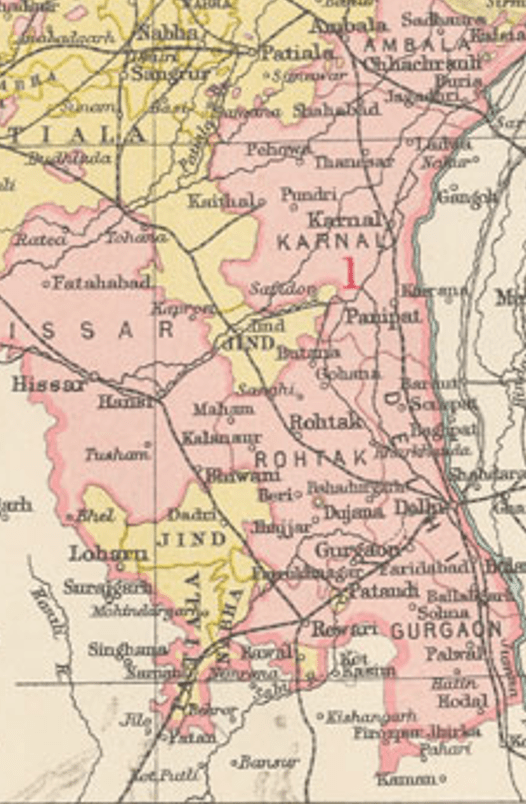
Seaton had long since decided that any resistance would be folly. He had 12 European officers with him, including the regimental doctor and one English sergeant – he did not doubt for a moment that there probably was a good majority of the sepoys and native officers who were indeed as faithful as they professed, but he understood that when the crush finally came, they would be swept up in the resolve of a few bolder men. Except for the drummer, not a single man of the 60th had offered up any information about the regiment’s thoughts to Seaton – he had no way of knowing who truly would stand at his side and guessing a man’s fidelity was suicide. As for Anson’s army, Seaton had had no news apart from two mail bags, but neither of them reported anything he could use to convince the sepoys of victory. Seaton did not know of Wilson’s battle at Ghaziudinnagar; he was in the dark about the action at Hindun River, and above all, he had not even heard of the victory at Badli-ki-Serai. Any of these incidents might have tipped the wavering loyalty of the 60th Regiment in his favour, had he but known. But it would appear the authorities had sent Seaton and his officers to their fate and were now indifferent to whatever that fate might have been. For all Seaton knew, the Commander-in-Chief himself most likely believed the men dead at Rohtak. By now, Anson had been in his grave for nearly 2 weeks, and considering all that had happened after, it is very likely that no one had given the 60th any thought at all.
The 10th of June began as any other long, hot, slow day in Rohtak. Five young officers, the four ensigns – Charles and Thomas Dayrell (brothers), A. Murray, and P. Dalmahoy – along with Lieutenant Walker, asked Seaton for permission to go off for a little shooting in the afternoon. Seeing the spies were quietly going about their business, respectful and civil with no outward signs of trouble, he gave his permission.
The young men gladly set off on their horses, free at least for a few hours from tiresome Rohtak. After lunch, Seaton settled down to write some letters. He was dressed in the usual hot weather clothes of a deshabille shirt, loose white cotton drawers, shoes and stockings, but the temperature that day had him wishing he could join the sepoys he had seen bathing serenely in the nearby lake. Suddenly, at 4 o’clock, he was startled by an explosion. His first thought was that one of the young officers had had an accident with his gun, and Seaton, getting up, pen still in hand, ran out to see if anyone was hurt. He did not see anything unusual – there were no crowds, and no officers had stirred; besides this one report, there was not a sound. The sepoys he came across were still lying down asleep after their meal, and a few were still cooking theirs. Puzzled, he walked to the centre of the camp, still trying to find out what the noise had been. He could just see the arms racks in front of the two centre companies when the pay havildar rushed out and grabbed him by the arm. Agitated and more than a little worried, he said hurriedly,
“Colonel Sahib, don’t go to the front.”
“Why not?” asked Seaton.
“The Grenadiers are accoutring themselves, ” the man replied helplessly.
“Accrouting themselves! By whose orders?”
“They have mutined – aur kya bol saka jaiega?” (What more can be said?)
The mutinous heart of the regiment had planned its surprise well. They had told no one of their intentions, and for days past, since their last failure had quietly made their arrangements. They had chosen the time of day when they knew both officers and sepoys would be drowsing the afternoon away, and, with no one alert, they had gathered together and accoutred themselves in their tent. One discharge of a musket, they knew, would “draw nine-tenths of the men into the vortex.” Seaton tried to gather the native officers to him, but no one answered his call. The havildar major entreated him to leave while he still had time – realising there really was nothing for it, he retraced his steps to his tent.
As he sat on the stairs of a nearby bungalow, wondering what to do next, his personal servant suddenly glided noiselessly up to him, holding a pair of corduroy pants. As he changed, his groom brought up his horse already saddled. Some of the officers had already ridden off, and others were preparing to follow when the sergeant-major rushed past him.
“A dozen musket shots were fired at him from the right of the tents, and immediately the whole body of the grenadiers burst out of their tent, firing their muskets as they ran towards us and shouting with all their might, to rouse the regiment and hurry it into mutiny.” And suddenly everything descended into confusion.
The sleeping sepoys started up and emerged from their tents, looking blankly around them. A few ran to their tents, others to their arms. Seaton could not see a single native officer among them; whether from shame or cowardice, they were staying well out of the way.
“The hubbub increased every moment. The shouts of the officers for their grooms and servants, the cries of terror from the camp followers—some of whom were wounded—the galloping of horses, the rush of the people to get out of the way, the fierce shouts of the mutineers, the sharp and frequent reports of the muskets, and the whiz of the balls…” The sergeant major was wounded, but the quick-thinking Dr Keates took him up in his dog cart and, under a sudden onslaught of bullets, drove off at a gallop – the sergeant, he well knew, was hated by the sepoys. Seaton dashed into his tent and gathered up his watch and his keys, thrust them into his shirt pocket and jumped on his horse. With the mutineers but ten paces away with bayonets fixed, he had no time to grab his sword.
“Fortunately, the nearest mutineers had discharged their muskets, and, though many were reloading, I managed to escape. I had got a few seconds’ start, and in a mêlée like this, a second makes all the difference between life and eternity.”
Seaton joined Lieutenant Shebbeare, and they rode off together. Not far from the camp, they came across Colonel Drought on foot. He had been unable to get on his horse, his groom had run off, and here he was, walking as the sounds of mutiny came closer in his wake.
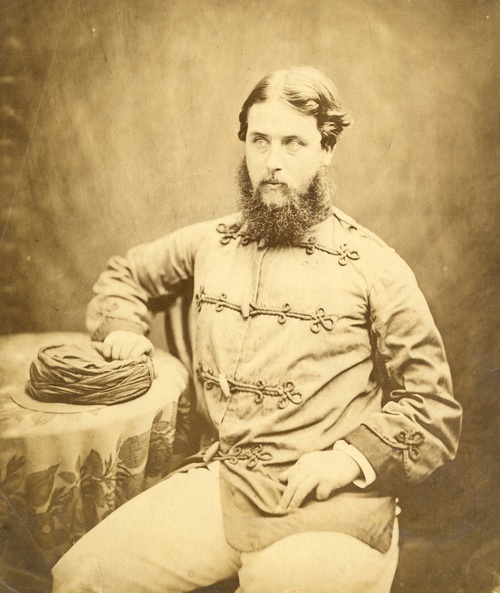
Shebbeare instantly exclaimed, “ Colonel, the poor old fellow will be murdered. I’ll put him on my
horse and run for it.’’
It was a noble and heroic act and deserves to be recorded.
The major was mounted in all haste and started off, for the musket balls were now flying pretty sharply about our ears, and the servants and camp followers were calling out to me to ride for my life.
“ Now, Shebbeare,” I said, “ we will ride and die.”
“ No, Colonel, I will not; I am young and strong, and I can run.”
“ Very well, then, we will keep together.”
So making him get on the lee side of my horse, he laid hold of the stirrup, and off I went at a round canter. We went on thus for some four hundred yards when Shebbeare got blown, for he was of a stout habit of body, and unaccustomed to running. So we pulled up and walked quietly along, the mutineers making no attempt to follow us, and their shots now flying wide. At about eight hundred yards from camp, the road made a slight bend to the left, and the elbow shut out the view of the camp. Here we found the officers assembled, waiting for any who might escape, and hoping that some of the better-disposed sepoys might join them.”
The mutineers had seen even to this – by placing a line of sentries at the rear of the camp, they prevented the servants from accompanying their officers. Only one man got away – a Sikh orderly – and subsequently not more than half a dozen men joined Seaton in the Delhi camp.
Seaton’s worry now was for the five young officers who had gone out. If they returned to the camp they would undoubtedly be cut to pieces so he determined to save them. The officers moved off the road onto the plain, still in sight of the camp where they could see through an opening between the camp and the jungle where the men had gone shooting. He hoped they would see them in time for one of the officers to ride up and bring them off. For two hours they waited but the young men did not turn up. The very real danger of the mutineers mounting the spare horses and coming after Seaton and his men was never far from his mind or if worse came to worse, the missing officers would be greeted by the mutineers long before Seaton had a chance to warn them.
“But they appeared fully occupied in camp, for at intervals sounds of great uproar reached us, with the occasional report of a musket, as if some obnoxious person had been shot down. Presently, too, we saw clouds of smoke ascending. I was glad to see this, for I could tell that they were burning our tents, and immediately after there was a great explosion of ammunition.”
It would appear the mutineers now had two courses of action – they could proceed unencumbered to Delhi or return to Ambala and gather up the 5th. Seaton felt the latter was unlikely, for all he knew, Anson was still marching up and it was unlikely the 60th would wish to meet European troops. If they needed speed, they would burn anything they could not carry, and the ammunition as such was no great loss to the mutineers for the Delhi magazine was filled to the brim. At any rate, Seaton hoped the noise of the explosion and the smoke from the camp would be enough to warn the missing officers that something was amiss at Rohtak. Turning to the others he said,
““ Gentlemen, we have done our duty by our comrades, and, must now do our duty by our commander-in-chief. “
Shortly after sunset, they moved off at a foot’s pace as one of their party did not have a horse, hoping to reach Delhi by dawn. They had no idea where the camp was or if indeed there was a camp; they still had miles of road ahead full of badmashes, like those that had killed their camp followers and murdered the dak runners, not to mention hordes of disaffected irregular cavalry, each of whom, Seaton could only surmise, had murder on his mind. It was not a happy thought but there was nothing for it, they had to reach Delhi.
Late at night, they stopped at a large village for a drink of water. Curious bystanders crowded around them, wanting to know who they were and where they were going. Seaton boldly said they were going to Delhi, and their regiment was close behind. The villagers were “civil enough” and offered the men water before telling them that not too long back, a group of gentlemen had ridden through. They continued on their road hoping those gentlemen might well be the missing officers. In fact, it was Walker and his party but hearing what they supposed was cavalry, they had put spurs to their horses and had ridden off with all haste.
At 3 in the morning, they heard a horseman coming towards them – the officers drew up across the road and challenged.
“Who is there ?”
“ Sowar.”
” What sowar ?”
“ Hodson Sahib ka sowar.” (one of Captain Hodson’s troopers). “Are you the sahib log?”
(the gentleman)’ And he added, “ I have got a letter for the Colonel Sahib—Colonel Cheetun Sahib.”
Seaton read the note by the light of a cigar “vehemently” smoked by one of the officers. From what he could make out, it said the troops had met the rebels at Badli-ki-Serai on the morning of the 8th of June. They had not only beaten them but captured their guns and driven them off. They had taken over their positions and the camp was pitched in the cantonments just on the other side of the Ridge.
At daybreak, they were just outside Delhi and were making to go through it when a man rushed out and told them the rebels had the bridge on the canal but he would show them the way to the camp by the Karnal Road – by 9 am Seaton was seated comfortably in General Barnard’s tent. It was no great comfort to hear that Barnard knew of the mutiny of the 60th but had presumed every one of Seaton’s party had been horribly murdered, news young Lieutenant Walker had brought him two hours earlier.
Now we reach a puzzling part of the tale and it makes one wonder whether Walker or Seaton, at the time of writing their memoirs were suffering from serious memory lapses. According to Walker, he and his party of officers met Seaton on the road; according to Seaton, he did not see them until after he arrived in Delhi. As both officers reported separately to Barnard, and Walker recalls telling the general he hoped Seaton and the others were alive, it would explain why Barnard thought Seaton was dead! The only explanation is that Walker did not want to appear as too much of an upstart in his narrative and simply conflated his telling of his escape with that of Seaton’s to make it look like he had in fact had Seaton’s permission to proceed to Delhi ahead of him. On the face of it, it is unlikely Seaton would have allowed that. However, by the time Walker published his book in 1907, Seaton, whose book came out in 1866, was long dead and we are left with picking through Walker’s confusing version without any explanation.
 Mutiny Reflections