The Ridge under Archdale Wilson
General Reed officially retired from the Ridge on the 17th of July and made his way to Simla, leaving Brigadier Archdale Wilson Commander-in-Chief of the Delhi Field Force, superseding three senior officers. In absolute disgust at being passed over for the position, Colonel Graves, who had been Brigadier at Delhi before the mutiny, left the Ridge. Congreve took over as Acting Adjutant-General, and Longfield filled in for Graves.
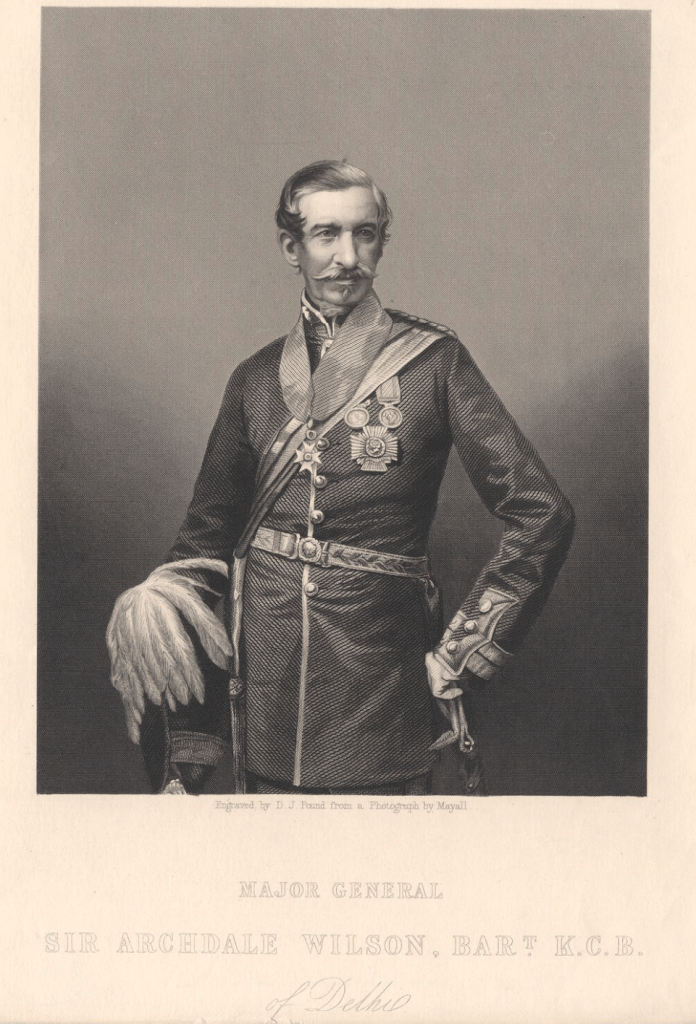
Considered the best of the senior officers present on the Ridge ( though the men who had lived through Meerut mutiny, for the most part, disagreed), Wilson decided to do what he knew best – preserve life and hold out until reinforcements came.
However, not everything he did was met with scorn. He organised the various duties with order and efficiency – a system of reliefs; only those who were on duty or wanted for support were to turn out in case of an alarm. They were to sleep in the accoutrements, to be ready at a moment’s notice. With this came more attention to order – in consequence, to prevent sentries from sleeping at their posts, officers were ordered to visit their posts more regularly. Wilson also insisted men, as far as possible, turn out in the uniforms – fighting in their shirt sleeves was bad for discipline. As such, morale improved in the camp; being better rested and regularly fed, soldiers were less inclined to blow their brains out in desperation. He also turned his attention to the sanitary arrangements as cholera and dysentery continued to wreak havoc in the ranks. Wilson took full advantage of the recently arrived reinforcements and tried to put a stop to the reckless practice of driving the enemy right up to the city walls, which had cost the force so many lives. Instead, he “contented himself with preventing the rebels from remaining near the advanced posts”, something he put into practice the day after General Reed left. While some men continued to grumble at Wilson’s lack of enthusiastic leadership, it was becoming increasingly clear that no matter what John Lawrence or, indeed, anyone in Calcutta thought, the siege of Delhi would not be won in weeks. The Delhi Force and the rebels had reached an uncomfortable stalemate, with neither side able to gain anything more than counting the dead.
18th July
On the 18th of July, the insurgents once again concentrated their attack on the Ridge batteries and Sabzi Mandi piquets – so sharp was the firing that Wilson, in the afternoon, saw it was necessary to send out a column to beat them back. Four Horse Artillery guns, 750 Infantry and the Guides Cavalry, all under Lieutenant-Colonel Jones of the 60th Rifles, quickly cleared the troublesome rebels. Then, instead of giving chase, he took up a good position and simply waited to see what the mutineers would do next. Disconcerted by this change in tactics, most of the mutineers melted back into the city while those who stayed to fight ensured they remained well away from Jones and his guns. This was the last time the mutineers ventured this far into Sabzi Mandi, for by this time, the engineers had also done their part and cleared the area of many of the old serais and walled gardens, leaving the grounds around the picquets open with no place for the rebels to hide.
Of course, nothing the British did on the Ridge was secret for long, and most of it was in plain sight. Realising the Ridge was not substantially reinforced to the right, the rebels decided to take their chances and attack the left instead.
20th July
An action not reported in the usual texts is recorded as follows in “Selections of the Letters and Dispatches preserved in the Military Department of the Government of India 1857-58 (Vol. 1, pp 337-8)
From Lieutenant-Colonel T. Seaton, C.B., Commanding Detachment, to Major R.S. Ewart, Deputy Assistant Adjutant-General, Field Force (Dated Camp Delhi, 21st July 1857)
I have the honour to report, for the information of the Brigadier General Commanding the Field Force, that having assumed command yesterday afternoon of the party named in the margin:
Her Majesty’s 75th Regiment …150
1st European Bengal Fusiliers…400
Guides – ..200
Total 750
I proceeded to carry out the instructions given to me by the Brigadier-General. I moved off at half past three, and on reaching the Trunk Road leading through Subzee Mundee, I threw the infantry of the Guides into the mass of gardens to the south of the road and supported them by a party of the 1st European Bengal Fusiliers. I directed Lieutenant W.S.R. Hodson to sweep through the gardens in skirmishing order, feeling on to the banks of the canal to drive before him any enemy he might find, and to halt when he came in a line with the picquet in the serai.
Whilst this operation was going on, I moved the column slowly down the road, halting at intervals. I rode on to the serai to make observations on the Subzee Mundee village and enquiries as to any enemy it might contain. The skirmishers shortly emerged from the gardens, not having met with any of the enemy or traces of any earthworks or entrenchments of any kind; I then took the column into the Subzee Mundee village and found it utterly deserted.
There now only remained for me to search the upper part of the gardens between the canal and the new escape cut; therefore, sending the guns with a suitable guard up the road to the point from whence I started, I proceeded with the column up to the banks of the canal to within a short distance of the Phool Chudder aqueduct. Then, directing the column into a crossroad leading towards the camp and instructing the senior officer to march slowly along, I formed a rear guard of the Guides (those with Lieutenant Hodson), rode up the aqueduct, and examined that small corner of ground. Finding neither traces of any enemy nor entrenchments, we rejoined our column.
In the meantime, a small body of the enemy had come out of Trevelyangunge and followed our retiring steps, firing a considerable distance but gradually creeping up.
As we came to an open space in the midst of the mass of gardens, they got to within one hundred yards of us, and some them exposed themselves on the garden walls as if to make a rush at the rear guard; but the Guides, admirably posted by that excellent officer, Lieutenant Hodson, gave them a volley with a cheer, which drove them off precipitately, and I returned to camp without further molestation. The casualties were only 2 men, slightly wounded.
23rd July
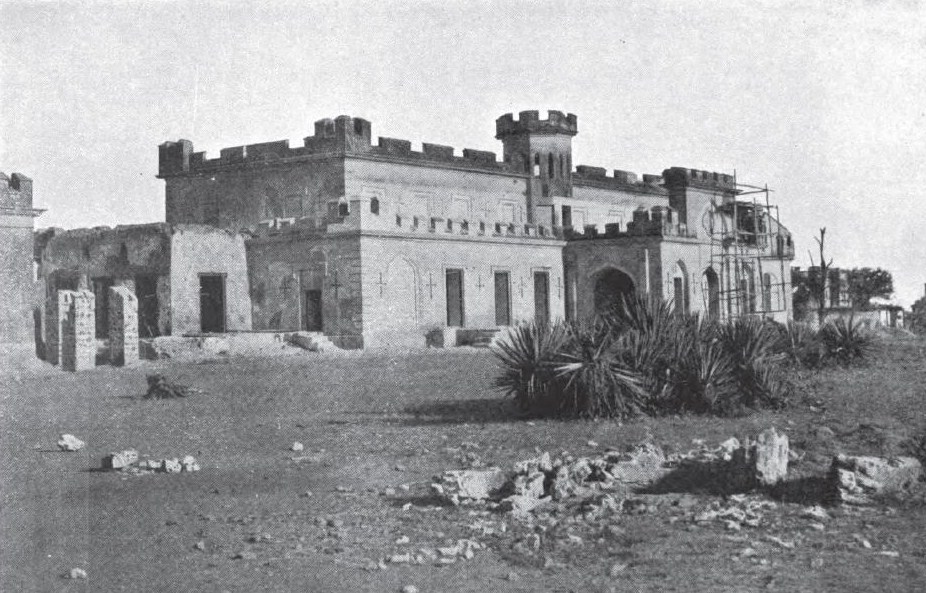
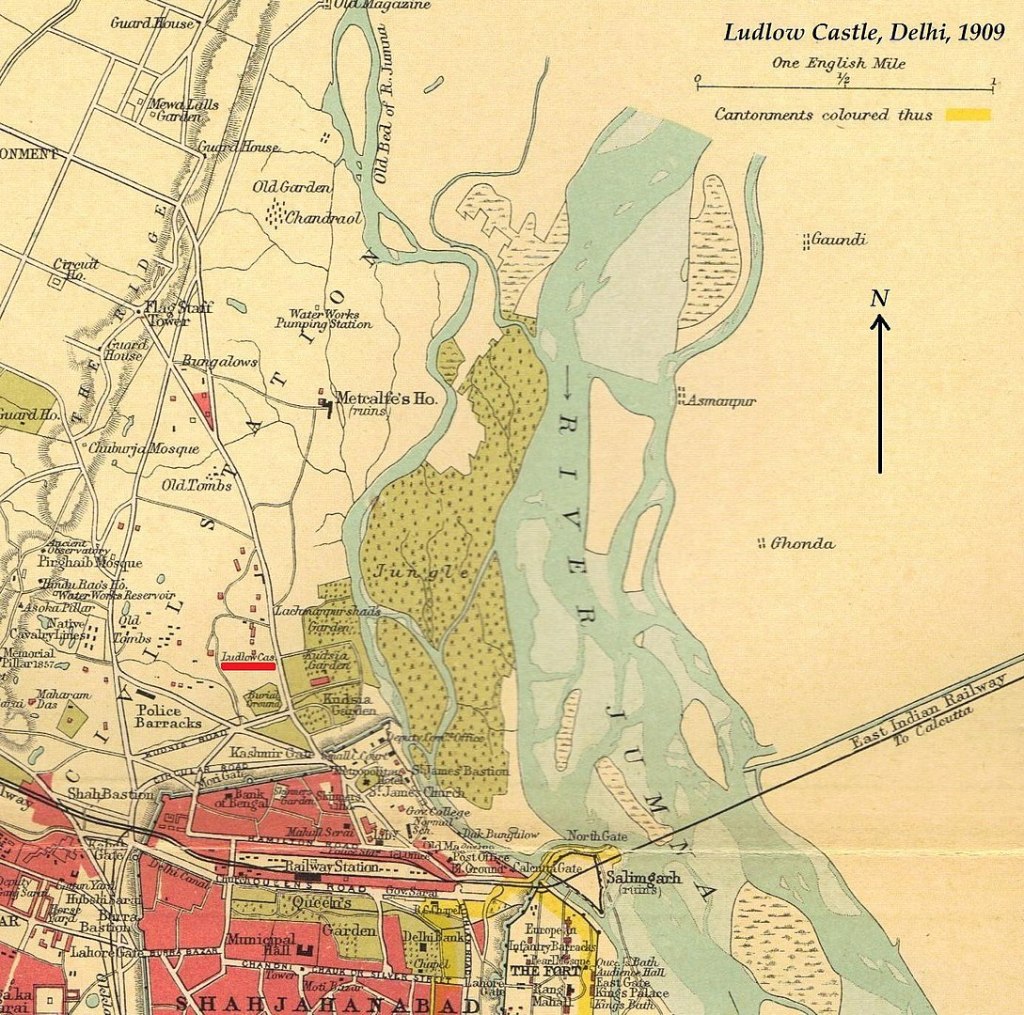
On the 23rd of July, the rebels sallied out in force out of the Kashmir Gate and in one advance took up their position at Ludlow Castle and the immediate neighbourhood, opening a relentless barrage of shelling on Metcalfe House, the stable piquet and the mosque piquet on the Ridge. There was nothing for it; the force on the Ridge would have to meet the insurgents in the field. Forming a column under Brigadier Showers and consisting of HM’s 8th and 81st, Coke’s Rifles, the 4th Sikhs and Horse Artillery, “the advance was made in splendid style in one grand skirmishing line, with the guns in the centre; they swept all before them..” The rebels, undaunted, worked their guns so effectively that the loss from grapeshot was inordinately heavy, and they managed to carry their guns off safely. Unfortunately, the men, intent now on capturing the guns, once again laid chase to the rebels and ended up once again under the city walls. The result was the deplorable loss of fifty officers and men killed and wounded. However, it proved to the rebels that setting up a piquet at Ludlow Castle was better not attempted again, and the Ridge gained another post.
Baird Smith continued reinforcing their positions – by now, the engineers had built a nearly unbroken line of breastwork which ran up from the Flagstaff Tower on the left to the most exposed batteries on the right. It was built of stones – abundant on the Ridge – and these, piled up breast high and the intervals filled in with sandbags and fascines, provided a covered way through which men could pass in relative safety. It was a boon to the poor servants who, until now, had had to run the gauntlet as they chased after their officers around the Ridge trying to bring them their dinner, supplies and accoutrements. Not everyone was impressed. One rifleman complained to his officer, Sir E. Campbell of the Rifles, that “he didn’t like the new breastworks, as men now only got hit in the head!”
Day after day, mutinied regiments marched into the city, in parade order, their bands playing, to the great irritation of the Delhi Field Force, that well-known tune, “Cheer Boys, Cheer” with banners flying. However, any lull in the fighting was greeted with as much merry-making as the field force could muster, the engineers amusing themselves with fishing in the canal while some officers got together for a horse race. One officer amused himself by wrangling river crocodiles. Still, others preferred to try their luck at a little game of tennis on the ruined court of Metcalfe House, the insurgents adding to their enjoyment by occasionally shooting at the players.
The final attack of the month came on the 31st. The insurgents may not have been able to run the British force off the Ridge, but it was not for lack of trying; they decided to build a temporary bridge over the river, covering a patch of swampy ground to the rear of the Ridge. Cavalry was quickly assembled to secure a convoy of the Kumaon battalion (composed of Gurkhas and hillmen, some 500 in number), who were bringing a large store of ammunition from the Punjab, while a column under Coke was sent to intercept the enemy should they succeed in getting across their bridge. However, there turned out to be no enemy to engage – the bridge the insurgents had tried to build was swept away by a torrent of water brought on by the incessant rain. As the disappointed rebels retired back to the city, they managed a minor attack on the right of the Ridge, but as if to prove a point, they kept up a roar of artillery from the city walls, which lasted the whole night.
It was now August, and over the vast plains of the Punjab, Brigadier John Nicholson was on the march, and he had one goal in mind: to capture Delhi.
Sources:
Barter, Richard. The Siege of Delhi: Mutiny Memories of an Old Officer. Edited by Ashok Khanna. London: Folio Society, 1984.
Cave-Browne, J. The Punjab and Delhi in 1857. Vol. 2. London: William Blackwood and Sons, 1861.
Greathed, Hervey Harris. Letters Written During the Siege of Delhi. Edited by Elisa Greathed. London: Richard Bentley, 1858.
Griffiths, Charles John. A Narrative of the Siege of Delhi with an Account of the Mutiny at Ferozepore in 1857. Edited by Henry John Yonge. London: John Murray, 1910.
Handcock, Arthur Gore. A Short Account of the Siege of Delhi in 1857. Simla: Government Central Printing Office, 1897.
Hibbert, Christopher. The Great Mutiny: India 1857. London: Allen Lane, 1978.
Hodson, William Stephen Raikes. Twelve Years of a Soldier’s Life in India: Being Extracts from the Letters of the Late Major W. S. R. Hodson, B.A. Edited by George H. Hodson. London: John W. Parker and Son, 1859.
Holmes, T. Rice. A History of the Indian Mutiny. 5th ed. London: Macmillan and Co., 1904.
Ireland, William W. History of the Siege of Delhi by an Officer Who Served There. Edinburgh: Adam and Charles Black, 1861.
Leasor, James. The Red Fort: The Story of the Indian Mutiny of 1857. London: Werner Laurie, 1956.
Malleson, George Bruce. The Indian Mutiny of 1857. London: Seeley and Co., 1891.
Metcalfe, Charles Theophilus, trans. Two Native Narratives of the Mutiny in Delhi. Westminster: Archibald Constable and Co., 1898.
Nigam, N. K. Delhi in 1857. Delhi: S. Chand, 1957.
Norman, Henry Wylie, and Mrs. Keith Young, eds. Delhi-1857: The Siege, Assault, and Capture as Given in the Diary and Correspondence of the Late Colonel Keith Young. London: William Chambers, 1902.
Roberts, Frederick Sleigh. Forty-One Years in India: From Subaltern to Commander-in-Chief. Vol. 1. London: Richard Bentley and Son, 1897.
Sedgwick, Francis Roger. The Indian Mutiny of 1857: A Sketch of the Principal Military Events. London: Foster Groom & Co., 1909.
Singh, Ajit. “Jind State and the Sepoy Mutiny of 1857.” Proceedings of the Indian History Congress 46 (1985): 432–40.
Vibart, Henry Meredith. Richard Baird Smith: The Leader of the Delhi Heroes in 1857. Westminster: Archibald Constable and Co., 1907.
 Mutiny Reflections